Our hair. It’s probably not something that many of us think about that deeply on a day-to-day basis. But what about when you start to lose it, and especially when you’re young?
The impact can be much more than physical. City News has been speaking to young people who have experienced hair loss about the effect it can have mentally – and how it’s about much more than hair.
Laura Mathias has had alopecia areata, since she was 12. Reflecting back on when she started to lose her hair, she shares that she “didn’t cope with it”. She didn’t leave the house for around six months, stopped going to school and didn’t see her friends.
And she says it was made more difficult by the fact that there was “no example of someone who was happy, healthy and bald” she could look to.
“There is an assumption that hair loss is either associated with being ill or old and it certainly made me feel like, if this is going to be me, its abnormal, I’m going to be undesirable and this is out of my control.
Laura Mathias started losing her hair aged 12. Image: Laura Mathias
“And that was a strange feeling to have when I was just going into my teenage years, when all you want to do is fit in,” she explains.
Another person who has gone through hair loss at a young age is Harry James. He started losing his hair when he was 25 and at university. He explains how much it affected his confidence: “I just started to avoid people and I’d walk with my head down, looking at the floor, I never wanted to look at people.”
He says he didn’t realise he was doing it and then one day when someone looked like they wanted to talk to him, he put his head down “and it just clicked”.
Harry James reflects back on how losing his hair affected his confidence. Image: Emily Kinder
“I was like ‘what has happened?’ [I’d] completely changed in how I felt about myself and stuff like that. That was the moment when I thought, ‘I can’t keep going on like this, I’ve got to do something about it’.”
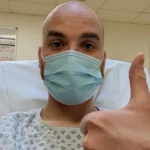
And Vishal Chaudhari, a student originally from India living in the US, says he continues to experience the difficulties of being a bald person due to cultural views held about hair loss.
Vishal Chaudhari shares how his hair loss has been mentally difficult.
“If you want to show a villain, or a person with a negative role in a movie, they always show that person as a bald [person], especially in Bollywood. So people don’t take it openly,” Vishal says.
He added that when he started losing his hair, “people started talking about it” around him and says “it’s not a common thing” for someone to “accept their spouse as a bald person”.
What causes hair loss?
A lot of the time, the reason behind why someone’s hair has begun to fall out isn’t always clear.
Head of The Institute of Trichologists, Eva Proudman, explains that the hair follicle is a “very complex cell” and the “second fastest dividing cell that we have in the body, but also a non-essential cell”.
“That gives the body a complete anomaly to work with”, she says, “which is why the hair follicle is very responsive to lots of different changes whether it be in the state of your mental health, your physical health, your diet, stress, bereavement, all of those different things which cause the body to have a reaction – impact the hair.”
There are many different types of alopecia – the general term for hair loss – which can affect men and women at any age.
Androgenetic alopecia, otherwise known as male or female pattern baldness, affects 30% of men under 30 and more than 1 in 10 women aged 20 to 29.
Another type, alopecia areata, often starts with patches of hair loss. According to Alopecia UK, this affects 2% of people in their lifetime. About 50% of cases start in childhood.
How can hair loss impact mental health?
A number of studies have noted the impact that alopecia can have. Alopecia UK’s Charity Development Manager, Jen Chambers, says that, although the figures vary in studies, “you can often see anywhere between 40 and 60% of people with alopecia often have anxiety and depression as well”.
The charity Alopecia UK say studies show those with alopecia often have anxiety and depression.
Jen describes the process of losing hair as being like a “grieving process”: “Suddenly you can look in the mirror and just think ‘I don’t know who that is anymore, I don’t recognise that person’, and that’s a real challenge to kind of not feel like yourself.”
Changing the narrative
But now young people who have experienced or are currently going through hair loss in some form have turned to social media to raise awareness about it, and attempt to normalise the process.
Laura says after a disruption to her routine in lockdown, she spent more time on social media and found the hair loss community there. This prompted her to post a photo on her own Instagram without a wig on for the first time.
Since then, Laura has renamed her Instagram page to @RelightAlopecia and she said it’s “almost given [her] a new life’s purpose”.
“I’ve always wanted to be an expert in something. Well guess what? I’m an expert in my experience of being a young person without hair,” she says.
“I went from 300 followers last May to now I’ve got almost 7,000 because there are so many people out there that have some kind of hair loss or know someone that does, and they don’t feel they can talk openly about it, so they have to come to this safe Instagram bubble.
“If I can show up on Instagram being that happy, healthy bald person then that’s what I want to be.”
After seeing how many people responded to him talking about his own hair loss journey in a Youtube video, Harry James created the Youtube channel Baldcafe where he shares the experiences of young people and their hair loss. It now has over 80,000 subscribers.
Harry James started the Youtube channel Baldcafe to share the experiences of those going through hair loss. Image: Harry James
“I think the biggest response I get when people first find the videos is that…we’re just two guys who’ve being going through the same thing, or have gone through the same thing, talking it out,” he says.
“I will never stop trying to help people feel more comfortable with the situation they’re in and, I think, normalise this thing of losing your hair.”
What needs to happen now?
Jen Chambers says we now need to do more studies into the actual impact of alopecia: “We need to use that to educate all of those that people with alopecia might come into contact with; the GPs, the dermatologists, the people in wig salons, the hairdressers and we also need to use it to educate people generally about alopecia and do awareness campaigns.
“Hopefully all of those things can help grow the confidence of people with alopecia so that they do feel more able to speak out about their experiences.”
Harry James says the “number one thing” regarding hair loss, is to “talk about it as much as you can, as best as you can”.
“Find someone you feel comfortable lending you an ear, whether that’s me, whether that’s a stranger, whether that’s you getting the camera out, getting your phone out and making little entries on this is how I feel about it right now.”
And Laura says she “wishes a little bit” she “didn’t have to create that world” for herself on Instagram.
“I would like that world and that kind of level of representation of happy, healthy bald people to exist out there on billboards, on mainstream TV, and we still have a long way to go.”
Submitted Article
Headline
Short Headline
Standfirst
Published Article
HeadlineMore than hair: how hair loss impacts young people’s mental health
Short HeadlineWhat impact can alopecia have on young people?
StandfirstSocial media has now become a space where young people are raising awareness of the experience.
Our hair. It’s probably not something that many of us think about that deeply on a day-to-day basis. But what about when you start to lose it, and especially when you’re young?
The impact can be much more than physical. City News has been speaking to young people who have experienced hair loss about the effect it can have mentally – and how it’s about much more than hair.
Laura Mathias has had alopecia areata, since she was 12. Reflecting back on when she started to lose her hair, she shares that she “didn’t cope with it”. She didn’t leave the house for around six months, stopped going to school and didn’t see her friends.
And she says it was made more difficult by the fact that there was “no example of someone who was happy, healthy and bald” she could look to.
“There is an assumption that hair loss is either associated with being ill or old and it certainly made me feel like, if this is going to be me, its abnormal, I’m going to be undesirable and this is out of my control.
Laura Mathias started losing her hair aged 12. Image: Laura Mathias
“And that was a strange feeling to have when I was just going into my teenage years, when all you want to do is fit in,” she explains.
Another person who has gone through hair loss at a young age is Harry James. He started losing his hair when he was 25 and at university. He explains how much it affected his confidence: “I just started to avoid people and I’d walk with my head down, looking at the floor, I never wanted to look at people.”
He says he didn’t realise he was doing it and then one day when someone looked like they wanted to talk to him, he put his head down “and it just clicked”.
Harry James reflects back on how losing his hair affected his confidence. Image: Emily Kinder
“I was like ‘what has happened?’ [I’d] completely changed in how I felt about myself and stuff like that. That was the moment when I thought, ‘I can’t keep going on like this, I’ve got to do something about it’.”
And Vishal Chaudhari, a student originally from India living in the US, says he continues to experience the difficulties of being a bald person due to cultural views held about hair loss.
Vishal Chaudhari shares how his hair loss has been mentally difficult.
“If you want to show a villain, or a person with a negative role in a movie, they always show that person as a bald [person], especially in Bollywood. So people don’t take it openly,” Vishal says.
He added that when he started losing his hair, “people started talking about it” around him and says “it’s not a common thing” for someone to “accept their spouse as a bald person”.
What causes hair loss?
A lot of the time, the reason behind why someone’s hair has begun to fall out isn’t always clear.
Head of The Institute of Trichologists, Eva Proudman, explains that the hair follicle is a “very complex cell” and the “second fastest dividing cell that we have in the body, but also a non-essential cell”.
“That gives the body a complete anomaly to work with”, she says, “which is why the hair follicle is very responsive to lots of different changes whether it be in the state of your mental health, your physical health, your diet, stress, bereavement, all of those different things which cause the body to have a reaction – impact the hair.”
There are many different types of alopecia – the general term for hair loss – which can affect men and women at any age.
Androgenetic alopecia, otherwise known as male or female pattern baldness, affects 30% of men under 30 and more than 1 in 10 women aged 20 to 29.
Another type, alopecia areata, often starts with patches of hair loss. According to Alopecia UK, this affects 2% of people in their lifetime. About 50% of cases start in childhood.
How can hair loss impact mental health?
A number of studies have noted the impact that alopecia can have. Alopecia UK’s Charity Development Manager, Jen Chambers, says that, although the figures vary in studies, “you can often see anywhere between 40 and 60% of people with alopecia often have anxiety and depression as well”.
The charity Alopecia UK say studies show those with alopecia often have anxiety and depression.
Jen describes the process of losing hair as being like a “grieving process”: “Suddenly you can look in the mirror and just think ‘I don’t know who that is anymore, I don’t recognise that person’, and that’s a real challenge to kind of not feel like yourself.”
Changing the narrative
But now young people who have experienced or are currently going through hair loss in some form have turned to social media to raise awareness about it, and attempt to normalise the process.
Laura says after a disruption to her routine in lockdown, she spent more time on social media and found the hair loss community there. This prompted her to post a photo on her own Instagram without a wig on for the first time.
Since then, Laura has renamed her Instagram page to @RelightAlopecia and she said it’s “almost given [her] a new life’s purpose”.
“I’ve always wanted to be an expert in something. Well guess what? I’m an expert in my experience of being a young person without hair,” she says.
“I went from 300 followers last May to now I’ve got almost 7,000 because there are so many people out there that have some kind of hair loss or know someone that does, and they don’t feel they can talk openly about it, so they have to come to this safe Instagram bubble.
“If I can show up on Instagram being that happy, healthy bald person then that’s what I want to be.”
After seeing how many people responded to him talking about his own hair loss journey in a Youtube video, Harry James created the Youtube channel Baldcafe where he shares the experiences of young people and their hair loss. It now has over 80,000 subscribers.
Harry James started the Youtube channel Baldcafe to share the experiences of those going through hair loss. Image: Harry James
“I think the biggest response I get when people first find the videos is that…we’re just two guys who’ve being going through the same thing, or have gone through the same thing, talking it out,” he says.
“I will never stop trying to help people feel more comfortable with the situation they’re in and, I think, normalise this thing of losing your hair.”
What needs to happen now?
Jen Chambers says we now need to do more studies into the actual impact of alopecia: “We need to use that to educate all of those that people with alopecia might come into contact with; the GPs, the dermatologists, the people in wig salons, the hairdressers and we also need to use it to educate people generally about alopecia and do awareness campaigns.
“Hopefully all of those things can help grow the confidence of people with alopecia so that they do feel more able to speak out about their experiences.”
Harry James says the “number one thing” regarding hair loss, is to “talk about it as much as you can, as best as you can”.
“Find someone you feel comfortable lending you an ear, whether that’s me, whether that’s a stranger, whether that’s you getting the camera out, getting your phone out and making little entries on this is how I feel about it right now.”
And Laura says she “wishes a little bit” she “didn’t have to create that world” for herself on Instagram.
“I would like that world and that kind of level of representation of happy, healthy bald people to exist out there on billboards, on mainstream TV, and we still have a long way to go.”
As e-bike riders weave through London’s busiest junctions, red lights are increasingly treated as optional. One software engineer says the problem may be baked into how hire firms charge users