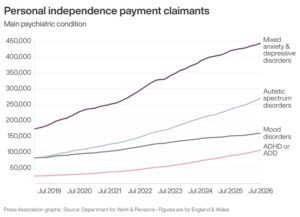
The number of disabled young people not in work, education or training who cite poor mental health as their main concern has nearly doubled since 2011.
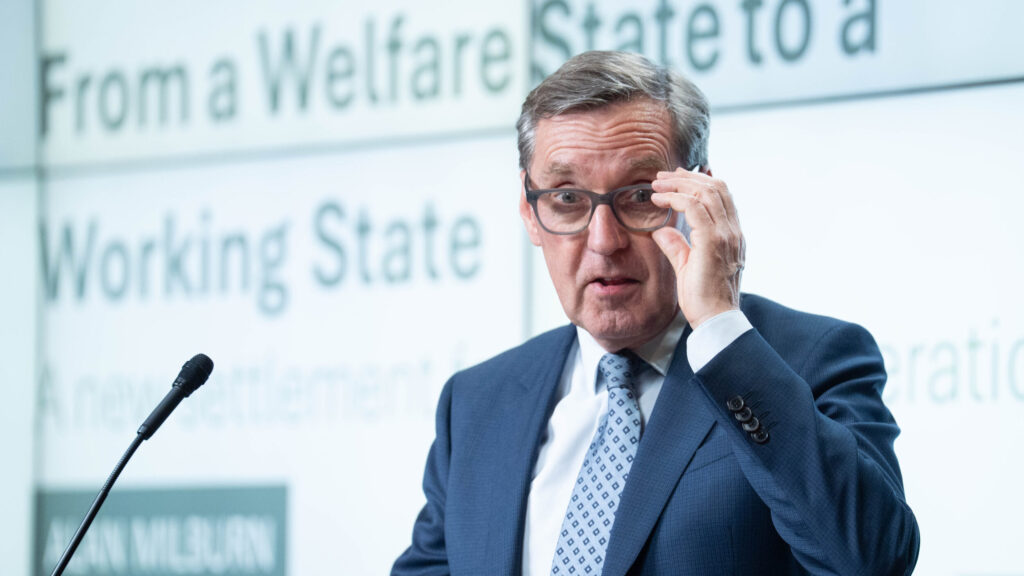
Between 2011 and 2025, the proportion rose from 24.3% to 42.6%, according to a newly published review by Alan Milburn, former Secretary of State for Health and Social Care.
The report was commissioned by the Labour government to investigate why nearly one million people aged 16-24 are not in work or education, often described as NEETs. It calls for earlier health support and restructuring across education, employment and the welfare state to help young people get into work.
Gary Buckley is CEO of Action West London, a charity that helps young people build careers through mentoring and enterprise projects. He says the term NEET is unhelpful.
“That implies that young people are not looking for work and that they are actively not engaged either in training or the labour market. That’s simply not true,” he told CityNews.
“I generally don’t believe that young people are actively less resilient than any other part of society. I just think they’ve had less opportunity, and it’s about all of society trying to redress that balance”
Milburn outlines that young people should be able to receive help for their conditions like ADHD and autism online or via the NHS app. This comes after a pledge last month to reduce long waits for clinical diagnosis.
Also, employers could be given incentives for taking on NEETs, in an extension of the Youth Job Grant. A young person who has been inactive for six months could earn the employer a £3,000 payment, while £2,000 could be offered if the young person has been in care or is disabled.
What comes before diagnosis?
Milburn warns that poor health should not be a ‘one-way route out of education or work’ and recommends that support should be available without the need for a diagnosis.
The support aims to respond before connections to work and education have broken down.
However, support must work with individuals’ circumstances, according to Dr Heidi Phillips, a specialist GP in neurodiversity at Clinical Partners.
“ADHD, autism, anxiety and depression can all cause significant functional impairment…what matters is understanding what is getting in the way for that individual.”
She moves the focus away from just cutting dependency on Universal Credit or PIP, to getting into a more sustainable form of work or training.
The benefits system could be completely redone. Under-25s who do not qualify for Universal Credit could instead receive a Youth Allowance at base level, and PIP replaced by two funds which restrict support for additional costs of living with disability.
Labour aims to save £13.7bn cumulatively by 2036/37.
Buckley welcomed the emphasis on involving charities and smaller businesses but noted that before any long-term savings can be achieved, there would be an upfront cost.
“I work for a charity. We know what’s going on at ground level”, he said.
While the government announced support through the Jobs Guarantee for 90,000 young people at the start of the year, Buckley warns that we should not overlook those recently unemployed.
For Gary Buckley, improving the prospects for young people depends on employers and organisers listening to those they intend to help.
“There is a wider conversation about making sure that all of civil society is included in that support”
Submitted Article
Headline
Short Headline
Standfirst
Published Article
HeadlineMental health concerns nearly doubled among disabled young people
Short HeadlineMental health concerns double in latest report
StandfirstMilburn committed to a ‘fundamental transformation’ of support systems in the next decade
The number of disabled young people not in work, education or training who cite poor mental health as their main concern has nearly doubled since 2011.
Between 2011 and 2025, the proportion rose from 24.3% to 42.6%, according to a newly published review by Alan Milburn, former Secretary of State for Health and Social Care.
The report was commissioned by the Labour government to investigate why nearly one million people aged 16-24 are not in work or education, often described as NEETs. It calls for earlier health support and restructuring across education, employment and the welfare state to help young people get into work.
Gary Buckley is CEO of Action West London, a charity that helps young people build careers through mentoring and enterprise projects. He says the term NEET is unhelpful.
“That implies that young people are not looking for work and that they are actively not engaged either in training or the labour market. That’s simply not true,” he told CityNews.
“I generally don’t believe that young people are actively less resilient than any other part of society. I just think they’ve had less opportunity, and it’s about all of society trying to redress that balance”
Milburn outlines that young people should be able to receive help for their conditions like ADHD and autism online or via the NHS app. This comes after a pledge last month to reduce long waits for clinical diagnosis.
Also, employers could be given incentives for taking on NEETs, in an extension of the Youth Job Grant. A young person who has been inactive for six months could earn the employer a £3,000 payment, while £2,000 could be offered if the young person has been in care or is disabled.
What comes before diagnosis?
Milburn warns that poor health should not be a ‘one-way route out of education or work’ and recommends that support should be available without the need for a diagnosis.
The support aims to respond before connections to work and education have broken down.
However, support must work with individuals’ circumstances, according to Dr Heidi Phillips, a specialist GP in neurodiversity at Clinical Partners.
“ADHD, autism, anxiety and depression can all cause significant functional impairment…what matters is understanding what is getting in the way for that individual.”
She moves the focus away from just cutting dependency on Universal Credit or PIP, to getting into a more sustainable form of work or training.
The benefits system could be completely redone. Under-25s who do not qualify for Universal Credit could instead receive a Youth Allowance at base level, and PIP replaced by two funds which restrict support for additional costs of living with disability.
Labour aims to save £13.7bn cumulatively by 2036/37.
Buckley welcomed the emphasis on involving charities and smaller businesses but noted that before any long-term savings can be achieved, there would be an upfront cost.
“I work for a charity. We know what’s going on at ground level”, he said.
While the government announced support through the Jobs Guarantee for 90,000 young people at the start of the year, Buckley warns that we should not overlook those recently unemployed.
For Gary Buckley, improving the prospects for young people depends on employers and organisers listening to those they intend to help.
“There is a wider conversation about making sure that all of civil society is included in that support”