After one of its wettest starts to the year, London is now set to be hotter than Athens. This erratic weather is not an isolated quirk, but an early sign of a climate that is becoming more extreme. With some degree of climate change now inevitable, what does the future hold for the capital?
Here are the three top changes Londoners can expect to see as the climate changes.
1. Floods
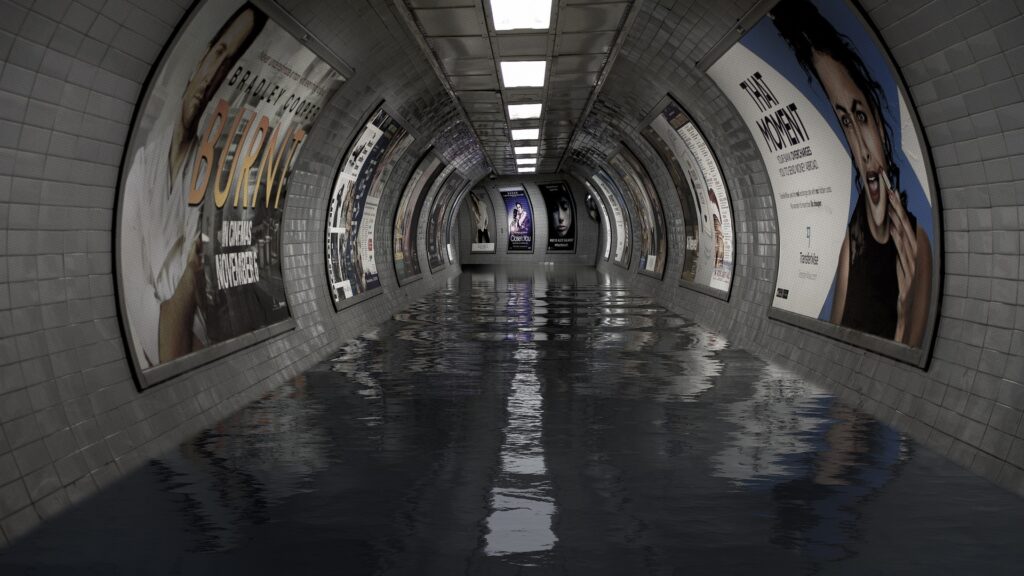
You may have come across dramatic images online of central London submerged under the Thames. While these cinematic images are fictional, they reflect a global reality: rising sea levels.
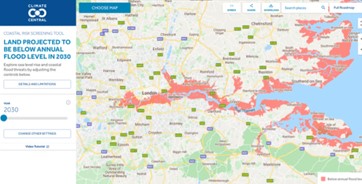
The Thames is set to rise as sea levels climb, and about 15% of London sits on floodplains. This map by Climate Central shows areas projected to be below the flood level by 2030.
Climate Central
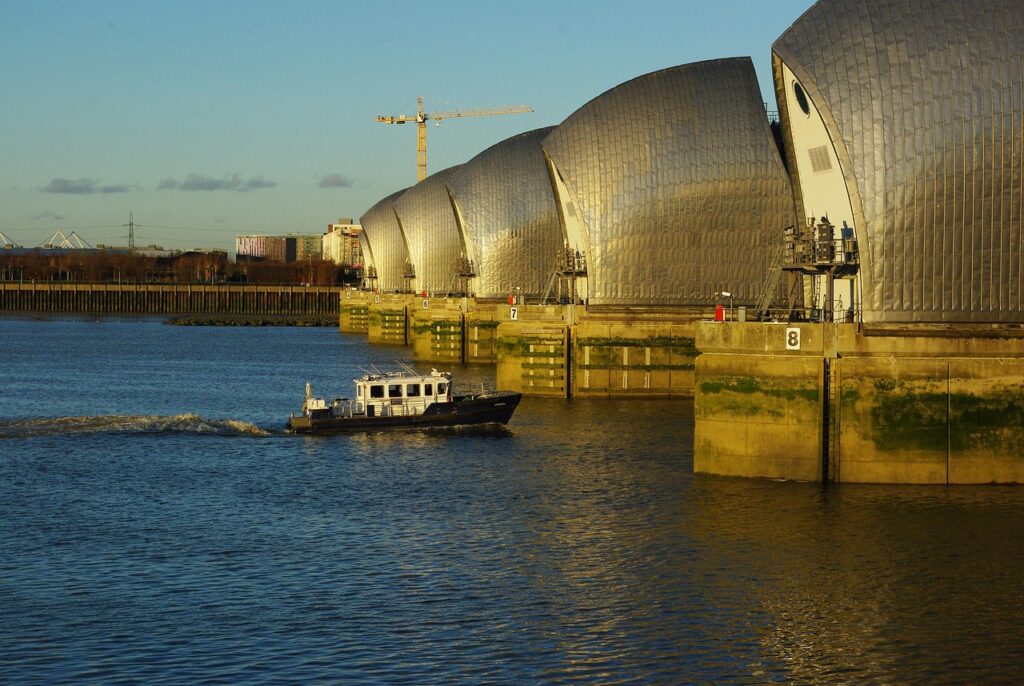
But this isn’t the full picture. The Thames Barrier – one of the largest flood-defence structures in the world – is already protecting London from tidal surges. According to the Institute of Civil Engineers, it’s expected to remain effective until about 2070, and plans are underway to reinforce it further to meet projected rises.
But while your apartment likely won’t end up under the Thames, flooding of another kind remains a real threat.
L0nd0ner / Pixabay
Surface water flooding happens when rainfall overwhelms a city’s drainage system. And London can expect a lot more rain. “We’re seeing heavier rainfall because a warmer climate means a warmer atmosphere, and it’s basic physics that a warmer atmosphere holds more moisture” says Bob Ward, Chair of the London Climate Ready Partnership. According to the Met Office, for every degree the temperature rises, rainfall increases by roughly 7%.
London’s clay-rich soil is almost impermeable, meaning rainwater tends to sit on the surface instead of being absorbed, while the Victorian-era sewer system struggles to cope. This creates the perfect storm for surface water flooding.
In 2021 alone, 2,000 London properties were flooded with storm water and sewage, causing widespread transport disruptions and damage – a pattern that is expected to repeat as unpredictable storms become more frequent.
“Even if your home is not threatened by it, it will disrupt transport because it can flood roads, railway tracks, the underground,” says Bob. “Flash flooding has the capacity to essentially paralyse London.”
Flash flooding isn’t just a threat to infrastructure: it can be lethal. “With things like underpasses, you can get depths of water that if you drive into them in a car, you’re at danger of drowning if you can’t get out. Although it’s not happened in London, it has happened in Liverpool in the last few years. A couple drove into flood waters in the city and couldn’t get out and drowned. We don’t want that happening in London.” Bob says.
2. Heat
By 2050, London’s average summer day could be three degrees warmer. And as Bob explains, the city is already hotter than much of the UK. “We’re in the warmest quarter of the UK, so we tend to get most of the host weather. But because we’re a large, urban area, our man-made surfaces tend to soak up the sun’s energy rather than reflecting it, and that means we get something called the Urban Heat Island Effect. London is usually several degrees warmer than surrounding areas.” This combined heating effect means that in the next 25 years, London’s climate could feel more like Barcelona than Britain.
ELG21 / Pixabay
While this might not sound like a bad thing, it comes with great dangers. “It kills hundreds of Londoners every year.” says Bob. “It also costs a huge amount to the London economy through workplaces overheating, making people less productive.”
We had a taste of what extreme heat does to London in July 2022, when temperatures hit 40°C. The London Fire Brigade reported its busiest levels since World War II. Hospitals cancelled operations, trains from King’s Cross were suspended as lines buckled, and 387 people in London died. The city simply isn’t yet equipped to handle this kind of sustained temperature rise.
3. Plants and Animals
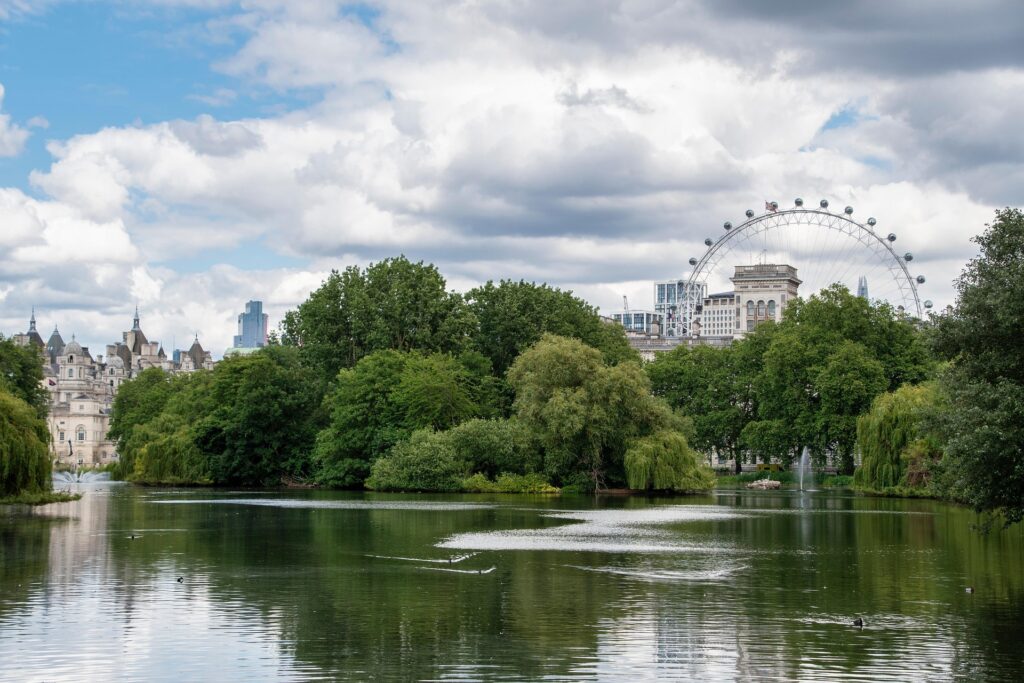
London’s green spaces are set to change dramatically. Summers are projected to be about 20% drier by 2050, meaning iconic spaces like Hyde Park may no longer be green year-round. Grass lawns are likely to struggle in prolonged heat, turning yellow in the summer.
Trees, too, will feel the heat. Research by Kew Gardens shows that native species such as oak, birch, and beech may not survive beyond 2090, with over half of Kew’s tree species at risk of dying from climate change. These shifts will transform the look and feel of London’s natural spaces, affecting both wildlife and city residents alike.
sunnivalode97 / Pixabay
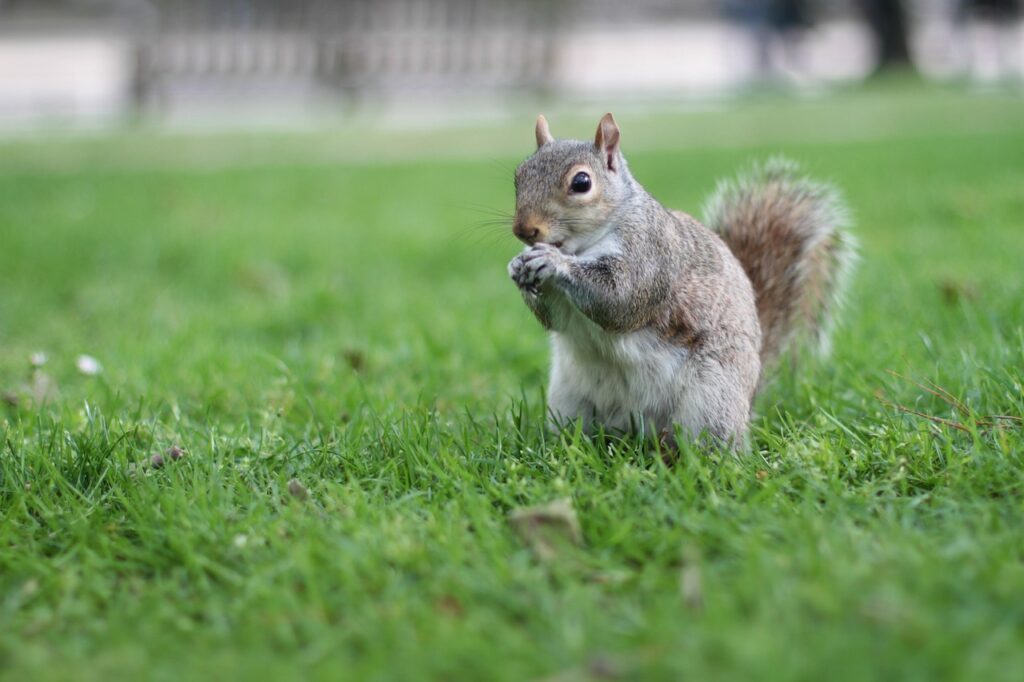
Finally, London may feel strangely quieter. While some mammals like foxes and grey squirrels are likely to adapt well to climate change, London’s swifts, swallows and starlings, as well as some flying insects, are set to continue their steady decline. As biodiversity decreases, the volume is likely to be turned down on the familiar buzz and birdsong of London’s urban parks and gardens.
While we can’t undo the climate changes already underway, the worst impacts are not inevitable. London is taking steps to adapt, from upgraded flood defences and sustainable drainage systems to strategies for heat resilience and protecting green spaces. The question, Bob says, is whether we will do enough. “What London looks like in the future is really up to us. If we don’t adapt, it will become a very difficult place to live and work. If we adapt well, it could continue to be a world-class city, but we’ll need to make investments to make sure it can cope with future change.”
Submitted Article
Headline
Short Headline
Standfirst
Published Article
HeadlineLondon after climate change: What the future could hold for the capital
Short HeadlineLondon after climate change
StandfirstThe effects of climate change are already underway. Here are the top three changes Londoners can expect.
After one of its wettest starts to the year, London is now set to be hotter than Athens. This erratic weather is not an isolated quirk, but an early sign of a climate that is becoming more extreme. With some degree of climate change now inevitable, what does the future hold for the capital?
Here are the three top changes Londoners can expect to see as the climate changes.
1. Floods
You may have come across dramatic images online of central London submerged under the Thames. While these cinematic images are fictional, they reflect a global reality: rising sea levels.
The Thames is set to rise as sea levels climb, and about 15% of London sits on floodplains. This map by Climate Central shows areas projected to be below the flood level by 2030.
Climate Central
But this isn’t the full picture. The Thames Barrier – one of the largest flood-defence structures in the world – is already protecting London from tidal surges. According to the Institute of Civil Engineers, it’s expected to remain effective until about 2070, and plans are underway to reinforce it further to meet projected rises.
But while your apartment likely won’t end up under the Thames, flooding of another kind remains a real threat.
L0nd0ner / Pixabay
Surface water flooding happens when rainfall overwhelms a city’s drainage system. And London can expect a lot more rain. “We’re seeing heavier rainfall because a warmer climate means a warmer atmosphere, and it’s basic physics that a warmer atmosphere holds more moisture” says Bob Ward, Chair of the London Climate Ready Partnership. According to the Met Office, for every degree the temperature rises, rainfall increases by roughly 7%.
London’s clay-rich soil is almost impermeable, meaning rainwater tends to sit on the surface instead of being absorbed, while the Victorian-era sewer system struggles to cope. This creates the perfect storm for surface water flooding.
In 2021 alone, 2,000 London properties were flooded with storm water and sewage, causing widespread transport disruptions and damage – a pattern that is expected to repeat as unpredictable storms become more frequent.
“Even if your home is not threatened by it, it will disrupt transport because it can flood roads, railway tracks, the underground,” says Bob. “Flash flooding has the capacity to essentially paralyse London.”
Flash flooding isn’t just a threat to infrastructure: it can be lethal. “With things like underpasses, you can get depths of water that if you drive into them in a car, you’re at danger of drowning if you can’t get out. Although it’s not happened in London, it has happened in Liverpool in the last few years. A couple drove into flood waters in the city and couldn’t get out and drowned. We don’t want that happening in London.” Bob says.
2. Heat
By 2050, London’s average summer day could be three degrees warmer. And as Bob explains, the city is already hotter than much of the UK. “We’re in the warmest quarter of the UK, so we tend to get most of the host weather. But because we’re a large, urban area, our man-made surfaces tend to soak up the sun’s energy rather than reflecting it, and that means we get something called the Urban Heat Island Effect. London is usually several degrees warmer than surrounding areas.” This combined heating effect means that in the next 25 years, London’s climate could feel more like Barcelona than Britain.
ELG21 / Pixabay
While this might not sound like a bad thing, it comes with great dangers. “It kills hundreds of Londoners every year.” says Bob. “It also costs a huge amount to the London economy through workplaces overheating, making people less productive.”
We had a taste of what extreme heat does to London in July 2022, when temperatures hit 40°C. The London Fire Brigade reported its busiest levels since World War II. Hospitals cancelled operations, trains from King’s Cross were suspended as lines buckled, and 387 people in London died. The city simply isn’t yet equipped to handle this kind of sustained temperature rise.
3. Plants and Animals
London’s green spaces are set to change dramatically. Summers are projected to be about 20% drier by 2050, meaning iconic spaces like Hyde Park may no longer be green year-round. Grass lawns are likely to struggle in prolonged heat, turning yellow in the summer.
Trees, too, will feel the heat. Research by Kew Gardens shows that native species such as oak, birch, and beech may not survive beyond 2090, with over half of Kew’s tree species at risk of dying from climate change. These shifts will transform the look and feel of London’s natural spaces, affecting both wildlife and city residents alike.
sunnivalode97 / Pixabay
Finally, London may feel strangely quieter. While some mammals like foxes and grey squirrels are likely to adapt well to climate change, London’s swifts, swallows and starlings, as well as some flying insects, are set to continue their steady decline. As biodiversity decreases, the volume is likely to be turned down on the familiar buzz and birdsong of London’s urban parks and gardens.
While we can’t undo the climate changes already underway, the worst impacts are not inevitable. London is taking steps to adapt, from upgraded flood defences and sustainable drainage systems to strategies for heat resilience and protecting green spaces. The question, Bob says, is whether we will do enough. “What London looks like in the future is really up to us. If we don’t adapt, it will become a very difficult place to live and work. If we adapt well, it could continue to be a world-class city, but we’ll need to make investments to make sure it can cope with future change.”
Pope Francis was an advocate for the poor, opened the church's relationship with the LGBT+ community, and worked to combat climate change, but where does Pope Leo XIV stand on these issues?