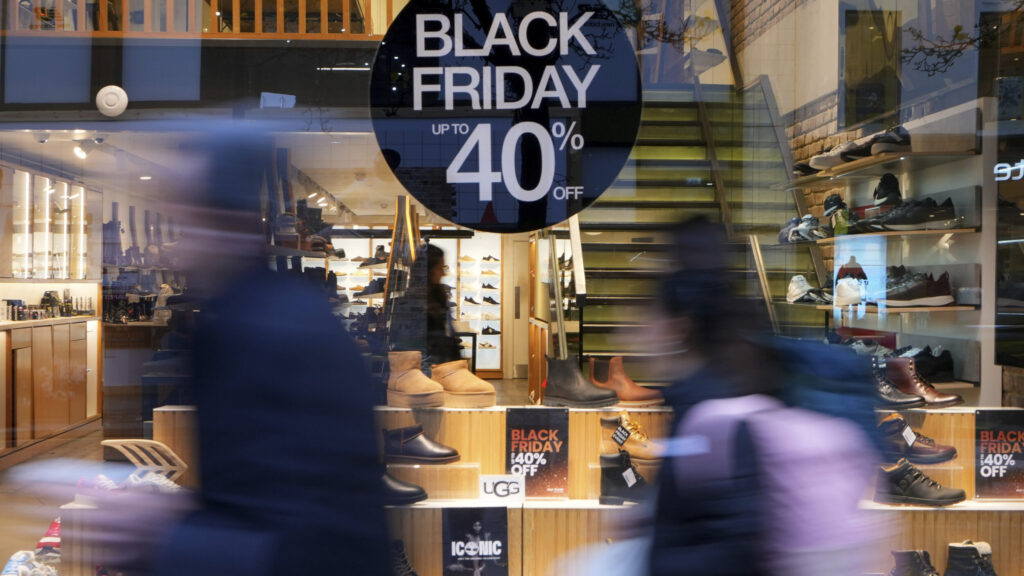
The Black Friday sales have hit London early this year and the promotions are plastered across shop windows. However, some shoppers are wary.
80% of Generation Z and 81% of Millennials are hitting the high street this Black Friday, to prepare for Christmas. Many shoppers told City News that they are always appreciative of a discount, and look forward to the sale every year.
Some, however, are feeling cautious after Which? Looked at 227 products in the sales fortnight last year and found that 9 out of 10 deals were the same price or cheaper at other times of the year.
Andrew Goodacre, CEO of the British Independent Retailers Association said “some retailers purposefully increase product prices in order to show a bigger drop as and when Black Friday arrives”.
Shoppers told us they are approaching Black Friday with caution, checking prices across multiple retailers, using AI price tracking tools and even searching the internet for additional discount codes.
Barclays estimates shoppers are looking to spend £14 billion this Black Friday period, a £4 billion increase from last year’s figures.
Sarah Johnson, director of merchandising consultancy firm Flourish Retail, told City News that there’s a trust deficit between retailer and shopper and more customers were getting annoyed at brands having a certain percentage off, then jumping to a deeper discount.
Ms Johnson hopes that with shoppers being warier they will push back at brands for their erratic discounting, causing retailers to be more transparent with their pricing over the busy sales period.
Amazon introduced Black Friday to the UK in 2010. What used to be a one-day sale, traditionally marking the day after Thanksgiving in the United States, has expanded into a month-long affair.
Experts say that before the UK had Black Friday sales, shoppers would gradually spend from October through to Christmas. The introduction of this sale has changed the public’s spending habits; shoppers are seeing discounts at the start of November but are holding off making their purchases until it is actually Black Friday, as they think this will be the biggest discount. Although the lowest prices of the year are now being reported in the post-Christmas sales instead.
Submitted Article
Headline
Short Headline
Standfirst
Published Article
HeadlineShoppers are Cautious this Black Friday, Says Retail Expert
Short HeadlineShoppers Wary this Black Friday, Says Retail Expert
StandfirstShoppers are being more savvy after it came to light that retailers are inflating prices prior to Black Friday sales.
The Black Friday sales have hit London early this year and the promotions are plastered across shop windows. However, some shoppers are wary.
80% of Generation Z and 81% of Millennials are hitting the high street this Black Friday, to prepare for Christmas. Many shoppers told City News that they are always appreciative of a discount, and look forward to the sale every year.
Some, however, are feeling cautious after Which? Looked at 227 products in the sales fortnight last year and found that 9 out of 10 deals were the same price or cheaper at other times of the year.
Andrew Goodacre, CEO of the British Independent Retailers Association said “some retailers purposefully increase product prices in order to show a bigger drop as and when Black Friday arrives”.
Shoppers told us they are approaching Black Friday with caution, checking prices across multiple retailers, using AI price tracking tools and even searching the internet for additional discount codes.
Barclays estimates shoppers are looking to spend £14 billion this Black Friday period, a £4 billion increase from last year’s figures.
Sarah Johnson, director of merchandising consultancy firm Flourish Retail, told City News that there’s a trust deficit between retailer and shopper and more customers were getting annoyed at brands having a certain percentage off, then jumping to a deeper discount.
Ms Johnson hopes that with shoppers being warier they will push back at brands for their erratic discounting, causing retailers to be more transparent with their pricing over the busy sales period.
Amazon introduced Black Friday to the UK in 2010. What used to be a one-day sale, traditionally marking the day after Thanksgiving in the United States, has expanded into a month-long affair.
Experts say that before the UK had Black Friday sales, shoppers would gradually spend from October through to Christmas. The introduction of this sale has changed the public’s spending habits; shoppers are seeing discounts at the start of November but are holding off making their purchases until it is actually Black Friday, as they think this will be the biggest discount. Although the lowest prices of the year are now being reported in the post-Christmas sales instead.
A 2024 Freedom of Information request showed Bromley Council had £4.5 million invested in arms companies that year with £1.5 million reportedly linked to Israel.
Undercover officers raided three linked shops in Barking town centre, revealing how illicit tobacco is being hidden in walls, ceilings and nearby locations to evade detection.
More than 330,000 people across the UK sought support from the Stop It Now helpline in 2025 over concerns about their own or someone else’s online sexual behaviour towards children, according to new charity data. The anonymous service says contacts by phone, email and webchat rose significantly over the year.