Meet Yasmin and Sonia: two Iranian women trying to give a voice to their people on the streets of London. Both women have asked not to be identified, fearing repercussions in their home country.
Yasmin, who’s name we’ve changed, was twelve when she moved to the UK with her parents and sister. She still has family in Iran, including aunts, uncles, and grandparents.
Amid a nationwide internet shutdown in Iran, families in London have been struggling to communicate with loved ones. Yasmin says that in the last few days her family have been able to call, but she cannot contact them directly. It hasn’t made things any easier.
“I can hear the fear in their voices. They’re scared to talk. They know they’re being listened to.”
Sonia grew up in Tehran and moved to the UK with her family after finishing primary school. Though she has lived in London for many years, she says her heart and home are in Iran. She, too, still has family and friends there.
“That’s what makes everything unbearable. Every protest, every internet shutdown, every rumour of arrests immediately turns into fear for my loved ones in Iran.”
What is happening in Iran?
On December 28, shopkeepers and bazaar merchants in Tehran went on strike amid a deepening economic crisis, after years of crippling global sanctions. This has evolved into weeks of anti-government demonstrations across hundreds of cities in Iran.
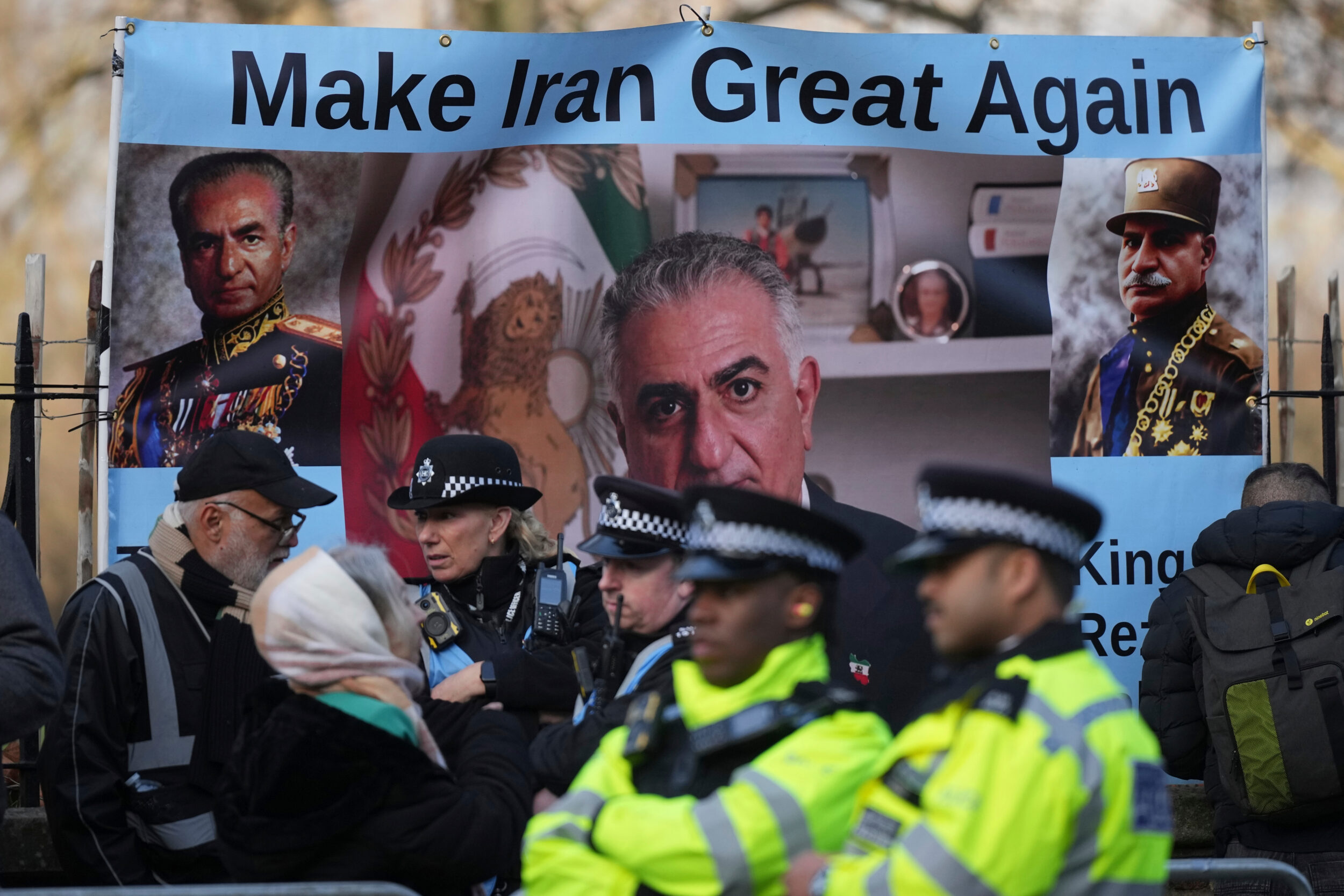
Many of the protestors are calling for the return of Reza Pahlavi. The son of the former Shah, who was deposed in the 1979 Islamic Revolution, has said publicly that he does not seek power but is willing to facilitate a peaceful transition to democracy.
Police speak to demonstrators as they hold placards, banner and flags as they protest outside the Iranian Embassy in London, Friday, Jan. 16, 2026. (AP Photo/Alastair Grant)
Although there have been significant protests in Iran before, most recently the Women, Life, Freedom protests in 2022-23, both Yasmin and Sonia say this time feels different.
“At first, there was a strange mix of pride and terror,” says Sonia. “Pride because people were finally saying no openly, loudly, without fear. Terror because I know exactly what the regime does when it feels threatened.”
Yasmin says she would wake up every morning at 3 am to check whether the government had fallen. “We all had a lot of hope this time. We thought, this time there’s no going back… there’s no way they can come back from this.” She adds that although she’s trying to stay positive, she’s worried the outside world is losing interest.
The internet shutdown has made it very difficult to verify the full scale of the crackdown led by the regime’s Islamic Revolutionary Guard Corps (IRGC). She says that after 5 pm, no one is allowed to leave the house. “You’ll be shot, even if you’re not protesting.” Thousands are thought to have been killed. Yasmin believes it’s at least 20,000.
“I’ve heard this from several different people in Iran. Some big cities smell like blood. They’re going into hospitals and dragging people out.”
Both women tell me that the government is refusing to hand over bodies to their families and often demands extortionate amounts of money, just so they can be buried.
How are Iranians responding in London?
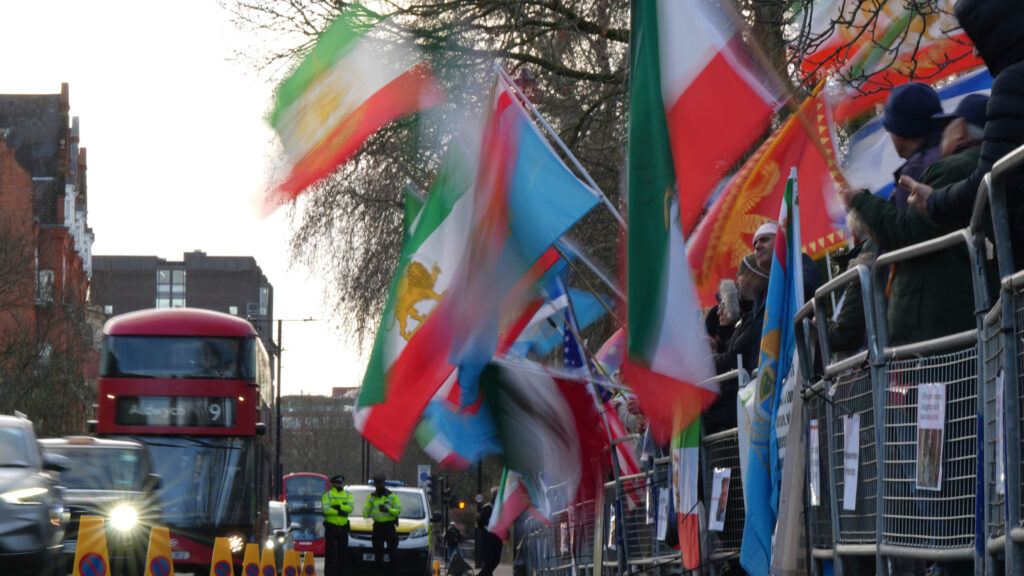
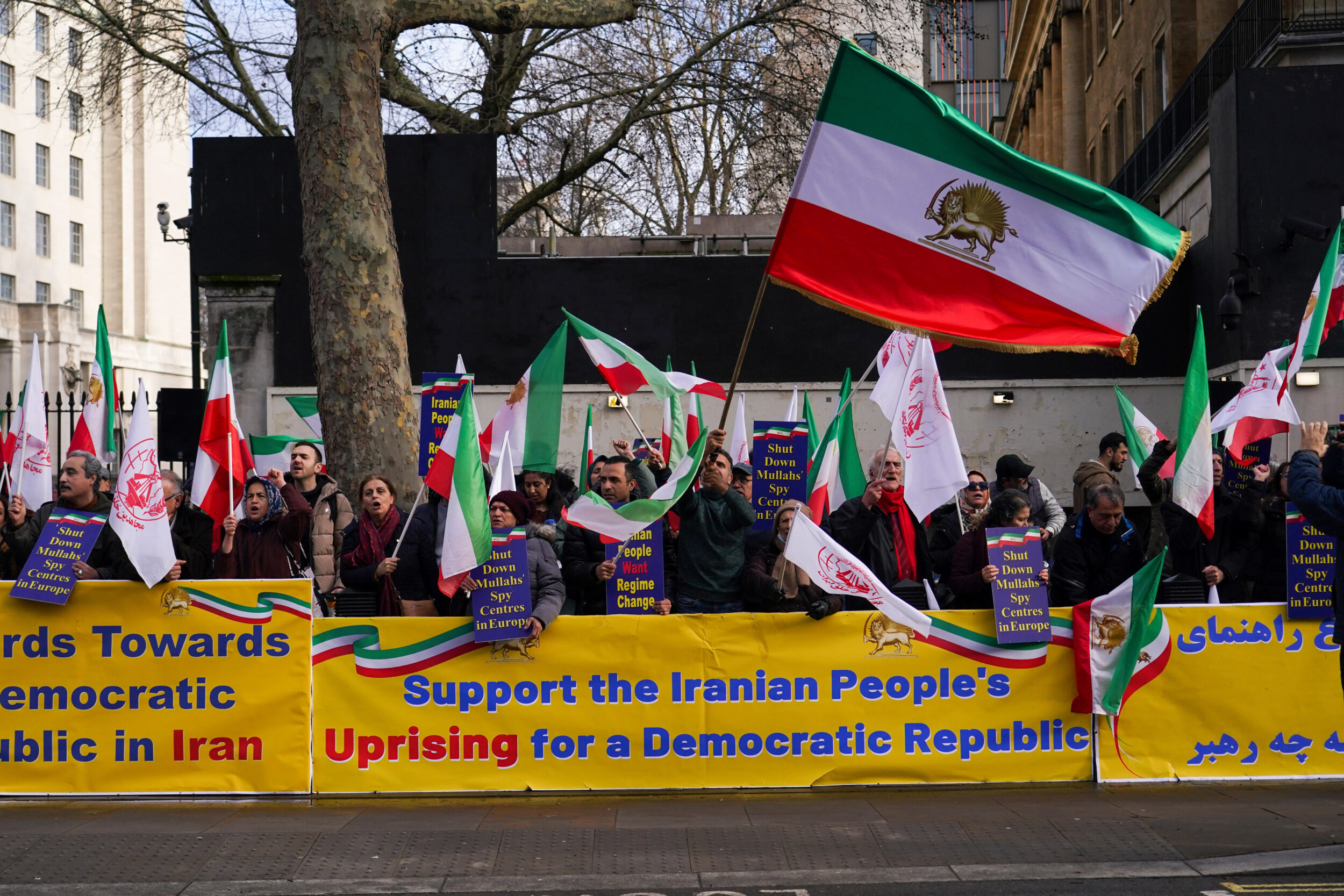
Here in London, there have also been anti-regime demonstrations. On Sunday, thousands marched from the BBC to Parliament Square. There have also been frequent protests outside the Iranian embassy, where last week 14 people were arrested after clashes with police.
People hold flags and placards as they gather to demonstrate in support of the protests happening in Iran, in London, Saturday, Jan. 17, 2026. (AP Photo/Alberto Pezzali)
Sonia says she is protesting here because people inside Iran don’t have that option anymore. “They are risking their lives just to be heard. Those of us outside the country carry a responsibility to speak when they can’t.” She says she hopes these protests will send a message to the UK government.
“I want them to stop treating the Iranian regime as a normal diplomatic partner and deport the diplomats and ambassador.
She adds she wants stronger sanctions, accountability for human rights crimes, and for the IRGC to be proscribed as a terrorist organisation.
Is there a personal price?
Yasmin focuses most of her energy on online activism. “I want to be the voice of the people in Iran who don’t have a voice right now. They are begging for help.”
After building a significant social media presence, she’s now worried for her and her family’s safety. She used to visit family in Iran once a year, but doesn’t think she’ll be able to go back now, adding, “I can sacrifice my motherland because it’s nothing compared to the sacrifices they [Iranians] are making.”
She has faced online abuse for speaking out against the Islamic Regime. Some have accused her of being a monarchist or working for the CIA and Mossad. “I haven’t got any other agenda other than being the voice of my people. I can’t sleep, I can’t eat. To be called that is really insulting.” Yasmin says she is frustrated with the lack of understanding, and her goal is to raise awareness.
“We have so much to lose, and we’re trying to shout as loud as we can. I am just an Iranian person trying to speak up. We have lived in fear for 50 years – not anymore.”
Sonia says that as an Iranian living in London, her message is clear. That, for her, this isn’t just another protest or short-term crisis. This is a population standing up after decades of repression. She calls it a “true revolution”, and she doesn’t want attention to fade.
“For Iranians, this isn’t a news cycle. It’s our lives, our families, and our future.”
Submitted Article
Headline
Short Headline
Standfirst
Published Article
Headline“We have lived in fear for 50 years – not anymore.” Meet the Iranian women using their voice in London
Short Headline"I am just an Iranian person trying to speak up."
StandfirstYasmin and Sonia have been protesting in London and engaging in social activism while they struggle to contact family and friends in Iran.
Meet Yasmin and Sonia: two Iranian women trying to give a voice to their people on the streets of London. Both women have asked not to be identified, fearing repercussions in their home country.
Yasmin, who’s name we’ve changed, was twelve when she moved to the UK with her parents and sister. She still has family in Iran, including aunts, uncles, and grandparents.
Amid a nationwide internet shutdown in Iran, families in London have been struggling to communicate with loved ones. Yasmin says that in the last few days her family have been able to call, but she cannot contact them directly. It hasn’t made things any easier.
“I can hear the fear in their voices. They’re scared to talk. They know they’re being listened to.”
Sonia grew up in Tehran and moved to the UK with her family after finishing primary school. Though she has lived in London for many years, she says her heart and home are in Iran. She, too, still has family and friends there.
“That’s what makes everything unbearable. Every protest, every internet shutdown, every rumour of arrests immediately turns into fear for my loved ones in Iran.”
What is happening in Iran?
On December 28, shopkeepers and bazaar merchants in Tehran went on strike amid a deepening economic crisis, after years of crippling global sanctions. This has evolved into weeks of anti-government demonstrations across hundreds of cities in Iran.
Many of the protestors are calling for the return of Reza Pahlavi. The son of the former Shah, who was deposed in the 1979 Islamic Revolution, has said publicly that he does not seek power but is willing to facilitate a peaceful transition to democracy.
Police speak to demonstrators as they hold placards, banner and flags as they protest outside the Iranian Embassy in London, Friday, Jan. 16, 2026. (AP Photo/Alastair Grant)
Although there have been significant protests in Iran before, most recently the Women, Life, Freedom protests in 2022-23, both Yasmin and Sonia say this time feels different.
“At first, there was a strange mix of pride and terror,” says Sonia. “Pride because people were finally saying no openly, loudly, without fear. Terror because I know exactly what the regime does when it feels threatened.”
Yasmin says she would wake up every morning at 3 am to check whether the government had fallen. “We all had a lot of hope this time. We thought, this time there’s no going back… there’s no way they can come back from this.” She adds that although she’s trying to stay positive, she’s worried the outside world is losing interest.
The internet shutdown has made it very difficult to verify the full scale of the crackdown led by the regime’s Islamic Revolutionary Guard Corps (IRGC). She says that after 5 pm, no one is allowed to leave the house. “You’ll be shot, even if you’re not protesting.” Thousands are thought to have been killed. Yasmin believes it’s at least 20,000.
“I’ve heard this from several different people in Iran. Some big cities smell like blood. They’re going into hospitals and dragging people out.”
Both women tell me that the government is refusing to hand over bodies to their families and often demands extortionate amounts of money, just so they can be buried.
How are Iranians responding in London?
Here in London, there have also been anti-regime demonstrations. On Sunday, thousands marched from the BBC to Parliament Square. There have also been frequent protests outside the Iranian embassy, where last week 14 people were arrested after clashes with police.
People hold flags and placards as they gather to demonstrate in support of the protests happening in Iran, in London, Saturday, Jan. 17, 2026. (AP Photo/Alberto Pezzali)
Sonia says she is protesting here because people inside Iran don’t have that option anymore. “They are risking their lives just to be heard. Those of us outside the country carry a responsibility to speak when they can’t.” She says she hopes these protests will send a message to the UK government.
“I want them to stop treating the Iranian regime as a normal diplomatic partner and deport the diplomats and ambassador.
She adds she wants stronger sanctions, accountability for human rights crimes, and for the IRGC to be proscribed as a terrorist organisation.
Is there a personal price?
Yasmin focuses most of her energy on online activism. “I want to be the voice of the people in Iran who don’t have a voice right now. They are begging for help.”
After building a significant social media presence, she’s now worried for her and her family’s safety. She used to visit family in Iran once a year, but doesn’t think she’ll be able to go back now, adding, “I can sacrifice my motherland because it’s nothing compared to the sacrifices they [Iranians] are making.”
She has faced online abuse for speaking out against the Islamic Regime. Some have accused her of being a monarchist or working for the CIA and Mossad. “I haven’t got any other agenda other than being the voice of my people. I can’t sleep, I can’t eat. To be called that is really insulting.” Yasmin says she is frustrated with the lack of understanding, and her goal is to raise awareness.
“We have so much to lose, and we’re trying to shout as loud as we can. I am just an Iranian person trying to speak up. We have lived in fear for 50 years – not anymore.”
Sonia says that as an Iranian living in London, her message is clear. That, for her, this isn’t just another protest or short-term crisis. This is a population standing up after decades of repression. She calls it a “true revolution”, and she doesn’t want attention to fade.
“For Iranians, this isn’t a news cycle. It’s our lives, our families, and our future.”
A 2024 Freedom of Information request showed Bromley Council had £4.5 million invested in arms companies that year with £1.5 million reportedly linked to Israel.
Undercover officers raided three linked shops in Barking town centre, revealing how illicit tobacco is being hidden in walls, ceilings and nearby locations to evade detection.
More than 330,000 people across the UK sought support from the Stop It Now helpline in 2025 over concerns about their own or someone else’s online sexual behaviour towards children, according to new charity data. The anonymous service says contacts by phone, email and webchat rose significantly over the year.