Skint and scrolling: is social media the new Michelin guide?
With budgets battered and dinner out feeling more like a luxury, cash-strapped Londoners are turning to TikTok and Instagram to find the city’s best bites. But is social media now the poor man’s Michelin Guide?
Where do you go to find a good restaurant these days? Google? A guidebook? Or the glowing rectangle welded to your hand that now does almost everything short of chewing your food for you?
Smartphones have made life faster, lazier and permanently online. Then social media came along and made that dependency even worse. TikTok, X and Instagram are now not just where people waste time, but where they get information too. In fact, more than half of UK adults now get their news from social media.
So it should not be a shock that food influencers are starting to matter more to normal diners than old-school guides like Michelin.
And in London, that matters. Because eating out here is absurdly expensive.
City News Food Critics
A nice meal now feels less like a treat and more like a financial crime. By the time you have paid for starters, mains and a drink, you are halfway to remortgaging your flat for a plate of pasta and a side of regret.
The Michelin guide only sharpens that divide. In London, just six restaurants sit in its cheapest price bracket. Ninety-eight are listed in the top one. Translation: this is not a guide for the masses. It is a guide for people who think a £14 side dish is character building.
So where does that leave everyone else?
Enter the food influencer.
Less silver service, more actual service. Less polished nonsense, more useful recommendations from people who eat like the rest of us.
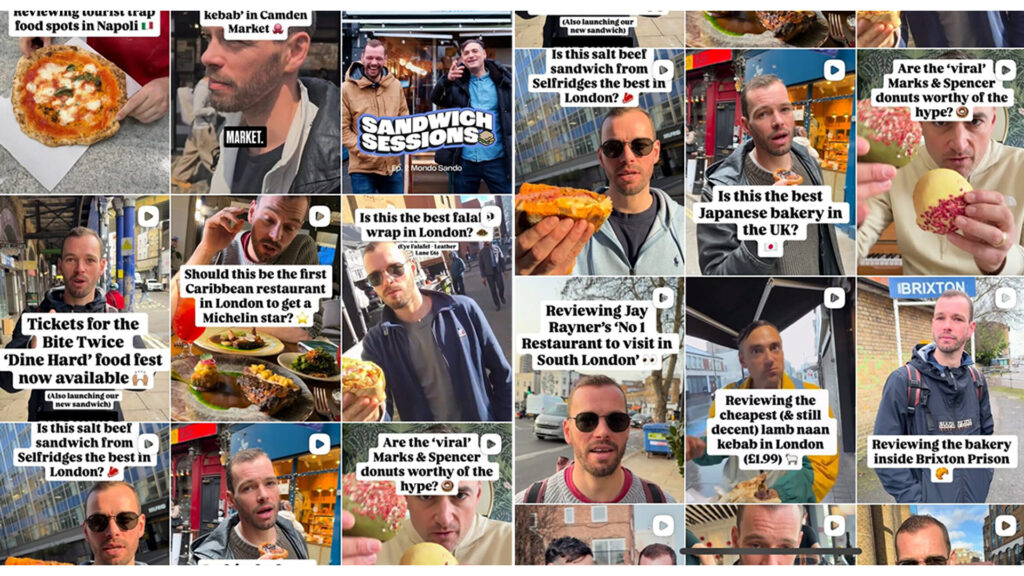
Gerardo from Bite Twice says London’s food scene has become impossible to ignore on price alone.
“The cost of living has skyrocketed and we are very mindful to acknowledge that not everyone can go out and eat at Michelin-star restaurants,” he said.
“Franco Manca is a perfect example. When they were the GOATs, which was 10 years ago now, they’re not anymore. It was £5.20 for a margherita pizza, which was very cheap back then. Now it costs you a tenner.”
And the numbers show people are chasing cheap eats more than ever.
“We went to New York and the content did well, but when we go and do a £2.50 lamb wrap in Tooting that performs better than anything else that we do,” he said.
“When we find cheap pizza, they perform well because people are struggling.
“It is expensive to be out, and it doesn’t seem to be slowing down.”
That is where social media has stepped in. Not just as entertainment, but as a survival guide.
Gerardo says traditional food critics still tend to ignore the sort of spots people can actually afford.
“I tell you who isn’t going to write about it, you’re not going to see The Guardian or The Telegraph,” he joked.
“I think some of the more traditional food writers don’t generally talk about this kind of stuff. So I think social media is the first. Or they’ll only write about it once all the people have talked about it on social media.”
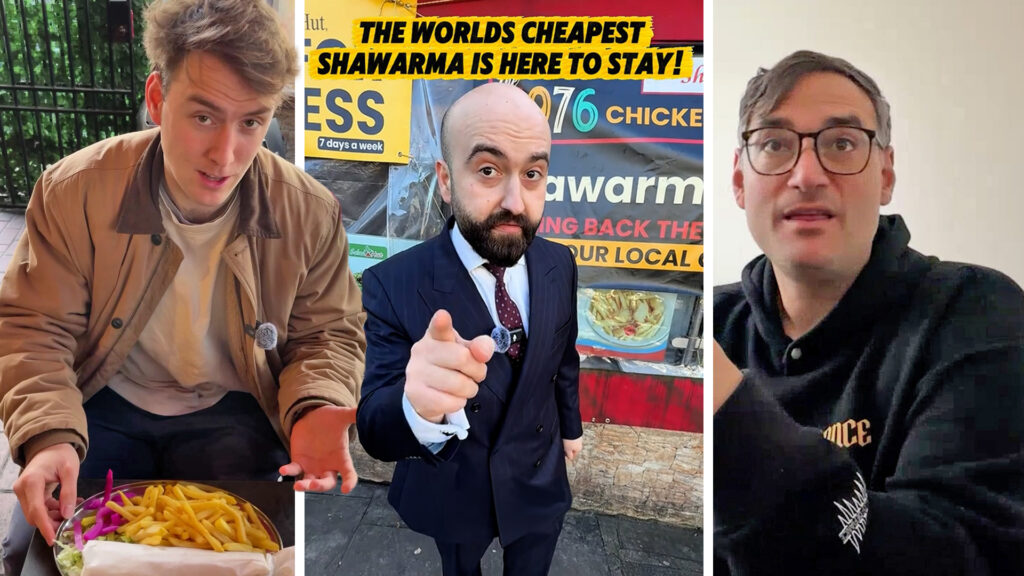
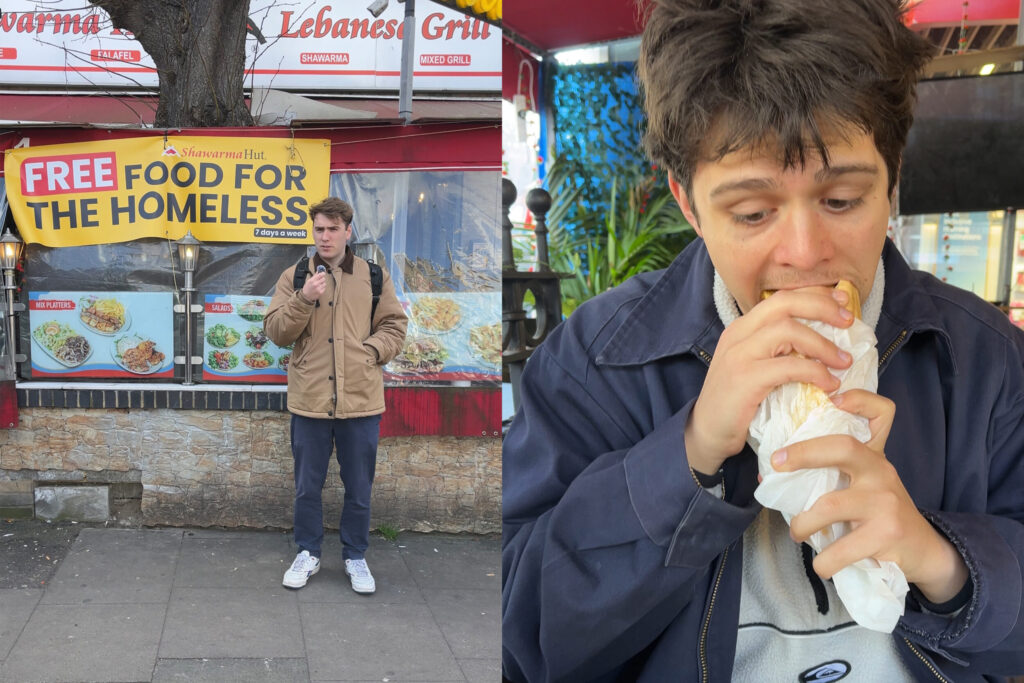
City News went to try Southwark’s viral 5p shawarma to see whether the internet hype was deserved.
Ali, owner of Shawarma Hut, has registered his restaurant as a charitable body and now gives away 200 shawarmas a day for just 5p to people in need.
It is not just cheap. It is also doing something useful.
And that, Gerardo says, is part of the appeal. Influencers are not only pointing people towards good food, but good people too.
“If we can present ways to eat for cheap that are relatively healthy, that aren’t supporting big corporations or feeding into the big corporate machine, people really enjoy that,” he said.
“We’re going to White Men Called Jerk in Peckham. They basically support Peckham Food Bank.
“So if we can offer our platform to spread the word and get people to maybe put some of their money into it, and talk about the amazing things that people are doing, I feel that’s probably better than talking about some big chain.”
So when it comes to finding your next meal, who are you trusting: the guide built for people with expense accounts, or the Londoner on TikTok showing you where to eat well without going broke?
The Michelin man might have the stars. But right now, the algorithm has the appetite.
Submitted Article
Headline
Short Headline
Standfirst
Published Article
HeadlineSkint and scrolling: is social media the new Michelin guide?
Short HeadlineSkint and scrolling: The TikTok Taste Test
StandfirstWith budgets battered and dinner out feeling more like a luxury, cash-strapped Londoners are turning to TikTok and Instagram to find the city’s best bites. But is social media now the poor man’s Michelin Guide?
Where do you go to find a good restaurant these days? Google? A guidebook? Or the glowing rectangle welded to your hand that now does almost everything short of chewing your food for you?
Smartphones have made life faster, lazier and permanently online. Then social media came along and made that dependency even worse. TikTok, X and Instagram are now not just where people waste time, but where they get information too. In fact, more than half of UK adults now get their news from social media.
So it should not be a shock that food influencers are starting to matter more to normal diners than old-school guides like Michelin.
And in London, that matters. Because eating out here is absurdly expensive.
City News Food Critics
A nice meal now feels less like a treat and more like a financial crime. By the time you have paid for starters, mains and a drink, you are halfway to remortgaging your flat for a plate of pasta and a side of regret.
The Michelin guide only sharpens that divide. In London, just six restaurants sit in its cheapest price bracket. Ninety-eight are listed in the top one. Translation: this is not a guide for the masses. It is a guide for people who think a £14 side dish is character building.
So where does that leave everyone else?
Enter the food influencer.
Less silver service, more actual service. Less polished nonsense, more useful recommendations from people who eat like the rest of us.
Gerardo from Bite Twice says London’s food scene has become impossible to ignore on price alone.
“The cost of living has skyrocketed and we are very mindful to acknowledge that not everyone can go out and eat at Michelin-star restaurants,” he said.
“Franco Manca is a perfect example. When they were the GOATs, which was 10 years ago now, they’re not anymore. It was £5.20 for a margherita pizza, which was very cheap back then. Now it costs you a tenner.”
And the numbers show people are chasing cheap eats more than ever.
“We went to New York and the content did well, but when we go and do a £2.50 lamb wrap in Tooting that performs better than anything else that we do,” he said.
“When we find cheap pizza, they perform well because people are struggling.
“It is expensive to be out, and it doesn’t seem to be slowing down.”
That is where social media has stepped in. Not just as entertainment, but as a survival guide.
Gerardo says traditional food critics still tend to ignore the sort of spots people can actually afford.
“I tell you who isn’t going to write about it, you’re not going to see The Guardian or The Telegraph,” he joked.
“I think some of the more traditional food writers don’t generally talk about this kind of stuff. So I think social media is the first. Or they’ll only write about it once all the people have talked about it on social media.”
City News went to try Southwark’s viral 5p shawarma to see whether the internet hype was deserved.
Ali, owner of Shawarma Hut, has registered his restaurant as a charitable body and now gives away 200 shawarmas a day for just 5p to people in need.
It is not just cheap. It is also doing something useful.
And that, Gerardo says, is part of the appeal. Influencers are not only pointing people towards good food, but good people too.
“If we can present ways to eat for cheap that are relatively healthy, that aren’t supporting big corporations or feeding into the big corporate machine, people really enjoy that,” he said.
“We’re going to White Men Called Jerk in Peckham. They basically support Peckham Food Bank.
“So if we can offer our platform to spread the word and get people to maybe put some of their money into it, and talk about the amazing things that people are doing, I feel that’s probably better than talking about some big chain.”
So when it comes to finding your next meal, who are you trusting: the guide built for people with expense accounts, or the Londoner on TikTok showing you where to eat well without going broke?
The Michelin man might have the stars. But right now, the algorithm has the appetite.
A 2024 Freedom of Information request showed Bromley Council had £4.5 million invested in arms companies that year with £1.5 million reportedly linked to Israel.
Undercover officers raided three linked shops in Barking town centre, revealing how illicit tobacco is being hidden in walls, ceilings and nearby locations to evade detection.
More than 330,000 people across the UK sought support from the Stop It Now helpline in 2025 over concerns about their own or someone else’s online sexual behaviour towards children, according to new charity data. The anonymous service says contacts by phone, email and webchat rose significantly over the year.