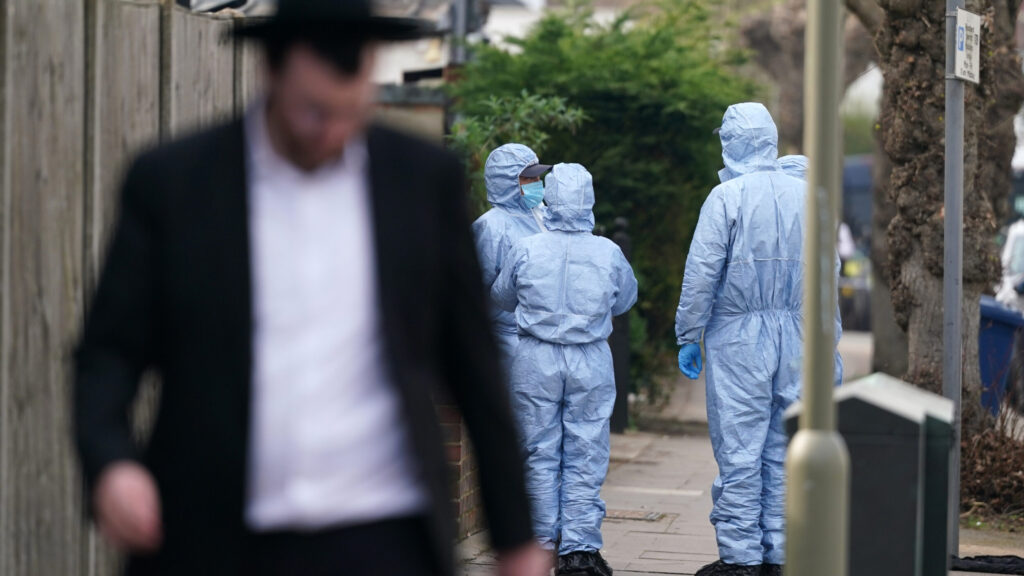
London’s Jewish community told City News anti-semitic comments online about an arson attack in North-west London is normalising hatred in real life. Four ambulances belonging to Jewish charity, Hatzola, were set on fire in Golders Green on Monday. Two men – aged 47 and 45 – arrested on suspicion of arson have been released on bail until April.
Joel Brahams, a student from Jews’ Free School in Harrow, shared how normalised it has become amongst his peers online.
Joel pointed to Instagram Reels as the main platform with antisemitic content. The damage to teenage boys can be lasting, “if you see something a hundred times, you’re going to start to think it’s true.”
A pupil from another school in North-West London, Jake Tash, echoed these thoughts:
“We’re instinctively reaching to take off our kippot, our lanyards, so that we’re not identifiable, so that we can’t be the target of attacks.”
Jake emphasised online news is a “whole different ballpark”, despite witnessing “vile” physical abuse.
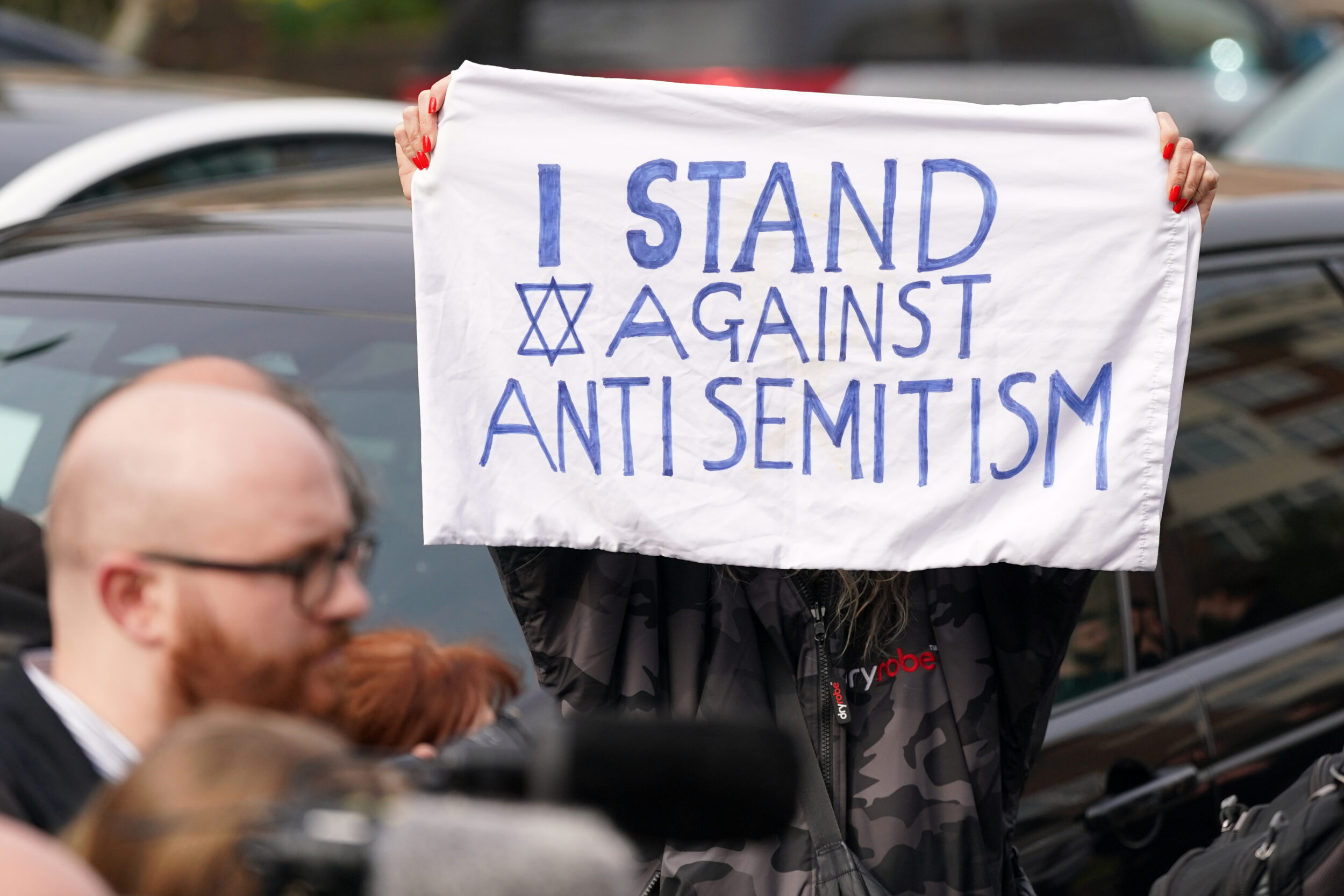
A protester shows a banner at Golders Green in London, Monday, March 23, 2026 after an apparent arson attack on four vehicles belonging to a Jewish ambulance service, Hatzola Northwest, in London.(AP Photo/Alberto Pezzali)
Attacks rose by 4%
In 2025, antisemitic attacks rose by 4% in 2025, the second highest year since the 2023 peak when antisemitism across Britain rocketed to record levels in the wake of the October 7, 2023, attacks by Hamas on Israel. The data comes from the Community Security Trust charity, which has held records on anti-semitic incidents since 1984.
There is no specific data on online anti-semitic attacks.
“The facelessness of it”
A rabbi, from North London, who wishes not to be named because of safety concerns told City News Jews are real victims online.
“I think when your lived experience is as a Jew in this climate, you see that we are real victims and there are real attackers out there.”
She shared concerns of the “psychological damage” online messages are having on her community. Another concern she shared was that non-Jews were exposed to this content, circulating false narratives about the Jewish community.
She blamed the “facelessness” of social media enables people to share hateful messages.
“Since social media started, I think it’s opened up a very ugly side of public discourse that didn’t exist before.”
Passover, an eight-day Jewish festival commemorating, begins on the evening of April 1st. City News asked the rabbi how preparations for the festival have been impacted:
“We should just be feeling joy, but people are also thinking, is there good security outside the synagogue? And do we have our radios fully charged? I’ve even had a congregant ask me if we should arm our synagogue with baseball bat. But that’s the atmosphere of fear that has been created by an act of anti-Semitism like this.”
Submitted Article
Headline
Short Headline
Standfirst
Published Article
Headline‘Faceless’ Online Anti-Semitism Fuels Fear in London Jewish Community After North-West London Arson
Short Headline‘Faceless’ Online Anti-Semitism Fuels Fear in London Jewish Community
StandfirstCity News spoke to a rabbi and members across London’s Jewish community about the impact of rising online abuse.
London’s Jewish community told City News anti-semitic comments online about an arson attack in North-west London is normalising hatred in real life. Four ambulances belonging to Jewish charity, Hatzola, were set on fire in Golders Green on Monday. Two men – aged 47 and 45 – arrested on suspicion of arson have been released on bail until April.
Joel Brahams, a student from Jews’ Free School in Harrow, shared how normalised it has become amongst his peers online.
Joel pointed to Instagram Reels as the main platform with antisemitic content. The damage to teenage boys can be lasting, “if you see something a hundred times, you’re going to start to think it’s true.”
A pupil from another school in North-West London, Jake Tash, echoed these thoughts:
“We’re instinctively reaching to take off our kippot, our lanyards, so that we’re not identifiable, so that we can’t be the target of attacks.”
Jake emphasised online news is a “whole different ballpark”, despite witnessing “vile” physical abuse.
A protester shows a banner at Golders Green in London, Monday, March 23, 2026 after an apparent arson attack on four vehicles belonging to a Jewish ambulance service, Hatzola Northwest, in London.(AP Photo/Alberto Pezzali)
Attacks rose by 4%
In 2025, antisemitic attacks rose by 4% in 2025, the second highest year since the 2023 peak when antisemitism across Britain rocketed to record levels in the wake of the October 7, 2023, attacks by Hamas on Israel. The data comes from the Community Security Trust charity, which has held records on anti-semitic incidents since 1984.
There is no specific data on online anti-semitic attacks.
“The facelessness of it”
A rabbi, from North London, who wishes not to be named because of safety concerns told City News Jews are real victims online.
“I think when your lived experience is as a Jew in this climate, you see that we are real victims and there are real attackers out there.”
She shared concerns of the “psychological damage” online messages are having on her community. Another concern she shared was that non-Jews were exposed to this content, circulating false narratives about the Jewish community.
She blamed the “facelessness” of social media enables people to share hateful messages.
“Since social media started, I think it’s opened up a very ugly side of public discourse that didn’t exist before.”
Passover, an eight-day Jewish festival commemorating, begins on the evening of April 1st. City News asked the rabbi how preparations for the festival have been impacted:
“We should just be feeling joy, but people are also thinking, is there good security outside the synagogue? And do we have our radios fully charged? I’ve even had a congregant ask me if we should arm our synagogue with baseball bat. But that’s the atmosphere of fear that has been created by an act of anti-Semitism like this.”
A 2024 Freedom of Information request showed Bromley Council had £4.5 million invested in arms companies that year with £1.5 million reportedly linked to Israel.
Undercover officers raided three linked shops in Barking town centre, revealing how illicit tobacco is being hidden in walls, ceilings and nearby locations to evade detection.
More than 330,000 people across the UK sought support from the Stop It Now helpline in 2025 over concerns about their own or someone else’s online sexual behaviour towards children, according to new charity data. The anonymous service says contacts by phone, email and webchat rose significantly over the year.