While there has been an upsurge in the coaching, structure and management of football academies, the psychological aid given to youngsters remains far from ideal.
The Premier League Rules of Development allows for each club to register up to 250 youngsters in their academies. But of the players who join at the age of nine, only one per cent will make it to England’s elite league, while an even lesser figure will ever make a living from the game.
That being said, are football academies doing enough to manage expectations, and to prepare young players for alternative careers if they don’t make it? And what are clubs doing to help released players integrate back into the society?
The worrisome deaths of released academy players have led many to place more demands on clubs to provide better wellness programs for players. First, it was Joel Darlington who made the news for sad reasons. The former Manchester United trialist, who was once considered as a footballing prospect committed suicide by hanging himself at his home in North Wales. The 18-year-old had once represented his country at Youth level.
There was also the distressing news of 18-year-old Jeremy Wisten who had a promising career at Manchester City’s academy.
Manchester City have paid tribute to former academy player Jeremy Wisten, who has died aged 17.
➡ https://t.co/Qd6VEhdD7H #ManCity #bbcfootball pic.twitter.com/rMJWk6doAn
— BBC Sport (@BBCSport) October 26, 2020
The teenager, who was born in Malawi, played for City’s elite youth squads after joining the club in 2016 but was released in 2019 after an injury stint. He was found hanged in his bedroom in October last year.
As more cases surface, experts have also called for football administrators to do more to protect the mental health of academy youngsters.
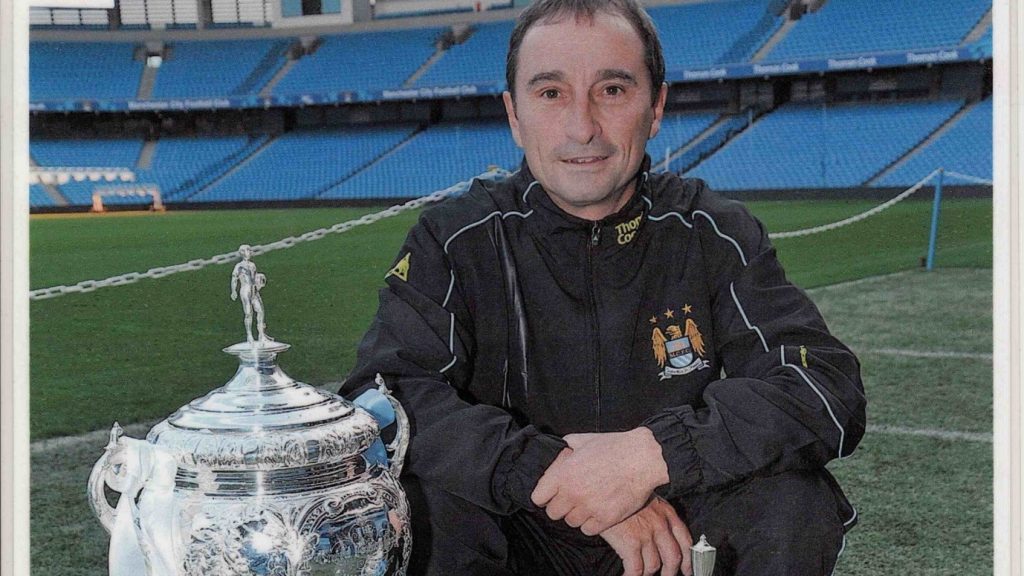
Former Manchester City academy coach and head of education and performance management Pete Lowe says many football academies generally ignored the psychological strain that players face simply because they didn’t believe in it.
“Every day I listened to the news where football is concerned or sport is concerned and something else comes up about a competitor, a performer, having an issue with anxiety and depression after being released from football from one club or another.
“In 2013, a young player took his own life, in 2020 in December at my old club, another young player took his own life, that’s two players too many and that should never happen.
“So even if you didn’t believe in this aspect of mental health or whatever, to find out two players have taken their own lives should make the game that we’re now talking about stand up and take a little bit more notice.”
Pete Lowe’s Career
Pete spent 13 years working within a senior role at Manchester City where he was responsible for a side that produced 39 first team footballers and 25 international players.
The team’s trophy cabinet further attests his success as they won 13 European tournaments, six Divisional Premier League Championships, an U16 Championship World Cup and an FA Youth Cup within a ten-years period.
He says that due to the ever-competitive nature of the sport, more players are getting released but clubs have a duty to help manage expectations and pressure, also adding that clubs must be communicative at each stage of a player’s transitioning.
“Now I know possibly more players are getting released now than they’ve ever been before because clubs sign more players than they’ve ever been allowed before. So therefore, if they can sign more players, it’s likely they’re going to release even more. We know that by the stats.
“So, it’s a question that everybody asks to handle pressure, but a young player that’s 16, 17, 18 years of age is not that good at handling pressure. Normally, you have to teach them how to handle it and do I think the game does that very well? No, I do not, not even remotely very well”
“In terms of the players that get released from the game, the ones that have these problems are the ones that didn’t know that they really weren’t doing that well and all of a sudden it’s dropped on them that they’re no longer wanted (by the club).
“So, if a player thinks about that one day he is wanted at the club and then the next day he’s not wanted, in a young person’s life, that’s a catastrophe that his world has been shattered overnight. All these dreams have been taken away from him and that’s so hard to deal with.”
He added that every staff within an academy setup must have some psychological experience and to be intentional about fostering a better understanding of the players in their care.
“What I mean by that is people that work with young players should understand young players. It’s their responsibility to understand young players, plain and simple. Do I think we could have done better in the past? Yes. Without a question, we got things. When I look back now, I’ll go, you know, I think we got some things wrong.”
“Everybody needs help at some stage. The secret is knowing when, how aware and how to deliver it.”
Pete left his role at City as part of a massive exodus at the club. He currently works as the director of PlayersNet, an independent, not-for-profit organisation that deals with former and current players and volunteers on metal wellness and psychological issues.