Do Pay-As-You-Go E-Bikes Incentivise Dangerous Riding?
As e-bike riders weave through London’s busiest junctions, red lights are increasingly treated as optional. One software engineer says the problem may be baked into how hire firms charge users
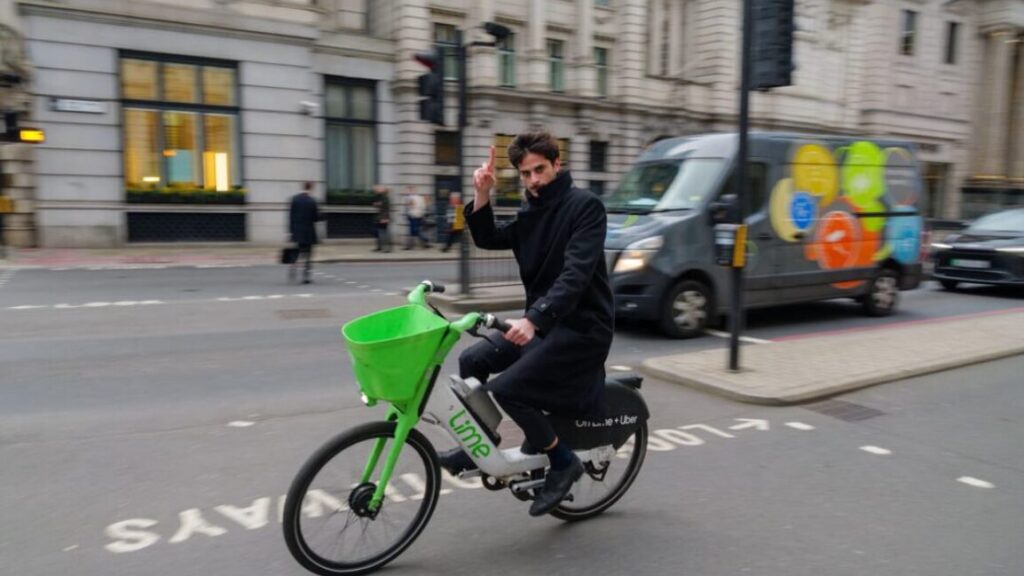
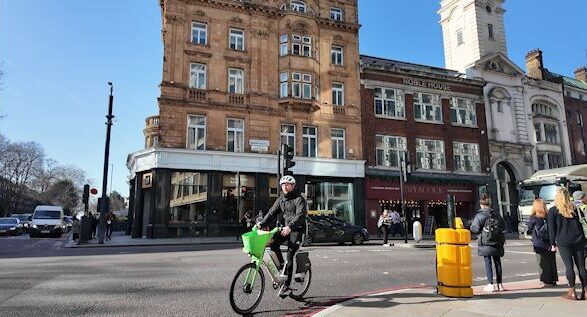
With the pace of London you might rarely stop to notice, but spend a few minutes watching a busy road and you’ll likely see e-bike riders brazenly jumping red lights.
I positioned myself next to the traffic lights at Oxford Street’s main junction – which is also one of London’s busiest pedestrian intersections – and witnessed 12 e-bike users speed through the traffic lights. One nearly every three minutes.
According to Rule 69 of the Highway Code, cyclists must obey all traffic light signals. But reasons for this flouting are varied. Perhaps you are running late for a meeting or a date and fancy your chances. Or, you’re encouraged by the fact that it is a largely unregulated act, unlike for motorists who if caught skipping a red light receive three points on their licence and a £100 fine.
But, one London-based software engineer, had a hunch that it could be explained by something more instinctive: behavioural economics.
After noticing dangerous cycling on his commute to work, Matt Taylor, decided to create an AI model to understand this risky collective mindset. His tool showed that users are driven to break the rules to save money:
“From my experience on hire bikes, if you are just using them on a kind of pay as you go basis, you are sitting at a red light for an average of 90 seconds, and watching 30 pence slip away from you. If you do that four or five times over the course of a journey, which is very common in London, a significant amount of the cost of your journey ends up being you standing still.”
Taylor’s model illustrates that on average, e-bike journeys are becoming between 10-25% more expensive if you decide to obey red lights. Using his model – which utilises OpenStreetMap data – a 20 minute journey from City St George’s Clerkenwell campus to the House of Parliament costs an e-bike user £4.84. You would likely run into 17 different lights and be forced to stop for an average of 6:32 minutes. So, you spend £1.31 – or around a quarter of the total fare – stationary.
Baked into the payment models of popular e-bike companies such as Lime and Forest is what amounts to a “red light tax”. Because riders are charged by the minute rather than by distance, every pause carries a cost. For some, waiting at a red light is therefore, economically irrational.
This sits within a broader conversation around e-bike safety.
Last year, Sadiq Khan criticised London’s e-bike culture as the ‘Wild West’, with the lack of regulation of their use a primary concern. He said: “Regulation has not caught up with the pace of people’s desire to use cycle hire bikes,”.
A recent survey by TFL showed that the number of people being seriously injured while cycling in London is set to reach a new high of about 1,200 a year. A fifth of these injuries happen on hired e-bikes. The proportion of cyclists killed or seriously injured while hiring an e-bike increased from one per cent of all cyclist injuries in 2017 to 17 per cent in May 2025.
It’s thought many factors contribute to these statistics, including the fact that e-bike users often travel without a helmet and the 30 kg weight of the bike themselves, which can make collisions more severe
However, it must also be considered that if riders are being nudged by pricing structures that penalise patience, then the issues becomes structural as well as personal.
Lime and Forest have taken measures to remind users to respect road safety measures. In July 2025, Lime launched a street advertising campaign – ‘Respect the Red’ – to promote safe riding and to stop at red lights. But, Taylor thinks this doesn’t go far enough:
“I’m very interested in the campaign as I didn’t see any of it…I think they need to do much more really if they are going to be good stewards.”
According to Taylor, fixing the problem would be easy given the amount of data e-bike hire companies have: “I don’t think it would be a huge ask to think about allowing people stoppage time.” The question then is less about feasibility and more about responsibility.
*Both Lime and Forest were approached for comment by City News.
Short HeadlineTime Is Money: Do e-bikes incentivise dangerous riding?
StandfirstAs e-bike riders weave through London’s busiest junctions, red lights are increasingly treated as optional. One software engineer says the problem may be baked into how hire firms charge users
With the pace of London you might rarely stop to notice, but spend a few minutes watching a busy road and you’ll likely see e-bike riders brazenly jumping red lights.
I positioned myself next to the traffic lights at Oxford Street’s main junction – which is also one of London’s busiest pedestrian intersections – and witnessed 12 e-bike users speed through the traffic lights. One nearly every three minutes.
According to Rule 69 of the Highway Code, cyclists must obey all traffic light signals. But reasons for this flouting are varied. Perhaps you are running late for a meeting or a date and fancy your chances. Or, you’re encouraged by the fact that it is a largely unregulated act, unlike for motorists who if caught skipping a red light receive three points on their licence and a £100 fine.
But, one London-based software engineer, had a hunch that it could be explained by something more instinctive: behavioural economics.
After noticing dangerous cycling on his commute to work, Matt Taylor, decided to create an AI model to understand this risky collective mindset. His tool showed that users are driven to break the rules to save money:
“From my experience on hire bikes, if you are just using them on a kind of pay as you go basis, you are sitting at a red light for an average of 90 seconds, and watching 30 pence slip away from you. If you do that four or five times over the course of a journey, which is very common in London, a significant amount of the cost of your journey ends up being you standing still.”
Taylor’s model illustrates that on average, e-bike journeys are becoming between 10-25% more expensive if you decide to obey red lights. Using his model – which utilises OpenStreetMap data – a 20 minute journey from City St George’s Clerkenwell campus to the House of Parliament costs an e-bike user £4.84. You would likely run into 17 different lights and be forced to stop for an average of 6:32 minutes. So, you spend £1.31 – or around a quarter of the total fare – stationary.
Baked into the payment models of popular e-bike companies such as Lime and Forest is what amounts to a “red light tax”. Because riders are charged by the minute rather than by distance, every pause carries a cost. For some, waiting at a red light is therefore, economically irrational.
This sits within a broader conversation around e-bike safety.
Last year, Sadiq Khan criticised London’s e-bike culture as the ‘Wild West’, with the lack of regulation of their use a primary concern. He said: “Regulation has not caught up with the pace of people’s desire to use cycle hire bikes,”.
A recent survey by TFL showed that the number of people being seriously injured while cycling in London is set to reach a new high of about 1,200 a year. A fifth of these injuries happen on hired e-bikes. The proportion of cyclists killed or seriously injured while hiring an e-bike increased from one per cent of all cyclist injuries in 2017 to 17 per cent in May 2025.
It’s thought many factors contribute to these statistics, including the fact that e-bike users often travel without a helmet and the 30 kg weight of the bike themselves, which can make collisions more severe
However, it must also be considered that if riders are being nudged by pricing structures that penalise patience, then the issues becomes structural as well as personal.
Lime and Forest have taken measures to remind users to respect road safety measures. In July 2025, Lime launched a street advertising campaign – ‘Respect the Red’ – to promote safe riding and to stop at red lights. But, Taylor thinks this doesn’t go far enough:
“I’m very interested in the campaign as I didn’t see any of it…I think they need to do much more really if they are going to be good stewards.”
According to Taylor, fixing the problem would be easy given the amount of data e-bike hire companies have: “I don’t think it would be a huge ask to think about allowing people stoppage time.” The question then is less about feasibility and more about responsibility.
*Both Lime and Forest were approached for comment by City News.
A 2024 Freedom of Information request showed Bromley Council had £4.5 million invested in arms companies that year with £1.5 million reportedly linked to Israel.
Undercover officers raided three linked shops in Barking town centre, revealing how illicit tobacco is being hidden in walls, ceilings and nearby locations to evade detection.
More than 330,000 people across the UK sought support from the Stop It Now helpline in 2025 over concerns about their own or someone else’s online sexual behaviour towards children, according to new charity data. The anonymous service says contacts by phone, email and webchat rose significantly over the year.