Two Royal Parks will continue with deer culling, despite opposition from animal welfare charities and a London-based petition calling for the practice to be reviewed.
The decision follows Defra’s deer impacts policy statement, published last week. Defra says around a third of England’s woodlands are now being harmed by deer, and that only two of the country’s six deer species are native.
Under wider plans, landowners will be able to apply for licences to cull deer outside the usual season. Defra also says it wants closer collaboration with the venison industry, arguing the meat is a healthy by-product of sustainable woodland and countryside management.
In London, Bushy Park has recently finished a cull that began on 12 January. Culling began in Richmond Park on 1 February.
The petition, which has more than 1,000 signatures, urges the Royal Parks and local authorities to explore “humane, effective alternatives” to killing animals it says “pose no threat to humans or the environment”.
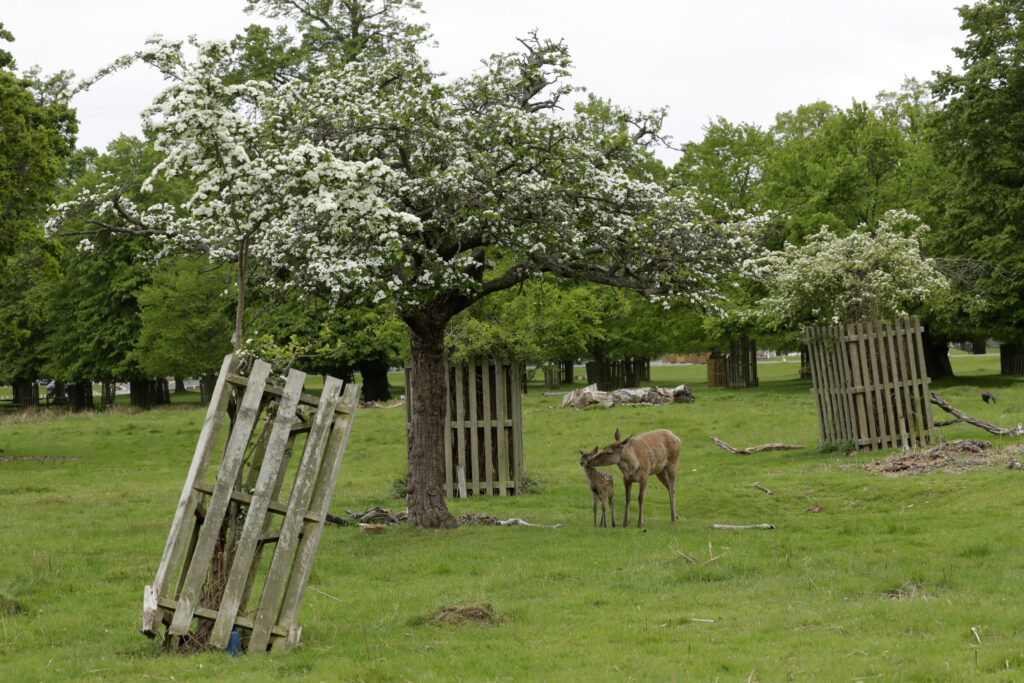
A Red Deer next to a young Hawthorn tree, with its wooden tree guard to protect from deer in Bushy Park, south west London. (AP Photo/Matt Dunham)
Animal welfare groups say there are alternatives to culling deer.
Fleur Disney, from Animal Aid, said: “It really is a case of implementing proper fencing and standards that are deer-proof, essentially.”
She also pointed to other options, including birth control and relocation, and said human behaviour plays a role in attracting wildlife.
“Whether it’s littering, waste management, we’re essentially providing a source of food for rats, pigeons, foxes and then we get upset when they come and eat dinner,” she said.
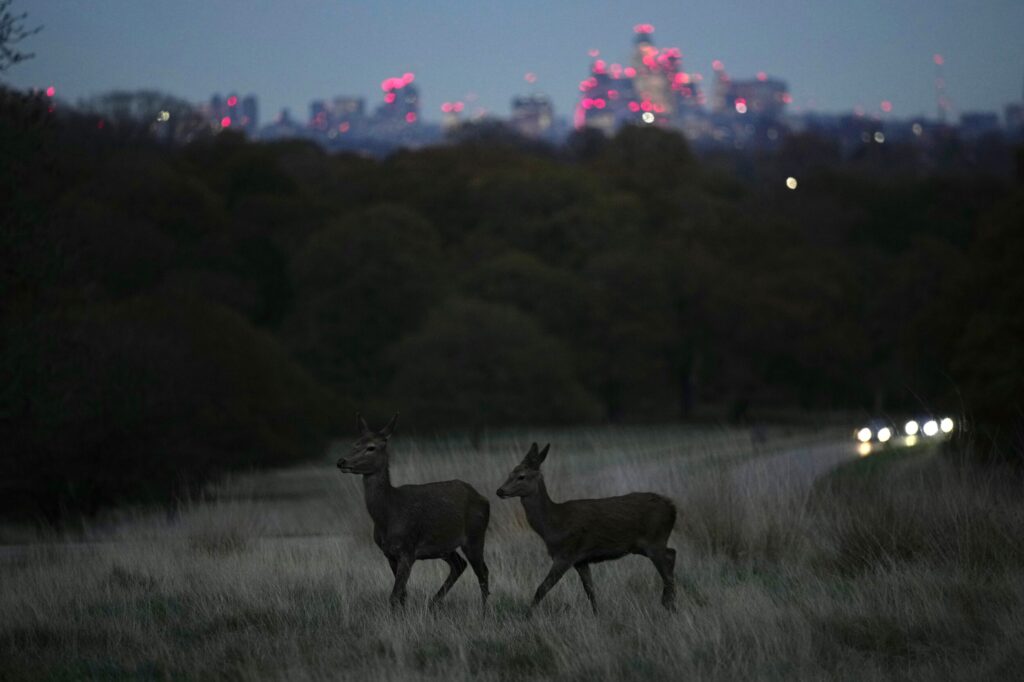
Deer roam in Richmond Park, in London, Wednesday, Nov. 5, 2025. (AP Photo/Kin Cheung)
The Royal Parks says contraception is not currently a workable option. On its website, it says wildlife experts have been monitoring the science and practice of contraception in wild animals for years, but “unfortunately, it is not possible to use this form of management in the parks.”
It said it has no current plans to administer contraceptives to deer, but will “keep abreast of the science”.
Research into public attitudes to deer management found support remained strongest for lethal control. Of around 4,000 people surveyed, 85% said they supported or strongly supported lethal control. Tree guards were backed by 82%, and deer fencing by 69%.
The survey was carried out by the Universities of Bangor, Reading and Southampton, alongside Forest Research, the Woodland Trust and the Game and Wildlife Conservation Trust.
Submitted Article
Headline
Short Headline
Standfirst
Published Article
HeadlineDeer Culling Continues in London Parks Despite Calls for a Rethink
Short HeadlinePetition Calls for an End to Deer Culling Practices in London
StandfirstAnimal rights charities and a London petition want Royal Parks to reconsider culling.
Two Royal Parks will continue with deer culling, despite opposition from animal welfare charities and a London-based petition calling for the practice to be reviewed.
The decision follows Defra’s deer impacts policy statement, published last week. Defra says around a third of England’s woodlands are now being harmed by deer, and that only two of the country’s six deer species are native.
Under wider plans, landowners will be able to apply for licences to cull deer outside the usual season. Defra also says it wants closer collaboration with the venison industry, arguing the meat is a healthy by-product of sustainable woodland and countryside management.
In London, Bushy Park has recently finished a cull that began on 12 January. Culling began in Richmond Park on 1 February.
The petition, which has more than 1,000 signatures, urges the Royal Parks and local authorities to explore “humane, effective alternatives” to killing animals it says “pose no threat to humans or the environment”.
A Red Deer next to a young Hawthorn tree, with its wooden tree guard to protect from deer in Bushy Park, south west London. (AP Photo/Matt Dunham)
Animal welfare groups say there are alternatives to culling deer.
Fleur Disney, from Animal Aid, said: “It really is a case of implementing proper fencing and standards that are deer-proof, essentially.”
She also pointed to other options, including birth control and relocation, and said human behaviour plays a role in attracting wildlife.
“Whether it’s littering, waste management, we’re essentially providing a source of food for rats, pigeons, foxes and then we get upset when they come and eat dinner,” she said.
Deer roam in Richmond Park, in London, Wednesday, Nov. 5, 2025. (AP Photo/Kin Cheung)
The Royal Parks says contraception is not currently a workable option. On its website, it says wildlife experts have been monitoring the science and practice of contraception in wild animals for years, but “unfortunately, it is not possible to use this form of management in the parks.”
It said it has no current plans to administer contraceptives to deer, but will “keep abreast of the science”.
Research into public attitudes to deer management found support remained strongest for lethal control. Of around 4,000 people surveyed, 85% said they supported or strongly supported lethal control. Tree guards were backed by 82%, and deer fencing by 69%.
The survey was carried out by the Universities of Bangor, Reading and Southampton, alongside Forest Research, the Woodland Trust and the Game and Wildlife Conservation Trust.
As the weather turns, City News has spoken to a long-term rough sleeper to see how those on the street feel about Andy Burnham’s plan to end homelessness and the upcoming winter.