Sanremo is back: Eurovision energy meets Italian music glam
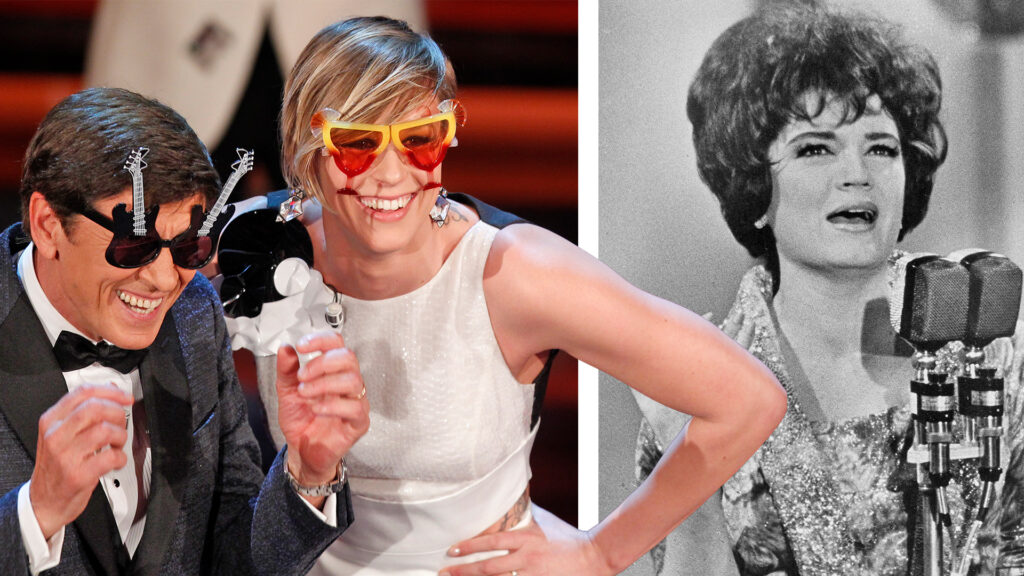
Sanremo is back! Italy’s five-night song contest where new and famous artists debut original tracks, mixing Eurovision-style drama with red-carpet glam
Are you a fan of Eurovision? Its roots trace back to Italy’s Sanremo Music Festival, launched in 1951 to showcase new Italian songs.
The Eurovision Song Contest followed in 1956, with the EBU openly crediting Sanremo as a key inspiration. So, yes: you can blame Italy for the format.
What you need to know
It’s often called Italy’s music “Holy Week”, and it does not do subtle. The show runs across five nights, typically Tuesday to Saturday, with the country’s attention fixed on Sanremo’s Ariston Theatre.
And at the end, someone leaves holding the Leone d’Oro
Romantic dates? They can wait until next Sunday. Business dinners? Let’s be honest, nobody plans them during those five holy days.
Sanremo is more than a music contest. It’s a national, socio-cultural event: nostalgia and modern pop in the same room, families parked in front of the TV, and a yearly ritual that still feels oddly communal. For a lot of Italians it’s where careers take off, where you hear the next big Italian hits first, and where the variety-show chaos is half the point.
To give you a sense of the scale, the final night in 2023 drew about 12.3 million viewers and a 66% audience share.
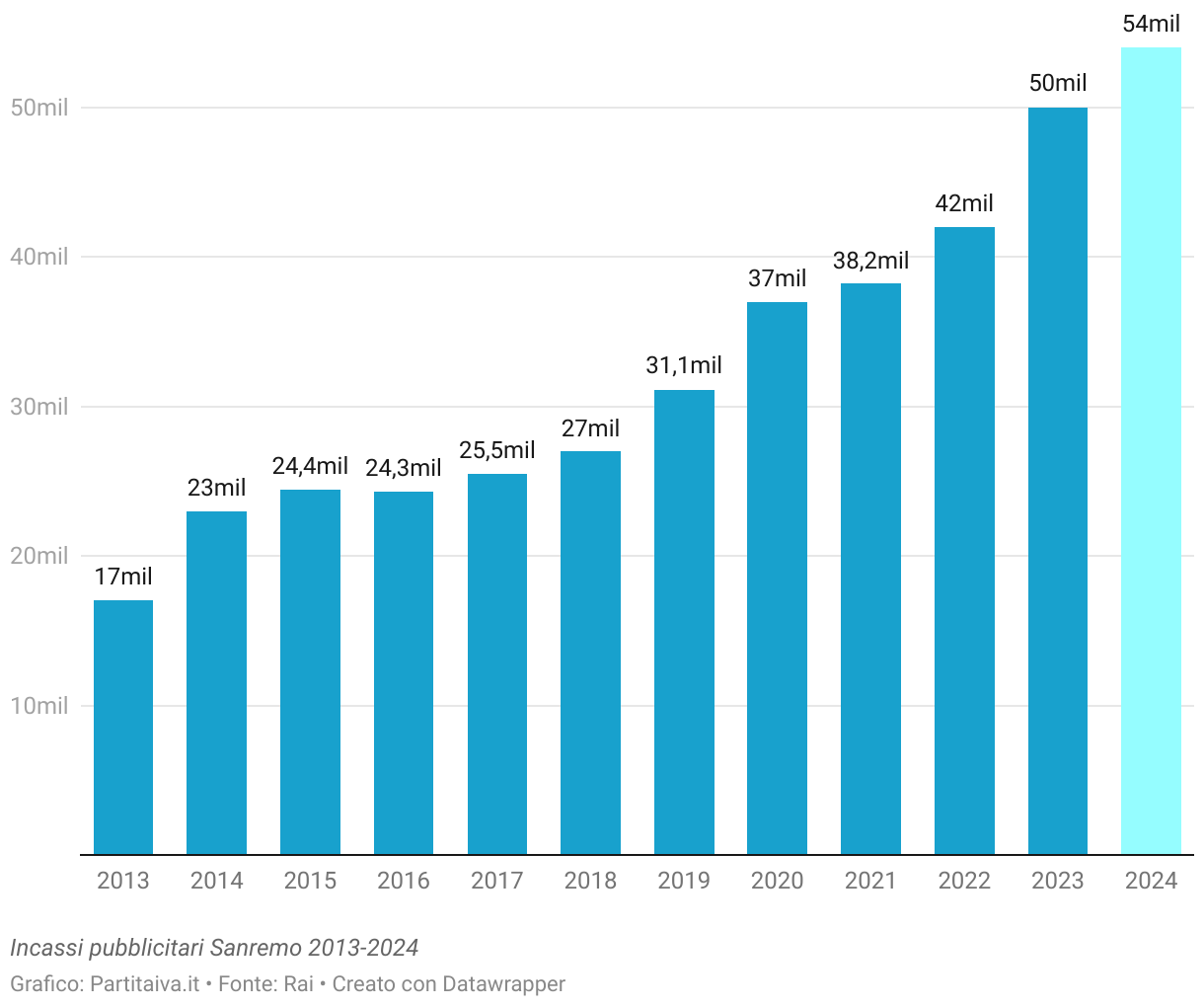
And yes, the money follows. Brands fight to get in. Publicly reported estimates put RAI’s Sanremo-week advertising revenues at around €50 million, with dozens of brands investing in airtime and sponsorship around the event.
Sanremo’s advertising revenue between 2013 and 2024 (Partitaiva.it)
Why is it so attractive?
Sanremo is so attractive to brands because it combines scale with obsession: millions of people watching prime-time TV every night, a week of memes and nonstop online chatter, and an audience that is emotionally invested rather than half-asleep. It reaches across generations, too, from younger viewers to families and older Italians, which is increasingly rare in fragmented media.
And because the festival is such an iconic stage, simply being there carries a premium signal of status, credibility and cultural relevance.
Official logo of Sanremo 2026
So why should you bother tuning into an Italian music festival? Because it’s basically Eurovision’s cooler older sibling, the place where a lot of the drama DNA was stress-tested before it went international.
The vocals are properly live, the orchestra is real, the stakes feel oddly personal, and Italians treat it with the seriousness of a national exam. Add in five nights of pop culture chaos, fashion moments, unpredictable speeches and meme fuel, plus the fact you’ll hear Italy’s biggest hits before they clog up the charts for months, and it starts to make sense.
It’s less novelty, more emotion, slick staging and Mediterranean glamour. If you like Eurovision but wish it came with more intensity, more fashion and more passionate debate, Sanremo is mot definitely your next obsession.
HeadlineSanremo is back: Eurovision energy meets Italian music glam
Short HeadlineItaly’s Sanremo: Eurovision’s older, louder sibling
StandfirstSanremo is back! Italy’s five-night song contest where new and famous artists debut original tracks, mixing Eurovision-style drama with red-carpet glam
Are you a fan of Eurovision? Its roots trace back to Italy’s Sanremo Music Festival, launched in 1951 to showcase new Italian songs.
The Eurovision Song Contest followed in 1956, with the EBU openly crediting Sanremo as a key inspiration. So, yes: you can blame Italy for the format.
What you need to know
It’s often called Italy’s music “Holy Week”, and it does not do subtle. The show runs across five nights, typically Tuesday to Saturday, with the country’s attention fixed on Sanremo’s Ariston Theatre.
And at the end, someone leaves holding the Leone d’Oro
Romantic dates? They can wait until next Sunday. Business dinners? Let’s be honest, nobody plans them during those five holy days.
Sanremo is more than a music contest. It’s a national, socio-cultural event: nostalgia and modern pop in the same room, families parked in front of the TV, and a yearly ritual that still feels oddly communal. For a lot of Italians it’s where careers take off, where you hear the next big Italian hits first, and where the variety-show chaos is half the point.
To give you a sense of the scale, the final night in 2023 drew about 12.3 million viewers and a 66% audience share.
And yes, the money follows. Brands fight to get in. Publicly reported estimates put RAI’s Sanremo-week advertising revenues at around €50 million, with dozens of brands investing in airtime and sponsorship around the event.
Sanremo’s advertising revenue between 2013 and 2024 (Partitaiva.it)
Why is it so attractive?
Sanremo is so attractive to brands because it combines scale with obsession: millions of people watching prime-time TV every night, a week of memes and nonstop online chatter, and an audience that is emotionally invested rather than half-asleep. It reaches across generations, too, from younger viewers to families and older Italians, which is increasingly rare in fragmented media.
And because the festival is such an iconic stage, simply being there carries a premium signal of status, credibility and cultural relevance.
Official logo of Sanremo 2026
So why should you bother tuning into an Italian music festival? Because it’s basically Eurovision’s cooler older sibling, the place where a lot of the drama DNA was stress-tested before it went international.
The vocals are properly live, the orchestra is real, the stakes feel oddly personal, and Italians treat it with the seriousness of a national exam. Add in five nights of pop culture chaos, fashion moments, unpredictable speeches and meme fuel, plus the fact you’ll hear Italy’s biggest hits before they clog up the charts for months, and it starts to make sense.
It’s less novelty, more emotion, slick staging and Mediterranean glamour. If you like Eurovision but wish it came with more intensity, more fashion and more passionate debate, Sanremo is mot definitely your next obsession.
A 2024 Freedom of Information request showed Bromley Council had £4.5 million invested in arms companies that year with £1.5 million reportedly linked to Israel.
Undercover officers raided three linked shops in Barking town centre, revealing how illicit tobacco is being hidden in walls, ceilings and nearby locations to evade detection.
More than 330,000 people across the UK sought support from the Stop It Now helpline in 2025 over concerns about their own or someone else’s online sexual behaviour towards children, according to new charity data. The anonymous service says contacts by phone, email and webchat rose significantly over the year.