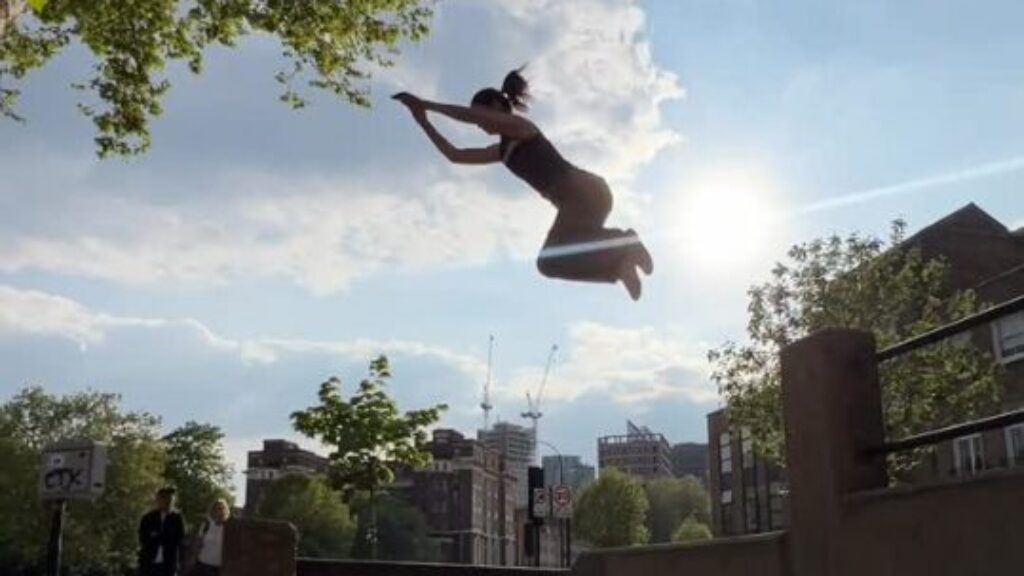
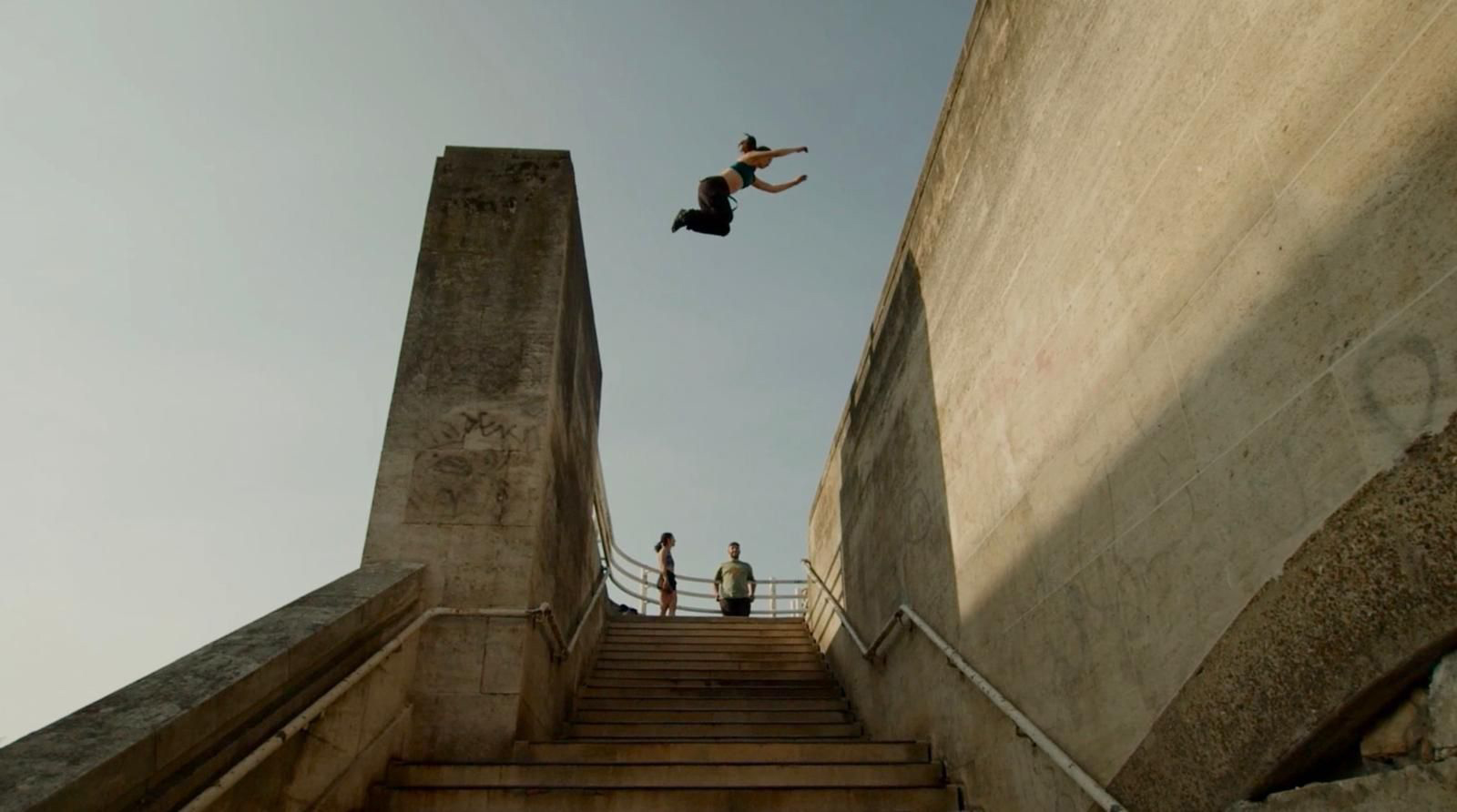
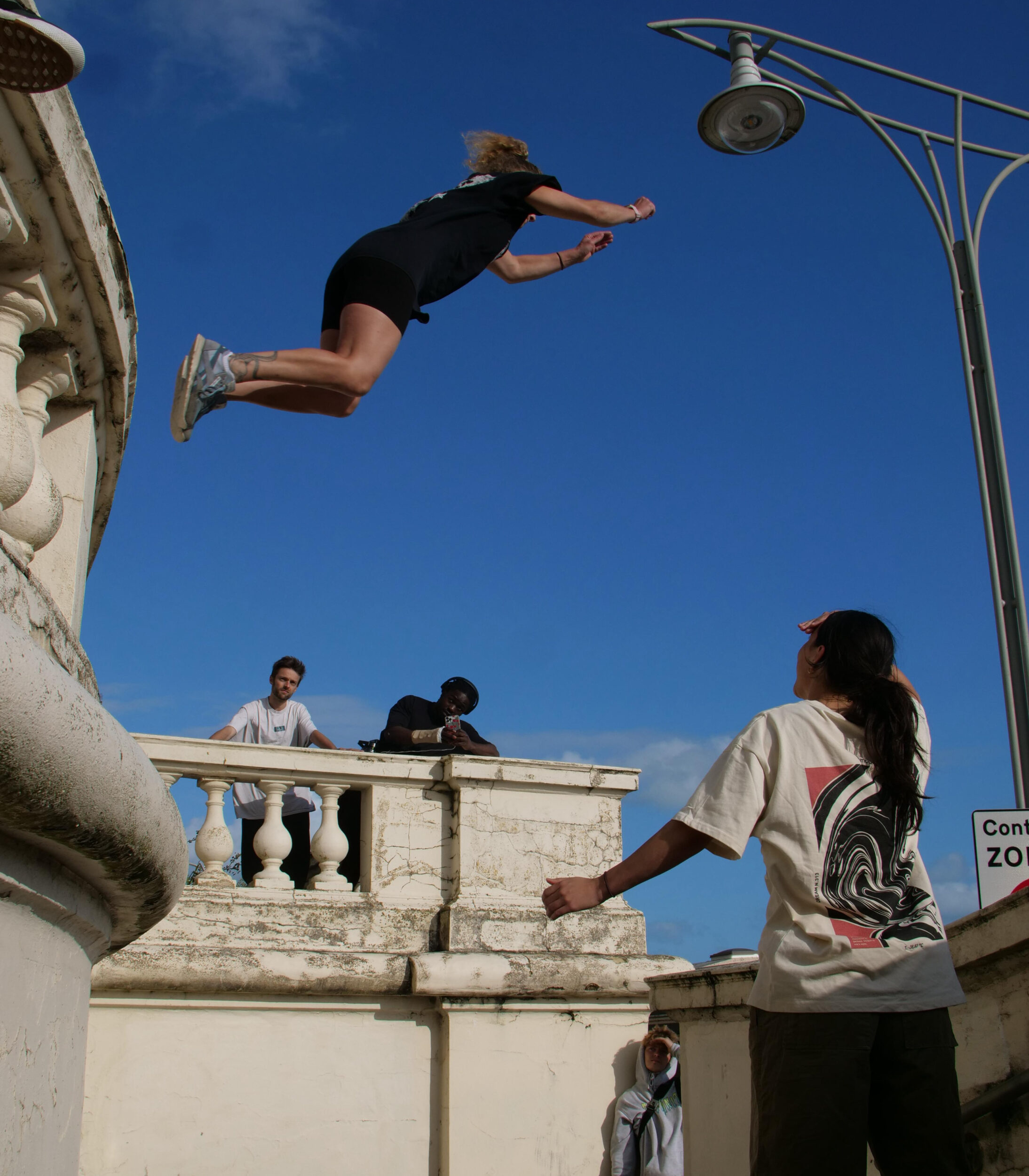
A London-based, all-female parkour group is creating women-only training opportunities across the capital, as athletes challenge assumptions about who can take up space in public sport. FemGaps, formed in 2024, brings women together to train in visible city environments – from parks to underpasses – building confidence and community in a discipline still largely dominated by men.
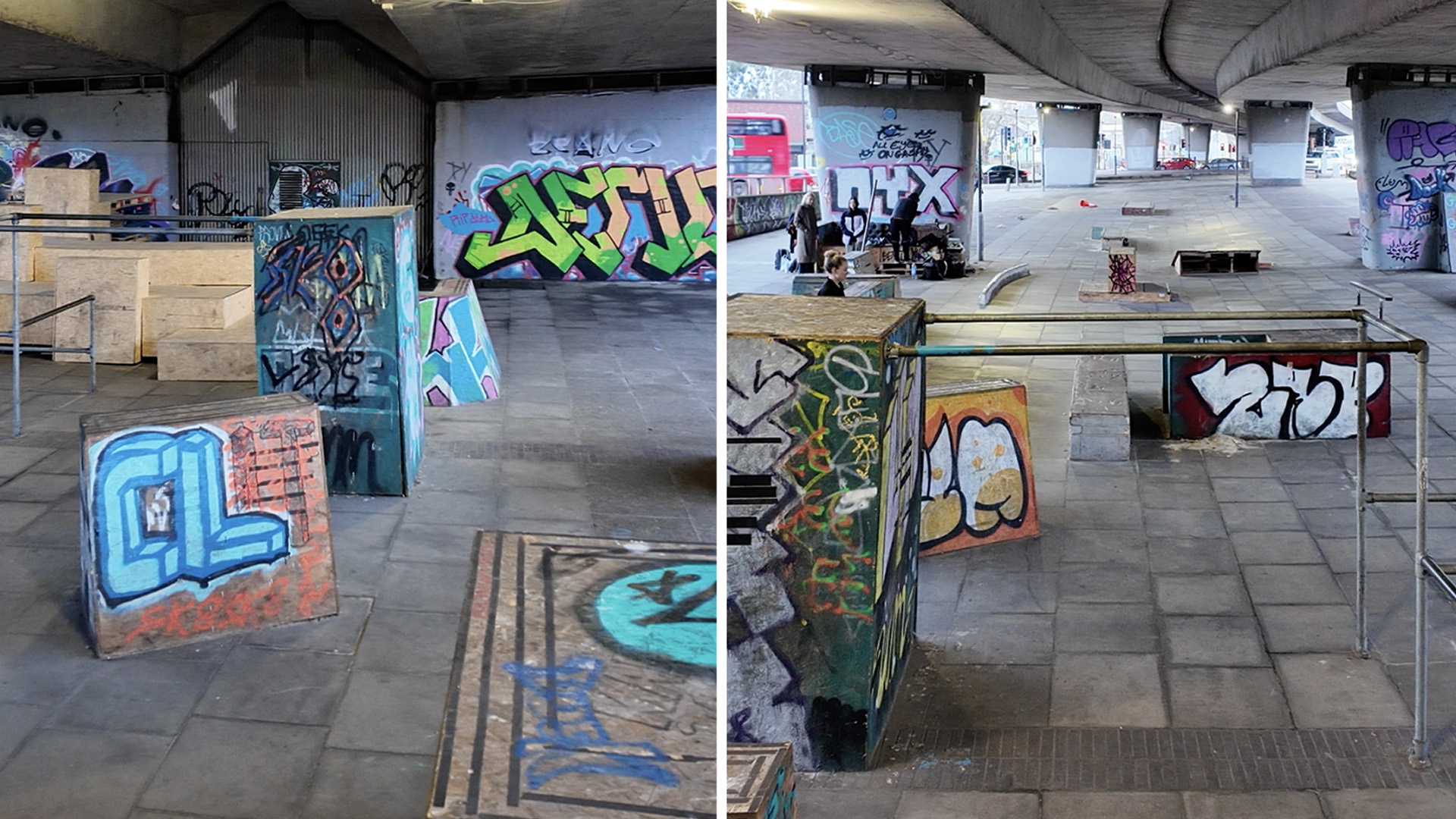
Under a motorway bridge in East London, a heavily graffitied underpass has become home to London’s fast-growing parkour community.
This is one of those communities that you wouldn’t know – or might pretend not to notice – existed from afar; one of those communities that I’d be likely to take a wide berth around when walking by.
But if you stop to watch, you discover there really is nothing to be intimidated by – just a group of likeminded people practising a sport they love.
Yard, East London
FemGaps is an all-female parkour group who come to Yard to train every Sunday afternoon. Flora, Isabel, Tanmaya, Georgia, Georgia, Shannon and Shannon formed FemGaps in the summer of 2024, carving out a rare women-only space in a typically male-coded sport.
In 2017, the UK became the first country to officially recognise parkour as a sport, but female-led groups, let alone female participation in the sport, remain rare.
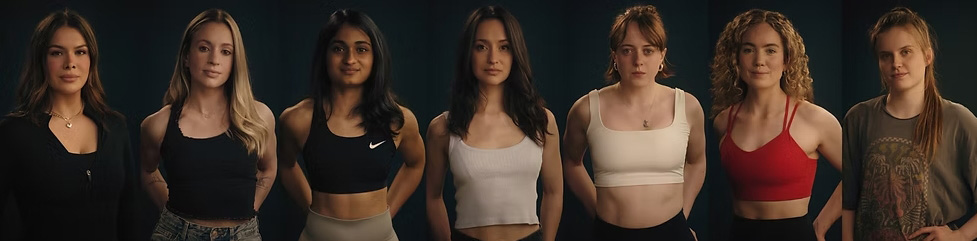
Left to right: Shannon Yassir, Flora Labedens, Tanmaya Agnihotri, Isabel Salazar, Georgia Duthie, Georgia Donati Clarke, and Shannon Martin.
Georgia Donati Clarke, 31, is an English-Italian parkour strength coach. She had been practising parkour for almost 15 years when she co-founded FemGaps.
The draw for Georgia was that “you don’t see women training, you don’t see women jumping off roofs, you don’t see many projects that are female led, and we know this can only be a good thing for the sport”.
Georgia Donati Clarke
For Georgia, one of the attractions of parkour is training in the outdoors, without the confines of purpose-built gym equipment, but still she prefers to train in spots that are “more quiet and private, on a nice Sunday morning, with some sturdy walls that no one really cares about anymore”.
She explained how over the years she’s got better at blocking people out but, when passers-by do react, it’s mostly negative – and mostly men.
“The negative interactions are either people yelling at us ‘you can’t jump there, you need to leave’, or they call the police, but that’s the worst thing they can do because it’s a complete waste of time.”
Georgia told me about a time that an onlooker called ‘999’ and lied to the police, saying that they group were jumping on cars and private property, to make them come out.
“The other thing [men] say to me, as a woman, is ‘come on, you can do it’, and it can be quite unpleasant and patronising – the way they say it. I think they were drunk, but they were making fun of what we were doing.”
FemGaps co-founder, Isabel Salazar’s love for parkour grew from her childhood fascination with French action films, although it took her a year to try the sport for herself because she thought it was only “big, buff criminals”, like in the films she had seen, who did it. In reality, when she turned up to training, “they were all normal and had pretty, colourful tracksuits on.” Now, 10 years later, she lives in London as an actress and stunt performer.
As the group’s skillset broadened and confidence increased, performing bigger stunts and jumping from higher planes, Isabel said that they only attracted more and more attention, both positive and negative.
“It’s always the way on social media when women do something that requires strength and bravery or power – [reactions] can go either way, like ‘that’s cool’ or ‘you’re doing it wrong, you’re being silly’.
I got so many comments on a viral video of me doing a roof jump saying, ‘I could do that easily’ or ‘you’re being so dumb, risking your life’ – mostly from men, [but also from] some women as well.”
Isabel Salazar
The group understand that what they do is something a lot of people consider abnormal or even frightening.
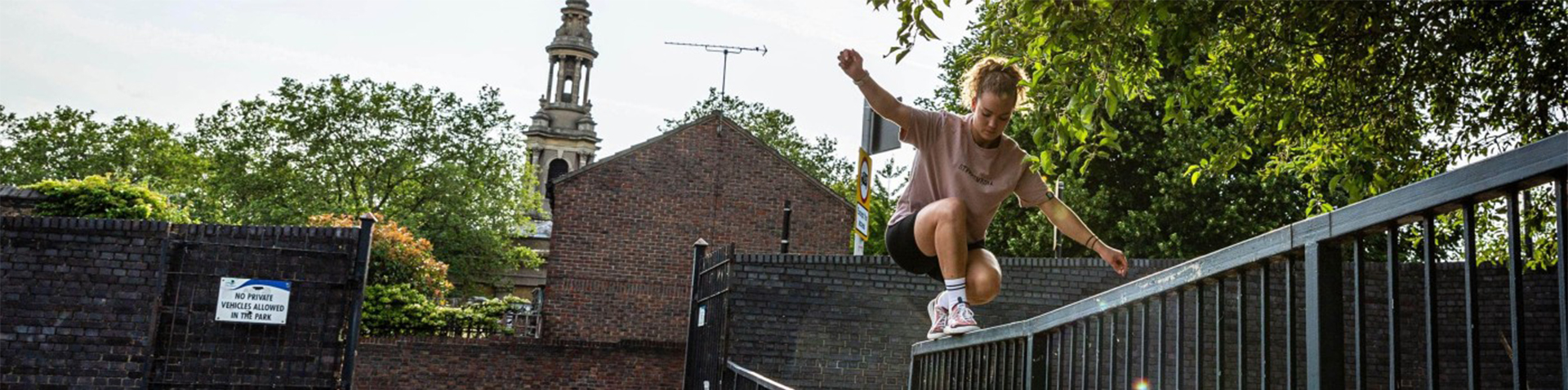
Georgia explained: “I try, when someone walks by, to smile because I realise we look intimidating – dressed in black, jumping on walls – also, because its different.”
The women of FemGaps understand that doing a sport – doing anything – so blatantly in the public eye is going to invite commentary, criticism and unsolicited advice. Their response: “so what?”.
Georgia Donati Clarke and Isabel Salazar
Having received an overwhelming response to their Instagram page from a female parkour community they didn’t even know existed, the group are hosting their first event in London in May, hoping to attract athletes from across the world. Recognising the uniqueness of women-only spaces in their sport, Georgia said the group decided to keep this event women-only “because it can get very busy very quickly and, in that scenario, the first people to take a step back and give space are women”.
Despite public reception being part and parcel doing parkour, carving out women-only spaces has become the cornerstone of FemGaps. Their story is about visibility and control: about making sure women feel that they can take up space, fail in public, and progress without fear of being watched, judged, chatted up, or policed.
Parkour isn’t behind a paywall door – it is in parks, streets, public squares, on roof tops. That’s the point.
Submitted Article
Headline
Short Headline
Standfirst
Published Article
HeadlineWomen-Only Parkour Group Reclaim the Narrative of Parkour in London
Short HeadlineWomen-Only Parkour Group Take To London Streets
StandfirstAs women continue to face scrutiny in public spaces, one London parkour group is using those same streets to build confidence and community.
A London-based, all-female parkour group is creating women-only training opportunities across the capital, as athletes challenge assumptions about who can take up space in public sport. FemGaps, formed in 2024, brings women together to train in visible city environments – from parks to underpasses – building confidence and community in a discipline still largely dominated by men.
Under a motorway bridge in East London, a heavily graffitied underpass has become home to London’s fast-growing parkour community.
This is one of those communities that you wouldn’t know – or might pretend not to notice – existed from afar; one of those communities that I’d be likely to take a wide berth around when walking by.
But if you stop to watch, you discover there really is nothing to be intimidated by – just a group of likeminded people practising a sport they love.
Yard, East London
FemGaps is an all-female parkour group who come to Yard to train every Sunday afternoon. Flora, Isabel, Tanmaya, Georgia, Georgia, Shannon and Shannon formed FemGaps in the summer of 2024, carving out a rare women-only space in a typically male-coded sport.
In 2017, the UK became the first country to officially recognise parkour as a sport, but female-led groups, let alone female participation in the sport, remain rare.
Left to right: Shannon Yassir, Flora Labedens, Tanmaya Agnihotri, Isabel Salazar, Georgia Duthie, Georgia Donati Clarke, and Shannon Martin.
Georgia Donati Clarke, 31, is an English-Italian parkour strength coach. She had been practising parkour for almost 15 years when she co-founded FemGaps.
The draw for Georgia was that “you don’t see women training, you don’t see women jumping off roofs, you don’t see many projects that are female led, and we know this can only be a good thing for the sport”.
Georgia Donati Clarke
For Georgia, one of the attractions of parkour is training in the outdoors, without the confines of purpose-built gym equipment, but still she prefers to train in spots that are “more quiet and private, on a nice Sunday morning, with some sturdy walls that no one really cares about anymore”.
She explained how over the years she’s got better at blocking people out but, when passers-by do react, it’s mostly negative – and mostly men.
“The negative interactions are either people yelling at us ‘you can’t jump there, you need to leave’, or they call the police, but that’s the worst thing they can do because it’s a complete waste of time.”
Georgia told me about a time that an onlooker called ‘999’ and lied to the police, saying that they group were jumping on cars and private property, to make them come out.
“The other thing [men] say to me, as a woman, is ‘come on, you can do it’, and it can be quite unpleasant and patronising – the way they say it. I think they were drunk, but they were making fun of what we were doing.”
FemGaps co-founder, Isabel Salazar’s love for parkour grew from her childhood fascination with French action films, although it took her a year to try the sport for herself because she thought it was only “big, buff criminals”, like in the films she had seen, who did it. In reality, when she turned up to training, “they were all normal and had pretty, colourful tracksuits on.” Now, 10 years later, she lives in London as an actress and stunt performer.
As the group’s skillset broadened and confidence increased, performing bigger stunts and jumping from higher planes, Isabel said that they only attracted more and more attention, both positive and negative.
“It’s always the way on social media when women do something that requires strength and bravery or power – [reactions] can go either way, like ‘that’s cool’ or ‘you’re doing it wrong, you’re being silly’.
I got so many comments on a viral video of me doing a roof jump saying, ‘I could do that easily’ or ‘you’re being so dumb, risking your life’ – mostly from men, [but also from] some women as well.”
Isabel Salazar
The group understand that what they do is something a lot of people consider abnormal or even frightening.
Georgia explained: “I try, when someone walks by, to smile because I realise we look intimidating – dressed in black, jumping on walls – also, because its different.”
The women of FemGaps understand that doing a sport – doing anything – so blatantly in the public eye is going to invite commentary, criticism and unsolicited advice. Their response: “so what?”.
Georgia Donati Clarke and Isabel Salazar
Having received an overwhelming response to their Instagram page from a female parkour community they didn’t even know existed, the group are hosting their first event in London in May, hoping to attract athletes from across the world. Recognising the uniqueness of women-only spaces in their sport, Georgia said the group decided to keep this event women-only “because it can get very busy very quickly and, in that scenario, the first people to take a step back and give space are women”.
Despite public reception being part and parcel doing parkour, carving out women-only spaces has become the cornerstone of FemGaps. Their story is about visibility and control: about making sure women feel that they can take up space, fail in public, and progress without fear of being watched, judged, chatted up, or policed.
Parkour isn’t behind a paywall door – it is in parks, streets, public squares, on roof tops. That’s the point.
A 2024 Freedom of Information request showed Bromley Council had £4.5 million invested in arms companies that year with £1.5 million reportedly linked to Israel.
Undercover officers raided three linked shops in Barking town centre, revealing how illicit tobacco is being hidden in walls, ceilings and nearby locations to evade detection.
More than 330,000 people across the UK sought support from the Stop It Now helpline in 2025 over concerns about their own or someone else’s online sexual behaviour towards children, according to new charity data. The anonymous service says contacts by phone, email and webchat rose significantly over the year.