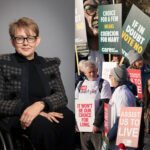
Disability, Livelihood and Employment is the theme for this month’s Disability History Month.
SHARE:
Disability, Livelihood and Employment is the theme for this month’s Disability History Month. It runs from 14th November to 20th December 2024.
Why is there a Disability History Month?
According to disability charity Mencap, Disability History Month is a chance for disabled people “to talk about disability history and to celebrate the changes” that have been made in the UK to be more inclusive. Mobility In Motion say “disabled people have experienced a long history of being ostracised, marginalised and dismissed” so Disability History Month could be a way to push against this.
For many people that are part of the disabled community, Disability History Month is important for educational purposes, disability awareness, and for helping remove stigma around disability, while also looking back at how far we have come in breaking down barriers and overcoming ableism.
For example, the concept of a ‘disabled person’ wasn’t legally acknowledged until the 1940s, The Disability Discrimination Act of 1995 was the first act that protected people with disabilities from discrimination in public spaces. And today, we even have John McFall who is on track to become the world’s first disabled astronaut.
But for some, disability equity still needs to go further.
Katouche Goll often speaks out about how her identity affects her everyday life when navigating her way around London. She is a black, disabled content creator. She is from Canada Water.
“There’s so many barriers disabled people face when it comes to employment…attitudinal barriers, where people have a preconceived idea of what disabled people can do. That can cause a problem because even if you get through the door, you still have to prove your humanity.”
She then explains some of the practical problems she faces, such as lifts at London Tube stations being broken, or how she often has to get off at a wrong stop because a member of staff isn’t there to assist her off. She says that disabled people often have to depend on non-disabled people’s discretion, and that sometimes you can be forced to work from home.
“If you’re always forced to work from home, it can definitely impede career progression, you’re not able to be visible and in the spaces that can afford you employment…accessing job interviews, networking events can be challenging. Especially in London, there’s a lot of rigor, everybody goes into the rat-race but what happens when you’re left behind?”.
She says disabled people have an invaluable skill set, “because we are able to think outside the box due to all the problem solving we do”. However, she thinks that others can view disabled people as a drain on resources, and that the support we need is still seen as a luxury and not a right.
City News then spoke to Rachel Charlton-Dailey about how she felt about the topic of livelihood and employment. She is a disability columnist and activist.
More than anything, disabled people more than anything need to be seen as human, we’re either this huge inspiration or we’re subhuman who are faking everything
Rachel Charlton-Dailey, Disability Activist
Rachel implies that livelihood isn’t just about work productivity.
“The main changes for disabled people is how society views us, there needs to be less pressure for us to constantly be working; less pressure to perform in a certain way. Disabled people have been targeted by the media and the government for so long, we need a whole reset to be honest. More than anything, disabled people more than anything need to be seen as human, we’re either this huge inspiration or we’re subhuman who are faking everything”.
City News also contacted Richard Rieser at Disability History Month Organisation said “disabled people with a wide range of physical and mental impairments, throughout history, have always worked when possible. However, negative attitudes and lack of flexibility has at times prevented this. Only 4.8% of this group under 30 years are in employment.”
While Disability History Month represents progress, it seems that in reality, equity for disabled people still has a way to go.
Submitted Article
Headline
Short Headline
Standfirst
Published Article
HeadlineDisability History Month: ‘Others view disabled people as a drain on resources’
Short Headline'Disabled people a drain on resources'
StandfirstCity News spoke to disabled creatives about how they felt about the theme of Disability History Month
Disability, Livelihood and Employment is the theme for this month’s Disability History Month. It runs from 14th November to 20th December 2024.
Why is there a Disability History Month?
According to disability charity Mencap, Disability History Month is a chance for disabled people “to talk about disability history and to celebrate the changes” that have been made in the UK to be more inclusive. Mobility In Motion say “disabled people have experienced a long history of being ostracised, marginalised and dismissed” so Disability History Month could be a way to push against this.
For many people that are part of the disabled community, Disability History Month is important for educational purposes, disability awareness, and for helping remove stigma around disability, while also looking back at how far we have come in breaking down barriers and overcoming ableism.
For example, the concept of a ‘disabled person’ wasn’t legally acknowledged until the 1940s, The Disability Discrimination Act of 1995 was the first act that protected people with disabilities from discrimination in public spaces. And today, we even have John McFall who is on track to become the world’s first disabled astronaut.
But for some, disability equity still needs to go further.
Katouche Goll often speaks out about how her identity affects her everyday life when navigating her way around London. She is a black, disabled content creator. She is from Canada Water.
“There’s so many barriers disabled people face when it comes to employment…attitudinal barriers, where people have a preconceived idea of what disabled people can do. That can cause a problem because even if you get through the door, you still have to prove your humanity.”
She then explains some of the practical problems she faces, such as lifts at London Tube stations being broken, or how she often has to get off at a wrong stop because a member of staff isn’t there to assist her off. She says that disabled people often have to depend on non-disabled people’s discretion, and that sometimes you can be forced to work from home.
“If you’re always forced to work from home, it can definitely impede career progression, you’re not able to be visible and in the spaces that can afford you employment…accessing job interviews, networking events can be challenging. Especially in London, there’s a lot of rigor, everybody goes into the rat-race but what happens when you’re left behind?”.
She says disabled people have an invaluable skill set, “because we are able to think outside the box due to all the problem solving we do”. However, she thinks that others can view disabled people as a drain on resources, and that the support we need is still seen as a luxury and not a right.
City News then spoke to Rachel Charlton-Dailey about how she felt about the topic of livelihood and employment. She is a disability columnist and activist.
More than anything, disabled people more than anything need to be seen as human, we’re either this huge inspiration or we’re subhuman who are faking everything
Rachel Charlton-Dailey, Disability Activist
Rachel implies that livelihood isn’t just about work productivity.
“The main changes for disabled people is how society views us, there needs to be less pressure for us to constantly be working; less pressure to perform in a certain way. Disabled people have been targeted by the media and the government for so long, we need a whole reset to be honest. More than anything, disabled people more than anything need to be seen as human, we’re either this huge inspiration or we’re subhuman who are faking everything”.
City News also contacted Richard Rieser at Disability History Month Organisation said “disabled people with a wide range of physical and mental impairments, throughout history, have always worked when possible. However, negative attitudes and lack of flexibility has at times prevented this. Only 4.8% of this group under 30 years are in employment.”
While Disability History Month represents progress, it seems that in reality, equity for disabled people still has a way to go.
A 2024 Freedom of Information request showed Bromley Council had £4.5 million invested in arms companies that year with £1.5 million reportedly linked to Israel.
Undercover officers raided three linked shops in Barking town centre, revealing how illicit tobacco is being hidden in walls, ceilings and nearby locations to evade detection.
More than 330,000 people across the UK sought support from the Stop It Now helpline in 2025 over concerns about their own or someone else’s online sexual behaviour towards children, according to new charity data. The anonymous service says contacts by phone, email and webchat rose significantly over the year.