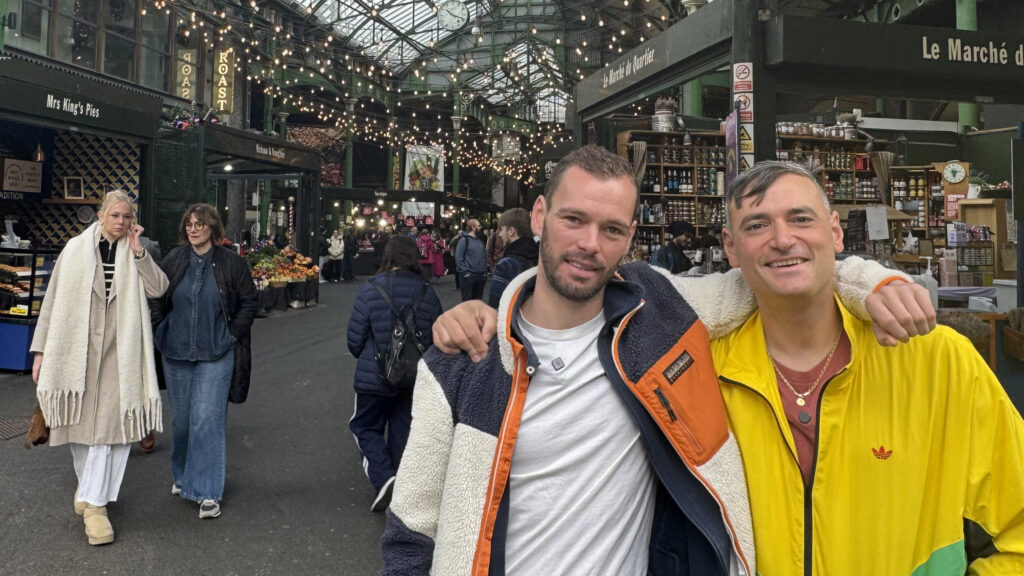
“We’re constantly having to prove ourselves,” said Gerry, who runs the food review account ‘Bite Twice’ with his best friend Paul on Instagram. “People ask, ‘What qualifies you to review food?’ But I ask: well what qualifies a chef to be a chef? You just go and do it.”
Gerry says he received a comment on one of their recent posts from a professional chef who – in the wake of the Borough Market influencer “ban” saga, which ‘Bite Twice’ were at the centre of – decided to “go in hard about what [their] credentials are to be reviewing food”.
“We put our hearts and souls into this stuff, and we’ve been doing it for six years – I think our opinion is just as valid as anyone else’s”.
Strawberries and chocolate have gone viral thanks to TikTok
The sentiment is common among food content creators who see themselves not as critics in the traditional sense, but as curators for their online audiences.
And their influence can be instant and tangible, sometimes sending queues round the block within hours of a video going viral. “If it wasn’t for people like Eating with Todd, would as many people be paying £8.50 for strawberries with chocolate all over them?” Gerry said. “Probably not. Influencers create a buzz – and Borough Market knows that.”
Critics Bite Back
Giles Coren, The Times’ food critic, Instagram Screenshot
Traditional food critics aren’t exactly blind to that reality. Many acknowledge that the balance of power has shifted, even if they don’t always approve of it. “Influencers are useless,” said Giles Coren, speaking to City News, restaurant critic for The Times. “They’re ignorant and inarticulate and vain. They just screw free food out of restaurants and provide no value at all.”
Others, like David Ellis from the Evening Standard, take a different view, “There’s room for everyone,” he said. “The death of the restaurant critic is overstated. In a noisy world, there’ll always be an audience who wants to read a considered opinion. Influencers offer a different service that’s no more or less important.”
Borough’s Appetite for Social Media
Traders we spoke to at Borough Market said social media has boosted footfall. “It’s great for the market. Any exposure is good,” said Samir, who was running the Arabica stall. “I don’t mind who reviews our food as long as they can eat and have an opinion.”
Stall workers encourage influencers to promote their food
At Mei Mei, a Singaporean street-food stand, stallholder Joe said the same, “Uncle Rogers been here a few times. He’s done loads for our brand. I don’t mind who it is, influencer or critic, anyone’s welcome.”
Joe says Uncle Rogers has helped Mei Mei’s success
For the market itself, it’s simply a balancing act. “We completely understand that influencers help showcase what Borough offers,” the market’s press team said. “But our priority is to keep the market running smoothly.”
So, Who Really Gets to Decide?
Critics and creators will fly their own flags – and chefs can wade into the debate as much as they want to – but it’s the customer that decides. And here’s the killer blow.
Most customers City News spoke with said they had first discovered the food stalls or restaurants they visited via social media, rather than traditional media. Many mentioned Instagram, TikTok and YouTube as their main sources for food recommendations.
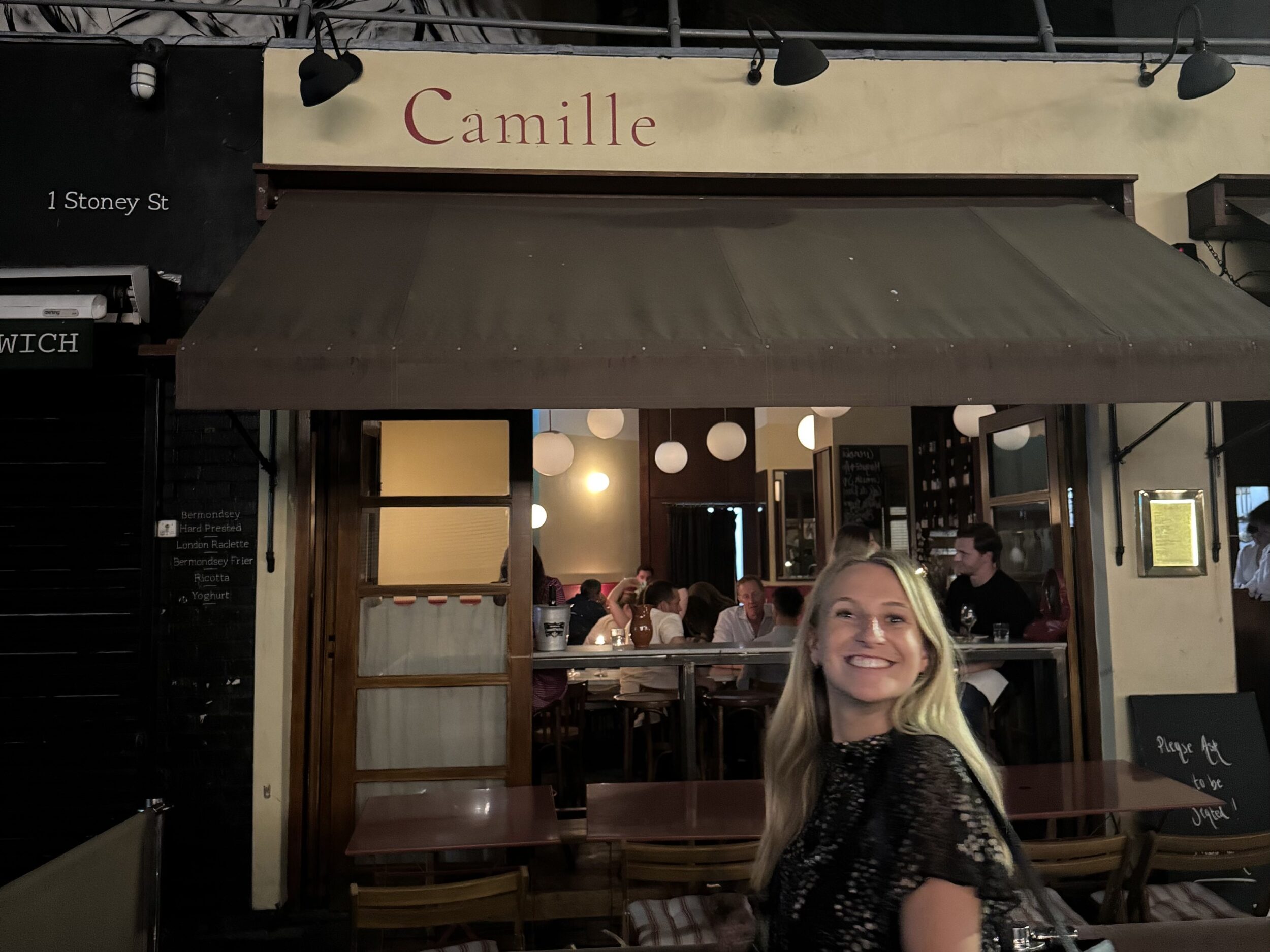
Lilly, who found Camille via TikTok
Lilly told us she came across Camille after seeing a video on her TikTok feed. “It popped up on my algorithm and I thought – oh, that looks nice – I love French food. I saved it on my TikTok ‘saveds’ and when it came to date night… it was easy – Camille was top of my list!”
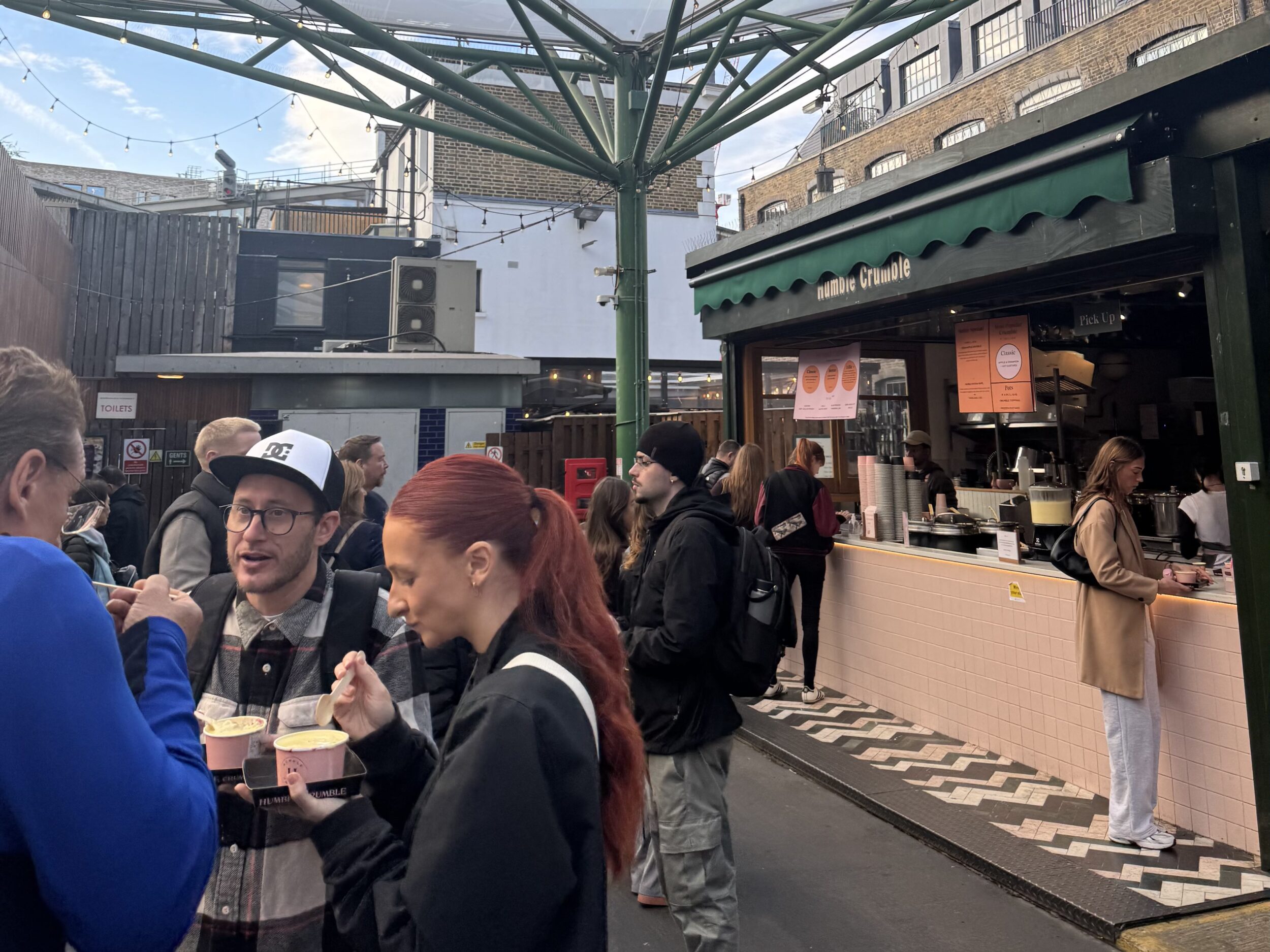
American tourists tuck into Humble Crumble, which they found on Instagram Reels
A group of American tourists outside ‘Humble Crumble’ told us they’d seen the famous dessert on a reel that had popped up around the time they’d landed in London. “We’d been searching for places in London for a while via our social media – we did it while we were in the US to sort of set our algorithm in gear, you know?”, Carl told City News. “When we arrived, it kind of did the job for us – I go on reels and Humble Crumble pops up. Now here we are!”
The Debate that Feeds Itself
The irony in all this? Every post, every article written, every comment made on social media has only amplified the exposure and potential influence of creators like ‘Bite Twice’.
“It’s been great for us”, said co-founder Gerry, “we’ll milk it while it lasts”. They’ve acquired approximately ten thousand new followers in the last week since the “controversy” first came to light.
Credentials or not, they’re doing something right.
Submitted Article
Headline
Short Headline
Standfirst
Published Article
Headline“We’re constantly having to prove ourselves”, say influencers targeted by professional chefs
Short HeadlineBorough Market "Ban" saga sparks debate
StandfirstInfluencers at heart of Borough Market "Ban" saga say they've been accused by pro chef of not having the "credentials" to review food
“We’re constantly having to prove ourselves,” said Gerry, who runs the food review account ‘Bite Twice’ with his best friend Paul on Instagram. “People ask, ‘What qualifies you to review food?’ But I ask: well what qualifies a chef to be a chef? You just go and do it.”
Gerry says he received a comment on one of their recent posts from a professional chef who – in the wake of the Borough Market influencer “ban” saga, which ‘Bite Twice’ were at the centre of – decided to “go in hard about what [their] credentials are to be reviewing food”.
“We put our hearts and souls into this stuff, and we’ve been doing it for six years – I think our opinion is just as valid as anyone else’s”.
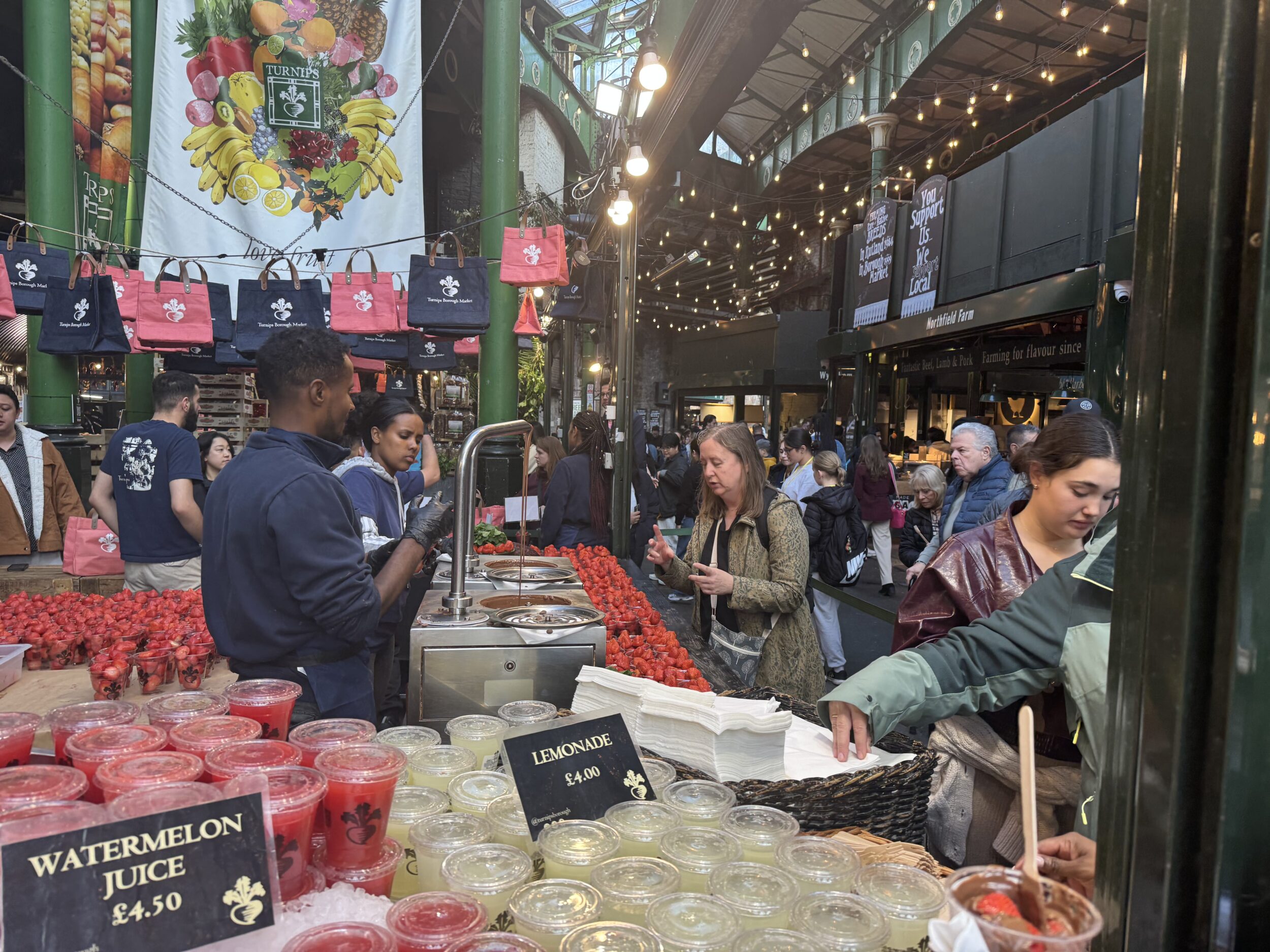
Strawberries and chocolate have gone viral thanks to TikTok
The sentiment is common among food content creators who see themselves not as critics in the traditional sense, but as curators for their online audiences.
And their influence can be instant and tangible, sometimes sending queues round the block within hours of a video going viral. “If it wasn’t for people like Eating with Todd, would as many people be paying £8.50 for strawberries with chocolate all over them?” Gerry said. “Probably not. Influencers create a buzz – and Borough Market knows that.”
Critics Bite Back
Giles Coren, The Times’ food critic, Instagram Screenshot
Traditional food critics aren’t exactly blind to that reality. Many acknowledge that the balance of power has shifted, even if they don’t always approve of it. “Influencers are useless,” said Giles Coren, speaking to City News, restaurant critic for The Times. “They’re ignorant and inarticulate and vain. They just screw free food out of restaurants and provide no value at all.”
Others, like David Ellis from the Evening Standard, take a different view, “There’s room for everyone,” he said. “The death of the restaurant critic is overstated. In a noisy world, there’ll always be an audience who wants to read a considered opinion. Influencers offer a different service that’s no more or less important.”
Borough’s Appetite for Social Media
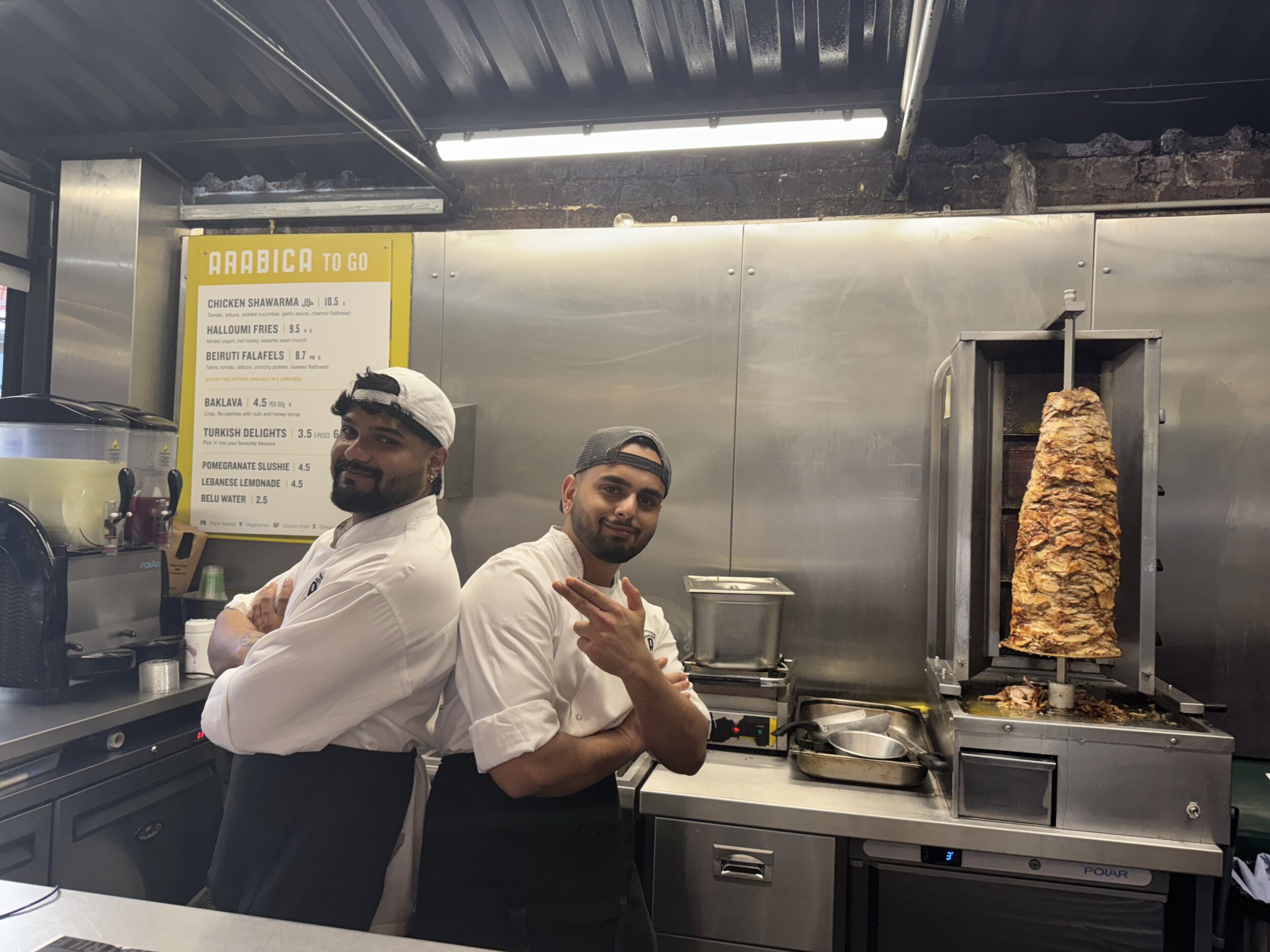
Traders we spoke to at Borough Market said social media has boosted footfall. “It’s great for the market. Any exposure is good,” said Samir, who was running the Arabica stall. “I don’t mind who reviews our food as long as they can eat and have an opinion.”
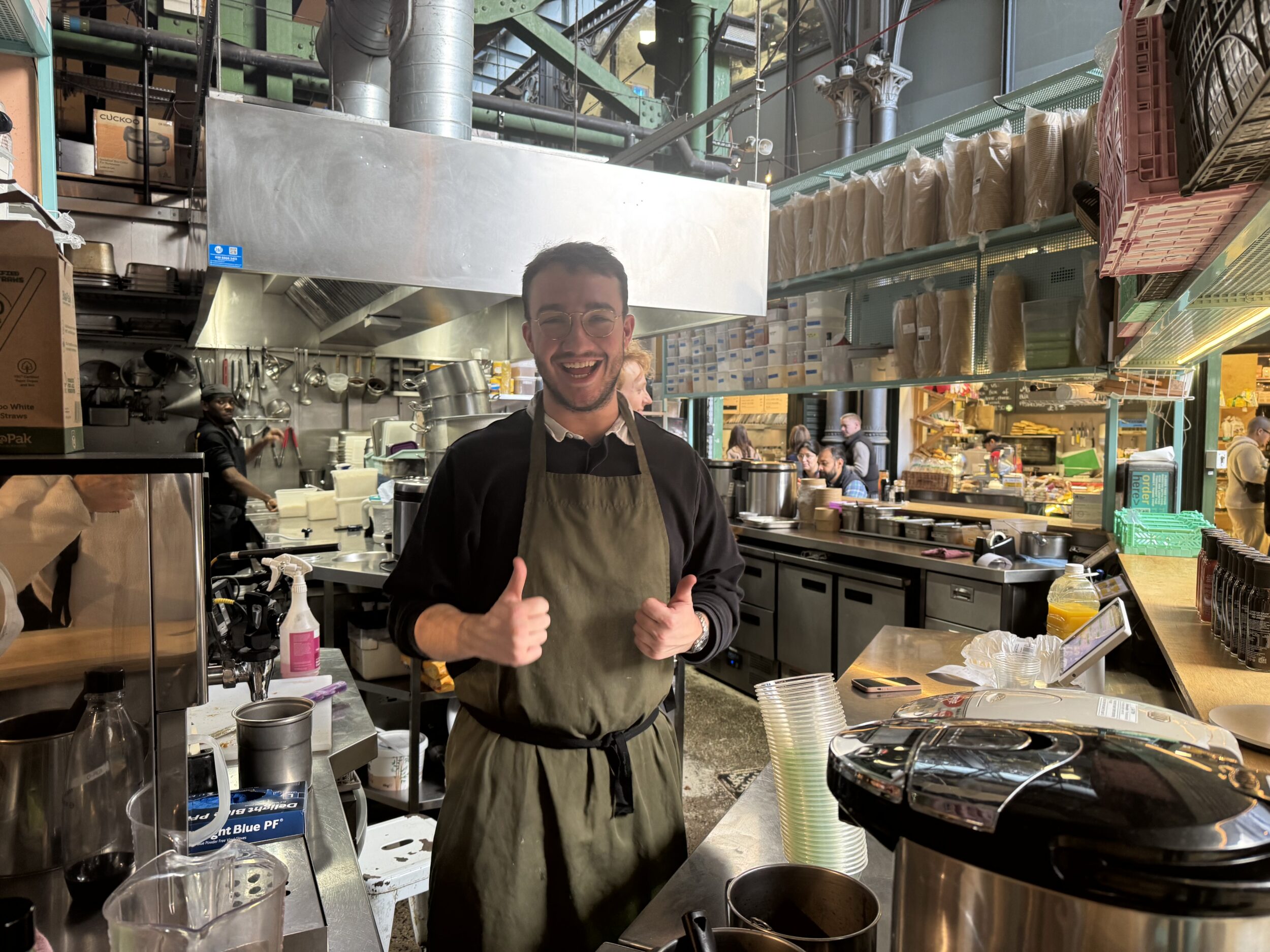
Stall workers encourage influencers to promote their food
At Mei Mei, a Singaporean street-food stand, stallholder Joe said the same, “Uncle Rogers been here a few times. He’s done loads for our brand. I don’t mind who it is, influencer or critic, anyone’s welcome.”
Joe says Uncle Rogers has helped Mei Mei’s success
For the market itself, it’s simply a balancing act. “We completely understand that influencers help showcase what Borough offers,” the market’s press team said. “But our priority is to keep the market running smoothly.”
So, Who Really Gets to Decide?
Critics and creators will fly their own flags – and chefs can wade into the debate as much as they want to – but it’s the customer that decides. And here’s the killer blow.
Most customers City News spoke with said they had first discovered the food stalls or restaurants they visited via social media, rather than traditional media. Many mentioned Instagram, TikTok and YouTube as their main sources for food recommendations.
Lilly, who found Camille via TikTok
Lilly told us she came across Camille after seeing a video on her TikTok feed. “It popped up on my algorithm and I thought – oh, that looks nice – I love French food. I saved it on my TikTok ‘saveds’ and when it came to date night… it was easy – Camille was top of my list!”
American tourists tuck into Humble Crumble, which they found on Instagram Reels
A group of American tourists outside ‘Humble Crumble’ told us they’d seen the famous dessert on a reel that had popped up around the time they’d landed in London. “We’d been searching for places in London for a while via our social media – we did it while we were in the US to sort of set our algorithm in gear, you know?”, Carl told City News. “When we arrived, it kind of did the job for us – I go on reels and Humble Crumble pops up. Now here we are!”
The Debate that Feeds Itself
The irony in all this? Every post, every article written, every comment made on social media has only amplified the exposure and potential influence of creators like ‘Bite Twice’.
“It’s been great for us”, said co-founder Gerry, “we’ll milk it while it lasts”. They’ve acquired approximately ten thousand new followers in the last week since the “controversy” first came to light.
Credentials or not, they’re doing something right.
A 2024 Freedom of Information request showed Bromley Council had £4.5 million invested in arms companies that year with £1.5 million reportedly linked to Israel.
Undercover officers raided three linked shops in Barking town centre, revealing how illicit tobacco is being hidden in walls, ceilings and nearby locations to evade detection.
When false reports of Dot Rotten’s death began circulating, some major outlets rushed to publish and used the wrong face. For a culture that changed British music, it was a grimly familiar failure of recognition and respect.
More than 330,000 people across the UK sought support from the Stop It Now helpline in 2025 over concerns about their own or someone else’s online sexual behaviour towards children, according to new charity data. The anonymous service says contacts by phone, email and webchat rose significantly over the year.