When trade meets tradition: inside London’s ancient livery companies
From Haberdashers' to HR Professionals, London's historic guilds have defined the culture and politics of the City for centuries. Ben Wormald asks how they're changing with the times
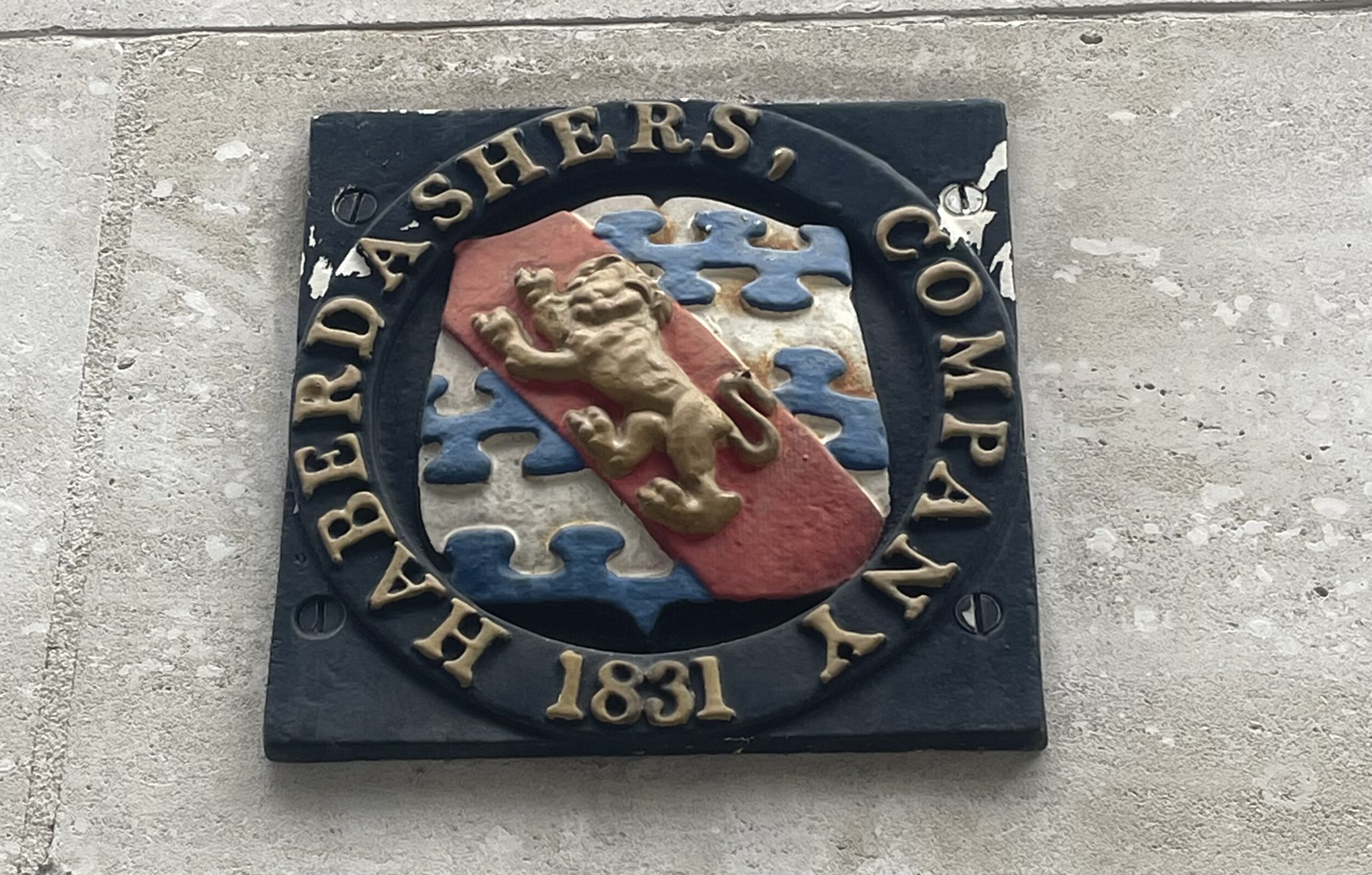
Take a walk around the City of London, and you might notice small symbols decorating the walls of the buildings you pass: colourful crests that look like they’ve been ripped from a medieval manuscript owned by some shady secret society. But these aren’t ruins of a bygone age – but small hints at an institution that’s still alive and well.
Chris Sanders has worked in finance since 2008. He’s also a member of the Worshipful Company of International Bankers.
“The number of people have asked me if I’m a member of the Freemasons. I’m like, “no, I’m not”.”
“There’s no secret handshakes, there’s not anything like that.”
The crest of the Haberdashers’ Company (Image: Ben Wormald)
Distinct from trade unions, the livery companies are a staple of the City of London steeped in tradition and crafts, old and new.
Earlier this month, the City saw its 114th livery company enter the fray: the Worshipful Company of Human Resource Professionals, joining a group of more modern professions including taxi drivers, insurers, and cleaners.
Despite playing a vital role in the City’s culture, economy, and even governance, you likely know very little about them. Combined, the livery companies are in the top six largest charitable donors in the UK.
So how did this medieval London curiosity go from cloth-making to HR?
Trade and traditions
In the Magna Carta, written in 1215, King John acknowledged the rights of the guilds and trades in London. A spat with the barons had led him to guarantee the “ancient liberties and free customs” within the Square Mile—essentially creating the City as a space free from the direct rule of the Crown.
“The livery companies were essentially established to regulate access to the freedom of the city.”
Matthew Davies is a historian of London, specialising in the storied past of the livery companies. He’s also a liveryman himself, a member of the Merchant Taylors’ Company.
“If you were a freeman, you could trade and you had all those privileges of being able to trade without paying taxes and that kind of thing in the City of London. Their role was to assess people. So, if you’ve got the skills, you’ve got the qualities to be a freeman in the city.”
Today, the companies’ regulatory role has been made redundant by more centralised authorities which oversee particular trades, like the Financial Conduct Authority. But they have grown to serve other functions.
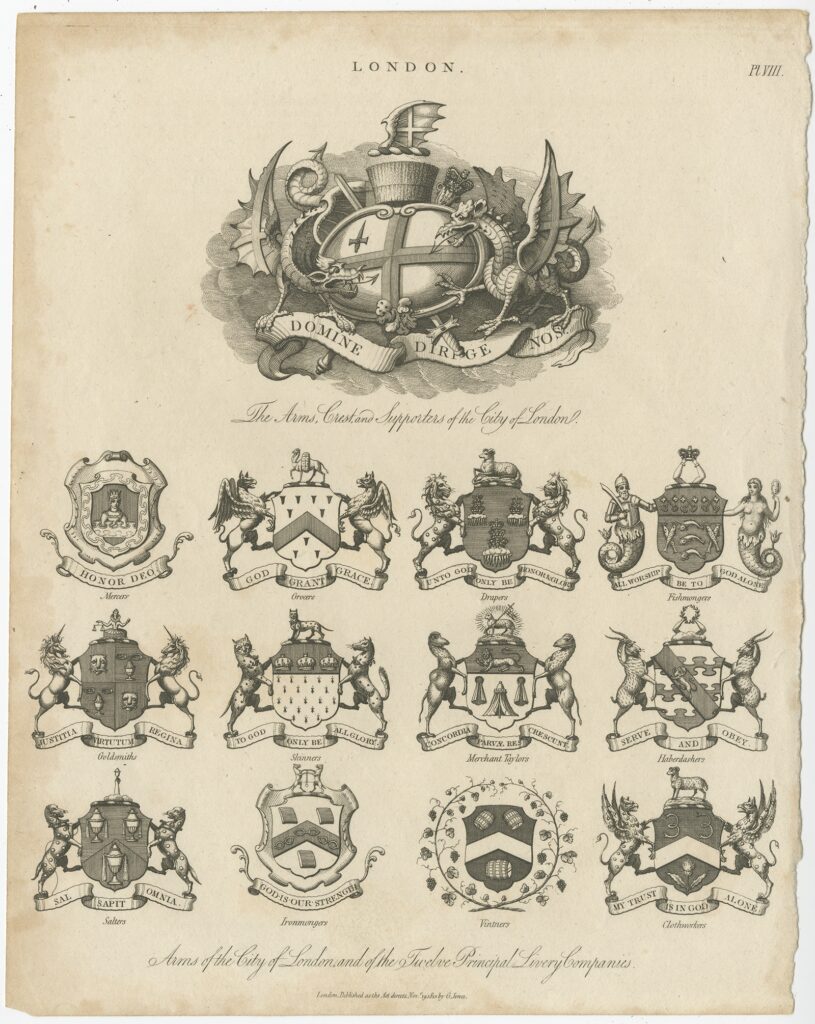
A print showing the crests of the “Great Twelve” Livery Companies (c. 1815)
As trade in the City blossomed in the late medieval period, so too did the companies’ wealth. In fact, they became so wealthy that they adopted their own fancy robes and regalia, or “liveries” – elevating them from conventional guilds to the prestigious groups that survive today.
Historically, the richest livery company has been the Mercers’. Topping the list of companies by ‘order of precedence’ (wealth), the Mercers’ have grown from representing cloth-traders in the medieval city to managing an extensive property portfolio worth millions of pounds. They still own half of Cheapside.
Part of the liveries’ enduring character is their power and grandeur. Banquets, ceremonies, and a host of peculiar traditions.
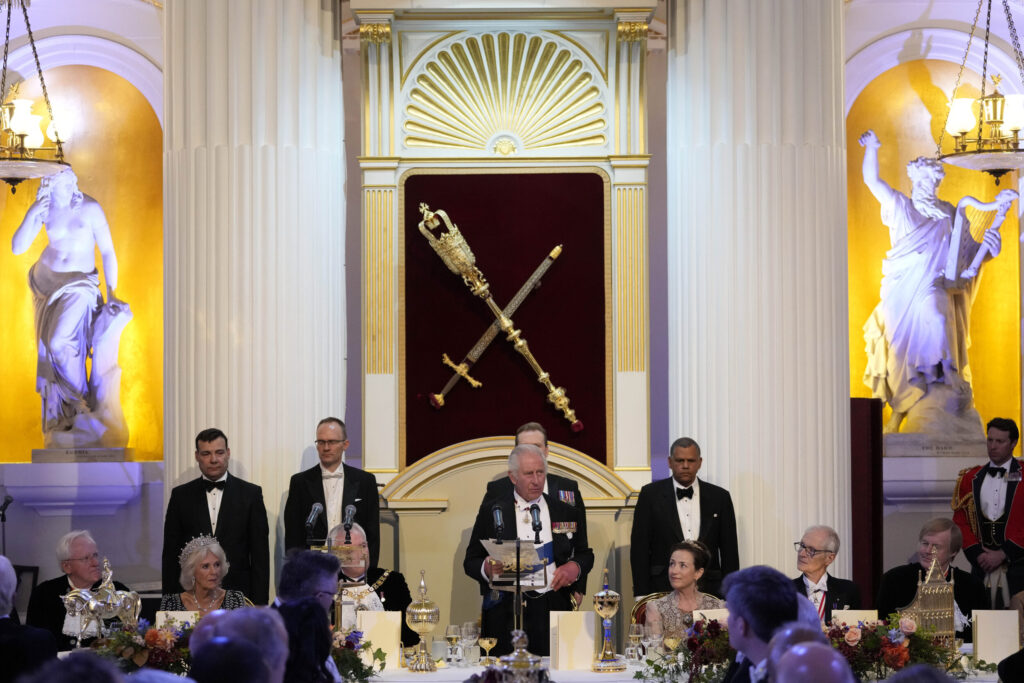
The King and Queen attended a dinner at Mansion House, to recognise the work of the City of London civic institutions and Livery Companies. (AP Photo/Kirsty Wigglesworth)
For some, this can be off-putting.
“If you’re in London and may not be familiar with it, I think a natural criticism of all the banquets and dinners is that it can look very elitist,” says Liam Randall, a member of the Coopers’ company.
Over time, membership of a livery company has developed a status of its own, beyond the often humble professions they began from.
The Drapers’ Company, founded as a guild of cloth merchants, counts Queen Elizabeth II, King Charles III, and the newly-elected Lady Mayor Susan Langley among its members.
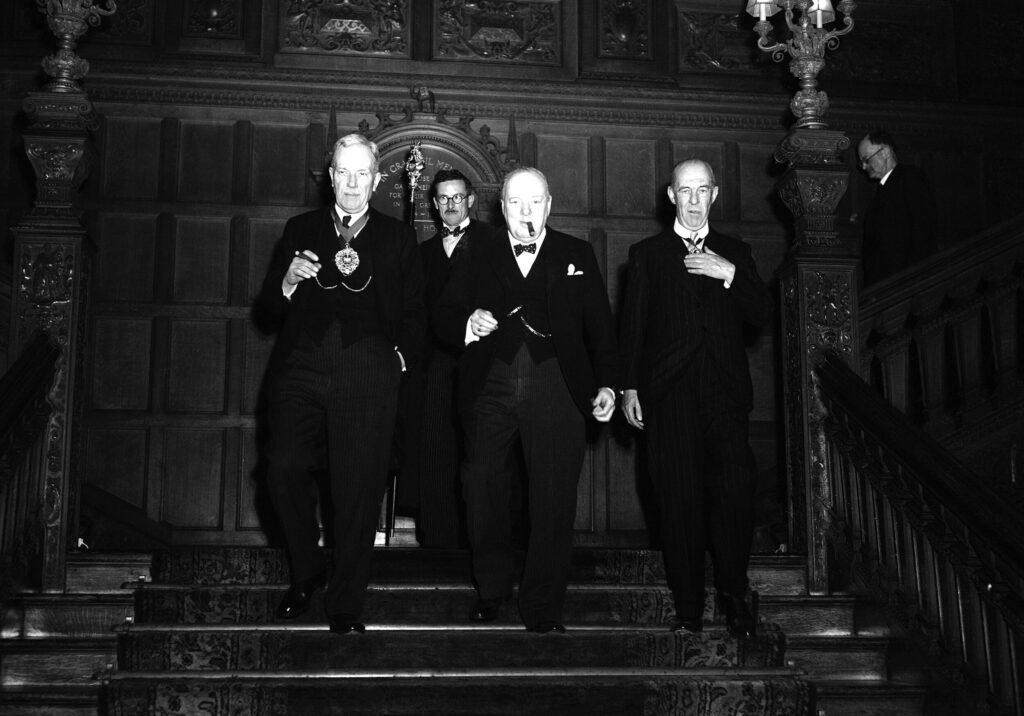
Meanwhile the list of historic Mercers includes Winston Churchill, Sir Thomas More, and Dick Whittington, the fabled Lord Mayor of London.
Mr. Churchill became a liveryman of the City of London in a ceremony held in the ruins of Mercer’s Hall, Ironmongers Lane on April 25, 1945. (AP Photo)
Being a member of a livery company is a precondition to running for City Sheriff, and eventually Lord Mayor, while the livery companies are responsible for the annual Lord Mayor’s show.
Of course, apart from the legendary cat-owning mayor, none of these famous figures earned their living selling cloth.
Even being based in London isn’t necessary to joining a livery company. As of 1999, the freedom of the City can be given to anyone of any nationality, allowing for the creation of the Company of International Bankers.
The livery companies today
Over time, the historic guilds have loosened ties with their trades. Some have disappeared altogether. The Hat-makers, Soap-makers, and silk merchants have all folded as livery companies, as industries moved and became mechanised.
But other companies have stuck around, often in a very different form.
“People see these livery companies as highly conservative,” says Liam Randall.
“But these were organisations that have always had to evolve. They have not remained static for half a millennia, or else they would not be recognisable to us today.”
The Worshipful Company of Playing-Card Makers, set up in 1621, sells novelty decks, and meets for card games above a pub.
The Fan-Makers, a guild founded around the trade of fashioning hand-fans, now supports the construction of wind-turbines and engine components.
Since 2025, Liam Randall has served as Upper Warden to the Worshipful Company of Coopers. A cooper is a maker of casks – Liam works in the charity sector. But he told City News that the culture of livery companies is changing.
“Since I joined [the Coopers] 13 or 14 years ago, I’ve seen the company and the City change a huge amount, especially accelerated by the pandemic.”
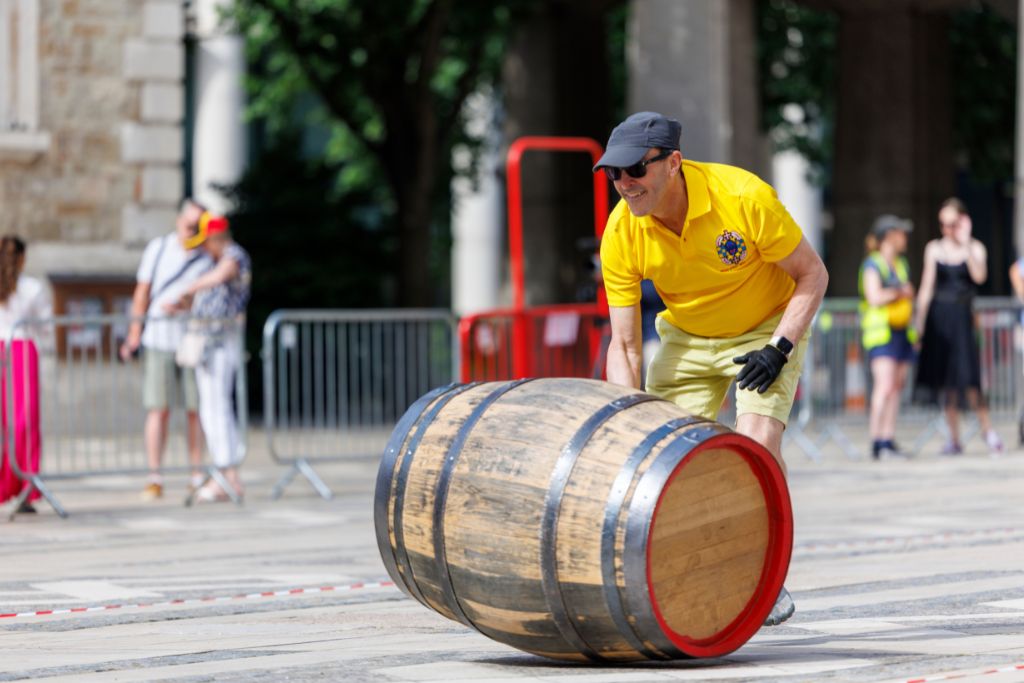
“[Post-COVID] what I saw was a transformation to a more outward looking company, a company that says, “let’s go and be more more inclusive, let’s engage more with the wider city, let’s put together new initiatives like the Cask Race, which is in a way to raise money for charity.”
The Coopers’ Cask Race. (Image: Liam Randall)
An impact report published last year boasted a record £81 million in charitable giving for 2024, an increase of 10% on 2021.
“The charitable purpose has been there from the beginning, but it sort of changed and developed over the centuries,” explains historian Matthew Davies.
“Several of them run out almshouses as well for poor people who are wanting either proper care-home facilities or retirement homes.”
For Liam Randall, it’s the philanthropic side of the livery companies that distinguishes them from other historic organisations.
“If you add the amount of annual volunteering hours put behind [being a liveryman], it’s something like 39 years’ worth of time in education, volunteering, and various other areas.”
“This isn’t just a private members’ club that you join. This is something which is a commitment for life.”
The future of livery companies
The admission of HR professionals in February to the ancient order of livery companies represents the next step in a constantly evolving tradition.
“What it reflects is a way in which the modern city can be reflected in what looked like quite ancient organisational structures,” Matthew Davies says. “So you’re bringing the ancient and modern together in quite an interesting way.”
Some of the older livery companies are even re-discovering their ancient roots.
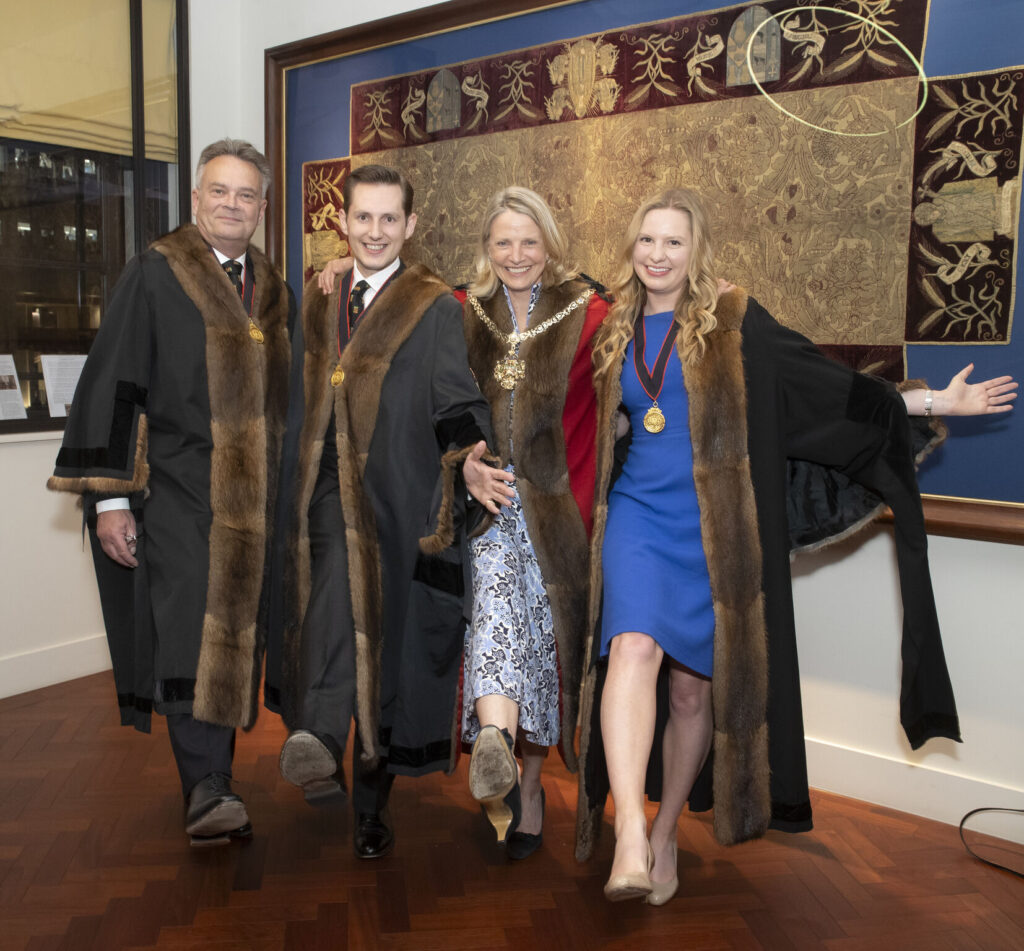
Members of the Coopers’ Company, dressed in their livery robes (Image: Liam Randall)
“There’s a new generation of Coopers,” Liam Randall tells City News, “not massive amounts, but I think what’s fascinating is that not only are we as a company building experiences, so you can go up and make your own cask, which helps them financially.”
“We’ve had people who have joined in the last year or two, who are then leading the relationships with these coopers, who are under the age of 35. It is a kind of treating this new generation of Coopers and linking up with a new generation of the Coopers in London.”
“It’s a really exciting time to be a liveryman.”
Submitted Article
Headline
Short Headline
Standfirst
Published Article
HeadlineWhen trade meets tradition: inside London’s ancient livery companies
Short HeadlineThe 'secret societies' behind the City of London
StandfirstFrom Haberdashers' to HR Professionals, London's historic guilds have defined the culture and politics of the City for centuries. Ben Wormald asks how they're changing with the times
Take a walk around the City of London, and you might notice small symbols decorating the walls of the buildings you pass: colourful crests that look like they’ve been ripped from a medieval manuscript owned by some shady secret society. But these aren’t ruins of a bygone age – but small hints at an institution that’s still alive and well.
Chris Sanders has worked in finance since 2008. He’s also a member of the Worshipful Company of International Bankers.
“The number of people have asked me if I’m a member of the Freemasons. I’m like, “no, I’m not”.”
“There’s no secret handshakes, there’s not anything like that.”
The crest of the Haberdashers’ Company (Image: Ben Wormald)
Distinct from trade unions, the livery companies are a staple of the City of London steeped in tradition and crafts, old and new.
Earlier this month, the City saw its 114th livery company enter the fray: the Worshipful Company of Human Resource Professionals, joining a group of more modern professions including taxi drivers, insurers, and cleaners.
Despite playing a vital role in the City’s culture, economy, and even governance, you likely know very little about them. Combined, the livery companies are in the top six largest charitable donors in the UK.
So how did this medieval London curiosity go from cloth-making to HR?
Trade and traditions
In the Magna Carta, written in 1215, King John acknowledged the rights of the guilds and trades in London. A spat with the barons had led him to guarantee the “ancient liberties and free customs” within the Square Mile—essentially creating the City as a space free from the direct rule of the Crown.
“The livery companies were essentially established to regulate access to the freedom of the city.”
Matthew Davies is a historian of London, specialising in the storied past of the livery companies. He’s also a liveryman himself, a member of the Merchant Taylors’ Company.
“If you were a freeman, you could trade and you had all those privileges of being able to trade without paying taxes and that kind of thing in the City of London. Their role was to assess people. So, if you’ve got the skills, you’ve got the qualities to be a freeman in the city.”
Today, the companies’ regulatory role has been made redundant by more centralised authorities which oversee particular trades, like the Financial Conduct Authority. But they have grown to serve other functions.
A print showing the crests of the “Great Twelve” Livery Companies (c. 1815)
As trade in the City blossomed in the late medieval period, so too did the companies’ wealth. In fact, they became so wealthy that they adopted their own fancy robes and regalia, or “liveries” – elevating them from conventional guilds to the prestigious groups that survive today.
Historically, the richest livery company has been the Mercers’. Topping the list of companies by ‘order of precedence’ (wealth), the Mercers’ have grown from representing cloth-traders in the medieval city to managing an extensive property portfolio worth millions of pounds. They still own half of Cheapside.
Part of the liveries’ enduring character is their power and grandeur. Banquets, ceremonies, and a host of peculiar traditions.
The King and Queen attended a dinner at Mansion House, to recognise the work of the City of London civic institutions and Livery Companies. (AP Photo/Kirsty Wigglesworth)
For some, this can be off-putting.
“If you’re in London and may not be familiar with it, I think a natural criticism of all the banquets and dinners is that it can look very elitist,” says Liam Randall, a member of the Coopers’ company.
Over time, membership of a livery company has developed a status of its own, beyond the often humble professions they began from.
The Drapers’ Company, founded as a guild of cloth merchants, counts Queen Elizabeth II, King Charles III, and the newly-elected Lady Mayor Susan Langley among its members.
Meanwhile the list of historic Mercers includes Winston Churchill, Sir Thomas More, and Dick Whittington, the fabled Lord Mayor of London.
Mr. Churchill became a liveryman of the City of London in a ceremony held in the ruins of Mercer’s Hall, Ironmongers Lane on April 25, 1945. (AP Photo)
Being a member of a livery company is a precondition to running for City Sheriff, and eventually Lord Mayor, while the livery companies are responsible for the annual Lord Mayor’s show.
Of course, apart from the legendary cat-owning mayor, none of these famous figures earned their living selling cloth.
Even being based in London isn’t necessary to joining a livery company. As of 1999, the freedom of the City can be given to anyone of any nationality, allowing for the creation of the Company of International Bankers.
The livery companies today
Over time, the historic guilds have loosened ties with their trades. Some have disappeared altogether. The Hat-makers, Soap-makers, and silk merchants have all folded as livery companies, as industries moved and became mechanised.
But other companies have stuck around, often in a very different form.
“People see these livery companies as highly conservative,” says Liam Randall.
“But these were organisations that have always had to evolve. They have not remained static for half a millennia, or else they would not be recognisable to us today.”
The Worshipful Company of Playing-Card Makers, set up in 1621, sells novelty decks, and meets for card games above a pub.
The Fan-Makers, a guild founded around the trade of fashioning hand-fans, now supports the construction of wind-turbines and engine components.
Since 2025, Liam Randall has served as Upper Warden to the Worshipful Company of Coopers. A cooper is a maker of casks – Liam works in the charity sector. But he told City News that the culture of livery companies is changing.
“Since I joined [the Coopers] 13 or 14 years ago, I’ve seen the company and the City change a huge amount, especially accelerated by the pandemic.”
“[Post-COVID] what I saw was a transformation to a more outward looking company, a company that says, “let’s go and be more more inclusive, let’s engage more with the wider city, let’s put together new initiatives like the Cask Race, which is in a way to raise money for charity.”
The Coopers’ Cask Race. (Image: Liam Randall)
An impact report published last year boasted a record £81 million in charitable giving for 2024, an increase of 10% on 2021.
“The charitable purpose has been there from the beginning, but it sort of changed and developed over the centuries,” explains historian Matthew Davies.
“Several of them run out almshouses as well for poor people who are wanting either proper care-home facilities or retirement homes.”
For Liam Randall, it’s the philanthropic side of the livery companies that distinguishes them from other historic organisations.
“If you add the amount of annual volunteering hours put behind [being a liveryman], it’s something like 39 years’ worth of time in education, volunteering, and various other areas.”
“This isn’t just a private members’ club that you join. This is something which is a commitment for life.”
The future of livery companies
The admission of HR professionals in February to the ancient order of livery companies represents the next step in a constantly evolving tradition.
“What it reflects is a way in which the modern city can be reflected in what looked like quite ancient organisational structures,” Matthew Davies says. “So you’re bringing the ancient and modern together in quite an interesting way.”
Some of the older livery companies are even re-discovering their ancient roots.
Members of the Coopers’ Company, dressed in their livery robes (Image: Liam Randall)
“There’s a new generation of Coopers,” Liam Randall tells City News, “not massive amounts, but I think what’s fascinating is that not only are we as a company building experiences, so you can go up and make your own cask, which helps them financially.”
“We’ve had people who have joined in the last year or two, who are then leading the relationships with these coopers, who are under the age of 35. It is a kind of treating this new generation of Coopers and linking up with a new generation of the Coopers in London.”
A 2024 Freedom of Information request showed Bromley Council had £4.5 million invested in arms companies that year with £1.5 million reportedly linked to Israel.
Undercover officers raided three linked shops in Barking town centre, revealing how illicit tobacco is being hidden in walls, ceilings and nearby locations to evade detection.
More than 330,000 people across the UK sought support from the Stop It Now helpline in 2025 over concerns about their own or someone else’s online sexual behaviour towards children, according to new charity data. The anonymous service says contacts by phone, email and webchat rose significantly over the year.