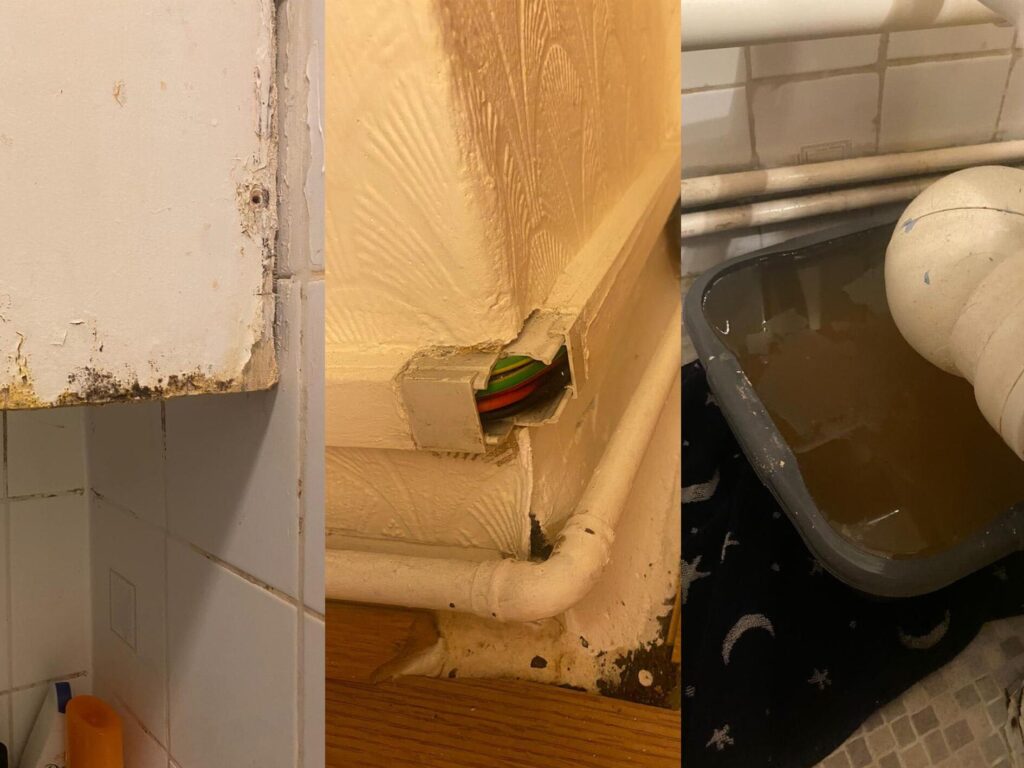
Black mould, a serious toilet leak, exposed electrical wires, and loose power sockets, this is what Isabella dealt with throughout her tenancy.
When Isabella moved into her flat, she quickly became familiar with the reality of renting in London.
She told City News that upon moving in, she sent an email to her property manager asking for urgent action to resolve issues she identified:
“We’re worried about our health because the toilet leaks are a bio hazard, and the mould carries allergens, irritants, toxic substances that can trigger asthma attacks and rashes. The unsafe electrical wiring can cause shock, burns, fire, and electrical explosions.”
The issues Isabella lived with took a significant physical and mental toll on her and her flatmates – Courtesy of Isabella
Isabella had never been able to speak to her landlord. Her complaint was passed from one property agent to the next – more than a dozen in total – with no resolution.
She said while some contractors were brought in, no substantial effort was made to the repair issues she reported.
Eventually, an inspector classified her flat as uninhabitable, yet her landlord refused to agree to terminate her contract.
Faulty wiring almost caused an electrical fire and melted her phone charger – Courtesy of Isabella
She told City News that a few months later, she woke up to a burning smell from an a smoking socket in her room but the flat lacked the necessary fire safety equipment, such as a fire blanket, that would have been essential had the smoke turned into a fire.
No matter how much they cleaned, the black mould kept coming back – Courtesy of Isabella
In that same time, her flatmate fell sick and found black mould covering the wall he slept next to. The mould eventually spread throughout the flat to all but one bedroom. Soon after, her flatmate moved out to prevent his illness from getting worse.
Research by Uswitch suggests 60% of homes in the UK have mould and London boroughs are among the worst mould cases. Of the ten highest local authorities that received mould or damp complaints, eight were from London.
Although sub-par flats are common in London, Isabella says that they should not be expected or normalised for the serious threat they pose to health and well-being.
Exposure to issues like mould and damp can directly affect airways, lungs, eyes and skin, and even mental health. The UK Health Security Agency has said the more severe the problem and the longer it persists, the worse the impacts will be.
Isabella told City News that her OCD was triggered by her experience – Courtesy of Isabella
Isabella described how in addition to repeatedly falling sick due to the lack of heating or adequate insulation, her mental health was deeply impacted and her obsessive-compulsive disorder was exacerbated.
She told City News that she developed brain fog, was unable to focus, and was constantly stressed and fatigued – symptoms that significantly impacted her university studies.
She said that as a renter, she felt like she did not have many rights and was at the whim of her landlord who continued to demand rent payments.
“It just makes you feel so small, like you don’t have any power.”
Ultimately, it was only through legal action that they were able to terminate the contract.
Isabella told City News that she was lucky to have had access to reliable legal aid but acknowledges that it is not always accessible to everyone.
By early 2026 new laws will help more tenants to challenge poor conditions without risking eviction, by extending the Decent Home Standard to the private rented sector and ending hurdles like the Section 21 ‘no fault’ evictions.
The Renters’ Rights Act has achieved Royal Assent and is set to become law by Spring 2026.
Isabella hopes the new rules will be positive for renters, but after her nightmare, remains sceptical:
“If the bill goes through and nothing really changes, I don’t think I’ll be surprised, but [after my experience] it will hurt that much more.”
In Greater London, more than a tenth of homes for rent do not meet the Decent Home Standard, and about half of those are in states that threaten serious health and safety risks. This means that many London renters see sub-par flat conditions as an expected reality.
X/@_megito
Since the Decent Home Standard was introduced to social housing in 2001 the English Housing Survey reports the condition of homes in the sector is “generally in better condition” than the private rented sector.
However, some boroughs, like Kensington and Chelsea, are still receiving low grades for the standard of social housing.
The Regulator of Social Housing allocated the borough a C3 grade in August 2025 as 30% of social housing did not meet the Decent Home Standard.
In his response to the London Assembly’s motion about damp and mould in social housing, Sadiq Khan has said the situation in London is unacceptable.
“I am clear that Londoners should expect high standards of social housing immediately and have called for additional funding and reforms to make this a reality.”
Isabella now lives in a flat without persisting issues, but says that she has had to pay rent above what she can comfortably afford to have peace of mind.
Submitted Article
Headline
Short Headline
Standfirst
Published Article
Headline“We’re worried about our health”: ‘Uninhabitable’ Conditions Facing Some London Renters
Short Headline'Uninhabitable' Flats Severely Threaten Physical and Mental Health
StandfirstThe Renters' Rights Act will extend the Decent Home Standard into the private rented sector, but renters like Isabella are sceptical.
Black mould, a serious toilet leak, exposed electrical wires, and loose power sockets, this is what Isabella dealt with throughout her tenancy.
When Isabella moved into her flat, she quickly became familiar with the reality of renting in London.
She told City News that upon moving in, she sent an email to her property manager asking for urgent action to resolve issues she identified:
“We’re worried about our health because the toilet leaks are a bio hazard, and the mould carries allergens, irritants, toxic substances that can trigger asthma attacks and rashes. The unsafe electrical wiring can cause shock, burns, fire, and electrical explosions.”
The issues Isabella lived with took a significant physical and mental toll on her and her flatmates – Courtesy of Isabella
Isabella had never been able to speak to her landlord. Her complaint was passed from one property agent to the next – more than a dozen in total – with no resolution.
She said while some contractors were brought in, no substantial effort was made to the repair issues she reported.
Eventually, an inspector classified her flat as uninhabitable, yet her landlord refused to agree to terminate her contract.
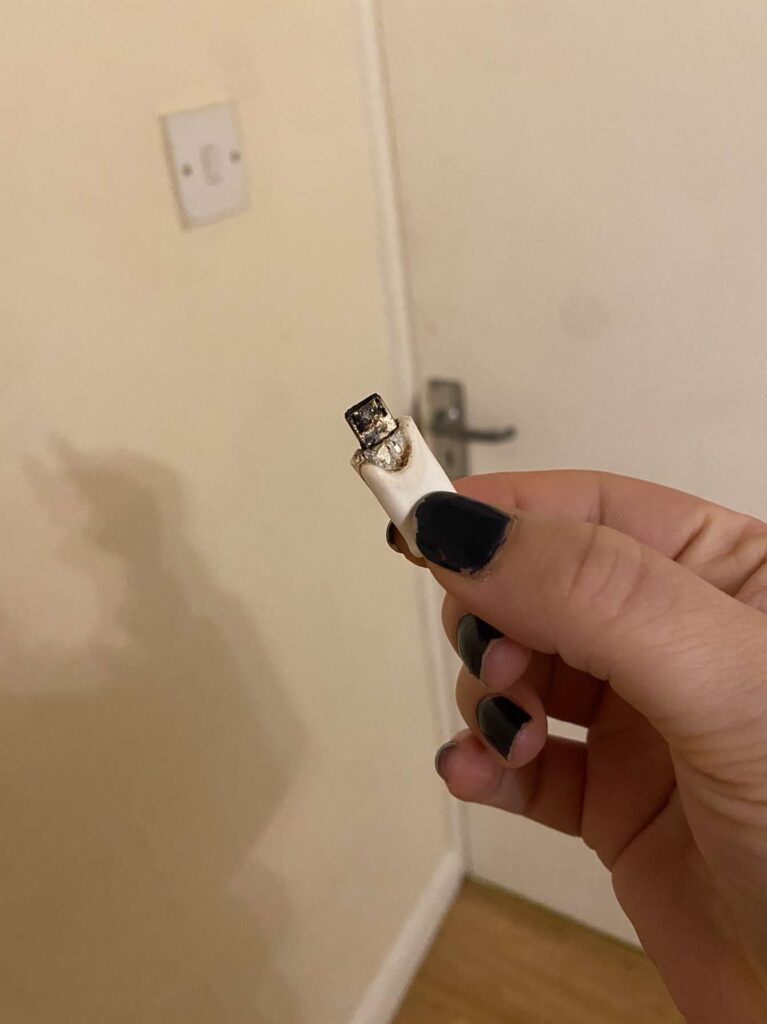
Faulty wiring almost caused an electrical fire and melted her phone charger – Courtesy of Isabella
She told City News that a few months later, she woke up to a burning smell from an a smoking socket in her room but the flat lacked the necessary fire safety equipment, such as a fire blanket, that would have been essential had the smoke turned into a fire.
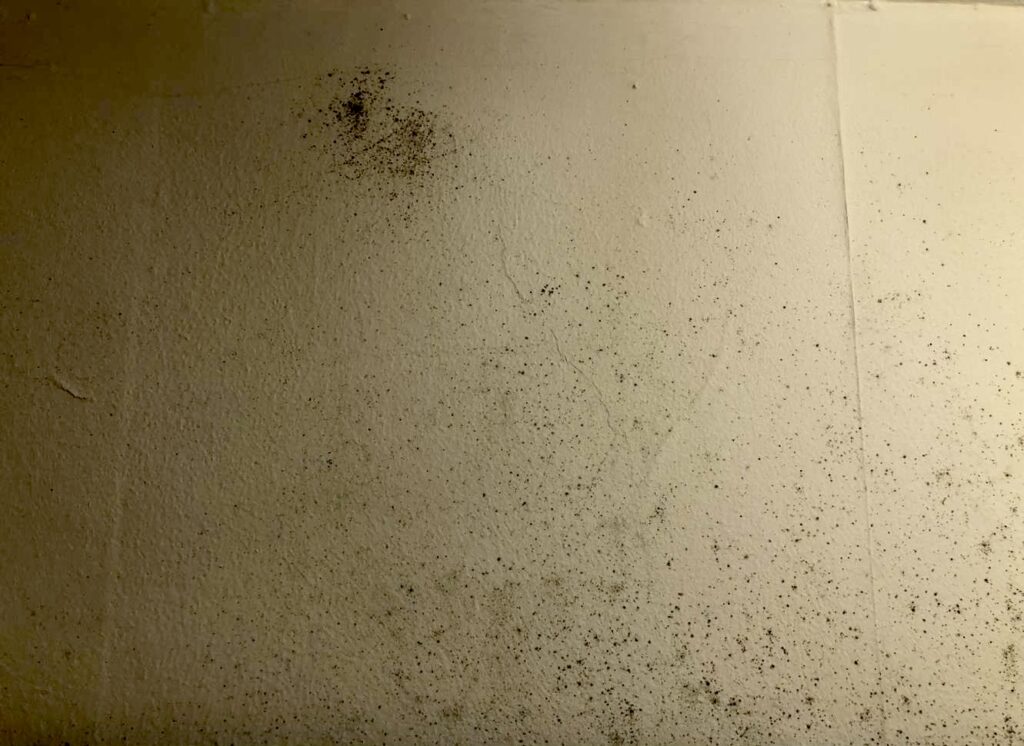
No matter how much they cleaned, the black mould kept coming back – Courtesy of Isabella
In that same time, her flatmate fell sick and found black mould covering the wall he slept next to. The mould eventually spread throughout the flat to all but one bedroom. Soon after, her flatmate moved out to prevent his illness from getting worse.
Research by Uswitch suggests 60% of homes in the UK have mould and London boroughs are among the worst mould cases. Of the ten highest local authorities that received mould or damp complaints, eight were from London.
Although sub-par flats are common in London, Isabella says that they should not be expected or normalised for the serious threat they pose to health and well-being.
Exposure to issues like mould and damp can directly affect airways, lungs, eyes and skin, and even mental health. The UK Health Security Agency has said the more severe the problem and the longer it persists, the worse the impacts will be.
Isabella told City News that her OCD was triggered by her experience – Courtesy of Isabella
Isabella described how in addition to repeatedly falling sick due to the lack of heating or adequate insulation, her mental health was deeply impacted and her obsessive-compulsive disorder was exacerbated.
She told City News that she developed brain fog, was unable to focus, and was constantly stressed and fatigued – symptoms that significantly impacted her university studies.
She said that as a renter, she felt like she did not have many rights and was at the whim of her landlord who continued to demand rent payments.
“It just makes you feel so small, like you don’t have any power.”
Ultimately, it was only through legal action that they were able to terminate the contract.
Isabella told City News that she was lucky to have had access to reliable legal aid but acknowledges that it is not always accessible to everyone.
By early 2026 new laws will help more tenants to challenge poor conditions without risking eviction, by extending the Decent Home Standard to the private rented sector and ending hurdles like the Section 21 ‘no fault’ evictions.
The Renters’ Rights Act has achieved Royal Assent and is set to become law by Spring 2026.
Isabella hopes the new rules will be positive for renters, but after her nightmare, remains sceptical:
“If the bill goes through and nothing really changes, I don’t think I’ll be surprised, but [after my experience] it will hurt that much more.”
In Greater London, more than a tenth of homes for rent do not meet the Decent Home Standard, and about half of those are in states that threaten serious health and safety risks. This means that many London renters see sub-par flat conditions as an expected reality.
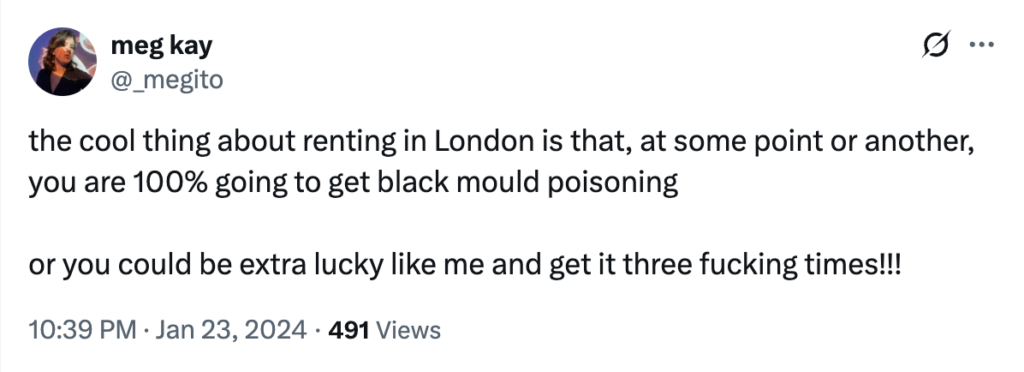
X/@_megito
Since the Decent Home Standard was introduced to social housing in 2001 the English Housing Survey reports the condition of homes in the sector is “generally in better condition” than the private rented sector.
However, some boroughs, like Kensington and Chelsea, are still receiving low grades for the standard of social housing.
The Regulator of Social Housing allocated the borough a C3 grade in August 2025 as 30% of social housing did not meet the Decent Home Standard.
In his response to the London Assembly’s motion about damp and mould in social housing, Sadiq Khan has said the situation in London is unacceptable.
“I am clear that Londoners should expect high standards of social housing immediately and have called for additional funding and reforms to make this a reality.”
Isabella now lives in a flat without persisting issues, but says that she has had to pay rent above what she can comfortably afford to have peace of mind.
A 2024 Freedom of Information request showed Bromley Council had £4.5 million invested in arms companies that year with £1.5 million reportedly linked to Israel.
Undercover officers raided three linked shops in Barking town centre, revealing how illicit tobacco is being hidden in walls, ceilings and nearby locations to evade detection.
More than 330,000 people across the UK sought support from the Stop It Now helpline in 2025 over concerns about their own or someone else’s online sexual behaviour towards children, according to new charity data. The anonymous service says contacts by phone, email and webchat rose significantly over the year.