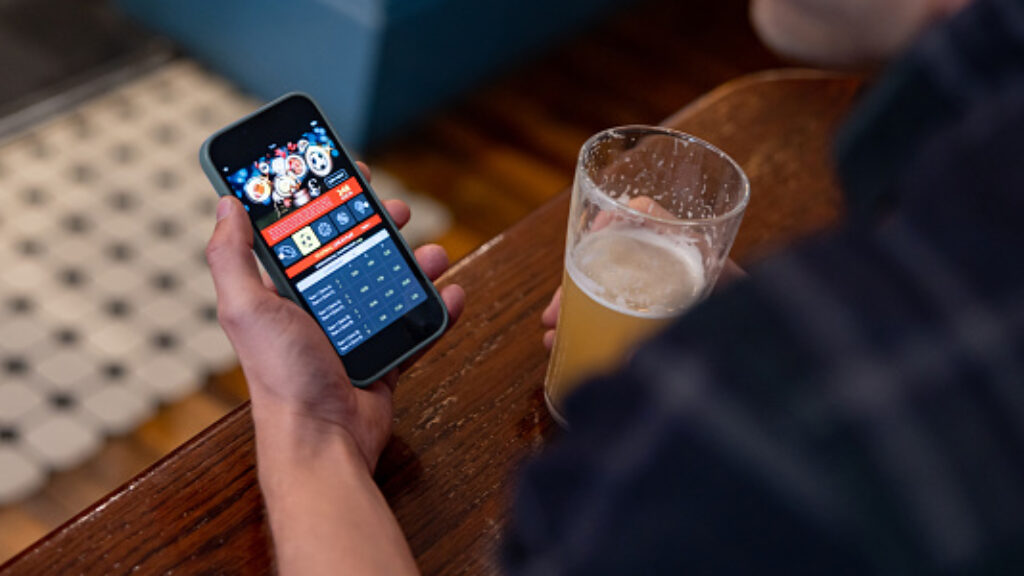
Adam bets for fun. Last month, he estimated spending between £600 and £800 gambling.
He says the social aspect makes even losing enjoyable. “Even if I’m losing a bit, I don’t mind cuz it’s fun to do with everyone.
Adam – not his real name – participates in online sports betting. He’s one of thousands of online gamblers who are expected to be hit by the new government tax in the November budget.
Adam, who lives in London, says he has “no idea about the new tax and how it works. But in terms of would it stop me, then no.”
He started gambling when he was 18 years old, but said he didn’t fully get into it until he got a job.
Adam explained, “I bet for fun, but also if the money doesn’t look good, then I wouldn’t place it.”
“I pretty much only bet on football and horse racing. Football a lot, but horse racing only when the big festivals are on”.
Former Prime Minister Gordon Brown has called on Reeves to use the government revenue to fund the £2bn black hole. “We tax cigarettes at 80%, we tax alcohol at 70%, but the online gambling tax is 21%. So there’s a big case for change,” he said in an interview earlier this week.
He added, “Move the money from the bad, by taxing it, and put it to good, which is children taken out of poverty.”
Online sports betting accounts for a third of the online gambling market. Football betting is the most popular, generating £1.1bn annually.
Modern One Handed Bandit Slot Machines Inside a Casino. Gambling Industry Theme.
But with the autumn budget looming, Chancellor Rachel Reeves is set to raise online betting tax.
A recent study commissioned by Ygam, a gambling awareness charity that focuses on reducing gambling harm among children and young people, reveals that more than half of university students have gambled in the past 12 months.
The Chancellor’s budget is set to be announced on the 26th of November.
Submitted Article
Headline
Short Headline
Standfirst
Published Article
HeadlineWhy a tax won’t stop this man from betting
Short HeadlineA young gambler has told City News that a new tax won’t stop him from gambling.
Standfirst'Adam' says he has no idea about the new tax and how it works. "Would it stop me? No.”
Adam bets for fun. Last month, he estimated spending between £600 and £800 gambling.
He says the social aspect makes even losing enjoyable. “Even if I’m losing a bit, I don’t mind cuz it’s fun to do with everyone.
Adam – not his real name – participates in online sports betting. He’s one of thousands of online gamblers who are expected to be hit by the new government tax in the November budget.
Adam, who lives in London, says he has “no idea about the new tax and how it works. But in terms of would it stop me, then no.”
He started gambling when he was 18 years old, but said he didn’t fully get into it until he got a job.
Adam explained, “I bet for fun, but also if the money doesn’t look good, then I wouldn’t place it.”
“I pretty much only bet on football and horse racing. Football a lot, but horse racing only when the big festivals are on”.
Former Prime Minister Gordon Brown has called on Reeves to use the government revenue to fund the £2bn black hole. “We tax cigarettes at 80%, we tax alcohol at 70%, but the online gambling tax is 21%. So there’s a big case for change,” he said in an interview earlier this week.
He added, “Move the money from the bad, by taxing it, and put it to good, which is children taken out of poverty.”
Online sports betting accounts for a third of the online gambling market. Football betting is the most popular, generating £1.1bn annually.
Modern One Handed Bandit Slot Machines Inside a Casino. Gambling Industry Theme.
But with the autumn budget looming, Chancellor Rachel Reeves is set to raise online betting tax.
A recent study commissioned by Ygam, a gambling awareness charity that focuses on reducing gambling harm among children and young people, reveals that more than half of university students have gambled in the past 12 months.
The Chancellor’s budget is set to be announced on the 26th of November.
A 2024 Freedom of Information request showed Bromley Council had £4.5 million invested in arms companies that year with £1.5 million reportedly linked to Israel.
Undercover officers raided three linked shops in Barking town centre, revealing how illicit tobacco is being hidden in walls, ceilings and nearby locations to evade detection.
More than 330,000 people across the UK sought support from the Stop It Now helpline in 2025 over concerns about their own or someone else’s online sexual behaviour towards children, according to new charity data. The anonymous service says contacts by phone, email and webchat rose significantly over the year.