London is the global capital of insurance. With attacks on ships travelling through the Strait of Hormuz, what is the insurance story behind the human tragedy?
Iran’s new supreme leader Mojtaba Khamenei has vowed to continue blocking the Strait of Hormuz, according to a statement read out on Iranian state television.
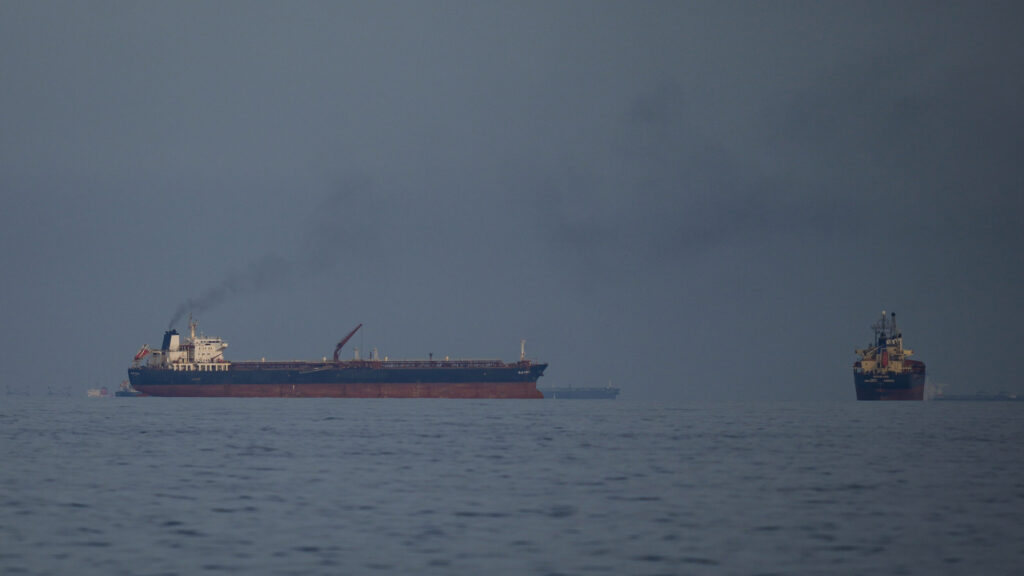
This follows a series of strikes on ships travelling through the gulf. As of Thursday 12th March, the U.K. Maritime Trade Operations Centre has reported 16 incidents of attacks in the Strait of Hormuz.
The Strait of Hormuz is particularly important as it is a key route for ship transportation through the Gulf. It produces around “20% of global energy raw material” according to Dr Yannis Koliousis, an expert in supply chain management. This includes oil and LNG (liquified natural gas).
“Most of the ship owners have delayed reaching or leaving the area as they are afraid of something happening”.
Simultaneously insurance costs have “increased considerably”.
This impacts costs as supply chains break down, meaning energy prices increase.
Oil prices have been volatile since the war began on the 28th of February. Costs hit almost $100 per barrel earlier today.
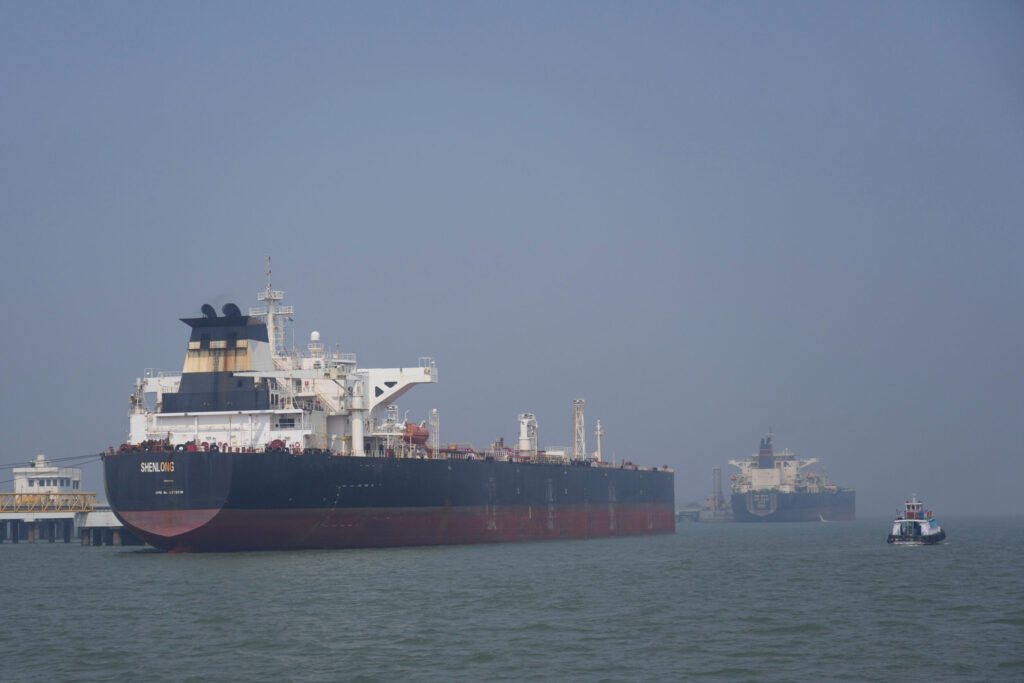
Liberia-flagged tanker Shenlong Suezmax, carrying crude oil from Saudi Arabia, that arrived clearing the Strait of Hormuz, is seen at the Mumbai Port in Mumbai, India, Thursday, March 12, 2026. (AP Photo/Rafiq Maqbool)
As dangers continue for ships traversing the waters, what is the insurance-related impact?
London finds itself at the global centre for shipping insurance. A recent report said that it is responsible for 45% of the global insurance premium for the shipping and aviation industries.
Patrick Davidson from Lloyd’s of London, the insurance marketplace, has hit back at accusations they’re refusing to cover the risk at all and said they would “still provide cover to basically anyone who asks” and that it was “not an insurance issue — it’s a question of vessel and crew safety”.
Still, that has not stopped President Trump’s government offering its own $20 billion dollar plan for reinsurance of ships in the gulf.
It is not clear yet if these moves will mean more ships will feel able to pass the Strait or not.
If the conflict does not stop then the effect could be harsher than the impact of the Russian-Ukraine war in 2022, Dr Koliousis said.
The supply chain of fertilisers, plastic and raw material are also set to be potentially affected, although the impact will be delayed.
Discover more on our Instagram and TikTok pages.
Submitted Article
Headline
Short Headline
Standfirst
Published Article
HeadlineShipping insurance rises amid attacks in Strait of Hormuz
Short HeadlineRising shipping insurance costs amid Iran war
Standfirst16 incidents of attacks have been recorded in the Strait of Hormuz. This has led to rising insurance costs for ships travelling through the Gulf.
London is the global capital of insurance. With attacks on ships travelling through the Strait of Hormuz, what is the insurance story behind the human tragedy?
Iran’s new supreme leader Mojtaba Khamenei has vowed to continue blocking the Strait of Hormuz, according to a statement read out on Iranian state television.
This follows a series of strikes on ships travelling through the gulf. As of Thursday 12th March, the U.K. Maritime Trade Operations Centre has reported 16 incidents of attacks in the Strait of Hormuz.
The Strait of Hormuz is particularly important as it is a key route for ship transportation through the Gulf. It produces around “20% of global energy raw material” according to Dr Yannis Koliousis, an expert in supply chain management. This includes oil and LNG (liquified natural gas).
“Most of the ship owners have delayed reaching or leaving the area as they are afraid of something happening”.
Simultaneously insurance costs have “increased considerably”.
This impacts costs as supply chains break down, meaning energy prices increase.
Oil prices have been volatile since the war began on the 28th of February. Costs hit almost $100 per barrel earlier today.
Liberia-flagged tanker Shenlong Suezmax, carrying crude oil from Saudi Arabia, that arrived clearing the Strait of Hormuz, is seen at the Mumbai Port in Mumbai, India, Thursday, March 12, 2026. (AP Photo/Rafiq Maqbool)
As dangers continue for ships traversing the waters, what is the insurance-related impact?
London finds itself at the global centre for shipping insurance. A recent report said that it is responsible for 45% of the global insurance premium for the shipping and aviation industries.
Patrick Davidson from Lloyd’s of London, the insurance marketplace, has hit back at accusations they’re refusing to cover the risk at all and said they would “still provide cover to basically anyone who asks” and that it was “not an insurance issue — it’s a question of vessel and crew safety”.
Still, that has not stopped President Trump’s government offering its own $20 billion dollar plan for reinsurance of ships in the gulf.
It is not clear yet if these moves will mean more ships will feel able to pass the Strait or not.
If the conflict does not stop then the effect could be harsher than the impact of the Russian-Ukraine war in 2022, Dr Koliousis said.
The supply chain of fertilisers, plastic and raw material are also set to be potentially affected, although the impact will be delayed.
A 2024 Freedom of Information request showed Bromley Council had £4.5 million invested in arms companies that year with £1.5 million reportedly linked to Israel.
Undercover officers raided three linked shops in Barking town centre, revealing how illicit tobacco is being hidden in walls, ceilings and nearby locations to evade detection.
More than 330,000 people across the UK sought support from the Stop It Now helpline in 2025 over concerns about their own or someone else’s online sexual behaviour towards children, according to new charity data. The anonymous service says contacts by phone, email and webchat rose significantly over the year.