Teachers across the capital have told City News that while phone bans can transform behaviour inside schools, the online world continues to spill into classrooms. It comes as Ofsted gains new powers to help schools ensure they’re phone-free.
This week the House of Lords voted in support of a social media ban for under-16s, a move ministers are trying to block, while the government has just launched its own consultation – speaking to teachers, parents and young people – that runs until the summer.
But enforcing a total ban may be far harder than politicians suggest.
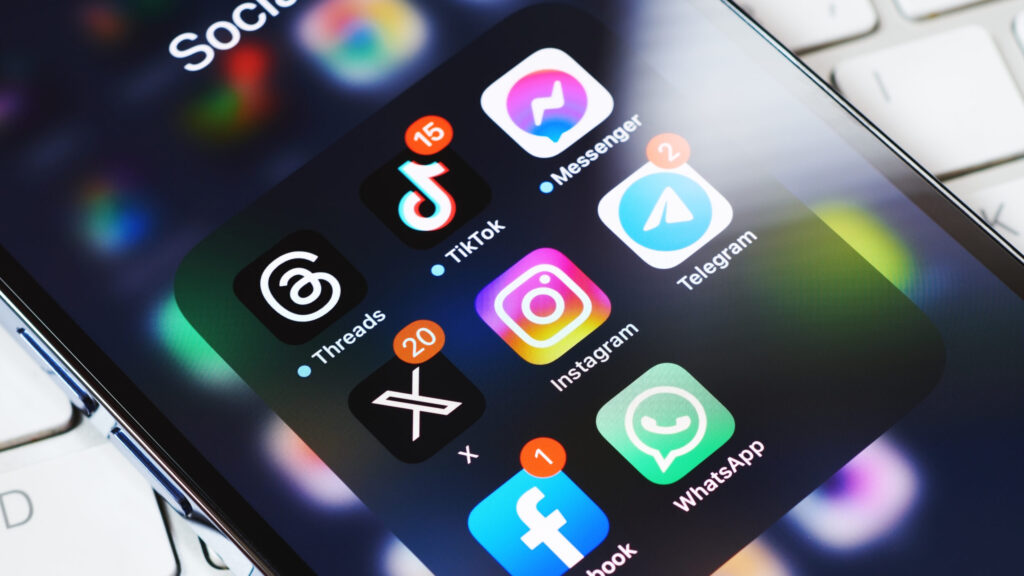
Source: Adobe Stock
“A greater degree of calm”
Many London schools already operate strict no-phone policies, long before Ofsted was given new enforcement powers on Monday.
Nathan Ralphs, a secondary teacher in Brent, says he was initially sceptical about his school’s no phone policy but now believes the “benefits outweigh any negatives.”
“Not having phones visible on site means there’s a greater degree of calm in the school day. You’re not worried about what students are doing on their phones at different times.”
He says the policy gives “greater control and predictability” helping students focus.
Joseph Cheeseright, who teaches in south-west London echoes this:
“As a result of this policy I have had little to no disruption from phones during my lessons.”
His school confiscates any phones seen on site, with parents required to collect it – a deterrent “that works extremely well.”
The ‘double’ phone problem
But not all schools have it so easy.
Tom Clifton, a primary teacher in London, says students have developed workarounds.
“There’s so much double phoning. They’ll hand in a Nokia brick and keep their iPhone. Parents buy them both.”
He says the school even encourages parents to buy children a brick style phone for commuting to school, which backfires with students using them to outsmart the rules.
He’s also unsure what new changes Ofsted would be able to enforce, when the reality is schools have limited time in the morning:
“You have such little time to cram everything in. If you had to check every child for phones, it would take an inordinate amount of time.”
Tom Clifton, a primary school teacher in North London.
The “overhang” from the night before
Teachers agree that the biggest classroom disruption is the ‘overhang’ from what students see the night before.
Tom Clifton says:
“If something’s happened the night before – a video, a group chat, a TikTok – it’s very distracting. They’ll be thinking about it all day.”
Joseph Cheeseright sees the same pattern in secondary students:
“I’ve had students upset about how they look. If they’re struggling socially, seeing posts of classmates having a great time knocks their confidence more.”
What about a total social media ban?
The government’s consultation proposes a blanket ban on social media for under‑16s — a move ministers say would protect mental health and reduce exposure to harmful content.
Joseph Cheeseright supports the idea:
“Mental health would be protected more. It may improve attention spans. Students are used to 15‑second videos — more complex content can seem boring.”
He also believes it could reduce exposure to extreme influencers:
“Students are only a few likes away from being subjected to extreme views like Andrew Tate.”
A female teacher shares her worries about the rise of the ‘manosphere’ at the all-boys secondary she teaches at.
“We’ve done work around students’ awareness of the manosphere and its impact on the relationships. I worry what they consume on TikTok and how much of a threat it is.”
But she is sceptical over enforcing the ban, citing her 15‑year‑old relative in Australia:
“He says there are no checks and everyone at school still uses social media. So is the ban actually impactful? My concern is how it can be enforced.”
Tom Clifton agrees that it would be great in theory, but is doubtful over if it could be effectively enforced.
As the government considers an under-16s social media ban, teachers warn that enforcement – not intention – will determine whether the policy protects children or simply pushes their digital lives into secrecy.
Until that gap is bridged, the ‘overhang’ of last night’s TikTok drama will keep walking into classrooms every morning.
Submitted Article
Headline
Short Headline
Standfirst
Published Article
HeadlineNo Phone Policy Brings ‘Calm’ to Classrooms say London Teachers, but divide remains on a social media ban
Short HeadlineLondon Teachers back phone ban, but split over under-16s social media ban
StandfirstFour teachers share their thoughts with CityNews about the social media debate and it's impact in the classroom
Teachers across the capital have told City News that while phone bans can transform behaviour inside schools, the online world continues to spill into classrooms. It comes as Ofsted gains new powers to help schools ensure they’re phone-free.
This week the House of Lords voted in support of a social media ban for under-16s, a move ministers are trying to block, while the government has just launched its own consultation – speaking to teachers, parents and young people – that runs until the summer.
But enforcing a total ban may be far harder than politicians suggest.
Source: Adobe Stock
“A greater degree of calm”
Many London schools already operate strict no-phone policies, long before Ofsted was given new enforcement powers on Monday.
Nathan Ralphs, a secondary teacher in Brent, says he was initially sceptical about his school’s no phone policy but now believes the “benefits outweigh any negatives.”
“Not having phones visible on site means there’s a greater degree of calm in the school day. You’re not worried about what students are doing on their phones at different times.”
He says the policy gives “greater control and predictability” helping students focus.
Joseph Cheeseright, who teaches in south-west London echoes this:
“As a result of this policy I have had little to no disruption from phones during my lessons.”
His school confiscates any phones seen on site, with parents required to collect it – a deterrent “that works extremely well.”
The ‘double’ phone problem
But not all schools have it so easy.
Tom Clifton, a primary teacher in London, says students have developed workarounds.
“There’s so much double phoning. They’ll hand in a Nokia brick and keep their iPhone. Parents buy them both.”
He says the school even encourages parents to buy children a brick style phone for commuting to school, which backfires with students using them to outsmart the rules.
He’s also unsure what new changes Ofsted would be able to enforce, when the reality is schools have limited time in the morning:
“You have such little time to cram everything in. If you had to check every child for phones, it would take an inordinate amount of time.”
Tom Clifton, a primary school teacher in North London.
The “overhang” from the night before
Teachers agree that the biggest classroom disruption is the ‘overhang’ from what students see the night before.
Tom Clifton says:
“If something’s happened the night before – a video, a group chat, a TikTok – it’s very distracting. They’ll be thinking about it all day.”
Joseph Cheeseright sees the same pattern in secondary students:
“I’ve had students upset about how they look. If they’re struggling socially, seeing posts of classmates having a great time knocks their confidence more.”
What about a total social media ban?
The government’s consultation proposes a blanket ban on social media for under‑16s — a move ministers say would protect mental health and reduce exposure to harmful content.
Joseph Cheeseright supports the idea:
“Mental health would be protected more. It may improve attention spans. Students are used to 15‑second videos — more complex content can seem boring.”
He also believes it could reduce exposure to extreme influencers:
“Students are only a few likes away from being subjected to extreme views like Andrew Tate.”
A female teacher shares her worries about the rise of the ‘manosphere’ at the all-boys secondary she teaches at.
“We’ve done work around students’ awareness of the manosphere and its impact on the relationships. I worry what they consume on TikTok and how much of a threat it is.”
But she is sceptical over enforcing the ban, citing her 15‑year‑old relative in Australia:
“He says there are no checks and everyone at school still uses social media. So is the ban actually impactful? My concern is how it can be enforced.”
Tom Clifton agrees that it would be great in theory, but is doubtful over if it could be effectively enforced.
As the government considers an under-16s social media ban, teachers warn that enforcement – not intention – will determine whether the policy protects children or simply pushes their digital lives into secrecy.
Until that gap is bridged, the ‘overhang’ of last night’s TikTok drama will keep walking into classrooms every morning.
A 2024 Freedom of Information request showed Bromley Council had £4.5 million invested in arms companies that year with £1.5 million reportedly linked to Israel.
Undercover officers raided three linked shops in Barking town centre, revealing how illicit tobacco is being hidden in walls, ceilings and nearby locations to evade detection.
More than 330,000 people across the UK sought support from the Stop It Now helpline in 2025 over concerns about their own or someone else’s online sexual behaviour towards children, according to new charity data. The anonymous service says contacts by phone, email and webchat rose significantly over the year.