“When you look at the extent some authoritarian regimes go to prevent journalists from telling their stories, it becomes clear that there is value in what those journalists and media outlets do.”
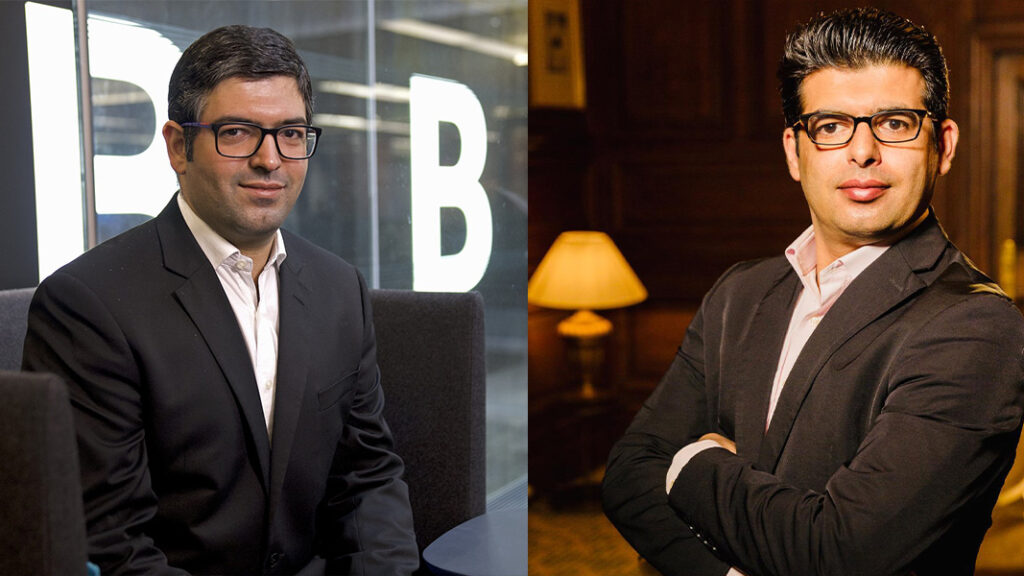
Behrang Tajdin, economics correspondent for BBC Persian, is talking to City News about the Iranian government’s efforts to censor journalists abroad. He said the regime hired criminal gangs to pressure journalists and punish family members on their behalf.
Protests in Iran are entering their fifth week following sharp economic collapse that saw the currency plunge, inflation soar, and worsening living conditions amidst decades of corruption and mismanagement of essential services.
Demonstrations began as shop owners in the capital’s Grand Bazaar went on strike, but have since grown to a nationwide protest calling for the end of the Islamic Republic and a transition to a new system of governance.
The government’s response has been forceful with immense violence resulting in the massacre of at least 30,000 Iranians, according to senior officials of Iran’s Ministry of Health. The state has implemented an internet blackout on 8 January, limiting communication both in and out the country and further complicating media coverage.
Pressure on the journalists dates back decades
“You must have a sense of patriotism. You are an Iranian, but you are working for foreigners”
These were the words of an agent of Iran’s Ministry of Intelligence in a hotel room in Tehran in 2008. For Hadi Torfi, an Iranian-British journalist in the UK, this was one of many interrogations he faced when reporting inside Iran.
“Working as a journalist in Iran is like walking in a minefield,” said Torfi – Courtesy of Christian Urresti
Torfi described how he was questioned about his work and intentions reporting for an international media company. The intelligence agent repeatedly pressed him to provide regular updates on his stories and internal documents, giving authorities direct oversight of his reporting.
His repeated refusal, he said, was met with escalating threats. “If we prevent you from working with this foreign media organization, what will you do?” the agent asked. “Your options will be limited, you may only be able to work as a farmer.”
One remark from that first interrogation stuck with Torfi: “Remember that on the Day of Judgement, when there is Heaven and Hell, you will be asked this question; a hand was extended to you by the government of the Islamic Republic, but you refused it.”
Months and many interrogations later, Torfi’s phone line was cut and he was summoned to the Revolutionary Court. In the wake of the Green Movement, some 50 journalists had been arrested in a single week and Torfi suspected he was next.
Within two days, he fled to Dubai.
Systemic targeting of the media
For decades, the Iranian regime has carried out a “systemic campaign of intimidation, harassment, and coercion against Iranian reporters working abroad”, accusing them of “media terrorism”, said Laura Davison, general secretary of the National Union of Journalists.
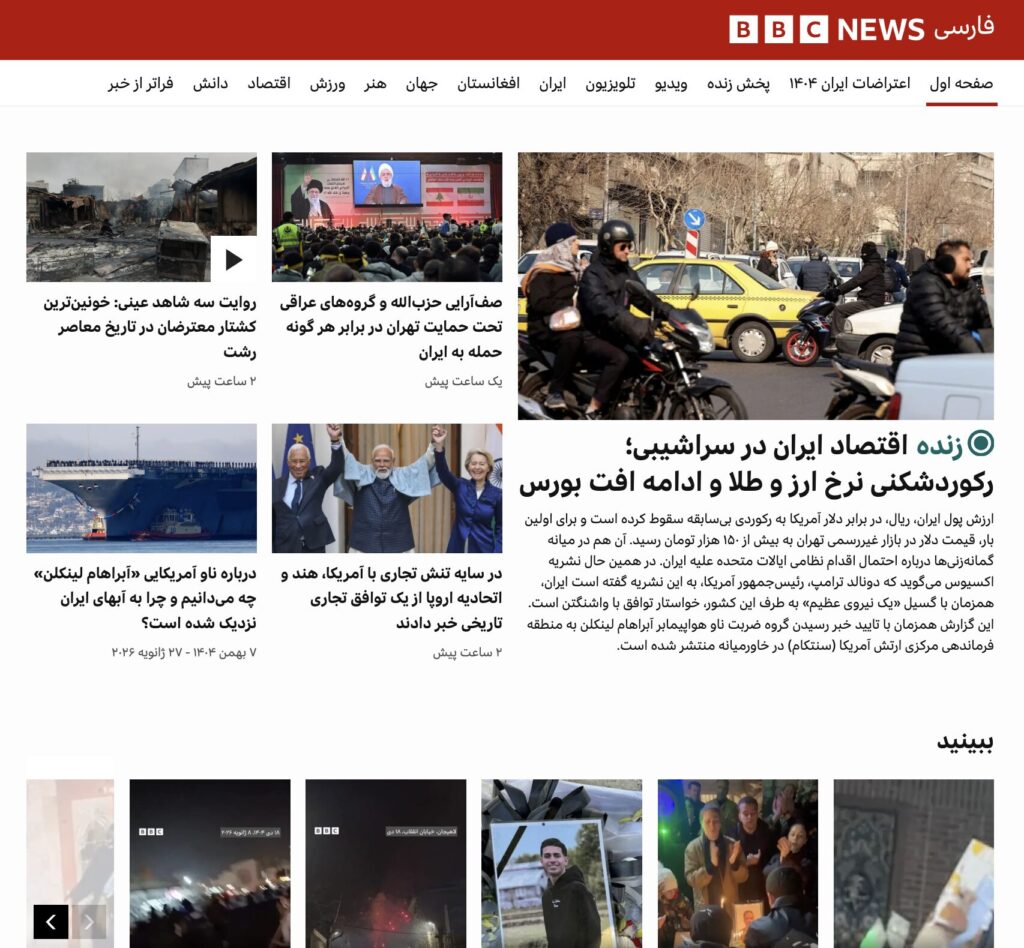
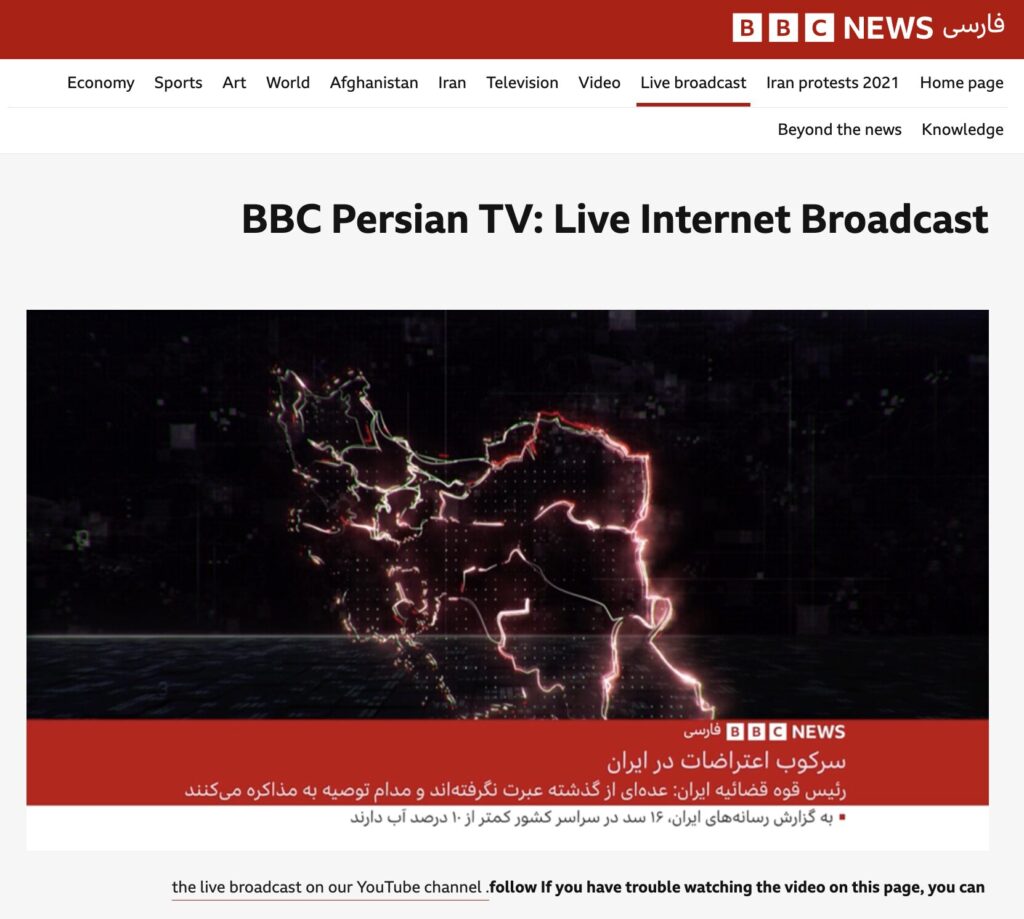
BBC Persian is banned from reporting within Iran and ownership of satellite dishes used to access the channel are illegal.
“They want us to stop doing journalism because journalism means people know the things that matter to them”, said Tajdin, “the state only wants the people to know what the state” decides.
“They want to own the narrative”, he said, and independent media threatens their monopoly.
Tajdin explained that protecting this “single narrative” is the driving intention behind the state’s intimidation campaign. “That’s the reason behind the persecution, that’s the reason behind all the pressures, that’s the reason behind physical and emotional threats.”
Several organisations including the BBC, the National Union of Journalists, the International Federation of Journalists, and the Committee to Protect Journalists have since repeatedly called on the United Nations to condemn Iran’s persecution of journalists.
The UN have said Special Rapporteurs are in contact with the government of Iran to discuss this issue.
Pressure through family members
After arriving in Dubai, Torfi began working for MBC, specialising in Iranian affairs. As tensions between Saudi Arabia and Iran peaked, Torfi’s reporting gained greater visibility on MBC’s channel.
“This did not go unpunished by the regime,” said Torfi. The Iranian state extended their strategies of intimidation transnationally by exploiting family ties to apply pressure and coax Torfi back to Iran. In Iran, his family was harassed, his brothers interrogated repeatedly, and his nephew deprived of government employment opportunities.
Eventually, Torfi received a phone call from his brother, telling him he was coming to Dubai to visit. Upon arrival in Dubai, his brother confessed that the Iranian state had forced him to travel from Ahvaz in southern Iran to “deliver a threat” – “Either you stay silent and shut your mouth, or we know how to make you shut your mouth.”
Independent media compromises the “single narrative”
Tajdin explained that for decades, the Iranian government has been opposed to independent journalism. “The constitution says that only the state has the right to broadcast”, making ownership of a satellite dish to watch international media such as BBC Persian illegal.
Despite distressing images, BBC Persian verify content “forensically, in order to determine facts and paint as accurate a picture of the events as possible for people,” explained Tajdin.
When it launched in 2009, Tajdin explained how BBC Persian was the first independent Persian television channel that did not take an anti-regime stance. He described how there was a sense of “euphoria” amongst viewers who felt they finally had access to accurate reporting, “this was the first time people would see reporters and presenters not taking a side.”
However, “that trust is what the Iranian authorities have never liked,” and led to extensive efforts to limit BBC Persian’s coverage and Iranian audiences’ access to the channel. Today, the channel is banned from reporting in Iran and has become the focus of the Iranian government’s efforts, alongside Iran International.
Despite being in the UK, Tajdin said that “all the evidence suggests that [the Iranian state] has case files on” BBC Persian staff and family members and are carrying out numerous hacking campaigns to access internal information.
Efforts to restrict BBC Persian’s reporting has continued to escalate. “It became clear that this is a war on BBC Persian,” said Tajdin.
He explained that in the past year, every time a close family member re-entered Iran from abroad, they were stopped at the airport and interrogated. Tajdin recounted how they are told to ask their son or daughter to stop working for the outlet because “BBC Persian is anti-regime, anti-revolutionary, anti-god.”
“I hope telling the truth and the story of what has happened helps, that’s all we can hope…”
Torfi explained that “our job as Iranian journalists abroad is to report the truth” so that “people inside the country feel supported and confident that their voices are reaching the world.”
Emphasising the heightened need for accuracy and impartiality when reporting on the protests in Iran, Tajdin said even if “some parts of the population or the government don’t like it”, “that’s the truth and if there is truth, we show it”, “that’s what’s important.”
He pointed to BBC Persian’s decision to broadcast a video of bodies of protestors piled in a mortuary in Kahrizak, southern Tehran, despite resistance from anti-regime activists and media outlets who said it would “discourage people from protesting.”
“It takes a heavy emotional toll, but it is vital that people know what those in power don’t want them to know. That is our role.” – Behrang Tajdin
Torfi said social media has made it increasingly difficult for the government to silence independent voices. Despite the internet blackout, he said “citizen journalists” continue to funnel footage to international newsrooms through platforms like X.
He added that their reporting ensures foreign governments, like the UK, understand the reality in Iran and the support civilians need.
To support colleagues under threat, Anthony Bellanger, General Secretary of the International Federation of Journalists, told City News that journalists should “lobby their governments” to guarantee strategies for security and guidance. He explained how this requires “sufficient funding” for efficient and effective action.
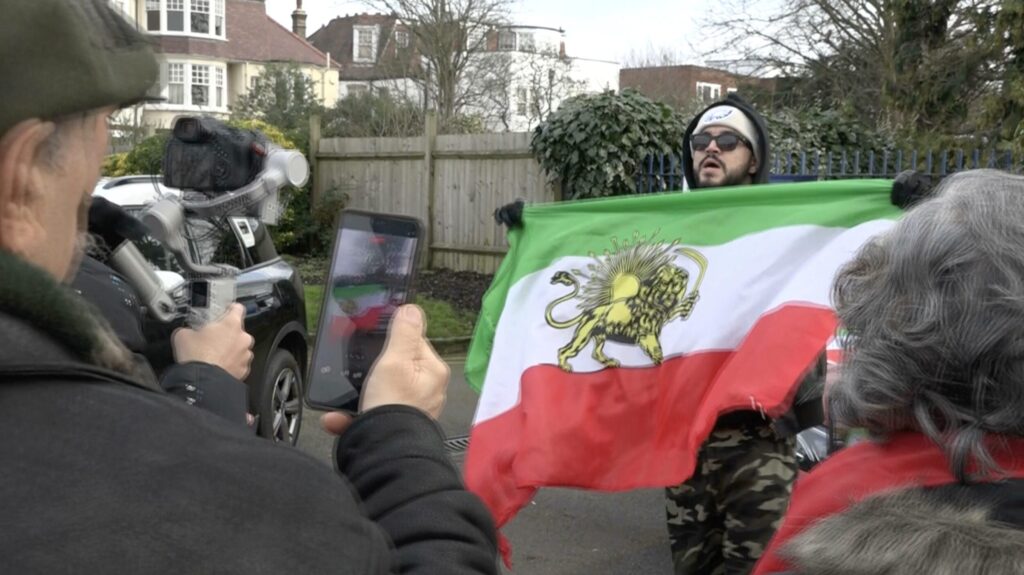
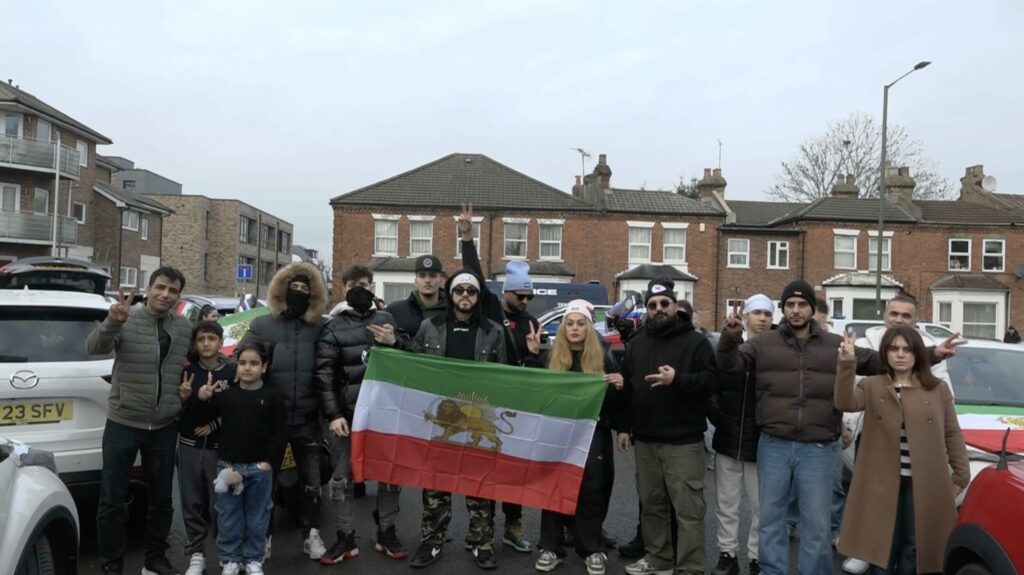
Iranian Londoners continue to protest in solidarity with family in Iran – Courtesy of Christian Urresti
Torfi explained that despite threats, he remains committed. “This is the way to work for our people, to use freedom of speech to tell the truth, and to work for freedom for our country.”
“People go to the street, and they know they will die,” said Torfi. He added that protestors’ confidence is built “from suffering” the consequence of economic collapse, and emboldened by international media coverage.
Despite being in the UK where his worries have calmed, Torfi said “this regime has shown that it does not respect other countries and targets journalists abroad to silence them,” as fear remains a shadow in his daily life.
Since he left in 2009, he has yet to return home but remains optimistic that he will be able to after a change in leadership – “I think we are very close to this.”
Submitted Article
Headline
Short Headline
Standfirst
Published Article
Headline“When he talks, he must remember that his body is in our hands”: The Iranian regime’s campaign to censor Iranian journalists abroad
Short HeadlineIran's campaign to censor reporting by journalists abroad
StandfirstThree weeks into a nationwide internet blackout, Iranian journalists abroad continue coverage of Iran despite decades of censorship.
“When you look at the extent some authoritarian regimes go to prevent journalists from telling their stories, it becomes clear that there is value in what those journalists and media outlets do.”
Behrang Tajdin, economics correspondent for BBC Persian, is talking to City News about the Iranian government’s efforts to censor journalists abroad. He said the regime hired criminal gangs to pressure journalists and punish family members on their behalf.
Protests in Iran are entering their fifth week following sharp economic collapse that saw the currency plunge, inflation soar, and worsening living conditions amidst decades of corruption and mismanagement of essential services.
Demonstrations began as shop owners in the capital’s Grand Bazaar went on strike, but have since grown to a nationwide protest calling for the end of the Islamic Republic and a transition to a new system of governance.
The government’s response has been forceful with immense violence resulting in the massacre of at least 30,000 Iranians, according to senior officials of Iran’s Ministry of Health. The state has implemented an internet blackout on 8 January, limiting communication both in and out the country and further complicating media coverage.
Pressure on the journalists dates back decades
“You must have a sense of patriotism. You are an Iranian, but you are working for foreigners”
These were the words of an agent of Iran’s Ministry of Intelligence in a hotel room in Tehran in 2008. For Hadi Torfi, an Iranian-British journalist in the UK, this was one of many interrogations he faced when reporting inside Iran.
“Working as a journalist in Iran is like walking in a minefield,” said Torfi – Courtesy of Christian Urresti
Torfi described how he was questioned about his work and intentions reporting for an international media company. The intelligence agent repeatedly pressed him to provide regular updates on his stories and internal documents, giving authorities direct oversight of his reporting.
His repeated refusal, he said, was met with escalating threats. “If we prevent you from working with this foreign media organization, what will you do?” the agent asked. “Your options will be limited, you may only be able to work as a farmer.”
One remark from that first interrogation stuck with Torfi: “Remember that on the Day of Judgement, when there is Heaven and Hell, you will be asked this question; a hand was extended to you by the government of the Islamic Republic, but you refused it.”
Months and many interrogations later, Torfi’s phone line was cut and he was summoned to the Revolutionary Court. In the wake of the Green Movement, some 50 journalists had been arrested in a single week and Torfi suspected he was next.
Within two days, he fled to Dubai.
Systemic targeting of the media
For decades, the Iranian regime has carried out a “systemic campaign of intimidation, harassment, and coercion against Iranian reporters working abroad”, accusing them of “media terrorism”, said Laura Davison, general secretary of the National Union of Journalists.
BBC Persian is banned from reporting within Iran and ownership of satellite dishes used to access the channel are illegal.
“They want us to stop doing journalism because journalism means people know the things that matter to them”, said Tajdin, “the state only wants the people to know what the state” decides.
“They want to own the narrative”, he said, and independent media threatens their monopoly.
Tajdin explained that protecting this “single narrative” is the driving intention behind the state’s intimidation campaign. “That’s the reason behind the persecution, that’s the reason behind all the pressures, that’s the reason behind physical and emotional threats.”
Several organisations including the BBC, the National Union of Journalists, the International Federation of Journalists, and the Committee to Protect Journalists have since repeatedly called on the United Nations to condemn Iran’s persecution of journalists.
The UN have said Special Rapporteurs are in contact with the government of Iran to discuss this issue.
Pressure through family members
After arriving in Dubai, Torfi began working for MBC, specialising in Iranian affairs. As tensions between Saudi Arabia and Iran peaked, Torfi’s reporting gained greater visibility on MBC’s channel.
“This did not go unpunished by the regime,” said Torfi. The Iranian state extended their strategies of intimidation transnationally by exploiting family ties to apply pressure and coax Torfi back to Iran. In Iran, his family was harassed, his brothers interrogated repeatedly, and his nephew deprived of government employment opportunities.
Eventually, Torfi received a phone call from his brother, telling him he was coming to Dubai to visit. Upon arrival in Dubai, his brother confessed that the Iranian state had forced him to travel from Ahvaz in southern Iran to “deliver a threat” – “Either you stay silent and shut your mouth, or we know how to make you shut your mouth.”
Independent media compromises the “single narrative”
Tajdin explained that for decades, the Iranian government has been opposed to independent journalism. “The constitution says that only the state has the right to broadcast”, making ownership of a satellite dish to watch international media such as BBC Persian illegal.
Despite distressing images, BBC Persian verify content “forensically, in order to determine facts and paint as accurate a picture of the events as possible for people,” explained Tajdin.
When it launched in 2009, Tajdin explained how BBC Persian was the first independent Persian television channel that did not take an anti-regime stance. He described how there was a sense of “euphoria” amongst viewers who felt they finally had access to accurate reporting, “this was the first time people would see reporters and presenters not taking a side.”
However, “that trust is what the Iranian authorities have never liked,” and led to extensive efforts to limit BBC Persian’s coverage and Iranian audiences’ access to the channel. Today, the channel is banned from reporting in Iran and has become the focus of the Iranian government’s efforts, alongside Iran International.
Despite being in the UK, Tajdin said that “all the evidence suggests that [the Iranian state] has case files on” BBC Persian staff and family members and are carrying out numerous hacking campaigns to access internal information.
Efforts to restrict BBC Persian’s reporting has continued to escalate. “It became clear that this is a war on BBC Persian,” said Tajdin.
He explained that in the past year, every time a close family member re-entered Iran from abroad, they were stopped at the airport and interrogated. Tajdin recounted how they are told to ask their son or daughter to stop working for the outlet because “BBC Persian is anti-regime, anti-revolutionary, anti-god.”
“I hope telling the truth and the story of what has happened helps, that’s all we can hope…”
Torfi explained that “our job as Iranian journalists abroad is to report the truth” so that “people inside the country feel supported and confident that their voices are reaching the world.”
Emphasising the heightened need for accuracy and impartiality when reporting on the protests in Iran, Tajdin said even if “some parts of the population or the government don’t like it”, “that’s the truth and if there is truth, we show it”, “that’s what’s important.”
He pointed to BBC Persian’s decision to broadcast a video of bodies of protestors piled in a mortuary in Kahrizak, southern Tehran, despite resistance from anti-regime activists and media outlets who said it would “discourage people from protesting.”
“It takes a heavy emotional toll, but it is vital that people know what those in power don’t want them to know. That is our role.” – Behrang Tajdin
Torfi said social media has made it increasingly difficult for the government to silence independent voices. Despite the internet blackout, he said “citizen journalists” continue to funnel footage to international newsrooms through platforms like X.
He added that their reporting ensures foreign governments, like the UK, understand the reality in Iran and the support civilians need.
To support colleagues under threat, Anthony Bellanger, General Secretary of the International Federation of Journalists, told City News that journalists should “lobby their governments” to guarantee strategies for security and guidance. He explained how this requires “sufficient funding” for efficient and effective action.
Iranian Londoners continue to protest in solidarity with family in Iran – Courtesy of Christian Urresti
Torfi explained that despite threats, he remains committed. “This is the way to work for our people, to use freedom of speech to tell the truth, and to work for freedom for our country.”
“People go to the street, and they know they will die,” said Torfi. He added that protestors’ confidence is built “from suffering” the consequence of economic collapse, and emboldened by international media coverage.
Despite being in the UK where his worries have calmed, Torfi said “this regime has shown that it does not respect other countries and targets journalists abroad to silence them,” as fear remains a shadow in his daily life.
Since he left in 2009, he has yet to return home but remains optimistic that he will be able to after a change in leadership – “I think we are very close to this.”
A 2024 Freedom of Information request showed Bromley Council had £4.5 million invested in arms companies that year with £1.5 million reportedly linked to Israel.
Undercover officers raided three linked shops in Barking town centre, revealing how illicit tobacco is being hidden in walls, ceilings and nearby locations to evade detection.
More than 330,000 people across the UK sought support from the Stop It Now helpline in 2025 over concerns about their own or someone else’s online sexual behaviour towards children, according to new charity data. The anonymous service says contacts by phone, email and webchat rose significantly over the year.