UK’s Busiest Train Station Approved For £1.2bn Controversial Redevelopment
National Rail’s proposal to develop Liverpool Street Station has been approved by the City of London planning committee despite heritage and financial concerns.
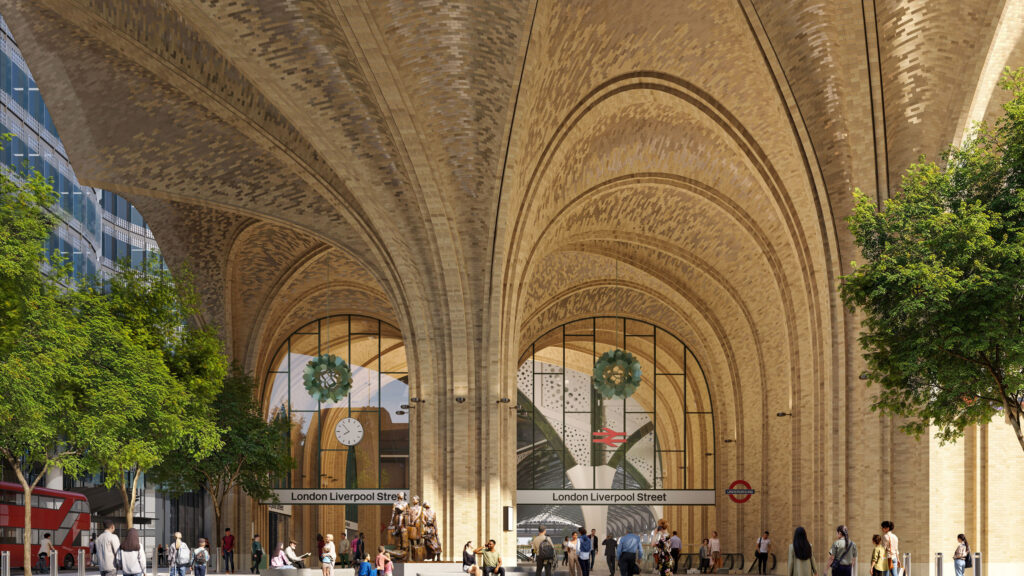
Network Rail's design for the new entrance to Liverpool Street Station
SHARE:
The architect who redesigned King’s Cross Station has criticised Network Rail’s £1.2 billion plan to redevelop Liverpool Street Station, describing it as undeliverable, and ‘too costly’.
The City of London planning committee backed the scheme by 19 votes to three, despite more than 3,000 objections, and the chair Tom Sleigh hailed it as an ‘excellent application’.
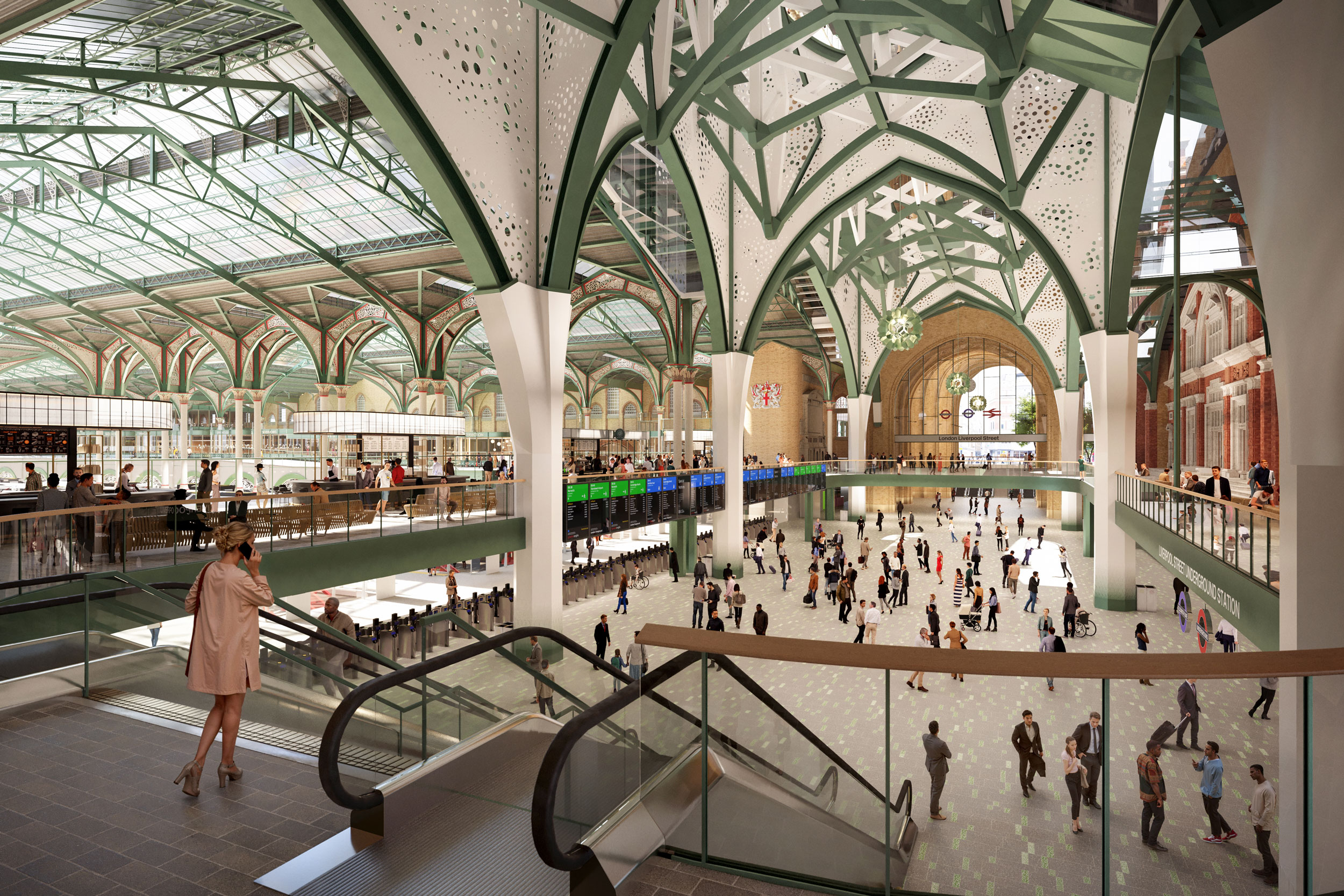
The transformation would aim to make the station completely wheelchair accessible, and increase the overall concourse capacity by 76%. This is considered essential as annual passenger numbers are forecast to grow to 158 million by 2014.
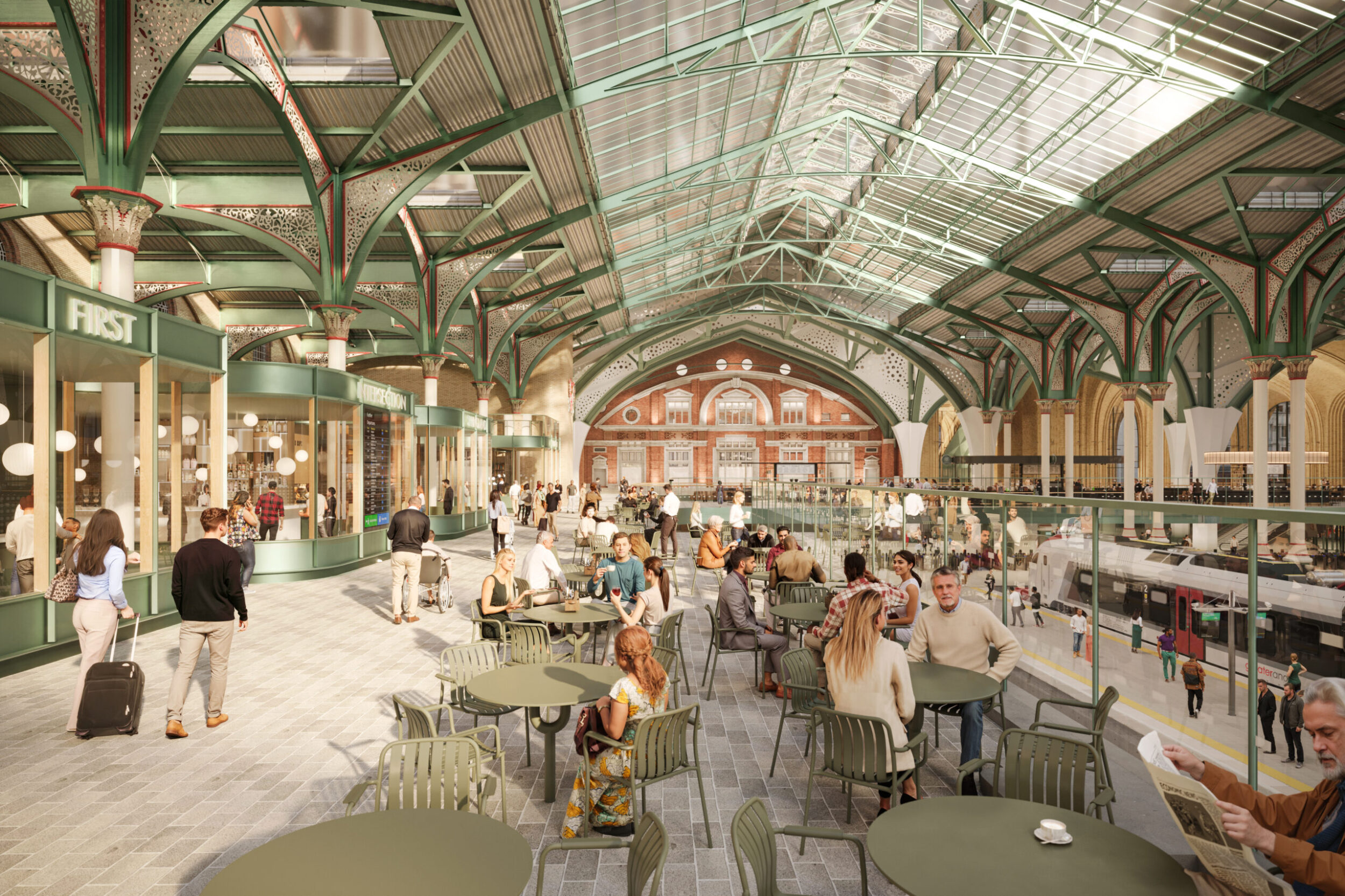
The plan would see increased seating areas, a cycle hub providing 732 cycle parking spaces and a roof garden for public access.
However, the design includes a 19-storey office block above the Grade II listed building, intended to help fund the project, which has drawn sharp criticism from heritage organisations.
Although the design has been approved, the project’s biggest challenge now is ensuring financial viability. Committee members raised concerns over the construction costs, which are expected to exceed earnings from the office block by over £200 million.
In an interview with City News, architect John McAslan, said ‘the Network Rail scheme will make a huge loss… because it is too costly and the benefits are too little’.
‘I don’t know how they’ll ever make it deliverable or viable’.
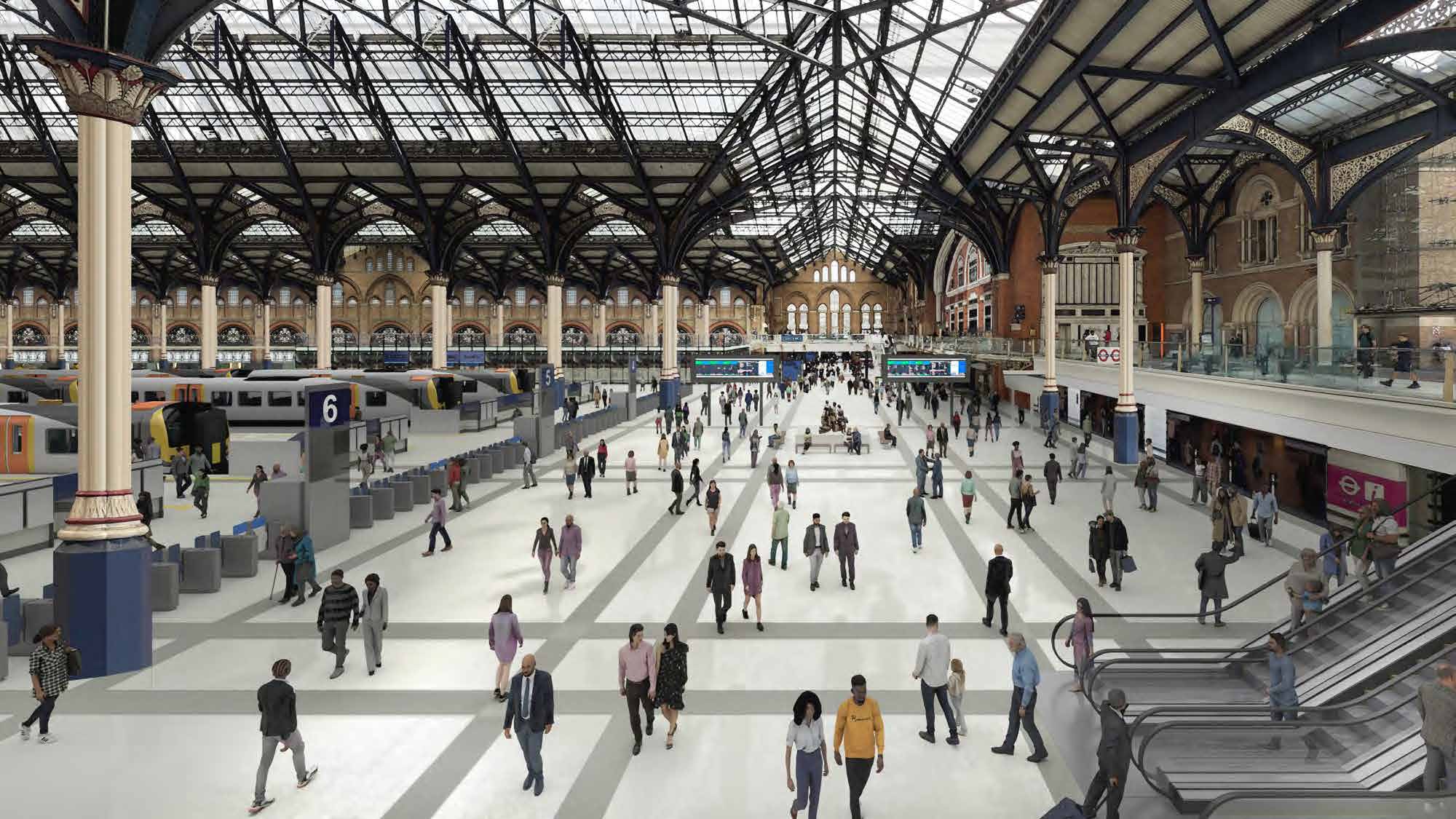
John McAslan has designed an alternative proposal in response to the criticism the Network Rail plan was receiving, which he claims ‘doesn’t remove any historic building fabric… and doesn’t cause disruptions’. His design has been backed by heritage groups including SAVE Britain’s heritage and The Victorian Society.
John McAslan’s proposal for the development of the concourse. Photo: John McAslan + Partners
Developers Defend The Proposal
During the committee meeting, Ellie Burrows, Deputy CEO of Network Rail claimed ‘our scheme is operationally focused, solves infrastructure shortcomings and safeguards the remaining Victorian architecture of the majority of the 1990s roof’.
In response to concerns over disruption to the station, she told the committee ‘we could have accelerated the programme, but that would require station closure, and that is not an option’.
ACME’s lead architect for the proposal, Friedrich Ludewig, also attended the meeting and was ‘delighted that quite a lot of our neighbours, that we have intensely engaged with, have written to support these proposals’.
However, committee member Tana Adkin KC claimed a LinkedIn search revealed that some letters of support, supposedly from local residents, were in fact written by employees of Network Rail and ACME.
Peter Norman, representing the Grade II listed Andaz Hotel, said Network Rail had ‘consistently and intentionally ignored the hotel’ during the development of the application, even though it includes reconstruction work on the building. He added that other neighbours had been ‘similarly ignored’ and asked the committee, ‘Is the pain worth the end result? It is not’.
Committee Chair Highlights Public Benefit
Despite these concerns, in an interview with City News, the chair of the planning committee, Tom Sleigh, insisted that the proposal offers a ‘massive amount of public benefit’.
‘We actually need a lot more office space in the city and it delivers that’.
In response to critics of the proposal, Tom Sleigh said some heritage groups were ‘out of tune with the reality on the ground’, adding that no Victorian architecture would be removed, only structures from the 1990s. He argued that the project reflects the ‘national mood which is one of growth’ and that the best way to deliver it in London is through infrastructure improvements such as this.
The Victorian Society reacted to the approval by reaffirming its opposition, saying they are ‘prepared for the long haul’.
SAVE Britain’s Heritage echoed the disappointment, calling the decision ‘a missed opportunity to consider less disruptive and damaging approaches’, referring to John McAslan’s design, and said they will carefully consider their next steps.
John McAslan also believes that this decision is ‘not the end of the conversation’ saying there is still a ‘long long way to go before anything could be built, if at all’.
The proposal will now go to the Greater London Assembly for approval by the Mayor of London, Sir Sadiq Khan, and is likely to require sign-off from the Secretary of State for Housing, Communities and Local Government, Steve Reed.
Under Network Rail’s current plan, demolition could begin as early as 2028, with the whole project expected to take between seven to nine years to complete.
Submitted Article
Headline
Short Headline
Standfirst
Published Article
HeadlineUK’s Busiest Train Station Approved For £1.2bn Controversial Redevelopment
Short HeadlineUK’s Busiest Station £1.2bn Redevelopment Approved
StandfirstNational Rail’s proposal to develop Liverpool Street Station has been approved by the City of London planning committee despite heritage and financial concerns.
The architect who redesigned King’s Cross Station has criticised Network Rail’s £1.2 billion plan to redevelop Liverpool Street Station, describing it as undeliverable, and ‘too costly’.
The City of London planning committee backed the scheme by 19 votes to three, despite more than 3,000 objections, and the chair Tom Sleigh hailed it as an ‘excellent application’.
The transformation would aim to make the station completely wheelchair accessible, and increase the overall concourse capacity by 76%. This is considered essential as annual passenger numbers are forecast to grow to 158 million by 2014.
The plan would see increased seating areas, a cycle hub providing 732 cycle parking spaces and a roof garden for public access.
However, the design includes a 19-storey office block above the Grade II listed building, intended to help fund the project, which has drawn sharp criticism from heritage organisations.
Although the design has been approved, the project’s biggest challenge now is ensuring financial viability. Committee members raised concerns over the construction costs, which are expected to exceed earnings from the office block by over £200 million.
In an interview with City News, architect John McAslan, said ‘the Network Rail scheme will make a huge loss… because it is too costly and the benefits are too little’.
‘I don’t know how they’ll ever make it deliverable or viable’.
John McAslan has designed an alternative proposal in response to the criticism the Network Rail plan was receiving, which he claims ‘doesn’t remove any historic building fabric… and doesn’t cause disruptions’. His design has been backed by heritage groups including SAVE Britain’s heritage and The Victorian Society.
John McAslan’s proposal for the development of the concourse. Photo: John McAslan + Partners
Developers Defend The Proposal
During the committee meeting, Ellie Burrows, Deputy CEO of Network Rail claimed ‘our scheme is operationally focused, solves infrastructure shortcomings and safeguards the remaining Victorian architecture of the majority of the 1990s roof’.
In response to concerns over disruption to the station, she told the committee ‘we could have accelerated the programme, but that would require station closure, and that is not an option’.
ACME’s lead architect for the proposal, Friedrich Ludewig, also attended the meeting and was ‘delighted that quite a lot of our neighbours, that we have intensely engaged with, have written to support these proposals’.
However, committee member Tana Adkin KC claimed a LinkedIn search revealed that some letters of support, supposedly from local residents, were in fact written by employees of Network Rail and ACME.
Peter Norman, representing the Grade II listed Andaz Hotel, said Network Rail had ‘consistently and intentionally ignored the hotel’ during the development of the application, even though it includes reconstruction work on the building. He added that other neighbours had been ‘similarly ignored’ and asked the committee, ‘Is the pain worth the end result? It is not’.
Committee Chair Highlights Public Benefit
Despite these concerns, in an interview with City News, the chair of the planning committee, Tom Sleigh, insisted that the proposal offers a ‘massive amount of public benefit’.
‘We actually need a lot more office space in the city and it delivers that’.
In response to critics of the proposal, Tom Sleigh said some heritage groups were ‘out of tune with the reality on the ground’, adding that no Victorian architecture would be removed, only structures from the 1990s. He argued that the project reflects the ‘national mood which is one of growth’ and that the best way to deliver it in London is through infrastructure improvements such as this.
The Victorian Society reacted to the approval by reaffirming its opposition, saying they are ‘prepared for the long haul’.
SAVE Britain’s Heritage echoed the disappointment, calling the decision ‘a missed opportunity to consider less disruptive and damaging approaches’, referring to John McAslan’s design, and said they will carefully consider their next steps.
John McAslan also believes that this decision is ‘not the end of the conversation’ saying there is still a ‘long long way to go before anything could be built, if at all’.
The proposal will now go to the Greater London Assembly for approval by the Mayor of London, Sir Sadiq Khan, and is likely to require sign-off from the Secretary of State for Housing, Communities and Local Government, Steve Reed.
Under Network Rail’s current plan, demolition could begin as early as 2028, with the whole project expected to take between seven to nine years to complete.
A 2024 Freedom of Information request showed Bromley Council had £4.5 million invested in arms companies that year with £1.5 million reportedly linked to Israel.
Undercover officers raided three linked shops in Barking town centre, revealing how illicit tobacco is being hidden in walls, ceilings and nearby locations to evade detection.
More than 330,000 people across the UK sought support from the Stop It Now helpline in 2025 over concerns about their own or someone else’s online sexual behaviour towards children, according to new charity data. The anonymous service says contacts by phone, email and webchat rose significantly over the year.