In a fast-paced city shaped by instability, commitment is being redefined, one new dating term at a time.
The capital has the highest proportion of single adults in England and Wales, according to the 2021 Census. Marriage rates have declined, Londoners are marrying later, and some boroughs record some of the lowest cohabitation rates in the country. Harrow, for example, reported just 5.9% of residents living as cohabiting couples in 2021. At the same time, “living apart together” relationships are increasingly common, often shaped by high rents and work instability.
Against this backdrop, a new term is entering the dating lexicon, the “story-likeationship”.
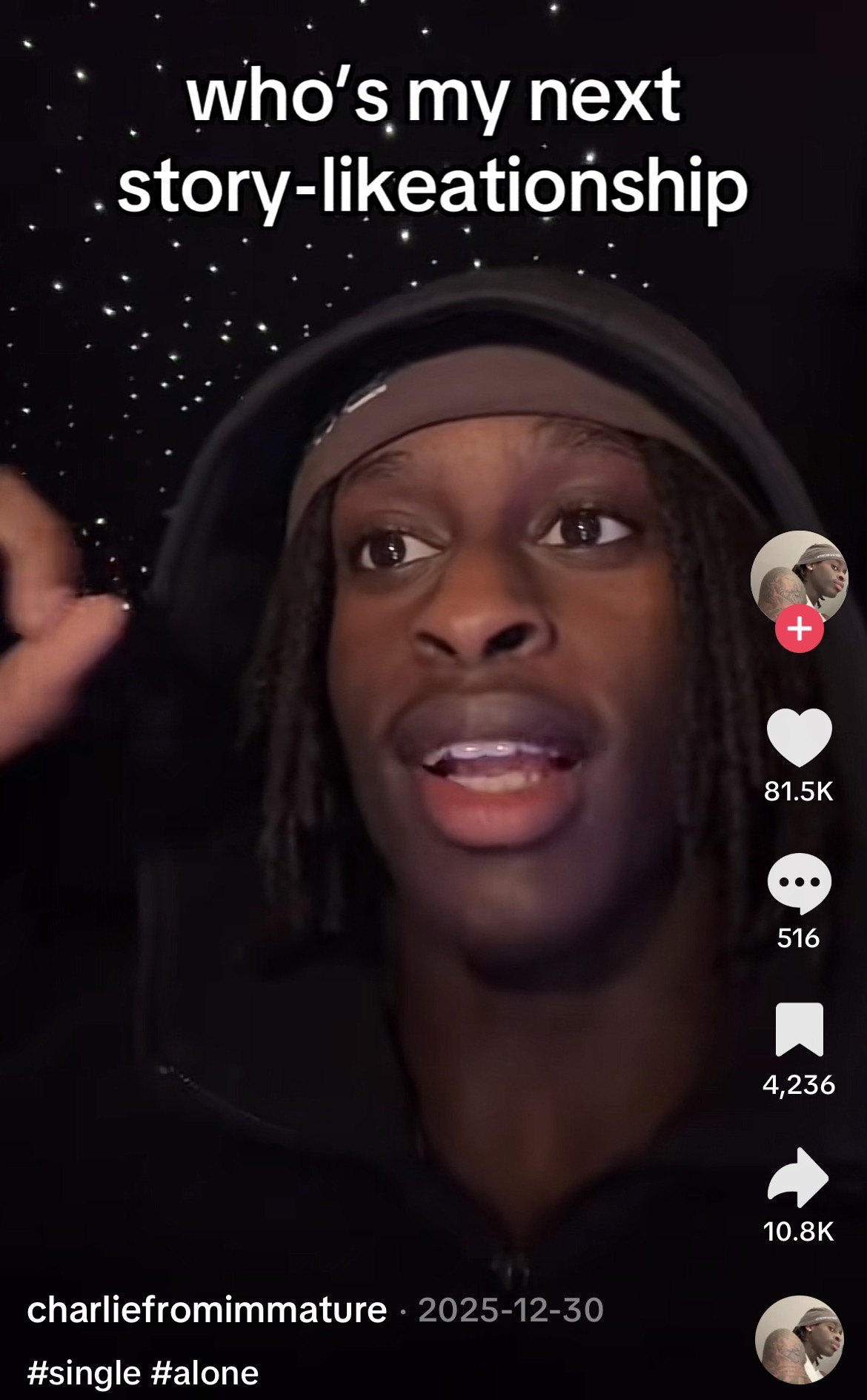
Charlie, 20, who runs the social media page Immature, invented the phrase after realising he wasn’t in a “situationship”, the popular term for an undefined romantic dynamic, but something even lighter.
Charliefromimmature TikTok
“It’s kind of been more just me liking a girl’s stories and her liking mine back, but it doesn’t really progress past it.”
He defines a story-likeationship as “when you and a partner repeatedly like each other’s stories as a means of flirtation”.
In practice, that means mutual attraction played out through Instagram views, emoji reactions and the occasional reply – but rarely a date. Charlie estimates he has had 10 to 15 of them over the years. Few developed into conversation, and only one resulted in a physical meeting.
“It’s flirting without any serious intention, to like a story doesn’t really take much commitment. You can probably have multiple at the same time.”
When he shared the term online, about 60% of his audience – mostly people his age, particularly young women – understood it instantly.
“I do think our generation has kind of a disdain almost towards commitment. Me personally, I don’t have time for a relationship. I don’t know if it’s a deep-rooted need for validation. But it’s just enough.”
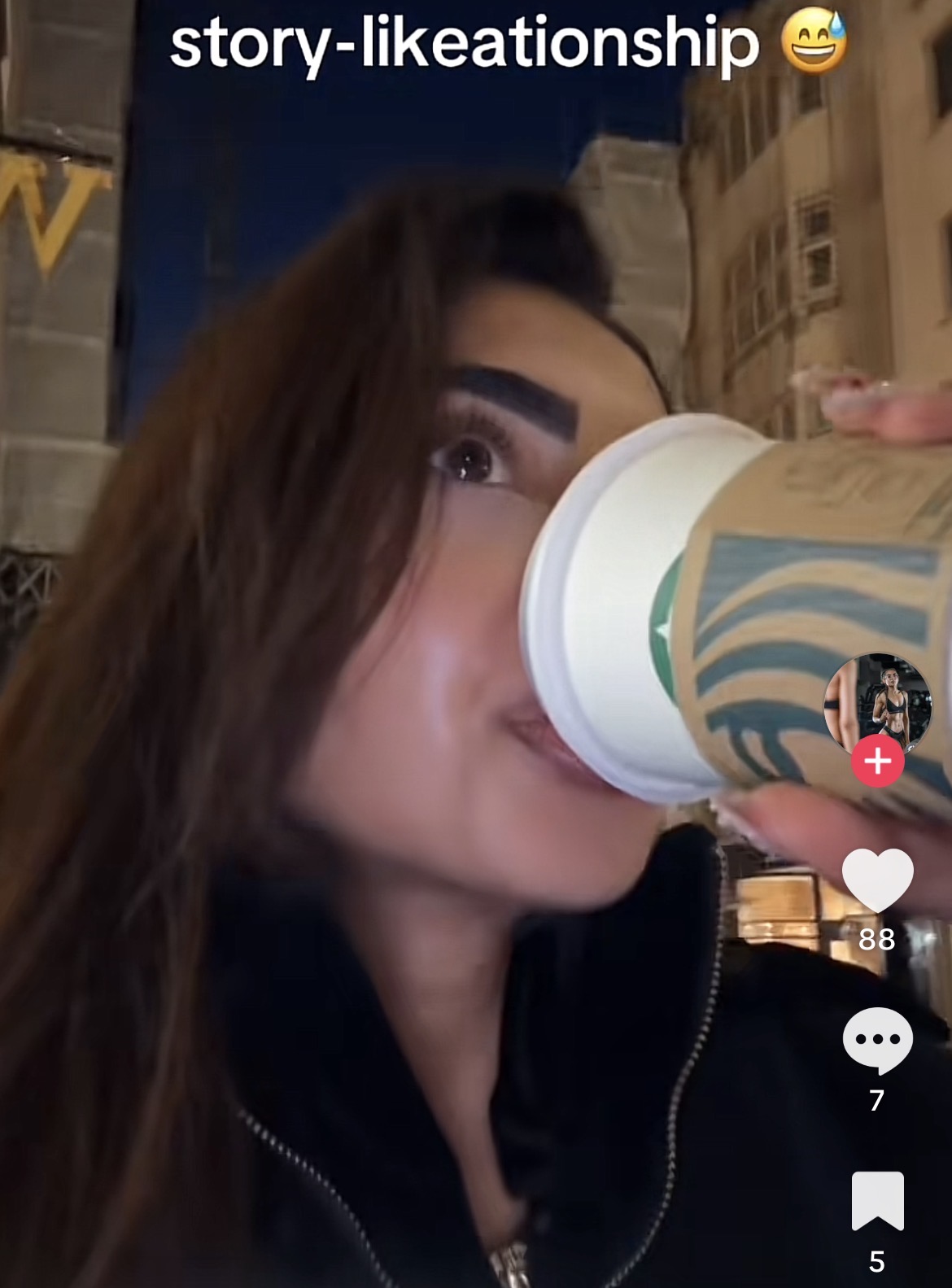
In North London, Deena had started using the term to describe her own experience.
“It’s building connections through story views, reactions and replies, but nothing was actually happening offline. A digital situationship.”
Denna @gymcinderella.lifestyle TikTok page
According to Deena, the dynamic is emotion without clarity and very low effort.
“There’s mutual interest, regular touch points and emotional undertones – but it lives entirely online. It allows you to keep the door wide open without anyone really having grounds to question where they stand.”
She believes the phrase resonated because it captured something many were already experiencing. But the experience remained unnamed.
“People want connection but are slower to commit. Social media allows them to stay present in someone’s life without fully stepping into a defined relationship.”
Experts say the use of such terms reflects both technological and social change.
Associate Lecturer Maria Carbajales Sisto, who researches dating apps and intimacy, argues that people have always used the media of their time to articulate love, from medieval ballads to modern television.
“What’s different now is speed,” she says. “Technology and social media accelerate how language spreads and becomes mainstream.”
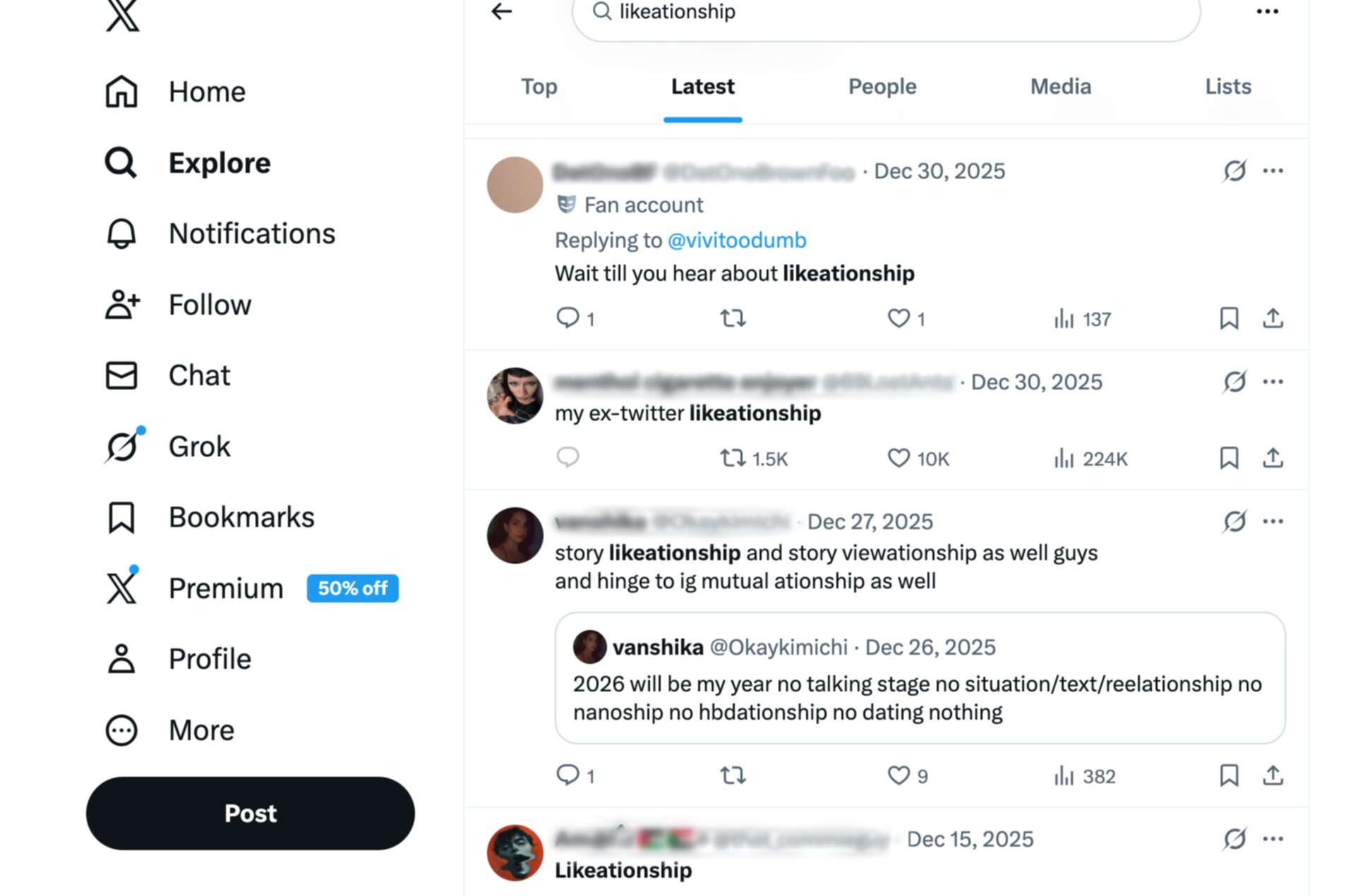
X feed
She said that undefined romantic arrangements are not new. The experience’s scale and visibility is new. Platforms encourage constant updates, algorithmic exposure and what she describes as “marketised” intimacy – where relationships are communicated like products, as in the trend of the “soft launch”.
London’s economics also play a role.
“Going for one or two drinks can cost £20 to £30 with transport. Time, energy and money all influence how people date. Many are more selective, texting for longer before agreeing to meet.”
In a city where people are increasingly single, living alone and delaying traditional milestones, the ‘story-likeationship’ may be less about romance and more about risk management.
Charlie is sceptical about its long-term impact. “Social media helps you speak to someone daily,” he says. “But it also brings more problems than it fixes.”
Deena is sure that “modern dating is broken. A story -likeationship keeps people emotionally engaged while they keep searching for something better.”
As Londoners continue to navigate romantic uncertainty, an evolving dating dictionary is giving Gen Z the words to name, and normalise, the grey areas.
Submitted Article
Headline
Short Headline
Standfirst
Published Article
HeadlineFrom ‘Situationship’ to ‘Story-likeationship’ : London’s Changing Dating Vocabulary
Short HeadlineInside the Gen Z Dating Dictionary
StandfirstDating app and intimacy expert tells City News that social media is changing, not re-inventing, modern relationship dynamics.
In a fast-paced city shaped by instability, commitment is being redefined, one new dating term at a time.
The capital has the highest proportion of single adults in England and Wales, according to the 2021 Census. Marriage rates have declined, Londoners are marrying later, and some boroughs record some of the lowest cohabitation rates in the country. Harrow, for example, reported just 5.9% of residents living as cohabiting couples in 2021. At the same time, “living apart together” relationships are increasingly common, often shaped by high rents and work instability.
Against this backdrop, a new term is entering the dating lexicon, the “story-likeationship”.
Charlie, 20, who runs the social media page Immature, invented the phrase after realising he wasn’t in a “situationship”, the popular term for an undefined romantic dynamic, but something even lighter.
Charliefromimmature TikTok
“It’s kind of been more just me liking a girl’s stories and her liking mine back, but it doesn’t really progress past it.”
He defines a story-likeationship as “when you and a partner repeatedly like each other’s stories as a means of flirtation”.
In practice, that means mutual attraction played out through Instagram views, emoji reactions and the occasional reply – but rarely a date. Charlie estimates he has had 10 to 15 of them over the years. Few developed into conversation, and only one resulted in a physical meeting.
“It’s flirting without any serious intention, to like a story doesn’t really take much commitment. You can probably have multiple at the same time.”
When he shared the term online, about 60% of his audience – mostly people his age, particularly young women – understood it instantly.
“I do think our generation has kind of a disdain almost towards commitment. Me personally, I don’t have time for a relationship. I don’t know if it’s a deep-rooted need for validation. But it’s just enough.”
In North London, Deena had started using the term to describe her own experience.
“It’s building connections through story views, reactions and replies, but nothing was actually happening offline. A digital situationship.”
Denna @gymcinderella.lifestyle TikTok page
According to Deena, the dynamic is emotion without clarity and very low effort.
“There’s mutual interest, regular touch points and emotional undertones – but it lives entirely online. It allows you to keep the door wide open without anyone really having grounds to question where they stand.”
She believes the phrase resonated because it captured something many were already experiencing. But the experience remained unnamed.
“People want connection but are slower to commit. Social media allows them to stay present in someone’s life without fully stepping into a defined relationship.”
Experts say the use of such terms reflects both technological and social change.
Associate Lecturer Maria Carbajales Sisto, who researches dating apps and intimacy, argues that people have always used the media of their time to articulate love, from medieval ballads to modern television.
“What’s different now is speed,” she says. “Technology and social media accelerate how language spreads and becomes mainstream.”
X feed
She said that undefined romantic arrangements are not new. The experience’s scale and visibility is new. Platforms encourage constant updates, algorithmic exposure and what she describes as “marketised” intimacy – where relationships are communicated like products, as in the trend of the “soft launch”.
London’s economics also play a role.
“Going for one or two drinks can cost £20 to £30 with transport. Time, energy and money all influence how people date. Many are more selective, texting for longer before agreeing to meet.”
In a city where people are increasingly single, living alone and delaying traditional milestones, the ‘story-likeationship’ may be less about romance and more about risk management.
Charlie is sceptical about its long-term impact. “Social media helps you speak to someone daily,” he says. “But it also brings more problems than it fixes.”
Deena is sure that “modern dating is broken. A story -likeationship keeps people emotionally engaged while they keep searching for something better.”
As Londoners continue to navigate romantic uncertainty, an evolving dating dictionary is giving Gen Z the words to name, and normalise, the grey areas.
A 2024 Freedom of Information request showed Bromley Council had £4.5 million invested in arms companies that year with £1.5 million reportedly linked to Israel.
Undercover officers raided three linked shops in Barking town centre, revealing how illicit tobacco is being hidden in walls, ceilings and nearby locations to evade detection.
More than 330,000 people across the UK sought support from the Stop It Now helpline in 2025 over concerns about their own or someone else’s online sexual behaviour towards children, according to new charity data. The anonymous service says contacts by phone, email and webchat rose significantly over the year.