A 103-year-old synagogue in East London has been sold despite fears from the local Jewish community that its history will be lost.
Nelson Street Synagogue, also known as the East London Central Synagogue, was set to be sold at auction today, but has been purchased prior, according to the auctioneers Acuitus. The synagogue has been largely unused since 2020, after part of the roof collapsed. A plan was reportedly in place to turn the premises into a Jewish cultural heritage centre, but it was recently put up for sale.
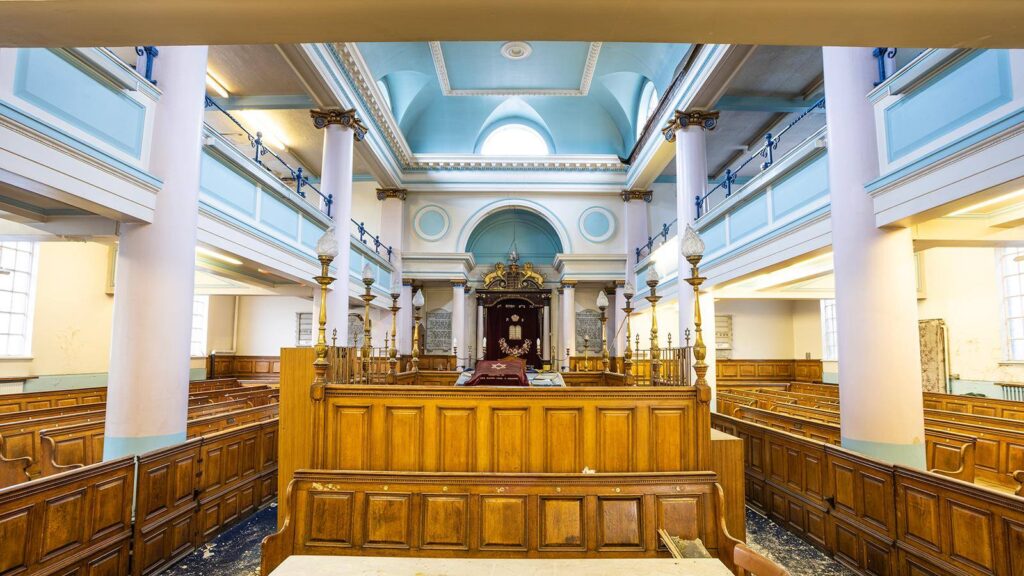
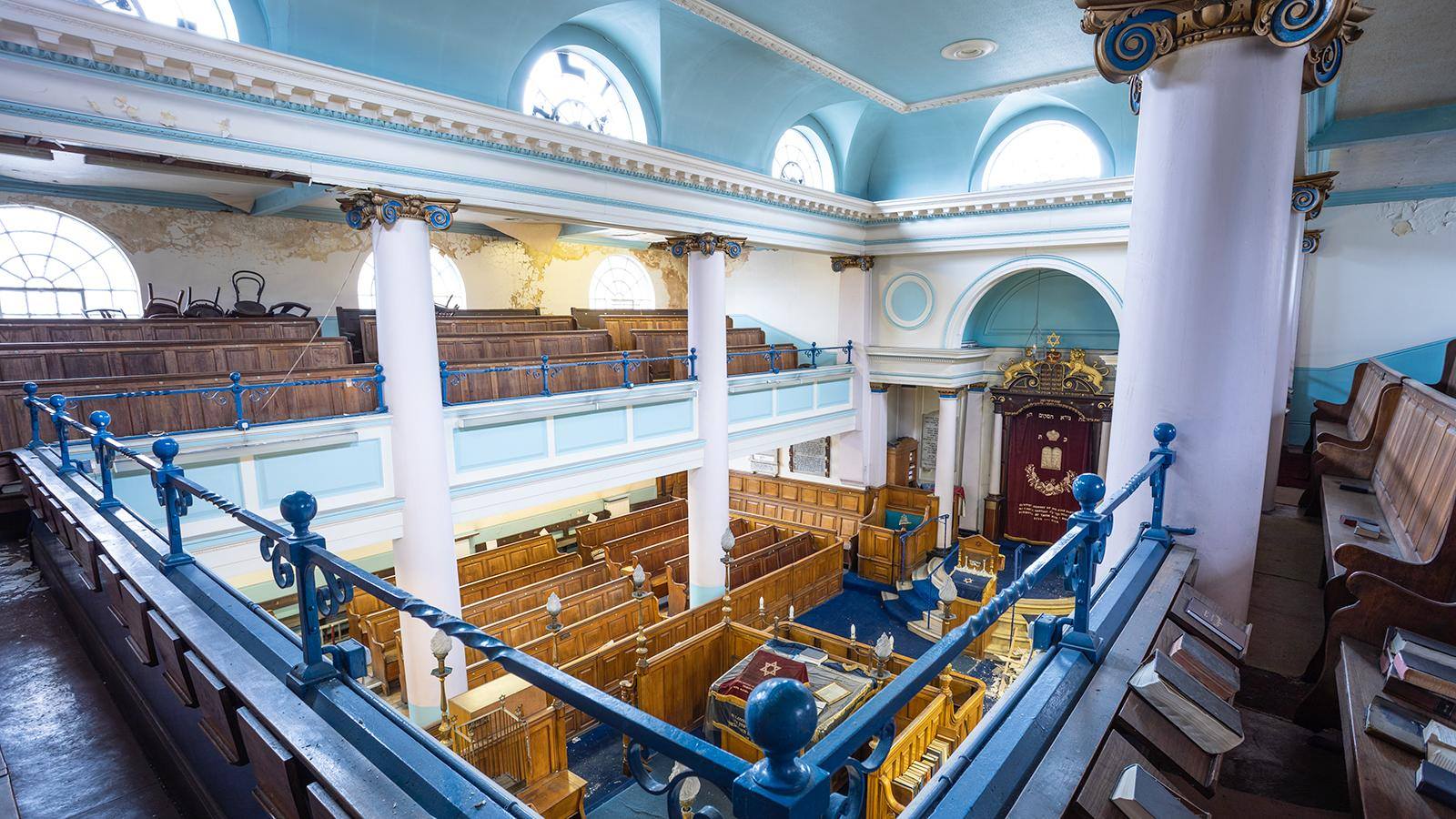
Photos advertised by Acuitus, which is selling on behalf of the Federation of Synagogues, show the synagogue’s interior. Much of the historic structure is still intact, with the bimah (synagogue platform), prayer books, wooden pews, and candlesticks left untouched.
While describing a “fine classic interior”, the auction site also advertises opportunities for redevelopment or alternative use. The advert specifies that lapsed planning permission had been granted in 2020 for a five-storey development on the adjoining land.
This has prompted concern from the local community that items of religious and historical significance, as well as personal family heirlooms, might be lost with its sale. The property is locally listed, meaning there are some restrictions to redevelopment, though the building does not receive the same protection as one which is nationally listed.
A post on Facebook highlighted the concerns of the community, with many calling for the synagogue to be restored or turned into a museum.
We asked Acuitus for information about the buyers, but they declined to disclose any details.
The history of Nelson Street
The Synagogue opened in 1923 at 40 Nelson Street and was one of the few purpose-built synagogues in the East End. A once thriving community, it’s thought that up to 250,000 Jews lived in the surrounding areas of Whitechapel and Spitalfields at the turn of the twentieth century, with more than 150 places of Jewish worship.
Designed by Lewis Solomon (1848-1928), the synagogue is an example of classic Anglo-Jewish architecture. Nelson Street served a devoted Orthodox-Ashkenazi congregation of mainly Yiddish-speaking refugees and their descendants.
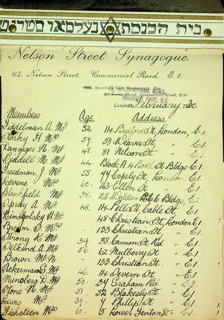
An 11-page, hand-written members list from 1930 shows at least 170 members. Over the years, it has hosted interfaith events with the local Muslim community and Holocaust Memorial Day commemorations.
Now just three synagogues remain in the East End: Sandys Row, Bevis Marks, and the Congregation of Jacob. This interactive memory map offers a glimpse of the area once vibrant with Jewish life.
Nelson Street members list from 1930. CREDIT: Jewish Miscellanies
A community concerned
Writer and journalist Amy Schreibman Walter began researching the last remaining East End synagogues in 2018. She recalls her first visit to Nelson Street, “took my breath away,” adding that none of the other synagogues in the area had the same architectural beauty.
Having considered getting married there, she says she was shocked and saddened that there was no plan to keep the synagogue.
“We feel it’s a tragedy that no one has stepped forward to save the building. This fate has befallen numerous synagogues in the East End over recent decades.”
Rachel Lichtenstein, social historian at Manchester Metropolitan University, told City News that the sale of the Nelson Street Synagogue “represents more than the loss of a building; it marks the final chapter in the once-thriving former landscape of the Jewish East End”.
She adds: “I hope this important building and its original features are saved, that it continues to serve the local community and that its unique Jewish history is salvaged, preserved, and then shared for future generations”.
Tower Hamlets Councillor Peter Golds describes the sale as “a very difficult subject”. He recalls visiting European cities where the local non-Jewish community are “desperately trying to preserve and show tourists Jewish history”. He questions why London can’t do the same.
“I am extremely concerned that items of liturgical and religious significance are lying around, and it’s up to the Federation to look after them(…) I’ve seen prayer books buried with bodies. Here they’re just lying inside an abandoned synagogue.”
London is one of the few European cities without a permanent Jewish museum, after the Camden museum closed in 2023.
Abandoned prayer books inside Nelson Street. CREDIT: Acuitus
“A major part of Jewish history”
For generations, the synagogue has been an important part of people’s lives.
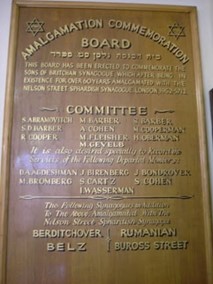
Barry Mordsley’s grandfather, Chaim Gershon Oberman, was one of the founding members of Nelson Street Synagogue. His name still appears on a board inside, and both Barry and his daughter Jessica have expressed concern that this might be lost.
Together, they tried but were unable to save a historic stained glass window naming Barry’s father at a different synagogue.
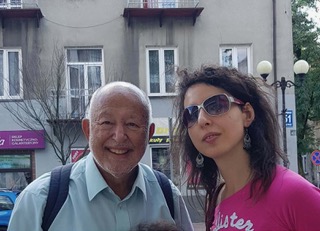
Barry Mordsley, with his daughter Jessica. CREDIT: Jessica Mordsley
Barry describes Nelson Street as a “major part of Jewish history”. He recalls attending services in the 1950s and 60s, adding, “I couldn’t believe how ram-packed the synagogue was with texts.” It’s thought that Nelson Street collected hundreds of Torah scrolls after local amalgamation.
Barry even says he recalls meeting George Weisz, the inventor and father of actress Rachel Weisz, at Nelson Street Synagogue.
Committee board featuring Barry’s grandfather. CREDIT: Ben Vos.
Today, the East End is home to only a few thousand Jews, with many moving to North London or other parts of the country.
Many people we spoke to say the sale of Nelson Street Synagogue is indicative of a declining Jewish presence in an area rich in British Jewish history.
City News has approached the Federation of Synagogues for comment.
Submitted Article
Headline
Short Headline
Standfirst
Published Article
Headline“This is more than a loss of a building: it’s the final chapter in the once-thriving Jewish East End”
Short HeadlineHistoric synagogue sold despite community's concern
StandfirstNelson Street Synagogue has served the community for over 100 years prompting fears its history might be lost with its sale
A 103-year-old synagogue in East London has been sold despite fears from the local Jewish community that its history will be lost.
Nelson Street Synagogue, also known as the East London Central Synagogue, was set to be sold at auction today, but has been purchased prior, according to the auctioneers Acuitus. The synagogue has been largely unused since 2020, after part of the roof collapsed. A plan was reportedly in place to turn the premises into a Jewish cultural heritage centre, but it was recently put up for sale.
Photos advertised by Acuitus, which is selling on behalf of the Federation of Synagogues, show the synagogue’s interior. Much of the historic structure is still intact, with the bimah (synagogue platform), prayer books, wooden pews, and candlesticks left untouched.
While describing a “fine classic interior”, the auction site also advertises opportunities for redevelopment or alternative use. The advert specifies that lapsed planning permission had been granted in 2020 for a five-storey development on the adjoining land.
This has prompted concern from the local community that items of religious and historical significance, as well as personal family heirlooms, might be lost with its sale. The property is locally listed, meaning there are some restrictions to redevelopment, though the building does not receive the same protection as one which is nationally listed.
A post on Facebook highlighted the concerns of the community, with many calling for the synagogue to be restored or turned into a museum.
We asked Acuitus for information about the buyers, but they declined to disclose any details.
The history of Nelson Street
The Synagogue opened in 1923 at 40 Nelson Street and was one of the few purpose-built synagogues in the East End. A once thriving community, it’s thought that up to 250,000 Jews lived in the surrounding areas of Whitechapel and Spitalfields at the turn of the twentieth century, with more than 150 places of Jewish worship.
Designed by Lewis Solomon (1848-1928), the synagogue is an example of classic Anglo-Jewish architecture. Nelson Street served a devoted Orthodox-Ashkenazi congregation of mainly Yiddish-speaking refugees and their descendants.
An 11-page, hand-written members list from 1930 shows at least 170 members. Over the years, it has hosted interfaith events with the local Muslim community and Holocaust Memorial Day commemorations.
Now just three synagogues remain in the East End: Sandys Row, Bevis Marks, and the Congregation of Jacob. This interactive memory map offers a glimpse of the area once vibrant with Jewish life.
Nelson Street members list from 1930. CREDIT: Jewish Miscellanies
A community concerned
Writer and journalist Amy Schreibman Walter began researching the last remaining East End synagogues in 2018. She recalls her first visit to Nelson Street, “took my breath away,” adding that none of the other synagogues in the area had the same architectural beauty.
Having considered getting married there, she says she was shocked and saddened that there was no plan to keep the synagogue.
“We feel it’s a tragedy that no one has stepped forward to save the building. This fate has befallen numerous synagogues in the East End over recent decades.”
Rachel Lichtenstein, social historian at Manchester Metropolitan University, told City News that the sale of the Nelson Street Synagogue “represents more than the loss of a building; it marks the final chapter in the once-thriving former landscape of the Jewish East End”.
She adds: “I hope this important building and its original features are saved, that it continues to serve the local community and that its unique Jewish history is salvaged, preserved, and then shared for future generations”.
Tower Hamlets Councillor Peter Golds describes the sale as “a very difficult subject”. He recalls visiting European cities where the local non-Jewish community are “desperately trying to preserve and show tourists Jewish history”. He questions why London can’t do the same.
“I am extremely concerned that items of liturgical and religious significance are lying around, and it’s up to the Federation to look after them(…) I’ve seen prayer books buried with bodies. Here they’re just lying inside an abandoned synagogue.”
London is one of the few European cities without a permanent Jewish museum, after the Camden museum closed in 2023.
Abandoned prayer books inside Nelson Street. CREDIT: Acuitus
“A major part of Jewish history”
For generations, the synagogue has been an important part of people’s lives.
Barry Mordsley’s grandfather, Chaim Gershon Oberman, was one of the founding members of Nelson Street Synagogue. His name still appears on a board inside, and both Barry and his daughter Jessica have expressed concern that this might be lost.
Together, they tried but were unable to save a historic stained glass window naming Barry’s father at a different synagogue.
Barry Mordsley, with his daughter Jessica. CREDIT: Jessica Mordsley
Barry describes Nelson Street as a “major part of Jewish history”. He recalls attending services in the 1950s and 60s, adding, “I couldn’t believe how ram-packed the synagogue was with texts.” It’s thought that Nelson Street collected hundreds of Torah scrolls after local amalgamation.
Barry even says he recalls meeting George Weisz, the inventor and father of actress Rachel Weisz, at Nelson Street Synagogue.
Committee board featuring Barry’s grandfather. CREDIT: Ben Vos.
Today, the East End is home to only a few thousand Jews, with many moving to North London or other parts of the country.
Many people we spoke to say the sale of Nelson Street Synagogue is indicative of a declining Jewish presence in an area rich in British Jewish history.
City News has approached the Federation of Synagogues for comment.
A 2024 Freedom of Information request showed Bromley Council had £4.5 million invested in arms companies that year with £1.5 million reportedly linked to Israel.
Undercover officers raided three linked shops in Barking town centre, revealing how illicit tobacco is being hidden in walls, ceilings and nearby locations to evade detection.
More than 330,000 people across the UK sought support from the Stop It Now helpline in 2025 over concerns about their own or someone else’s online sexual behaviour towards children, according to new charity data. The anonymous service says contacts by phone, email and webchat rose significantly over the year.