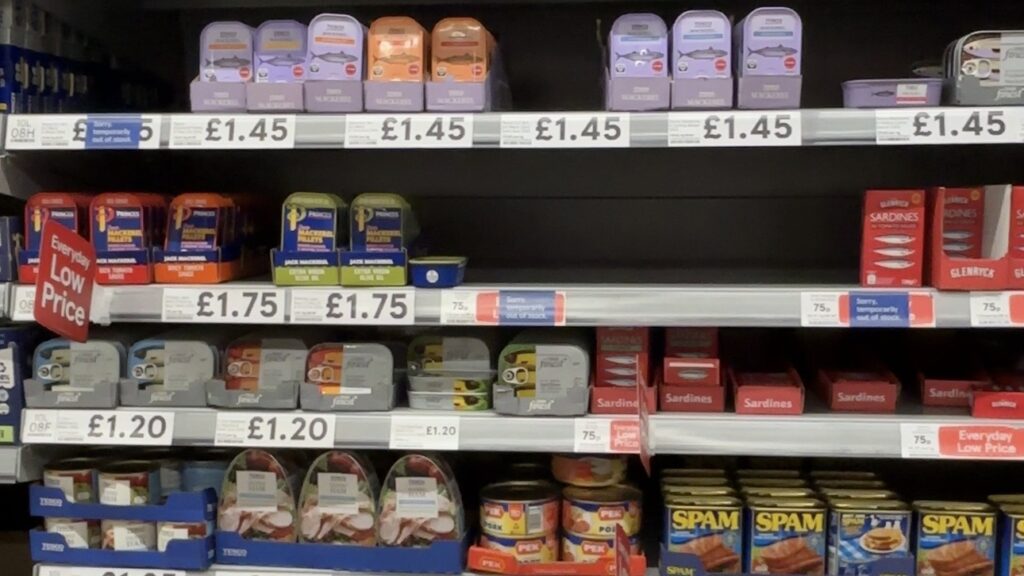
Consumers rushed to buy tinned products following government recommendations.
SHARE:
In the week since the government’s “Be Ready” campaign took off, British users have taken prepper forums by storm.
The government is recommending households stock up on food supplies and basic survival equipment. And many are turning to the experts for information and tips.
Whilst the official recommendation feels new, preparing for emergencies isn’t. One prepper I talked to recalls starting in 2011, out of fear for his wife’s safety, as riots rocked Birmingham.
“It wasn’t safe to go out and my wife was heavily pregnant (…) at the time I decided it would be best if she didn’t need to nip out to the shops while I was out working.”
He has since kept the habit going: supplies for his family of five could carry them for two months should a major crisis arise.
The prepping movement is dragged down by some harmful stereotypes. The Birmingham prepper has yet to get the people close to him on board, but time could be on his side.
Prepping is going mainstream across Europe
“The notion of typical prepping doesn’t really exist anymore” Kim Berknov, the founder of a long shelf-life emergency food brand, explains. She believes it could soon be as normalised as getting insurance for your home: “it just makes common sense.”
This is an idea shared by Marj Koppelar, a Dutch national living in London. Her British friends’ curiosity about the emergency box she keeps at home has transformed into a business.
In light of government announcements, she will soon start selling ready-made emergency boxes in the UK. She expects to reach urban consumers, who would have been less likely to buy such products in the past.
Preparing for emergencies is slowly growing on the British public. Despite the wave of emergency-related comedy on social media, Chair of the National Preparedness commission, Lord Toby Harris’ analysis is that “the level of cynicism has been nothing like some of their worse fears.”
Severe weather events, geopolitical tensions, cyberthreats: as the UK tries to navigate a world in crisis, Lord Harris says that the current debate is the one the UK needs.
Submitted Article
Headline
Short Headline
Standfirst
Published Article
Headline“I will sort everything out if it gets too bad”, says prepper
Short HeadlineUK preppers in the limelight
StandfirstBritish preppers are in the limelight as government recommends stocking up for emergencies
In the week since the government’s “Be Ready” campaign took off, British users have taken prepper forums by storm.
The government is recommending households stock up on food supplies and basic survival equipment. And many are turning to the experts for information and tips.
Whilst the official recommendation feels new, preparing for emergencies isn’t. One prepper I talked to recalls starting in 2011, out of fear for his wife’s safety, as riots rocked Birmingham.
“It wasn’t safe to go out and my wife was heavily pregnant (…) at the time I decided it would be best if she didn’t need to nip out to the shops while I was out working.”
He has since kept the habit going: supplies for his family of five could carry them for two months should a major crisis arise.
The prepping movement is dragged down by some harmful stereotypes. The Birmingham prepper has yet to get the people close to him on board, but time could be on his side.
Prepping is going mainstream across Europe
“The notion of typical prepping doesn’t really exist anymore” Kim Berknov, the founder of a long shelf-life emergency food brand, explains. She believes it could soon be as normalised as getting insurance for your home: “it just makes common sense.”
This is an idea shared by Marj Koppelar, a Dutch national living in London. Her British friends’ curiosity about the emergency box she keeps at home has transformed into a business.
In light of government announcements, she will soon start selling ready-made emergency boxes in the UK. She expects to reach urban consumers, who would have been less likely to buy such products in the past.
Preparing for emergencies is slowly growing on the British public. Despite the wave of emergency-related comedy on social media, Chair of the National Preparedness commission, Lord Toby Harris’ analysis is that “the level of cynicism has been nothing like some of their worse fears.”
Severe weather events, geopolitical tensions, cyberthreats: as the UK tries to navigate a world in crisis, Lord Harris says that the current debate is the one the UK needs.