Internationally renowned for transforming her life into confessional art, the exhibition offers an intimate and unapologetic glimpse into one of Britain’s most influential contemporary artists.
“She’s this frantic wild banshee in the studio (…) frenetic brush marks everywhere”, says creative director Harry Weller, describing Tracey Emin at work. Emin’s latest exhibition, A Second Life, has just opened at the Tate Modern and spans over four decades of her raw, confessional, and transformative art. We spoke to the curators to hear more about the making of the show.
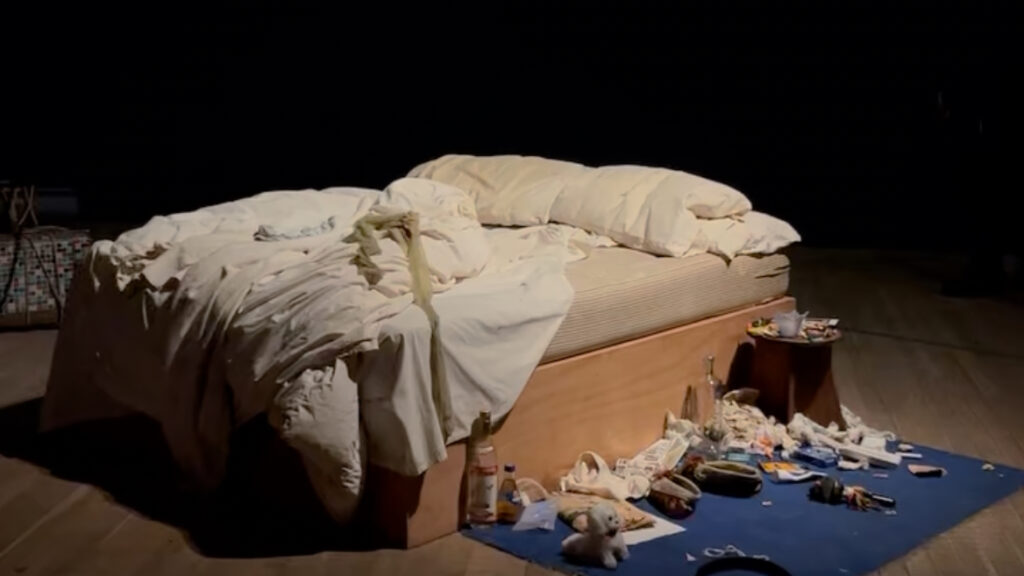
Dame Tracey Emin first captured public attention in the 1990s when she was nominated for the Turner Prize for her provocative installation, My Bed – an unmade bed strewn with personal items – that laid bare the aftermath of a mental breakdown.
This work sparked fierce debate and challenged perceptions of what art could be. Over the past 40 years, Emin has continued to push artistic boundaries.
Her practice has shifted from youthful confessionals to an unflinching exploration of mortality, trauma, and the ageing female body, most recently investigating the physical aftermath of major cancer surgery.
Spanning painting, video, textiles, neon, sculpture, and installation, A Second Life features over 100 works, some of which have never been publicly shown before.
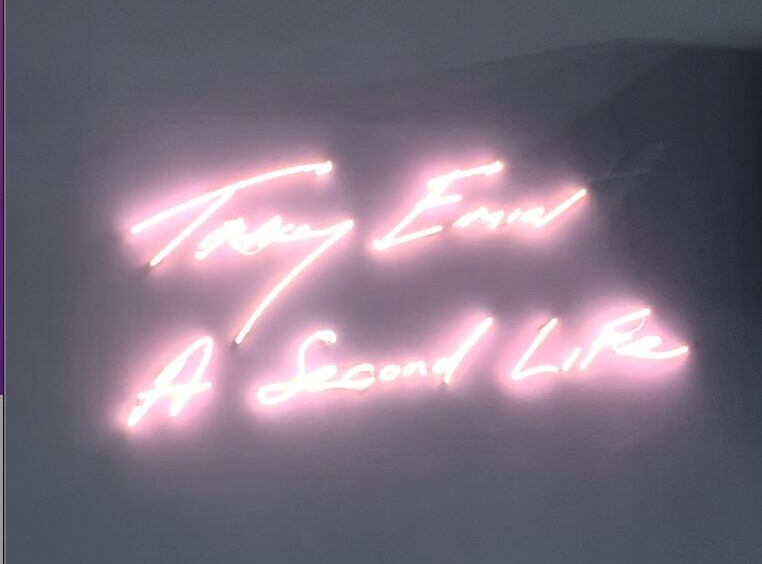
The exhibition signage for Tracey Emin: A Second Life photographed at the press preview at Tate Modern [CREDIT: Mia Flook].
So, why a ‘second life’?
Assistant curator Jess Baxter told City News that the title “came to Tracey, mid-way through making this exhibition.”
Emin sees her life as divided into two distinct phases: an early period marked by hardship, sexual assault, and a traumatic abortion in 1990, and a later period shaped by survival and renewal.
The second “life” became literal in 2020, when Emin was diagnosed with bladder cancer and underwent major surgery. Emerging with renewed hope and energy, Baxter explains:
“After that, she felt so much better. She was much more hopeful (…) She was thinking about death, of course, but in a way that a second life had been granted to her.”
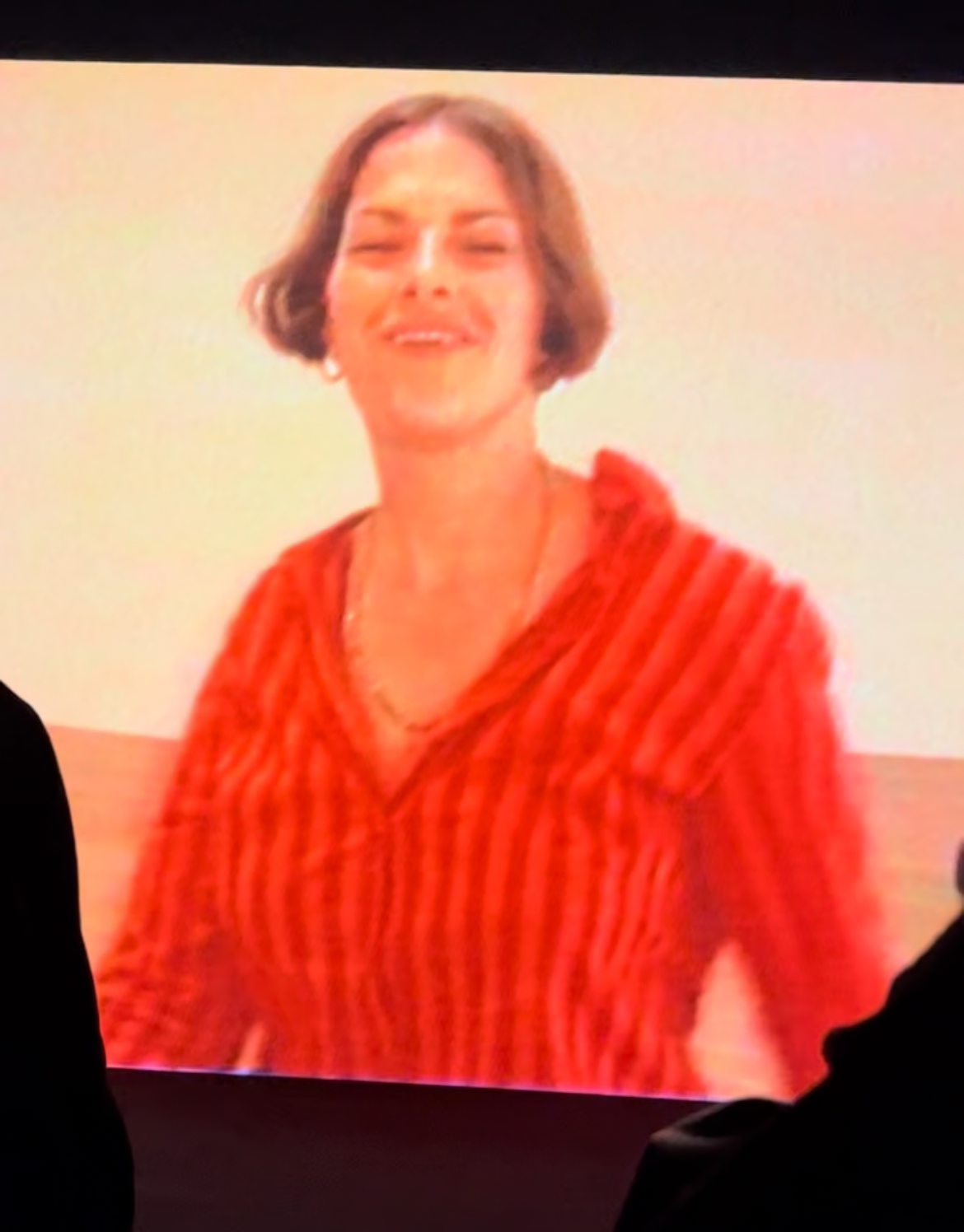
A video of Tracey Emin dancing, shown as part of Tracey Emin: A Second Life at Tate Modern. [CREDIT: Mia Flook]
Rather than presenting a chronological survey, Baxter explains, it’s shaped around how “her practice has changed, particularly in response to illness and the body being reshaped by disease.”
Moving through the exhibition, you’re taken on a journey through confessional corners to rooms filled with textiles, paintings, bronze sculptures and video interviews – giving a real vivid sense of Emin’s life, and her art.
‘She is a wild horse in the studio’
Harry Weller, the creative director of Emin’s studio, offers this insight into her process:
“She is a wild horse in the studio, spinning around, and my job is to contain that energy”
“Everything (Emin makes) has to come from a moment of sincerity”
He recalls a video he posted on Instagram of Emin smashing a canvas while screaming, almost piercing the surface, a moment of “sincere energy” that captures the raw intensity at the heart of the exhibition.
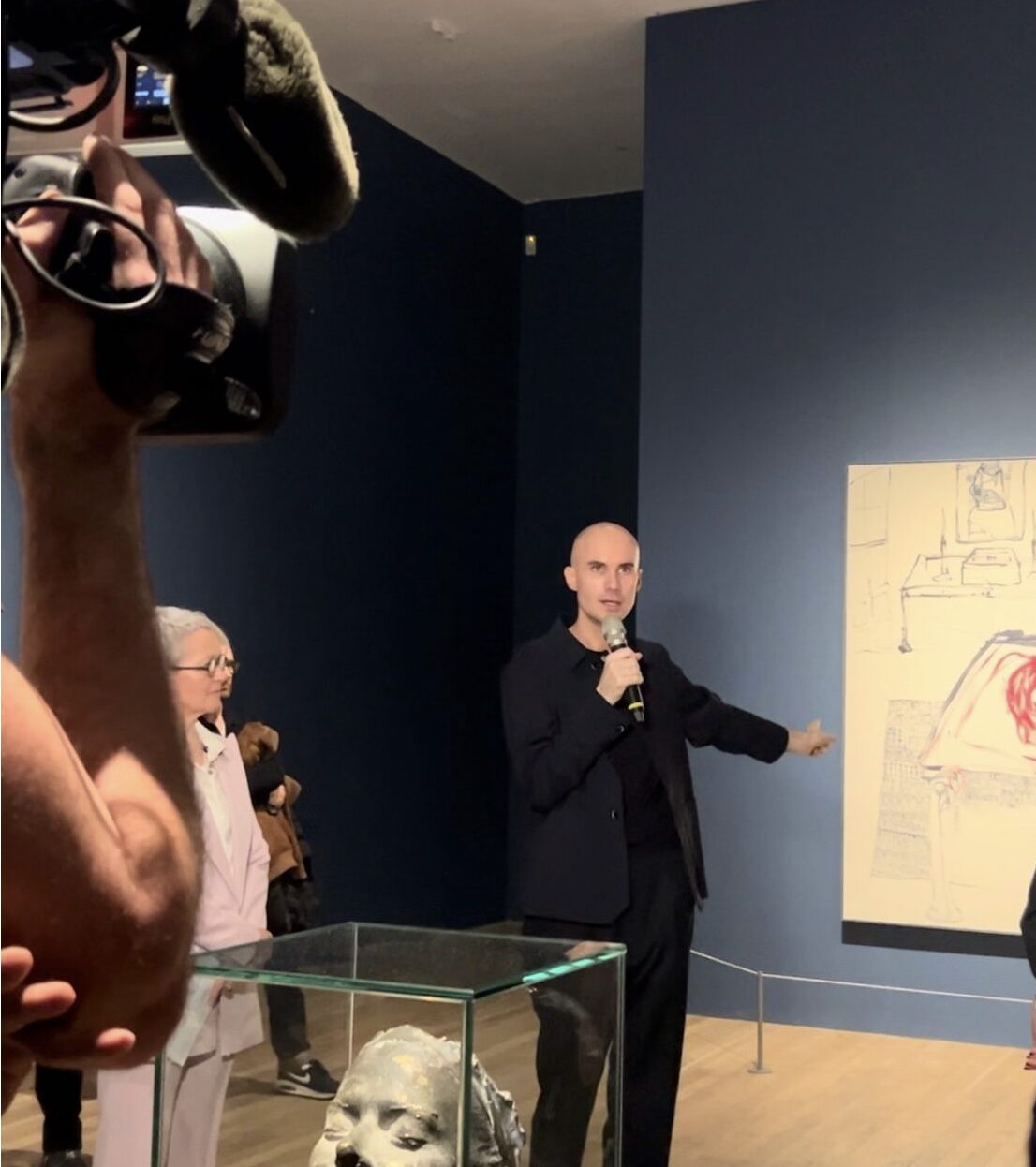
Harry Weller, the creative director of Emin studios. [CREDIT: Mia Flook]
Tracey Emin: A Second Life is currently on display at the Tate Modern, until 31 August 2026.
HeadlineInside making Dame Tracey Emin’s A Second Life
Short HeadlineInside Curating Dame Tracey Emin's A Second Life
StandfirstInternationally renowned for transforming her life into confessional art, the exhibition offers an intimate and unapologetic glimpse into one of Britain’s most influential contemporary artists.
“She’s this frantic wild banshee in the studio (…) frenetic brush marks everywhere”, says creative director Harry Weller, describing Tracey Emin at work. Emin’s latest exhibition, A Second Life, has just opened at the Tate Modern and spans over four decades of her raw, confessional, and transformative art. We spoke to the curators to hear more about the making of the show.
Dame Tracey Emin first captured public attention in the 1990s when she was nominated for the Turner Prize for her provocative installation, My Bed – an unmade bed strewn with personal items – that laid bare the aftermath of a mental breakdown.
This work sparked fierce debate and challenged perceptions of what art could be. Over the past 40 years, Emin has continued to push artistic boundaries.
Her practice has shifted from youthful confessionals to an unflinching exploration of mortality, trauma, and the ageing female body, most recently investigating the physical aftermath of major cancer surgery.
Spanning painting, video, textiles, neon, sculpture, and installation, A Second Life features over 100 works, some of which have never been publicly shown before.
The exhibition signage for Tracey Emin: A Second Life photographed at the press preview at Tate Modern [CREDIT: Mia Flook].
So, why a ‘second life’?
Assistant curator Jess Baxter told City News that the title “came to Tracey, mid-way through making this exhibition.”
Emin sees her life as divided into two distinct phases: an early period marked by hardship, sexual assault, and a traumatic abortion in 1990, and a later period shaped by survival and renewal.
The second “life” became literal in 2020, when Emin was diagnosed with bladder cancer and underwent major surgery. Emerging with renewed hope and energy, Baxter explains:
“After that, she felt so much better. She was much more hopeful (…) She was thinking about death, of course, but in a way that a second life had been granted to her.”
A video of Tracey Emin dancing, shown as part of Tracey Emin: A Second Life at Tate Modern. [CREDIT: Mia Flook]
Rather than presenting a chronological survey, Baxter explains, it’s shaped around how “her practice has changed, particularly in response to illness and the body being reshaped by disease.”
Moving through the exhibition, you’re taken on a journey through confessional corners to rooms filled with textiles, paintings, bronze sculptures and video interviews – giving a real vivid sense of Emin’s life, and her art.
‘She is a wild horse in the studio’
Harry Weller, the creative director of Emin’s studio, offers this insight into her process:
“She is a wild horse in the studio, spinning around, and my job is to contain that energy”
“Everything (Emin makes) has to come from a moment of sincerity”
He recalls a video he posted on Instagram of Emin smashing a canvas while screaming, almost piercing the surface, a moment of “sincere energy” that captures the raw intensity at the heart of the exhibition.
Harry Weller, the creative director of Emin studios. [CREDIT: Mia Flook]
Tracey Emin: A Second Life is currently on display at the Tate Modern, until 31 August 2026.
To mark the launch of HBO Max, iconic movie sets land in London for a two-day immersive experience, letting visitors wander through worlds from Friends, Harry Potter, The White Lotus and Superman.