Six months after being attacked by a dog near Regent’s Park, Londoner Celine Hashweh still crosses the street when she sees a big dog, and says police “didn’t do anything” after the attack.
With dog bites soaring despite the XL Bully ban, critics say Britain’s quick-fix approach has failed.
Celine Hashweh was out for a run, something she’d done countless times without fear. But half a year ago, that familiar routine turned into a nightmare.
As she jogged through a quiet side street near Regent’s Park, a massive dog – an XL bully, she believes – charged at her without warning. The dog was off its lead and without a muzzle.
“I started screaming, went across the street. He bit me, scratched me.
I fell on the floor. It was quite bad. I fell in the street with cars coming round.”
And the horror didn’t stop there.
“The owner of the dog threatened to stab me if I called the police.”
When she did report the attack, she says the police response was unsupportive.
“They asked if I aggravated the dog… it was quite traumatic because I ran to the police to get support.”
Despite needing hospital treatment, including stitches and jabs, she says officers told her there was “no need to follow up.”
City News has approached the Met Police for comment.
Celine Hashweh still counts herself lucky.
“I keep thinking, what if it was a child, what if it was someone in a wheelchair… I’m able-bodied, for someone else that would have ended way, way worse.”
Her experience is part of a worrying national trend: 31,920 dog attacks were recorded by the police in England and Wales in 2024 – a 2% rise on the previous year and a staggering 12,000 more than in 2018.
This comes despite the XL Bully ban, which came into force in February 2024. It was meant to make Britain’s streets safer. Instead, attacks keep climbing.
Protests against the UK’s then-proposed ban on the American XL Bully dog breed, October 2023 Credit: Matt Capon
Part of the problem, experts say, is how emotional and divided the issue has become.
For Sophie Coulthard, founder of the campaign “Don’t Ban Me, Licence Me,” the debate is deeply personal.
“My dog, Billy, is a three-year-old American Bully. He’s very lovable. He’s easily trained. He’s very friendly with children and other dogs,” she says. “For me, he’s turned out to be a dream pet, which is in contrast to what you see in the media.’’
Even on daily walks, she says she feels judged.
“Dogs that look a certain way can come under scrutiny because they come with a reputation. That’s why I put so much effort into the training.“
She says the government’s approach has been a “knee-jerk reaction” that punishes responsible owners while doing little to make the public safer.
“Dog attacks have risen sharply in recent years and they’ve risen again since the ban,” she adds. “Clearly, something else is going wrong.”
Sophie Coulthard believes responsible ownership, not breed bans, is the key.
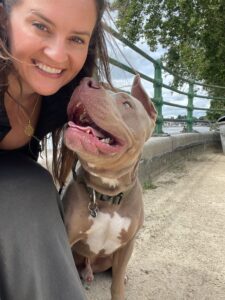
Campaigner Sophie Coulthard and her American Bully Billy, Credit: Sophie Coulthard
“Owners like me are not hooded criminals using the dog as some kind of status symbol,” she says. “We’re pet owners who’ve fallen in love with a bull breed. The most damage my dog does is with his wagging tail.”
Dr. Anne McBride, a leading clinical animal behaviourist and Chair of the Association of Pet Behaviour Counsellors, agrees that the focus should be on owner responsibility.
“No dog is bad of itself. But every dog under the sun can bite. Just like every human being under the sun can injure’’
“Given the right genetics, early experiences, later experiences, the situation you find yourself in, all of those things are going to add up to the likelihood.”
However, size matters: “The larger you are, the more damage you can do.”
She believes muzzles can make a major difference:
“If I’m just walking down the street, and even just as a courtesy to other people who may be anxious, putting a muzzle on is sensible, especially if I have a larger or anxious dog. It should be a piece of kit from the dog’s perspective that’s just like a collar and lead.”
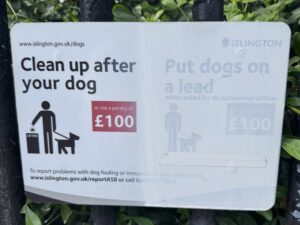
Sign in front of Spa Green Garden, Islington
For McBride the lesson is simple:
“Owning a dog is a privilege. Dog owners definitely need to be aware about what’s happening on the other end of their lead and what’s going on around them. It’s about being a bit more responsible in our thinking and not assuming ‘my dog’s wonderful, he won’t do anything wrong.’ The onus is on the owner.”
Celine experienced a panic attack shortly after she was attacked. “I had to take a day off work. Mentally, I was not okay,” she admits.
Months later, she still avoids bigger dogs on the street.
“I used to hear about dog attacks on the news and think how sad it was. But you don’t imagine it would just happen to you.’’
With tougher enforcement, better awareness and more responsible ownership, she hopes no one else will have to endure what happened to her on that London street.
Submitted Article
Headline
Short Headline
Standfirst
Published Article
HeadlineLondon Runner Left Traumatised After Dog Attack: “He bit me, scratched me – I fell in the street”
Short HeadlineLondon Runner Left Traumatised After Dog Attack
StandfirstLondon runner slams police, saying they "didn't do anything".
Six months after being attacked by a dog near Regent’s Park, Londoner Celine Hashweh still crosses the street when she sees a big dog, and says police “didn’t do anything” after the attack.
With dog bites soaring despite the XL Bully ban, critics say Britain’s quick-fix approach has failed.
Celine Hashweh was out for a run, something she’d done countless times without fear. But half a year ago, that familiar routine turned into a nightmare.
As she jogged through a quiet side street near Regent’s Park, a massive dog – an XL bully, she believes – charged at her without warning. The dog was off its lead and without a muzzle.
“I started screaming, went across the street. He bit me, scratched me.
I fell on the floor. It was quite bad. I fell in the street with cars coming round.”
And the horror didn’t stop there.
“The owner of the dog threatened to stab me if I called the police.”
When she did report the attack, she says the police response was unsupportive.
“They asked if I aggravated the dog… it was quite traumatic because I ran to the police to get support.”
Despite needing hospital treatment, including stitches and jabs, she says officers told her there was “no need to follow up.”
City News has approached the Met Police for comment.
Celine Hashweh still counts herself lucky.
“I keep thinking, what if it was a child, what if it was someone in a wheelchair… I’m able-bodied, for someone else that would have ended way, way worse.”
Her experience is part of a worrying national trend: 31,920 dog attacks were recorded by the police in England and Wales in 2024 – a 2% rise on the previous year and a staggering 12,000 more than in 2018.
This comes despite the XL Bully ban, which came into force in February 2024. It was meant to make Britain’s streets safer. Instead, attacks keep climbing.
Protests against the UK’s then-proposed ban on the American XL Bully dog breed, October 2023 Credit: Matt Capon
Part of the problem, experts say, is how emotional and divided the issue has become.
For Sophie Coulthard, founder of the campaign “Don’t Ban Me, Licence Me,” the debate is deeply personal.
“My dog, Billy, is a three-year-old American Bully. He’s very lovable. He’s easily trained. He’s very friendly with children and other dogs,” she says. “For me, he’s turned out to be a dream pet, which is in contrast to what you see in the media.’’
Even on daily walks, she says she feels judged.
“Dogs that look a certain way can come under scrutiny because they come with a reputation. That’s why I put so much effort into the training.“
She says the government’s approach has been a “knee-jerk reaction” that punishes responsible owners while doing little to make the public safer.
“Dog attacks have risen sharply in recent years and they’ve risen again since the ban,” she adds. “Clearly, something else is going wrong.”
Sophie Coulthard believes responsible ownership, not breed bans, is the key.
Campaigner Sophie Coulthard and her American Bully Billy, Credit: Sophie Coulthard
“Owners like me are not hooded criminals using the dog as some kind of status symbol,” she says. “We’re pet owners who’ve fallen in love with a bull breed. The most damage my dog does is with his wagging tail.”
Dr. Anne McBride, a leading clinical animal behaviourist and Chair of the Association of Pet Behaviour Counsellors, agrees that the focus should be on owner responsibility.
“No dog is bad of itself. But every dog under the sun can bite. Just like every human being under the sun can injure’’
“Given the right genetics, early experiences, later experiences, the situation you find yourself in, all of those things are going to add up to the likelihood.”
However, size matters: “The larger you are, the more damage you can do.”
She believes muzzles can make a major difference:
“If I’m just walking down the street, and even just as a courtesy to other people who may be anxious, putting a muzzle on is sensible, especially if I have a larger or anxious dog. It should be a piece of kit from the dog’s perspective that’s just like a collar and lead.”
Sign in front of Spa Green Garden, Islington
For McBride the lesson is simple:
“Owning a dog is a privilege. Dog owners definitely need to be aware about what’s happening on the other end of their lead and what’s going on around them. It’s about being a bit more responsible in our thinking and not assuming ‘my dog’s wonderful, he won’t do anything wrong.’ The onus is on the owner.”
Celine experienced a panic attack shortly after she was attacked. “I had to take a day off work. Mentally, I was not okay,” she admits.
Months later, she still avoids bigger dogs on the street.
“I used to hear about dog attacks on the news and think how sad it was. But you don’t imagine it would just happen to you.’’
With tougher enforcement, better awareness and more responsible ownership, she hopes no one else will have to endure what happened to her on that London street.
A 2024 Freedom of Information request showed Bromley Council had £4.5 million invested in arms companies that year with £1.5 million reportedly linked to Israel.
Undercover officers raided three linked shops in Barking town centre, revealing how illicit tobacco is being hidden in walls, ceilings and nearby locations to evade detection.
More than 330,000 people across the UK sought support from the Stop It Now helpline in 2025 over concerns about their own or someone else’s online sexual behaviour towards children, according to new charity data. The anonymous service says contacts by phone, email and webchat rose significantly over the year.