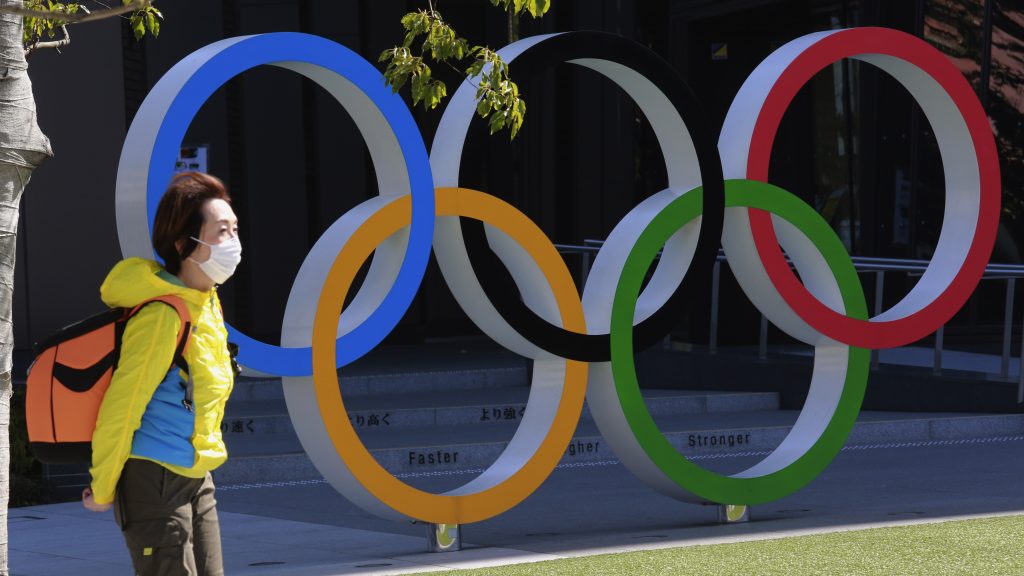
After the postponement of the Olympics was announced in 2020, elite-level athletes came across a great number of challenges as far as their preparation for Tokyo is concerned.
Never in peacetime had the Olympic Games been suspended. However, in 2020, the spread of the Covid-19 pandemic highlighted the need for a delay.
For a whole year, elite-level athletes had to maintain their physical strength, without dropping the ball at any point, in order to compete in the Olympics in 2021. However, they soon found out that thanks to the global pandemic, this extra year would be marked with numerous restrictions that would make the road to Tokyo even longer.
Athletes locked out of training facilities
Pitches, courts, pools, and training facilities had to close their doors. And even athletes who are representing their countries in this year’s Olympics had to get creative as far as their preparation is concerned.
Luke Patience is a Scottish sailor competing in Tokyo with Team GB. Luke said:
“The way we were training changed massively. For a start, I did build my homemade gym, lifted heavy rocks in the garden, and did lots of riding on my bike. But then I had to try and think of things that would keep my brain sharp as well. Amazingly video games are not such a bad direction to go. There is a sailing video game and I just have to decision make on it. I know it sounds funny but I had to try just anything to keep me making decisions and assessing risk.”
With Tokyo Olympics just over a month away, Team GB ???????? sailor @patience_luke picked the words “perspective and balance” to describe how he managed to stay physically and mentally fit in a year marked with so many challenging conditions for elite-level athletes! #TokyoOlympics pic.twitter.com/ZTIrgcuZVC
— Vangelis Pourikis (@PourikisV) June 20, 2021
However, Greek swimmer Anna Ntountounaki did not find it that easy to adjust to the new reality. She said:
“There is no kind of training that can replace training in a pool. Swimming has to do with the feeling of the water. When athletes are not able to swim for such a long period of time, they end up losing it. It is so easy to lose this feeling and it is twice as hard to get it back.”

According to Anna’s coach, Tasos Karampelas, “even when pools reopened in Greece, it was really difficult to pick it up from where we left it. Anna was exhausted. She had lost her momentum, her motivation. She almost gave up. So we had to start over.”
Tokyo athletes and Covid anxiety
Having to mentally cope with all these unprecedented circumstances was also something many athletes around the world did not find easy.
According to Dr. Carla Edwards, high-performance mental health advisor for Team Canada, this global pandemic created a new form of anxiety that, like the virus itself, changes every day. She said that “at first, Covid anxiety was all about that vicious, invisible enemy. We didn’t know what this virus was, who has it, and who doesn’t. We had to be extremely cautious with our moves.”
“Now things have shifted. Now I’m finding it more in the reintegration of people in normal society, in normal situations, in group settings. That is what’s triggering Covid anxiety now. Some of our athletes have had Covid. They don’t want to give it to their teammates. They don’t want to shut down competitions because they test positive. So, there is a lot of worry about that. Getting Covid in a competition or making your team have to be disqualified” she added.
Countless restrictions and no international fans in Tokyo
In an attempt to mitigate the risks of spreading coronavirus, it’s been decided that international visitors will not be allowed to enter Tokyo this summer.
It has been concluded that overseas spectators will not be allowed entry into Japan for #Tokyo2020 due to the COVID-19 pandemic.
We will continue to deliver a safe and secure Games in the hopes that they will be a light of hope. https://t.co/oGUJ1hv8JC
— #Tokyo2020 (@Tokyo2020) March 20, 2021
And although athletes are not asked to get vaccinated before traveling to Tokyo, they will have to get tested multiple times before the day of their competition.
But even under these overwhelming conditions, athletes are still eager for the unique experience they will gain in Tokyo this year. It has been a year full of challenges and obstacles, but they believe that competing in the Tokyo Olympics of 2021 is special in its own way.