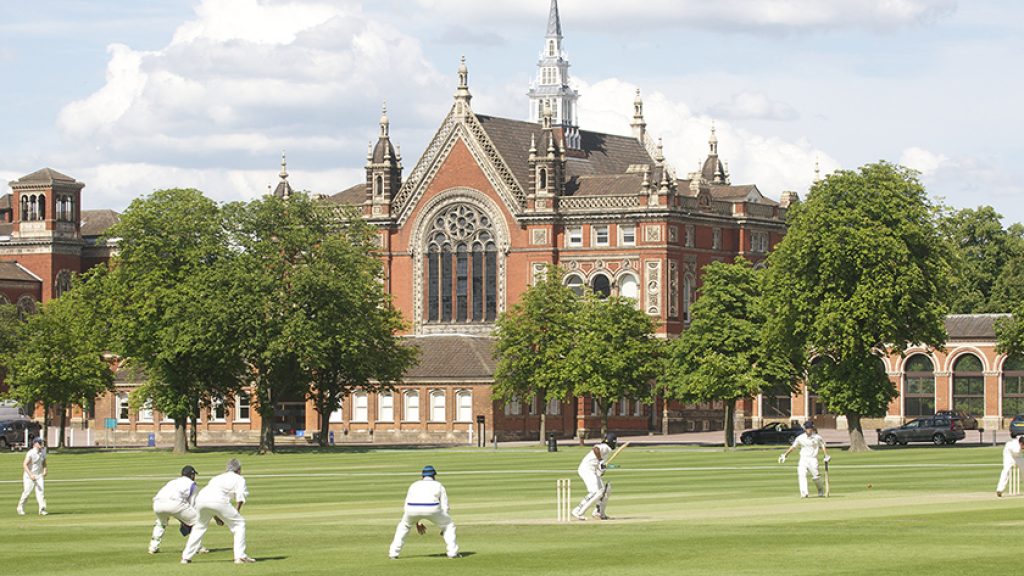
English cricket is increasingly being dominated by those who go to private schools. In the last decade, more than half of England’s players were privately educated, compared to just 7% of the rest of the country.
An apparent class divide exists within the English game, with batters far more likely to have been privately educated than bowlers. Since the year 2000, 61% of England’s batters went to private schools, compared to just 27% of bowlers and all-rounders.
This trend isn’t new. An old anecdote of the English game is that if England ever needed another fast bowler, all they’d have to do was whistle down a coal mine and one would come up. And cricket historian, Jeremy Lonsdale, believes that if you go back centuries, you find the reason why.
“Throughout the Victorian period, professionals were very much seen as sort of, club servants, and they were retainers. And the MCC and other prestigious clubs encouraged the idea that fast bowling was menial work that was designed to help batsmen get into form and stay in form.”
The modern day
Today, the raw physicality required for bowling, especially fast, has led to a debate over whether quick bowlers are born, or made. Paul Felton is a biomechanist who specialises in cricket. He believes that whilst a large proportion of fast bowlers are taught, the fastest in the world (and therefore a large proportion of those who reach international cricket) are in fact born with inherent properties that allow them to reach such speeds.
He points to England and Sussex bowler Tymal Mills as an example. Mills is one of the fastest bowlers in the world and only played cricket for the first time aged 14 where he was immediately the fastest bowler in his league.
“Within that level of cricket, I was immediately the fastest bowler, even though I had never played cricket before,” says Mills.
Batting vs bowling
“Bowling’s such a unique action, I’m just very lucky that basically I’m very powerful but I’m also very flexible. In a basic term it’s kind of like an elastic band, the further you can pull an elastic band the quicker it’s going to ping forward.”
England’s David Willey bowls a delivery during the third one-day international cricket match between England and Sri Lanka. Credit: AP
A key difference between batting and bowling is that batting is what’s known as an open skill, whereas bowling is what’s known as a closed skill.
What that means is that when bowling, you’re in control. The ball is in your hand and whether you bowl a good ball or a bad ball, that’s on you.
Batting, however, is an open skill because you need a stimulus. You can’t do it by yourself and you need someone else to bowl you a ball before you can play.
This means that there is a barrier to practising batting, which doesn’t exist with bowling. And it’s a barrier that state-educated, Surrey Academy player Ragu Aravinthan knows all too well.
Ragu Aravinthan preparing to bat. Source: City News
“Obviously the facilities [at private school] are better, you play against better opponents. Sometimes some of the coaches at private schools are linked with Surrey so there’s a bit of intel and you get a bit more noticed if you go to a private school because no one really looks into state school cricket because they don’t play a high standard.
Training wise during the winter obviously we can’t train ourselves at outdoor nets and at home it’s not that beneficial. So training wise they can train at school and at Surrey but as a state school kid we can only train at Surrey.”
Like so with so many things, it appears to come down to a question of access. Ragu has a very supportive family who’s taken him to multiple extra sessions by way of making up for the difference of having not gone to a private school. The point being that, in order to make up for not going to a private school Ragu and his family have had to go above and beyond. Whereas if you do to a private school, you don’t have to go above and beyond, you just have to go.
Overall, it seems that the primary emphasis on athleticism with fast bowlers means we pick bowlers from the nation as a whole. Whereas the technical emphasis with batting means we’re picking from those who have the best chance to practice, in other words, those who go to private schools.
Change on the horizon?
But, the idea that batting is cricket’s nurture to bowling’s nature is changing. Since 2011, the English Cricket Board have been running a series of tests on players aged 12-17 designed to find that magic ingredient that everyone is looking for: talent.
Ben Jones is a talent analyst for Chelsea FC who previously completed his PhD with the English Cricket Board that focused on finding the next generation of Test cricketers.
“I’d ask the question is batting a sport where you need that foundation in terms of your hand-eye coordination or whatever those raw ingredients may be, but that gives you the platform to build on that, put in those hours and maximise your potential from there.”
So, if batting is also primarily reliant on natural capabilities, does this not open the door for more batters to come through from a wider range of backgrounds in the same way that bowlers do? ECB Talent Lead, David Court believes it is too soon to tell.
“I think, unless the evidence is there, it would be counterproductive to make those decisions early. However, that doesn’t mean we should be happy with it. We need to find ways that we can continue to evolve state school cricket and make sure boys from all backgrounds have the chance to play for England.”
Tymal Mills agrees, although believes there’s hope for the future.
“From my experience cricket just wasn’t played because it was an expensive sport, it’s not exactly an accessible sport, so that’s definitely an advantage of if you go to a private school, you’re more likely to have the facilities and the amenities to potentially play cricket.”
“That’s starting to change. There’s a hell of a lot more initiatives, Sussex cricket, for example, have a whole foundation that’s getting cricket out into local schools and if it unearths one next England player it’s worth it isn’t it?”
Whilst it may only be a start, it is a step in the right direction, to levelling the playing field and giving every young cricketer the chance to make it to the top with the ball, or the bat, in their hand.
Submitted Article
Headline
Short Headline
Standfirst
Published Article
HeadlineClass divide between batters and bowlers in England cricket team
Short HeadlineClass divide between batters and bowlers in cricket
StandfirstSince the year 2000, 61% of England’s batters went to private schools, compared to just 27% of bowlers and all-rounders.
English cricket is increasingly being dominated by those who go to private schools. In the last decade, more than half of England’s players were privately educated, compared to just 7% of the rest of the country.
An apparent class divide exists within the English game, with batters far more likely to have been privately educated than bowlers. Since the year 2000, 61% of England’s batters went to private schools, compared to just 27% of bowlers and all-rounders.
This trend isn’t new. An old anecdote of the English game is that if England ever needed another fast bowler, all they’d have to do was whistle down a coal mine and one would come up. And cricket historian, Jeremy Lonsdale, believes that if you go back centuries, you find the reason why.
“Throughout the Victorian period, professionals were very much seen as sort of, club servants, and they were retainers. And the MCC and other prestigious clubs encouraged the idea that fast bowling was menial work that was designed to help batsmen get into form and stay in form.”
The modern day
Today, the raw physicality required for bowling, especially fast, has led to a debate over whether quick bowlers are born, or made. Paul Felton is a biomechanist who specialises in cricket. He believes that whilst a large proportion of fast bowlers are taught, the fastest in the world (and therefore a large proportion of those who reach international cricket) are in fact born with inherent properties that allow them to reach such speeds.
He points to England and Sussex bowler Tymal Mills as an example. Mills is one of the fastest bowlers in the world and only played cricket for the first time aged 14 where he was immediately the fastest bowler in his league.
“Within that level of cricket, I was immediately the fastest bowler, even though I had never played cricket before,” says Mills.
Batting vs bowling
“Bowling’s such a unique action, I’m just very lucky that basically I’m very powerful but I’m also very flexible. In a basic term it’s kind of like an elastic band, the further you can pull an elastic band the quicker it’s going to ping forward.”
England’s David Willey bowls a delivery during the third one-day international cricket match between England and Sri Lanka. Credit: AP
A key difference between batting and bowling is that batting is what’s known as an open skill, whereas bowling is what’s known as a closed skill.
What that means is that when bowling, you’re in control. The ball is in your hand and whether you bowl a good ball or a bad ball, that’s on you.
Batting, however, is an open skill because you need a stimulus. You can’t do it by yourself and you need someone else to bowl you a ball before you can play.
This means that there is a barrier to practising batting, which doesn’t exist with bowling. And it’s a barrier that state-educated, Surrey Academy player Ragu Aravinthan knows all too well.
Ragu Aravinthan preparing to bat. Source: City News
“Obviously the facilities [at private school] are better, you play against better opponents. Sometimes some of the coaches at private schools are linked with Surrey so there’s a bit of intel and you get a bit more noticed if you go to a private school because no one really looks into state school cricket because they don’t play a high standard.
Training wise during the winter obviously we can’t train ourselves at outdoor nets and at home it’s not that beneficial. So training wise they can train at school and at Surrey but as a state school kid we can only train at Surrey.”
Like so with so many things, it appears to come down to a question of access. Ragu has a very supportive family who’s taken him to multiple extra sessions by way of making up for the difference of having not gone to a private school. The point being that, in order to make up for not going to a private school Ragu and his family have had to go above and beyond. Whereas if you do to a private school, you don’t have to go above and beyond, you just have to go.
Overall, it seems that the primary emphasis on athleticism with fast bowlers means we pick bowlers from the nation as a whole. Whereas the technical emphasis with batting means we’re picking from those who have the best chance to practice, in other words, those who go to private schools.
Change on the horizon?
But, the idea that batting is cricket’s nurture to bowling’s nature is changing. Since 2011, the English Cricket Board have been running a series of tests on players aged 12-17 designed to find that magic ingredient that everyone is looking for: talent.
Ben Jones is a talent analyst for Chelsea FC who previously completed his PhD with the English Cricket Board that focused on finding the next generation of Test cricketers.
“I’d ask the question is batting a sport where you need that foundation in terms of your hand-eye coordination or whatever those raw ingredients may be, but that gives you the platform to build on that, put in those hours and maximise your potential from there.”
So, if batting is also primarily reliant on natural capabilities, does this not open the door for more batters to come through from a wider range of backgrounds in the same way that bowlers do? ECB Talent Lead, David Court believes it is too soon to tell.
“I think, unless the evidence is there, it would be counterproductive to make those decisions early. However, that doesn’t mean we should be happy with it. We need to find ways that we can continue to evolve state school cricket and make sure boys from all backgrounds have the chance to play for England.”
Tymal Mills agrees, although believes there’s hope for the future.
“From my experience cricket just wasn’t played because it was an expensive sport, it’s not exactly an accessible sport, so that’s definitely an advantage of if you go to a private school, you’re more likely to have the facilities and the amenities to potentially play cricket.”
“That’s starting to change. There’s a hell of a lot more initiatives, Sussex cricket, for example, have a whole foundation that’s getting cricket out into local schools and if it unearths one next England player it’s worth it isn’t it?”
Whilst it may only be a start, it is a step in the right direction, to levelling the playing field and giving every young cricketer the chance to make it to the top with the ball, or the bat, in their hand.
As e-bike riders weave through London’s busiest junctions, red lights are increasingly treated as optional. One software engineer says the problem may be baked into how hire firms charge users
Deliveroo has announced its sale to U.S. rival DoorDash, but concerns linger over the controversial ‘substitute’ feature at the heart of its operations.
Inside Success Union CIC claim to empower vulnerable young people, but allegations of underpayment and concerns over their fundraising practices are undermining their message.