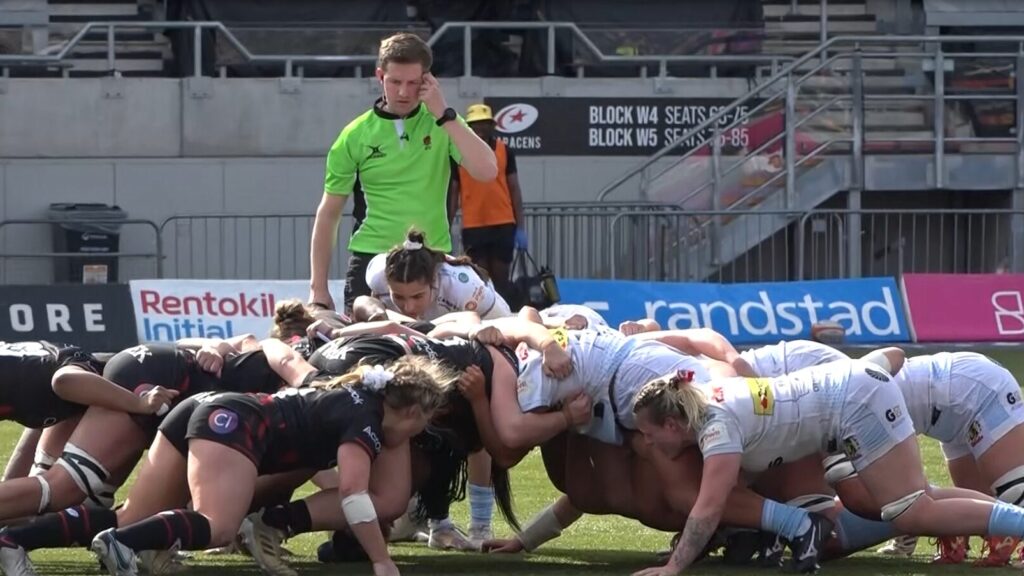
Flo Williams made her international debut for Wales at the Women’s Six Nations Championship in 2021 and has played at fly-half for Saracens since 2022.
As well as her on-field successes in more than 15 years as an elite rugby union player, her contributions off the field have encouraged important conversations about gender disparities in the sport, and advocacy now plays a huge role in her life.
In August 2020, the Irish rugby team released new promotional photos to advertise their jersey. The men’s kit was marketed using pictures of the team wearing it, while the women’s kit campaign used professional models.
Flo expressed her disappointment, calling it a “HUGE missed opportunity” to build recognition, fan bases, and create role models for future generations.
SPOT THE DIFFERENCE 🇮🇪
2 Jersey Launches
3 Models
3 International Players
3 Profiles lifted
1 HUGE Opportunity Missed
By not using the female players to market THEIR OWN KIT an opportunity to build recognition, fan bases & creating role models for future generations is lost. pic.twitter.com/TM75AH5rKr— Florence Williams (@FlorenceW94) August 22, 2020
Her tweet got more than 3,800 likes and nearly 1,000 reposts.
It inspired the IAmEnough hashtag, which went viral and was used online by people to uplift women in the sport and encourage athletic women to embrace their strengths, both physically and mentally.
The movement garnered involvement from some of the game’s top talent. Many posts centred around the ability to be both feminine and athletic, something many female players have been told were mutually exclusive.
Flo told City News: “I was shocked at the wider response.
“I was inspired by my former Wasps teammates who played for Ireland at the time. It resonated strongly with me and my experience in sports marketing.” The success of the hashtag led to the IRFU and Canterbury changing their marketing policy in a way that Flo says “protects from future lack of exposure for the women’s game”.
Motherhood and athleticism
Holly Jayne Wood is a professional referee and former player. She is also Mum to 10-month old Huxley.
Holly was the first female referee at her level to have a child and chose to keep her pregnancy secret from the Rugby Football Union (RFU) until she was almost six months pregnant.
Holly told City News she felt the stereotypical perceptions of pregnant women were not representative of her body’s capabilities.
“A lot of males take what a pregnant women looks like from their mother or sister. But being an athlete and pregnant… our bodies can cope in a different way.”
Holly’s experiences resulted in the creation of a pregnancy policy for professional referees.
“I didn’t want any woman to feel she couldn’t be both an active athlete and a mother. I didn’t want anyone else to feel like they had to hide it.”
Is anything changing?
Anna Brown is a grassroots rugby player at Beckenham Rugby Club.
At 22 years old, she’s part of a generation many hope are fighting back from these stereotypes.
Anna, however, says she struggled with her feelings toward her femininity as a teen, and continues to feel that her rugby-playing is markedly separate from her femininity.
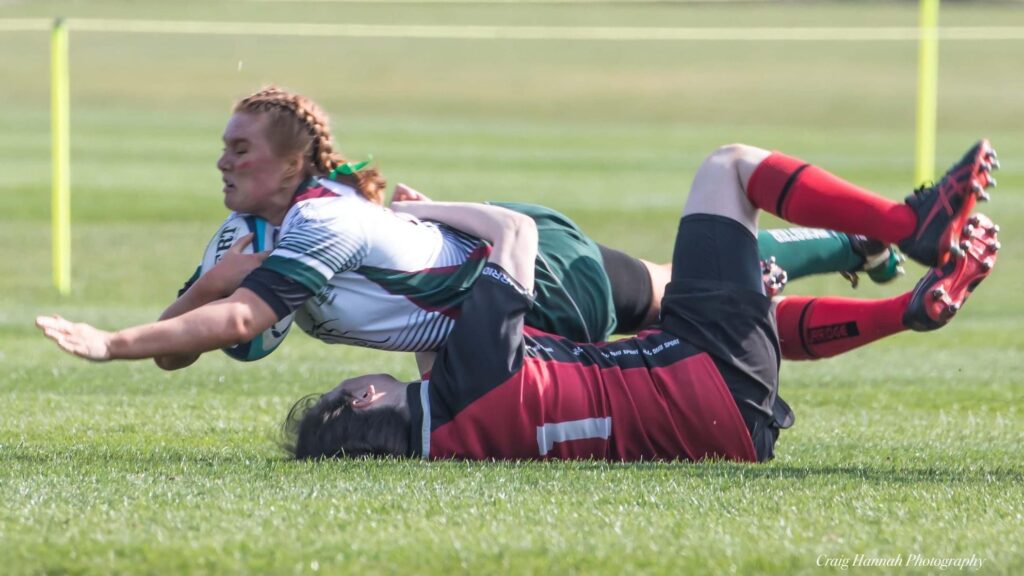
“It feels like I’m feminine and I have these masculine elements of strength and speed. It feels okay for them to both be me and I still feel feminine, but it’s not part of the femininity itself.”
Anna says that her femininity has also meant she has encountered harassment in the rugby world.
She says sexualisation is commonplace for many women in the sport, and is something she’s had to deal with all throughout her time playing.
“People have made comments of a sexual nature when they find out I play rugby. Sometimes it feels like you’re either a butch lesbian because you play rugby, or you’re rolling around the mud in a bikini.”
Looking forward
Paul Morgan, ex-communications director at Premiership Rugby, is a big advocate for the women’s game. He says the future for young women is a much brighter one.
His expertise in media has led him to believe that coverage is the key ingredient for removing judgements about femininity.
Paul told City News: “The more women we can see at the highest level, and the more that people see that it’s okay to be what you want to be, whether that’s muscular or not, the more we can break down these stigmas.”
The 2025 Women’s Rugby World Cup will take place in England, and many are hoping this could prove to be a watershed moment for the sport, akin to the Lionesses’ triumph at the Euros. The moment catapulted the players into the spotlight, with some even becoming faces of fashion brands alongside their playing career.
Ultimately, with the women and allies we have met at the forefront of the fight to change perceptions, and telling their stories passionately, there are certainly plenty of reasons to be hopeful.