Mike Brace CBE DL is a former Paralympian and charity worker.
At the age of 10, when at a local park, Mike approached some other children gathered around a medicine bottle on the floor.
Unknown to him, the bottle contained a firework, which went off as he bent down to pick it up.
The incident left Mike partially blind.
His sight continued to deteriorate over the next few years. Aged 12, Mike blew a bugle at a football match, and the pressure caused him to go completely blind.
Adapting to blindness
Mike remembers adapting to his disability took persistence. He thinks it was “very difficult” for his family, even more so than himself.
“Luckily no one told me aged 12 that I had a choice whether to give up or go on, whereas my parents and people around me were looking in the crystal ball. They could see 10 years, 15, 20 years, will you ever get a job, will you ever do anything with your life?”
“None of us had any experience with disability […] so between us it was a journey into the unknown. I had an aunt who couldn’t ever bring herself to say anything to do with seeing or looking, in case it upset me.”
Mike initially found it difficult to adapt to his blindness.
School
After this incident, Mike attended a school for blind children. Going to the blind school was “a shock”: “I was a pretty outgoing, East End lad, out on the streets playing out more and more. And then suddenly you’re sent over to the other side of London, you’re in a boarding school.”
“I didn’t know what to expect. Blindness was a word people banded around, and it was very negative. Blind men are disabled, blind men are unable.”
Looking back, Mike wishes he’d had more trust to speak to someone openly about how he was feeling. “Being as young as I was […] I couldn’t really speak to my parents about how I was properly feeling about life and about losing your sight. Because they were probably struggling more than I was to deal with that.”
I remember being 15, coming home from school, standing on the tube platform, and for a second thinking ‘If I jump, would any really miss me. Would it ease their lives, rather than be a tragedy?’ It frightens me now, looking back, that I had these thoughts. And I can’t be alone.”
Mike found inspiration in sport. While touring the school on his first day, he was immediately inspired by seeing children skating around on roller skates and riding go-karts, nearly knocking him over. “I thought wow, if they can do it, perhaps it isn’t all over – perhaps I’m not going to be sitting around just doing nothing.”
Paralympic journey
Upon leaving school, shocked by the lack of sporting opportunities for the visually impaired, Mike set up the Metro Sports Club in the early 1970s.
The club grew hugely inside, and members were invited in 1974 to travel to Norway and try cross-country skiing. It struck him as “crazy”, but immediately, “he was hooked”.
“You’re on the tracks, on the snow, out in the wild. It was the nearest to a spiritual moment, because it was totally silent […] it was just so, so fantastic.”
In 1974, Mike was invited to trial for the UK ski team for the first Winter Paralympics – he was successful, and subsequently represented the UK in Sweden in 1976.
“It was thrilling, but it was also pretty shambolic”, he says. Funding and training were difficult, because a national, all-sport Paralympic body not being fully developed.
He participated while training as a social worker: a career he would continue, supporting children across four London boroughs, alongside his sporting career.
They wore shell-suits, all they could get hold of but inappropriate for cross-country skiing, and didn’t have chance to practice with the guides they would race with.
Mike remembers training in his garage. “We put a rope on the front of the gates, and a rope tied to the garage, and a hoop on the rope. And the three blind guys ran up and down, up and down, to do our aerobic training.
“The men would be running 40 to 50 miles a week in preparation for the Games, and would run gruelling half marathons for training.
In 1976, the same year as his first Paralympic performance, Mike qualified as a social working. He would train with guides at 6am or 7pm to make sure he could still get his training. “We’d do an 18 mile home from work usually on a Wednesday, from Hackney to Romford.”
This appearance was the first of Mike’s five Paralympic performances, followed by four serving as the Winter team’s manager.
Chairman
Following this, Mike became Chairman of the Paralympic Association and served on the London 2012 Olympics planning team. He remembers being asked about being on the 2012 organising bid team. “I initially thought it was a hoax!”
2012 was “incredible”. Mike was amazed by so many of disabled fans coming to watch an event, geared for them.
Theirs was the first Games with audio description, and a raft of transport arrangements. 170,000 spectators came on some days; in Beijing in 2008, they didn’t have 170,000 attendees across the entire Paralympics.
Competing and leading an Olympic team, Mike was “thrilled by the enablement”. He’s inspired to see a team of hundreds of athletes competing at diverse sports, giving people the chance “to fulfil some of their dreams and their ambitions”.
Looking back
Mike says sport taught him to “push where his limits are”. He thinks many disabled people listen to people around them, who say ““Of course your blind, you can’t do this, you can’t do that. And they start to believe it.”
“Luckily for me, I didn’t really have that.” Whenever people would comment pityingly about his blindness, Mike says he’d think: “how dare you. Don’t make assumptions about me and my abilities. All you’re seeing is my disability, and you don’t really understand what that is either.”
“For me that was absolutely the red rag to a bull I needed as a youngster. Because when challenges came up, they were there to be overcome rather than defeat me.”
His advice to his younger self would be “to look at a challenge, and really get to it to overcome this challenge […] I’ve done 54 different sports in my life, and most of them I’ve been absolutely rubbish at.
“But I’m the one who decided I was rubbish at them, not someone said no you can’t possibly do that.”
Mike was awarded an OBE for services to sport in 2005. In 2009, he received a CBE for services to disabled sport. In 2016, he was appointed Deputy Lieutenant of London.
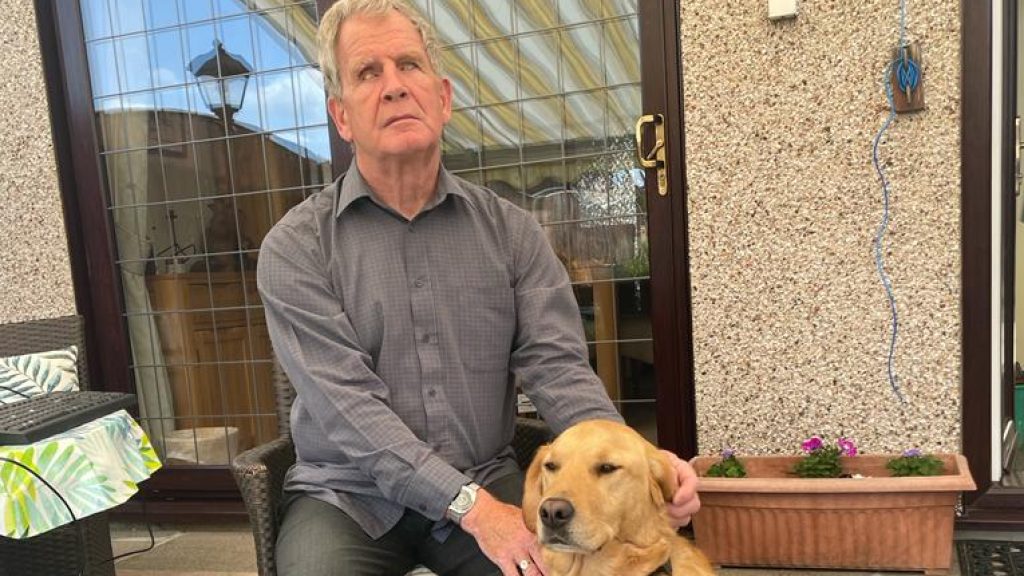
He now lives with his wife and guide dog King in Hornchurch, Essex.
Submitted Article
Headline
Short Headline
Standfirst
Published Article
HeadlineMike Brace: lessons from a five time Winter Paralympian
Short HeadlineLessons from a five time Winter Paralympian
StandfirstWhat would a a five time Winter Paralympian tell his younger self?
Mike Brace CBE DL is a former Paralympian and charity worker.
At the age of 10, when at a local park, Mike approached some other children gathered around a medicine bottle on the floor.
Unknown to him, the bottle contained a firework, which went off as he bent down to pick it up.
The incident left Mike partially blind.
His sight continued to deteriorate over the next few years. Aged 12, Mike blew a bugle at a football match, and the pressure caused him to go completely blind.
Adapting to blindness
Mike remembers adapting to his disability took persistence. He thinks it was “very difficult” for his family, even more so than himself.
“Luckily no one told me aged 12 that I had a choice whether to give up or go on, whereas my parents and people around me were looking in the crystal ball. They could see 10 years, 15, 20 years, will you ever get a job, will you ever do anything with your life?”
“None of us had any experience with disability […] so between us it was a journey into the unknown. I had an aunt who couldn’t ever bring herself to say anything to do with seeing or looking, in case it upset me.”
Mike initially found it difficult to adapt to his blindness.
School
After this incident, Mike attended a school for blind children. Going to the blind school was “a shock”: “I was a pretty outgoing, East End lad, out on the streets playing out more and more. And then suddenly you’re sent over to the other side of London, you’re in a boarding school.”
“I didn’t know what to expect. Blindness was a word people banded around, and it was very negative. Blind men are disabled, blind men are unable.”
Looking back, Mike wishes he’d had more trust to speak to someone openly about how he was feeling. “Being as young as I was […] I couldn’t really speak to my parents about how I was properly feeling about life and about losing your sight. Because they were probably struggling more than I was to deal with that.”
I remember being 15, coming home from school, standing on the tube platform, and for a second thinking ‘If I jump, would any really miss me. Would it ease their lives, rather than be a tragedy?’ It frightens me now, looking back, that I had these thoughts. And I can’t be alone.”
Mike found inspiration in sport. While touring the school on his first day, he was immediately inspired by seeing children skating around on roller skates and riding go-karts, nearly knocking him over. “I thought wow, if they can do it, perhaps it isn’t all over – perhaps I’m not going to be sitting around just doing nothing.”
Paralympic journey
Upon leaving school, shocked by the lack of sporting opportunities for the visually impaired, Mike set up the Metro Sports Club in the early 1970s.
The club grew hugely inside, and members were invited in 1974 to travel to Norway and try cross-country skiing. It struck him as “crazy”, but immediately, “he was hooked”.
“You’re on the tracks, on the snow, out in the wild. It was the nearest to a spiritual moment, because it was totally silent […] it was just so, so fantastic.”
In 1974, Mike was invited to trial for the UK ski team for the first Winter Paralympics – he was successful, and subsequently represented the UK in Sweden in 1976.
“It was thrilling, but it was also pretty shambolic”, he says. Funding and training were difficult, because a national, all-sport Paralympic body not being fully developed.
He participated while training as a social worker: a career he would continue, supporting children across four London boroughs, alongside his sporting career.
They wore shell-suits, all they could get hold of but inappropriate for cross-country skiing, and didn’t have chance to practice with the guides they would race with.
Mike remembers training in his garage. “We put a rope on the front of the gates, and a rope tied to the garage, and a hoop on the rope. And the three blind guys ran up and down, up and down, to do our aerobic training.
“The men would be running 40 to 50 miles a week in preparation for the Games, and would run gruelling half marathons for training.
In 1976, the same year as his first Paralympic performance, Mike qualified as a social working. He would train with guides at 6am or 7pm to make sure he could still get his training. “We’d do an 18 mile home from work usually on a Wednesday, from Hackney to Romford.”
This appearance was the first of Mike’s five Paralympic performances, followed by four serving as the Winter team’s manager.
Chairman
Following this, Mike became Chairman of the Paralympic Association and served on the London 2012 Olympics planning team. He remembers being asked about being on the 2012 organising bid team. “I initially thought it was a hoax!”
2012 was “incredible”. Mike was amazed by so many of disabled fans coming to watch an event, geared for them.
Theirs was the first Games with audio description, and a raft of transport arrangements. 170,000 spectators came on some days; in Beijing in 2008, they didn’t have 170,000 attendees across the entire Paralympics.
Competing and leading an Olympic team, Mike was “thrilled by the enablement”. He’s inspired to see a team of hundreds of athletes competing at diverse sports, giving people the chance “to fulfil some of their dreams and their ambitions”.
Looking back
Mike says sport taught him to “push where his limits are”. He thinks many disabled people listen to people around them, who say ““Of course your blind, you can’t do this, you can’t do that. And they start to believe it.”
“Luckily for me, I didn’t really have that.” Whenever people would comment pityingly about his blindness, Mike says he’d think: “how dare you. Don’t make assumptions about me and my abilities. All you’re seeing is my disability, and you don’t really understand what that is either.”
“For me that was absolutely the red rag to a bull I needed as a youngster. Because when challenges came up, they were there to be overcome rather than defeat me.”
His advice to his younger self would be “to look at a challenge, and really get to it to overcome this challenge […] I’ve done 54 different sports in my life, and most of them I’ve been absolutely rubbish at.
“But I’m the one who decided I was rubbish at them, not someone said no you can’t possibly do that.”
Mike was awarded an OBE for services to sport in 2005. In 2009, he received a CBE for services to disabled sport. In 2016, he was appointed Deputy Lieutenant of London.
He now lives with his wife and guide dog King in Hornchurch, Essex.