Pandemic-related economic stressors have meant that record numbers of people are relying on food banks to get enough food to feed their families. Charities say that, in some cases, the demand is not being met.
With cuts to universal credit and the economic fallout of the Coronavirus pandemic, an increasing number of people are turning to food banks.
Bow Foodbank in East London has experienced a 500% increase in the number of its users compared to pre-pandemic levels. A spokesperson from the charity explained that they are struggling to keep up with demand. They say that they will need to raise £100,000 by the Winter to ensure they have enough food to keep them going.
According to the UK Food Council, which represents the country’s food industry, there has been a noticeable change in the demographic of those using food banks over the past 18 months. In addition, supply chain problems have lead to a drop in the number of donations.
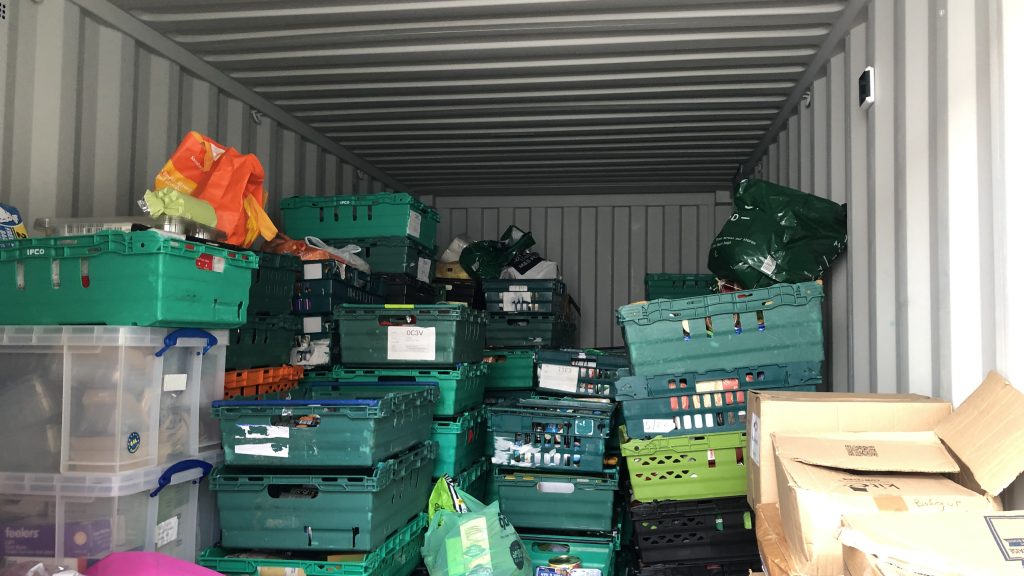
Supply chain problems mean that donations often do not meet demand.
Laura Jarman, the UK Food Council’s Media Projects Director, expressed concern.
“[T]he supply chain has been disrupted not only by volume, hence there is less to offer to good causes, but also the ‘use by’ dates are shorter. This has an impact as the volume of food that would have otherwise been destined for the food bank is now being destroyed.”
Laura added that yesterday’s budget, announced by the Chancellor, Rishi Sunak, didn’t reassure her.
“[The] Autumn Budget offers little if anything to those people who will continue […] to rely on food banks – when you isolate the issue and scratch away the surface, hunger isn’t about food, it’s lack of sufficient income, whether in work or not.”
With colder months fast approaching, Ringcross Community Centre Food Bank’s volunteers say they fear that rising fuel costs may further increase demand and worsen the problem.
Submitted Article
Headline
Short Headline
Standfirst
Published Article
HeadlineAutumn budget ‘offers little’ to keep food bank doors open
Short HeadlineBudget fails to reassure food banks
StandfirstEconomic pressures have caused demand for food banks to rise, and the autumn budget doesn’t go far enough to relieve these, charity says.
Pandemic-related economic stressors have meant that record numbers of people are relying on food banks to get enough food to feed their families. Charities say that, in some cases, the demand is not being met.
With cuts to universal credit and the economic fallout of the Coronavirus pandemic, an increasing number of people are turning to food banks.
Bow Foodbank in East London has experienced a 500% increase in the number of its users compared to pre-pandemic levels. A spokesperson from the charity explained that they are struggling to keep up with demand. They say that they will need to raise £100,000 by the Winter to ensure they have enough food to keep them going.
According to the UK Food Council, which represents the country’s food industry, there has been a noticeable change in the demographic of those using food banks over the past 18 months. In addition, supply chain problems have lead to a drop in the number of donations.
Supply chain problems mean that donations often do not meet demand.
Laura Jarman, the UK Food Council’s Media Projects Director, expressed concern.
“[T]he supply chain has been disrupted not only by volume, hence there is less to offer to good causes, but also the ‘use by’ dates are shorter. This has an impact as the volume of food that would have otherwise been destined for the food bank is now being destroyed.”
Laura added that yesterday’s budget, announced by the Chancellor, Rishi Sunak, didn’t reassure her.
“[The] Autumn Budget offers little if anything to those people who will continue […] to rely on food banks – when you isolate the issue and scratch away the surface, hunger isn’t about food, it’s lack of sufficient income, whether in work or not.”
With colder months fast approaching, Ringcross Community Centre Food Bank’s volunteers say they fear that rising fuel costs may further increase demand and worsen the problem.
A 2024 Freedom of Information request showed Bromley Council had £4.5 million invested in arms companies that year with £1.5 million reportedly linked to Israel.
Undercover officers raided three linked shops in Barking town centre, revealing how illicit tobacco is being hidden in walls, ceilings and nearby locations to evade detection.
More than 330,000 people across the UK sought support from the Stop It Now helpline in 2025 over concerns about their own or someone else’s online sexual behaviour towards children, according to new charity data. The anonymous service says contacts by phone, email and webchat rose significantly over the year.