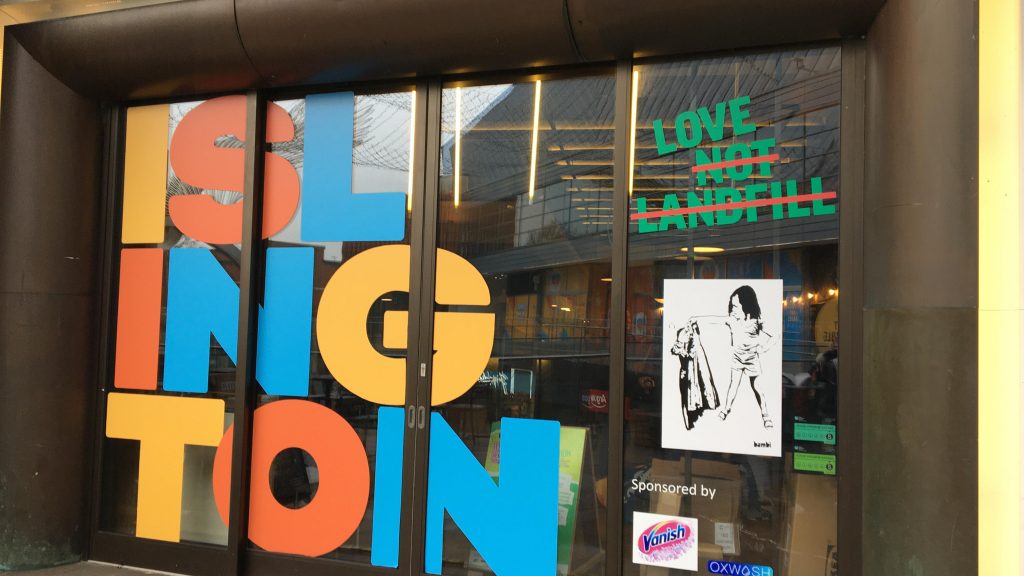
Against the backdrop of growing concerns about the climate crisis as the COP26 summit draws to a close, sustainable fashion initiative Love Not Landfill has opened a pop-up shop promoting pre-loved fashion to help fight the climate emergency.
The pop-up boutique, which has been curated by a number of fashion influencers including Shannon Alexandra and Ismail Stewart, encourages shoppers to ditch fast fashion in favour of pre-loved clothing.
In collaboration with their partner charity, each influencer has selected up to 500 pieces from donations. Credit: Kate Cornell, City News
A new generation of shoppers
In an interview with City News, Love Not Landfill campaign lead Ali Moore spoke about what she hopes to achieve through the charity-led initiative.
“We just really hope that people will come in and actively choose second-hand over new, because that’s one of the most important things that you can do.
“It’s those little actions that we can do in our lives everyday to help save the planet.”
The Angel boutique is the third pop-up charity shop of its kind. Credit: Kate Cornell, City News
But to what extent is affordability compromised by sustainability?
Targeted specially at 16 to 24-year-olds, initiatives promoting pre-loved fashion such as Love Not Landfill are not free from criticism. Many from the younger generation have drawn attention to the hefty price tags carried by vintage clothing, making it unaffordable for those from low-income families.
Vintage shopping has become somewhat of a fad in recent years, particularly among younger generations. Credit: Kate Cornell, City News
Speaking about the cost of pre-loved fashion, one shopper commented on the tendency of sustainable clothing brands to increase their prices as demand for an alternative to cheap clothing increases.
“I think at one point vintage clothing was affordable, but then when it got more popular the prices started rising and it got more expensive. Maybe too expensive.
“A lot of people can find [vintage] clothes that they like, but a fewer number of people who used to rely on second-hand clothing can do that now.”
The eco-fashion campaign is putting a spotlight on the benefits of shopping sustainably. Credit: Kate Cornell, City News
Love Not Landfill will be open from 11 to 14 November at the Angel Central shopping centre on Parkfield Street, Islington.
Submitted Article
Headline
Short Headline
Standfirst
Published Article
HeadlineLove Not Landfill: The eco-fashion campaign making a stand against fast fashion
Short HeadlineFashion influencers curate charity pop-up shop
StandfirstThe Angel pop-up shop will feature the collections of a number of charities including Oxfam, Cancer Research UK, Royal Trinity Hospice and Crisis.
Against the backdrop of growing concerns about the climate crisis as the COP26 summit draws to a close, sustainable fashion initiative Love Not Landfill has opened a pop-up shop promoting pre-loved fashion to help fight the climate emergency.
The pop-up boutique, which has been curated by a number of fashion influencers including Shannon Alexandra and Ismail Stewart, encourages shoppers to ditch fast fashion in favour of pre-loved clothing.
In collaboration with their partner charity, each influencer has selected up to 500 pieces from donations. Credit: Kate Cornell, City News
A new generation of shoppers
In an interview with City News, Love Not Landfill campaign lead Ali Moore spoke about what she hopes to achieve through the charity-led initiative.
“We just really hope that people will come in and actively choose second-hand over new, because that’s one of the most important things that you can do.
“It’s those little actions that we can do in our lives everyday to help save the planet.”
The Angel boutique is the third pop-up charity shop of its kind. Credit: Kate Cornell, City News
But to what extent is affordability compromised by sustainability?
Targeted specially at 16 to 24-year-olds, initiatives promoting pre-loved fashion such as Love Not Landfill are not free from criticism. Many from the younger generation have drawn attention to the hefty price tags carried by vintage clothing, making it unaffordable for those from low-income families.
Vintage shopping has become somewhat of a fad in recent years, particularly among younger generations. Credit: Kate Cornell, City News
Speaking about the cost of pre-loved fashion, one shopper commented on the tendency of sustainable clothing brands to increase their prices as demand for an alternative to cheap clothing increases.
“I think at one point vintage clothing was affordable, but then when it got more popular the prices started rising and it got more expensive. Maybe too expensive.
“A lot of people can find [vintage] clothes that they like, but a fewer number of people who used to rely on second-hand clothing can do that now.”
The eco-fashion campaign is putting a spotlight on the benefits of shopping sustainably. Credit: Kate Cornell, City News
Love Not Landfill will be open from 11 to 14 November at the Angel Central shopping centre on Parkfield Street, Islington.
A 2024 Freedom of Information request showed Bromley Council had £4.5 million invested in arms companies that year with £1.5 million reportedly linked to Israel.
Undercover officers raided three linked shops in Barking town centre, revealing how illicit tobacco is being hidden in walls, ceilings and nearby locations to evade detection.
More than 330,000 people across the UK sought support from the Stop It Now helpline in 2025 over concerns about their own or someone else’s online sexual behaviour towards children, according to new charity data. The anonymous service says contacts by phone, email and webchat rose significantly over the year.