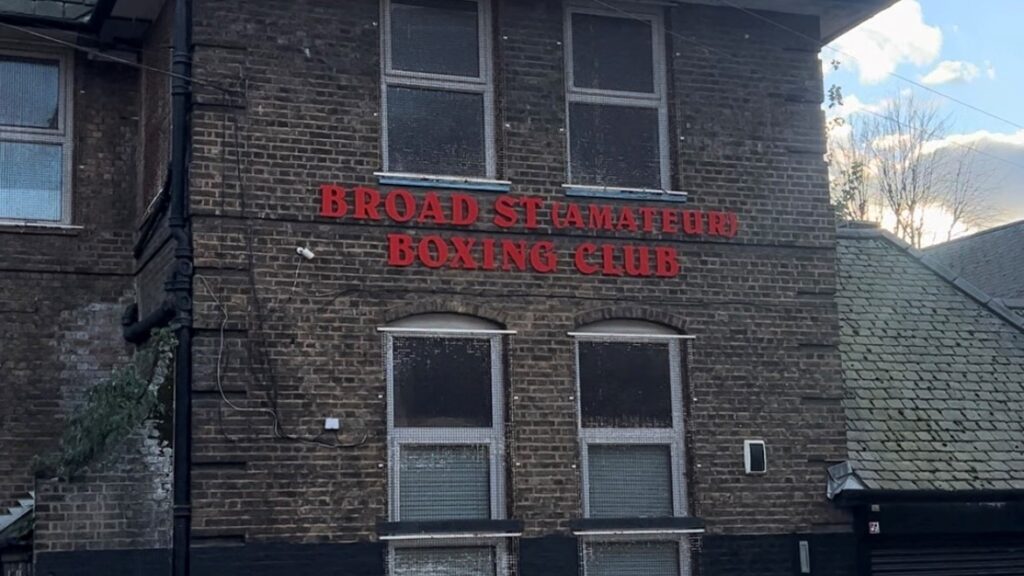
Broad Street Amateur Boxing Club in Shadwell has been around for 138 years, training young men and women from lower economic backgrounds free of charge. But its future is under threat due to rises in its rent.
The club is credited with steering young people away from a life of crime. It was first opened by the Highway Clubs Charity and was one of the charity’s many clubs for young people, but now it is the only surviving one left.
A number of youth clubs are being threatened with closure in London due to sky rocketing rent prices.
Broad Street is one of the only clubs left in London to offer free training.
Boxer Emma Judd says removing the “the barrier of money is essential as it allows anyone to come if you are willing to work hard”.
About 30% of youth clubs in London closed between 2010 and 2019 as a result of cuts to local authority funding, with the numbers of clubs closing set to increase year on year.
It’s been claimed the rise in closures has been linked to increased rates of reported crime.
Club ‘stopped boxers going down a bad path in life’
Broad Street’s head coach Ray McCallum told City News that keeping boxing clubs like this open is vital in keeping “young people off the streets”.
Boxer Wasim Rahman told City News how the club has shown him “there is more to life”, and the club being “open to all” steered him away from going from the “bad path he was going down”.
Fellow boxer Emma Judd highlighted the importance of the club giving young people a “support system” and allowed them to channel emotions and transfer them into “skills for life.”
Wasim further spoke about impact the closure would have on his mental health:
The club, which is run by volunteers, says it has been trying to negotiate a new lease with the council to reach an solution and find a way to keep its doors open to the young people who come and train there now and in the future.
McCallum claims Tower Hamlets Council has shown a lack of concern when it comes to keeping the club open.
He states that the council “should be about community” and asks the question what a club like Broad Street is “worth” to the council.
A spokesperson for the Tower Hamlets said: “We are aware of the club’s preference to have a longer lease and note they have rejected taking a community lease, which could have allowed them to receive an 80% rent reduction over three to five years.
“Because of their preference, we are required to go through the court process for the market rent to be determined and have instructed an expert to assess the case, which is currently ongoing.
“There is a range of support and funding options available for community groups and officers will liaise with the club to help them access these.”
The club rejected the council’s lease offer as it didn’t give them long-term security. The new contact would have taking the club out of “a protected lease to a five-year unprotected lease”, which could run the risk of the council terminating the agreement at any time, should they choose to.
The club is willing to pay £20,000 per year in rent and proposed this as part of a 30 year-lease, but this was rejected by the council.
McCallum said the club needed longer-term security in order to protect its survival and be able to keep the next generation “active and busy.”
Broad Street has asked the Mayor of London, Sadiq Khan, for support.
A spokesperson for the Mayor said: “The Mayor recognises the great value that grassroots sports and recreation facilities offer Londoners, contributing to their health and wellbeing, and City Hall is in contact with the Broad Street.”
McCallum explained how the Mayor’s office was helping and had visited the club.
Judd said the club’s “legacy is bigger than money” and hopes it can continue to keep its doors open for the next generation of boxers to benefit from the facilities like she did.
The club’s future is now in the hands of the courts, which will decide on the new market rent.
Submitted Article
Headline
Short Headline
Standfirst
Published Article
HeadlineFuture of 140 year old boxing club that keeps young people away from crime is under threat from rent rise
Short HeadlineFuture of 140 year old boxing club under threat from rent rise
StandfirstLondon Broad Street Amateur Boxing Club trains young people from lower economic backgrounds free of charge, but now it's under threat of closure
Broad Street Amateur Boxing Club in Shadwell has been around for 138 years, training young men and women from lower economic backgrounds free of charge. But its future is under threat due to rises in its rent.
The club is credited with steering young people away from a life of crime. It was first opened by the Highway Clubs Charity and was one of the charity’s many clubs for young people, but now it is the only surviving one left.
A number of youth clubs are being threatened with closure in London due to sky rocketing rent prices.
Broad Street is one of the only clubs left in London to offer free training.
Boxer Emma Judd says removing the “the barrier of money is essential as it allows anyone to come if you are willing to work hard”.
About 30% of youth clubs in London closed between 2010 and 2019 as a result of cuts to local authority funding, with the numbers of clubs closing set to increase year on year.
It’s been claimed the rise in closures has been linked to increased rates of reported crime.
Club ‘stopped boxers going down a bad path in life’
Broad Street’s head coach Ray McCallum told City News that keeping boxing clubs like this open is vital in keeping “young people off the streets”.
Boxer Wasim Rahman told City News how the club has shown him “there is more to life”, and the club being “open to all” steered him away from going from the “bad path he was going down”.
Fellow boxer Emma Judd highlighted the importance of the club giving young people a “support system” and allowed them to channel emotions and transfer them into “skills for life.”
Wasim further spoke about impact the closure would have on his mental health:
The club, which is run by volunteers, says it has been trying to negotiate a new lease with the council to reach an solution and find a way to keep its doors open to the young people who come and train there now and in the future.
McCallum claims Tower Hamlets Council has shown a lack of concern when it comes to keeping the club open.
He states that the council “should be about community” and asks the question what a club like Broad Street is “worth” to the council.
A spokesperson for the Tower Hamlets said: “We are aware of the club’s preference to have a longer lease and note they have rejected taking a community lease, which could have allowed them to receive an 80% rent reduction over three to five years.
“Because of their preference, we are required to go through the court process for the market rent to be determined and have instructed an expert to assess the case, which is currently ongoing.
“There is a range of support and funding options available for community groups and officers will liaise with the club to help them access these.”
The club rejected the council’s lease offer as it didn’t give them long-term security. The new contact would have taking the club out of “a protected lease to a five-year unprotected lease”, which could run the risk of the council terminating the agreement at any time, should they choose to.
The club is willing to pay £20,000 per year in rent and proposed this as part of a 30 year-lease, but this was rejected by the council.
McCallum said the club needed longer-term security in order to protect its survival and be able to keep the next generation “active and busy.”
Broad Street has asked the Mayor of London, Sadiq Khan, for support.
A spokesperson for the Mayor said: “The Mayor recognises the great value that grassroots sports and recreation facilities offer Londoners, contributing to their health and wellbeing, and City Hall is in contact with the Broad Street.”
McCallum explained how the Mayor’s office was helping and had visited the club.
Judd said the club’s “legacy is bigger than money” and hopes it can continue to keep its doors open for the next generation of boxers to benefit from the facilities like she did.
The club’s future is now in the hands of the courts, which will decide on the new market rent.
A 2024 Freedom of Information request showed Bromley Council had £4.5 million invested in arms companies that year with £1.5 million reportedly linked to Israel.
Undercover officers raided three linked shops in Barking town centre, revealing how illicit tobacco is being hidden in walls, ceilings and nearby locations to evade detection.
More than 330,000 people across the UK sought support from the Stop It Now helpline in 2025 over concerns about their own or someone else’s online sexual behaviour towards children, according to new charity data. The anonymous service says contacts by phone, email and webchat rose significantly over the year.