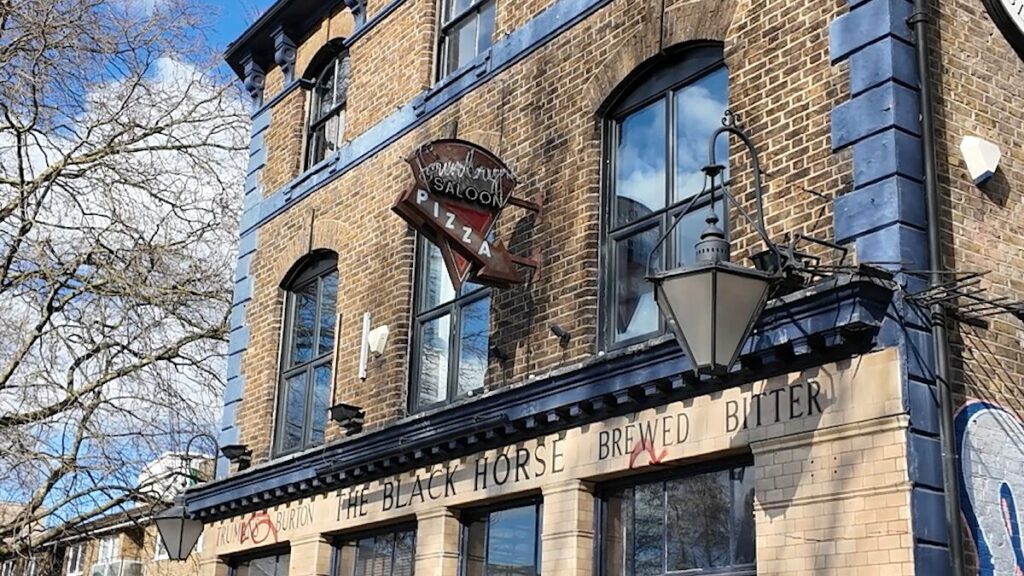
The venue has just applied for a new license, which would allow them to open until 2am on weekends.
SHARE:
It’s well known that London’s nightlife industry has taken a hit since Covid. But there’s one kind of venue that’s seeing a revival: the pub.
The Black Horse in Deptford, closed late 2022, is seeking a new lease of life. The replacement venue, ‘The Wolf’s Tavern’, are applying for an extended license, allowing them to sell alcohol and play music until 2am on weekends.
Deptford, set beside the Thames in South-East London, is home to a historical naval dockyard and trading network, and it’s also home to a lot of dead pubs.
The high-street alone has 14 ex-boozers, replaced either with newer, ‘up-market’ venues, or with different businesses altogether: there are four Paddy Power branches in this area alone.
But is there market for pubs in Deptford? Or should these venues adapt?
The demographic of the area is changing
This began with the controversial sale of ‘Aragon Tower’, now the ‘Z building’ to private investors, meaning hundreds of people were kicked from their social housing.
Since then, improved transport links, increasing property values, and private investment all boost the area’s economy. On paper, this is ideal for the opening of a new bar.
But for locals, it’s not so positive. The John Evelyn, just up the road, was a community pub, but had to close in 2010, unable to maintain just 50 customers a week which it needed to survive.
Pubs like the infamous Dog and Bell, offer other forms of entertainment to keep punters coming back. M’Arks Kitchen and Bar, formerly the Centurion pub at the end of the high street, have also tweaked their offering, with a strong focus on food.
Pubs are a strong part of London’s past. With Deptford as an example, they’re changing their offering to suit the changing taste of consumers. But does the traditional boozer have a place in London’s future?
Submitted Article
Headline
Short Headline
Standfirst
Published Article
HeadlineDoes the pub still have a place in London?
Short HeadlineIs the London pub dead?
StandfirstA pub in Deptford, South-East London, has applied for a new license with plans to open until 2am.
It’s well known that London’s nightlife industry has taken a hit since Covid. But there’s one kind of venue that’s seeing a revival: the pub.
The Black Horse in Deptford, closed late 2022, is seeking a new lease of life. The replacement venue, ‘The Wolf’s Tavern’, are applying for an extended license, allowing them to sell alcohol and play music until 2am on weekends.
Deptford, set beside the Thames in South-East London, is home to a historical naval dockyard and trading network, and it’s also home to a lot of dead pubs.
The high-street alone has 14 ex-boozers, replaced either with newer, ‘up-market’ venues, or with different businesses altogether: there are four Paddy Power branches in this area alone.
But is there market for pubs in Deptford? Or should these venues adapt?
The demographic of the area is changing
This began with the controversial sale of ‘Aragon Tower’, now the ‘Z building’ to private investors, meaning hundreds of people were kicked from their social housing.
Since then, improved transport links, increasing property values, and private investment all boost the area’s economy. On paper, this is ideal for the opening of a new bar.
But for locals, it’s not so positive. The John Evelyn, just up the road, was a community pub, but had to close in 2010, unable to maintain just 50 customers a week which it needed to survive.
Pubs like the infamous Dog and Bell, offer other forms of entertainment to keep punters coming back. M’Arks Kitchen and Bar, formerly the Centurion pub at the end of the high street, have also tweaked their offering, with a strong focus on food.
Pubs are a strong part of London’s past. With Deptford as an example, they’re changing their offering to suit the changing taste of consumers. But does the traditional boozer have a place in London’s future?
A 2024 Freedom of Information request showed Bromley Council had £4.5 million invested in arms companies that year with £1.5 million reportedly linked to Israel.
Undercover officers raided three linked shops in Barking town centre, revealing how illicit tobacco is being hidden in walls, ceilings and nearby locations to evade detection.
More than 330,000 people across the UK sought support from the Stop It Now helpline in 2025 over concerns about their own or someone else’s online sexual behaviour towards children, according to new charity data. The anonymous service says contacts by phone, email and webchat rose significantly over the year.