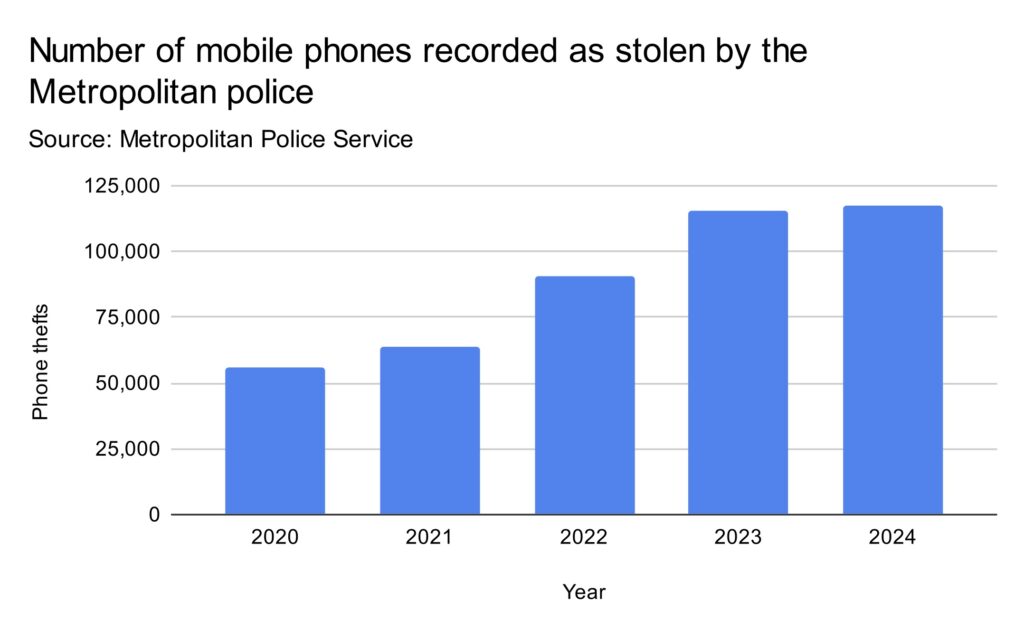
More than 80,000 phones were reported stolen in London in 2024, nearly triple the number recorded in 2020 according to Metropolitan Police data. However, the methodology used by phone thieves to evade capture after theft is evolving, suggesting a pattern of criminal adaptation responsive to increasing surveillance pressure.
Source: Metropolitan Police service
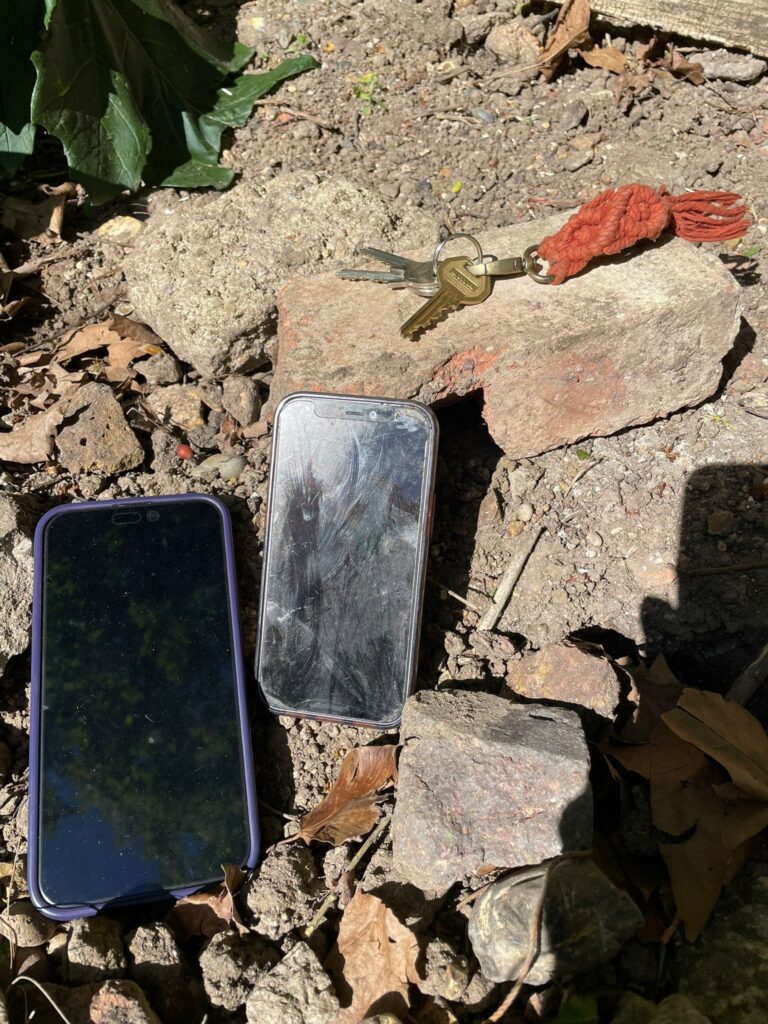
At The Phoenix Garden, a community-run green space in the centre of Soho, volunteers unearthed twenty-three abandoned phones buried beneath the soil of their flower beds between January and May of this year.
Source: London Centric
Head gardener, Louise Gates, has logged every discovery, eventually realising that thieves were using the garden as a temporary storage site. The story, first reported by London Centric, documented how stolen devices were being brazenly hidden in public spaces. What happened at Phoenix Garden seemed extraordinary, but it was not an isolated incident.
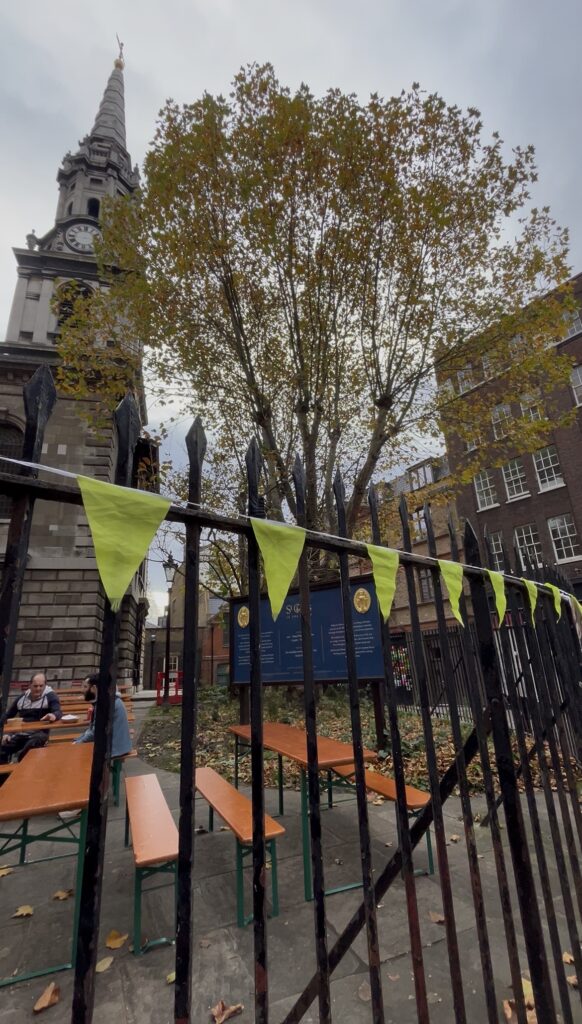
Just 200 metres away at St Giles-in-the-Fields Church, the pattern has taken root. Lesley Goddard, the church administrator, told City News that finding stolen phones in the flowerbeds of the churchyard has become a feature of maintaining the site. It continues to be a source of huge frustration for volunteers.
Source: Isabel Raper
Goddard told City News that phones are stolen in Soho and then dumped temporarily at St Giles Church routinely.
“It shows up on people’s location tracker, but they can never find them once they come here to look,” Goddard told City News.
Many victims leave empty handed, as their phones are either hidden below soil and rotting leaves or have already been moved on by the thieves.
The use of gardens and churchyards may represent an evolution in tactics rather than a new phenomenon. A former employee of Stanfords bookshop in Covent Garden, who wishes to remain anonymous, told City News they recall colleagues discovering what appeared to be stolen phones hidden behind a festive display during a seasonal changeover. The account, which City News has not independently verified, suggests the discovery was promptly reported to the police at the time. Stanfords declined to comment when contacted.
If accurate, this timeline would suggest that thieves initially favoured retail premises before shifting closer to the ground over time, potentially in response to increased vigilance from retailers and improved CCTV coverage in commercial areas around Soho.
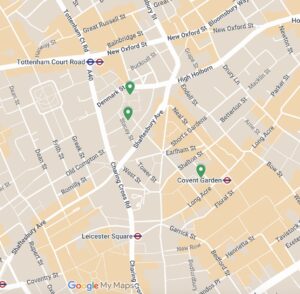
All three of these locations sit within a five hundred metre radius of Shaftesbury Avenue, the heart of London’s retail and theatre district and, according to Police data, the epicentre of phone theft in the capital.
Source: Google Maps
The tactic exploits a basic vulnerability in GPS tracking. Thieves snatch phones in busy areas around Soho, hide them immediately in nearby public spaces, before returning hours later when police attention has moved on.
Source: Associated Press
Many of the phones discovered by community members and retail staff are wrapped in tinfoil, a bizarre but methodical criminal practice. These makeshift cages aid thieves in preventing the transmission of radio signals between the phone and other devices, making it far more difficult to track a stolen phone. Of the seven victims of phone theft that City News spoke to, only one managed to recover their device.
Mobile theft in London is evolving continually. While these methods may seem analogue, they are the work of a sophisticated criminal network, says David Rogers, a mobile security specialist who formerly led fraud prevention for GSMA, the mobile operators’ trade body.
Rogers explained that this evolution in criminal strategy demonstrates that at least some of the measures taken by the Police are proving effective, forcing thieves to resort to increasingly high-risk methods of concealment.
However, he also outlined that this pattern reveals a flaw in ‘smart policing’.
“While there might be surveillance everywhere, it is a fallacy to expect that every single crime is detected, monitored and tracked,” he said.
“Theft is a very personal crime, and it requires an active, physical police presence at locations of theft in order to deter the actual execution of the crime.”
For those targeted, an increase in surveillance tactics offers little comfort. Oliver Grant told City News that after his phone was stolen in central London in January, and the GPS tracking was disabled, he began to receive large bills from his network provider -bills he couldn’t possibly have incurred as he no longer had access to his phone.
Grant believes that thieves accessed his account through two-factor authentication messages visible on his lock screen. Once they had obtained access, they were free to do as they pleased which, in Grant’s case, saw them purchase copious amounts of TikTok coin through his direct debit. Grant has not been compensated at the time of publication.
As large-scale police raids continue, a quieter criminal evolution is taking place on London’s streets. In an increasingly high-surveillance city, thieves are turning to festive displays, flowerbeds and tinfoil to evade suspicion, leaving community volunteers and retail staff to uncover a crime that continues to outwit the digital age.
Submitted Article
Headline
Short Headline
Standfirst
Published Article
HeadlineHidden in plain sight: the evolving tactics of London’s phone thieves
Short HeadlinePhone thieves hiding stolen phones across Soho
StandfirstFlower beds, tinfoil, and festive displays: a City News investigation into the dumping of stolen phones in Soho.
More than 80,000 phones were reported stolen in London in 2024, nearly triple the number recorded in 2020 according to Metropolitan Police data. However, the methodology used by phone thieves to evade capture after theft is evolving, suggesting a pattern of criminal adaptation responsive to increasing surveillance pressure.
Source: Metropolitan Police service
At The Phoenix Garden, a community-run green space in the centre of Soho, volunteers unearthed twenty-three abandoned phones buried beneath the soil of their flower beds between January and May of this year.
Source: London Centric
Head gardener, Louise Gates, has logged every discovery, eventually realising that thieves were using the garden as a temporary storage site. The story, first reported by London Centric, documented how stolen devices were being brazenly hidden in public spaces. What happened at Phoenix Garden seemed extraordinary, but it was not an isolated incident.
Just 200 metres away at St Giles-in-the-Fields Church, the pattern has taken root. Lesley Goddard, the church administrator, told City News that finding stolen phones in the flowerbeds of the churchyard has become a feature of maintaining the site. It continues to be a source of huge frustration for volunteers.
Source: Isabel Raper
Goddard told City News that phones are stolen in Soho and then dumped temporarily at St Giles Church routinely.
“It shows up on people’s location tracker, but they can never find them once they come here to look,” Goddard told City News.
Many victims leave empty handed, as their phones are either hidden below soil and rotting leaves or have already been moved on by the thieves.
The use of gardens and churchyards may represent an evolution in tactics rather than a new phenomenon. A former employee of Stanfords bookshop in Covent Garden, who wishes to remain anonymous, told City News they recall colleagues discovering what appeared to be stolen phones hidden behind a festive display during a seasonal changeover. The account, which City News has not independently verified, suggests the discovery was promptly reported to the police at the time. Stanfords declined to comment when contacted.
If accurate, this timeline would suggest that thieves initially favoured retail premises before shifting closer to the ground over time, potentially in response to increased vigilance from retailers and improved CCTV coverage in commercial areas around Soho.
All three of these locations sit within a five hundred metre radius of Shaftesbury Avenue, the heart of London’s retail and theatre district and, according to Police data, the epicentre of phone theft in the capital.
Source: Google Maps
The tactic exploits a basic vulnerability in GPS tracking. Thieves snatch phones in busy areas around Soho, hide them immediately in nearby public spaces, before returning hours later when police attention has moved on.
Source: Associated Press
Many of the phones discovered by community members and retail staff are wrapped in tinfoil, a bizarre but methodical criminal practice. These makeshift cages aid thieves in preventing the transmission of radio signals between the phone and other devices, making it far more difficult to track a stolen phone. Of the seven victims of phone theft that City News spoke to, only one managed to recover their device.
Mobile theft in London is evolving continually. While these methods may seem analogue, they are the work of a sophisticated criminal network, says David Rogers, a mobile security specialist who formerly led fraud prevention for GSMA, the mobile operators’ trade body.
Rogers explained that this evolution in criminal strategy demonstrates that at least some of the measures taken by the Police are proving effective, forcing thieves to resort to increasingly high-risk methods of concealment.
However, he also outlined that this pattern reveals a flaw in ‘smart policing’.
“While there might be surveillance everywhere, it is a fallacy to expect that every single crime is detected, monitored and tracked,” he said.
“Theft is a very personal crime, and it requires an active, physical police presence at locations of theft in order to deter the actual execution of the crime.”
For those targeted, an increase in surveillance tactics offers little comfort. Oliver Grant told City News that after his phone was stolen in central London in January, and the GPS tracking was disabled, he began to receive large bills from his network provider -bills he couldn’t possibly have incurred as he no longer had access to his phone.
Grant believes that thieves accessed his account through two-factor authentication messages visible on his lock screen. Once they had obtained access, they were free to do as they pleased which, in Grant’s case, saw them purchase copious amounts of TikTok coin through his direct debit. Grant has not been compensated at the time of publication.
As large-scale police raids continue, a quieter criminal evolution is taking place on London’s streets. In an increasingly high-surveillance city, thieves are turning to festive displays, flowerbeds and tinfoil to evade suspicion, leaving community volunteers and retail staff to uncover a crime that continues to outwit the digital age.
A 2024 Freedom of Information request showed Bromley Council had £4.5 million invested in arms companies that year with £1.5 million reportedly linked to Israel.
Undercover officers raided three linked shops in Barking town centre, revealing how illicit tobacco is being hidden in walls, ceilings and nearby locations to evade detection.
More than 330,000 people across the UK sought support from the Stop It Now helpline in 2025 over concerns about their own or someone else’s online sexual behaviour towards children, according to new charity data. The anonymous service says contacts by phone, email and webchat rose significantly over the year.