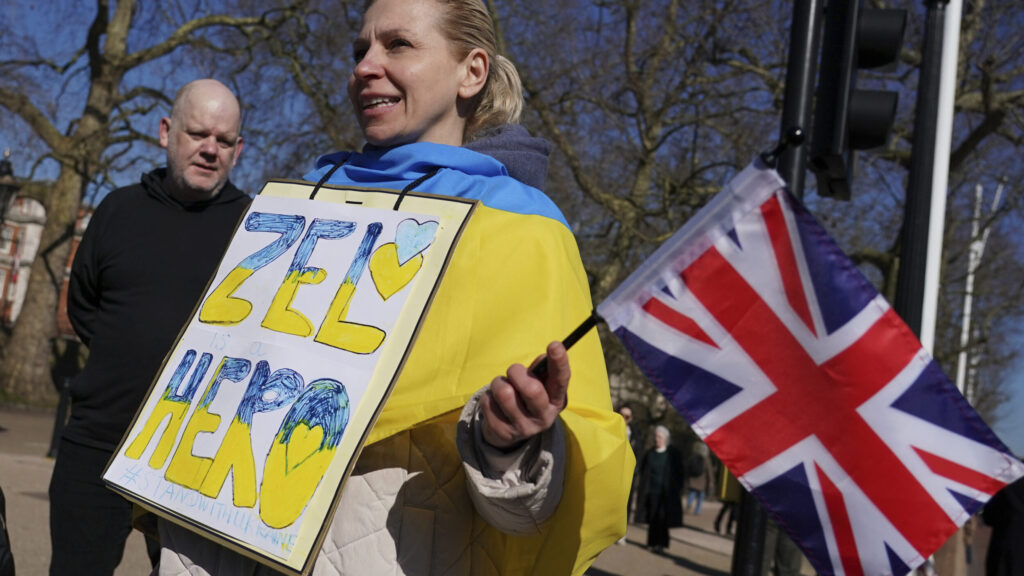
For the 19,000 Ukrainians living in London, Remembrance Day brings a mix of emotions. Many embrace Britain’s collective act of remembrance – honouring those who died in the World Wars – whilst also facing the painful reminder that, for them, war is not a chapter in a history book but a present-day reality. City News speaks to Ukrainian Londoners about this issue.
The phrase often heard during these commemorative days – “Never Again” – feels hollow for many Ukrainians.
Taisiia, who is from Eastern Ukraine and arrived in London three years ago, says: “It’s a disappointment. We all want it to never happen again, but it still happens again and again.”
Olia Hercules, a Ukrainian activist, author and chef with 149,000 followers on Instagram based in London, echoes similar frustrations: “‘Never Again’ needs to be reclaimed and processed and thought of seriously as it is easy to say ‘never again’.” Less performance and more action is needed, according to Hercules.
Across the UK, Remembrance ceremonies mark the past sacrifices made in conflicts around the world. Armistice Day commemorates the end of the First World War in 1918 – the moment peace was declared at the eleventh hour on the eleventh day of the eleventh month.
Remembrance Sunday pays tribute to the British and Commonwealth servicemen and women who served and died in both World Wars and subsequent conflicts.
Both days ask participants to look back, but for Ukrainian Londoners, reflection is painfully present.
For Arina, a Ukrainian opera singer who also moved to the UK three years ago, the act of remembrance is inseparable from her present reality. She reflects on the deeply personal act of remembrance: “It’s hard not to remember the war because it’s our homes, our lives.”
Taisiia recognises the importance of remembrance services for British families. “It is important for families of soldiers […] it is important to show respect and memory for those who fought in WW1 and WW2,” she says. The reflective period, she adds, reminds her of commemoration services held back home – traditions that started in 2014 following the annexation of Crimea by Russian forces.
Hercules reiterates a similar point, stating that these commemorations “are more important than ever” but crucially, it is just as important to “not do the ritual and then forget about it the next day”.
Both women express concern about what they see as growing war fatigue in Britain. “In 2022, everyone was helping us,” Arina recalls. “Now the help is beginning to end.” Taisiia agrees: “The war is getting less attention but that’s understandable,” given its duration and distance from the UK.
For Hercules, this distance acts as a shield from the ongoing reality of war in Ukraine: “Everyone has become really comfortable in the bubble we are in”.
A recent YouGov poll showed that fewer Brits now support backing Ukraine until it defeats Russia, with more favouring negotiations for a peace deal. However, the number of Britons who care if Ukraine beats Russia in the war has remained steady since 2023.
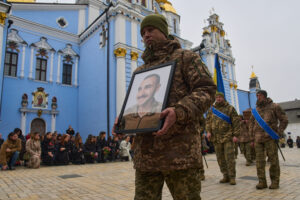
(AP Photo/Efrem Lukatsky)
However, for the Ukrainian community in London, remembrance is not confined to one day in November. It’s a daily act of resilience and connection. Arina uses digital platforms to stay informed about developments in Ukraine and to honour those lost through social media posts and performances.
Taisiia takes part in both online and in-person commemorations and observes a minute’s silence every morning at 9 a.m. to remember Ukrainian soldiers who have died. The act of remembrance is not confined to a single weekend but is a daily activity.
For Ukrainians in the diaspora, remembrance is not just about the past – it is about identity, defiance, and importantly, a connection to home. It is an act of resistance against forgetting that ultimately bridges the distance between London and a country still at war.
Submitted Article
Headline
Short Headline
Standfirst
Published Article
Headline‘Everyday Remembering’: How London’s Ukrainians Mark Remembrance Amid Ongoing War
Short HeadlineHow London's Ukrainians Mark Remembrance Amid Ongoing War
Standfirst"'Never Again' has a very different meaning as it happened again for us".
For the 19,000 Ukrainians living in London, Remembrance Day brings a mix of emotions. Many embrace Britain’s collective act of remembrance – honouring those who died in the World Wars – whilst also facing the painful reminder that, for them, war is not a chapter in a history book but a present-day reality. City News speaks to Ukrainian Londoners about this issue.
The phrase often heard during these commemorative days – “Never Again” – feels hollow for many Ukrainians.
Taisiia, who is from Eastern Ukraine and arrived in London three years ago, says: “It’s a disappointment. We all want it to never happen again, but it still happens again and again.”
Olia Hercules, a Ukrainian activist, author and chef with 149,000 followers on Instagram based in London, echoes similar frustrations: “‘Never Again’ needs to be reclaimed and processed and thought of seriously as it is easy to say ‘never again’.” Less performance and more action is needed, according to Hercules.
Across the UK, Remembrance ceremonies mark the past sacrifices made in conflicts around the world. Armistice Day commemorates the end of the First World War in 1918 – the moment peace was declared at the eleventh hour on the eleventh day of the eleventh month.
Remembrance Sunday pays tribute to the British and Commonwealth servicemen and women who served and died in both World Wars and subsequent conflicts.
Both days ask participants to look back, but for Ukrainian Londoners, reflection is painfully present.
For Arina, a Ukrainian opera singer who also moved to the UK three years ago, the act of remembrance is inseparable from her present reality. She reflects on the deeply personal act of remembrance: “It’s hard not to remember the war because it’s our homes, our lives.”
Taisiia recognises the importance of remembrance services for British families. “It is important for families of soldiers […] it is important to show respect and memory for those who fought in WW1 and WW2,” she says. The reflective period, she adds, reminds her of commemoration services held back home – traditions that started in 2014 following the annexation of Crimea by Russian forces.
Hercules reiterates a similar point, stating that these commemorations “are more important than ever” but crucially, it is just as important to “not do the ritual and then forget about it the next day”.
Both women express concern about what they see as growing war fatigue in Britain. “In 2022, everyone was helping us,” Arina recalls. “Now the help is beginning to end.” Taisiia agrees: “The war is getting less attention but that’s understandable,” given its duration and distance from the UK.
For Hercules, this distance acts as a shield from the ongoing reality of war in Ukraine: “Everyone has become really comfortable in the bubble we are in”.
A recent YouGov poll showed that fewer Brits now support backing Ukraine until it defeats Russia, with more favouring negotiations for a peace deal. However, the number of Britons who care if Ukraine beats Russia in the war has remained steady since 2023.
(AP Photo/Efrem Lukatsky)
However, for the Ukrainian community in London, remembrance is not confined to one day in November. It’s a daily act of resilience and connection. Arina uses digital platforms to stay informed about developments in Ukraine and to honour those lost through social media posts and performances.
Taisiia takes part in both online and in-person commemorations and observes a minute’s silence every morning at 9 a.m. to remember Ukrainian soldiers who have died. The act of remembrance is not confined to a single weekend but is a daily activity.
For Ukrainians in the diaspora, remembrance is not just about the past – it is about identity, defiance, and importantly, a connection to home. It is an act of resistance against forgetting that ultimately bridges the distance between London and a country still at war.
A 2024 Freedom of Information request showed Bromley Council had £4.5 million invested in arms companies that year with £1.5 million reportedly linked to Israel.
Undercover officers raided three linked shops in Barking town centre, revealing how illicit tobacco is being hidden in walls, ceilings and nearby locations to evade detection.
More than 330,000 people across the UK sought support from the Stop It Now helpline in 2025 over concerns about their own or someone else’s online sexual behaviour towards children, according to new charity data. The anonymous service says contacts by phone, email and webchat rose significantly over the year.