A 2,500-luxury flat project was approved on Tuesday evening, which proposes to bring a new neighbourhood to Kensal Canalside.
The Royal Borough of Kensington and Chelsea approved part of the Ballymore and Sainsbury’s application following lengthy discussion from objectors.
The 4 to 1 vote in favour of the development was met with shouts of “shame” from members of the public, as well as “you don’t live here”.
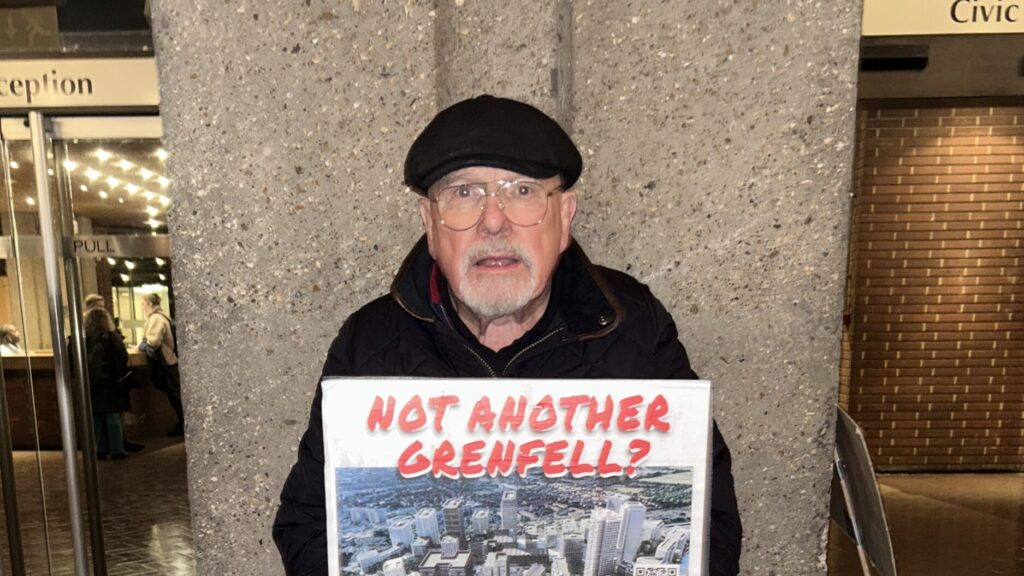
Protestor holds a sign outside Kensington Town Hall
Their hybrid application was set out to include multiple separate applications, and this approval sets a precedent that allows for other applications.
The area, noted as an opportunity in the Mayor’s ‘London Plan 2021’, was previously a gasworks as well as a Coke and Tar works, making it a ‘brownfield site’. Brownfield sites are land that has been previously developed but is now disused and potentially vacant.
Members of the protest afterwards said that “this is not the end… we go again”, with the project set to be asked for approval by the Mayor.
John Mulryan, group managing director at Ballymore, said: “We are pleased that the RBKC planning committee has given approval for our project at Kensal Canalside.”
“This will be an exemplar project, showing how we can turn a complex, former gasworks into a thriving place full of character delivering over 2,500 much needed new homes”.
While the application will still have to be brought before the Mayor, its approval on Tuesday sets a precedent that will be unlikely to be overturned.
Paired this with the site’s status as a designated opportunity area, and the council falling behind on its housing target, adds to the difficulty.
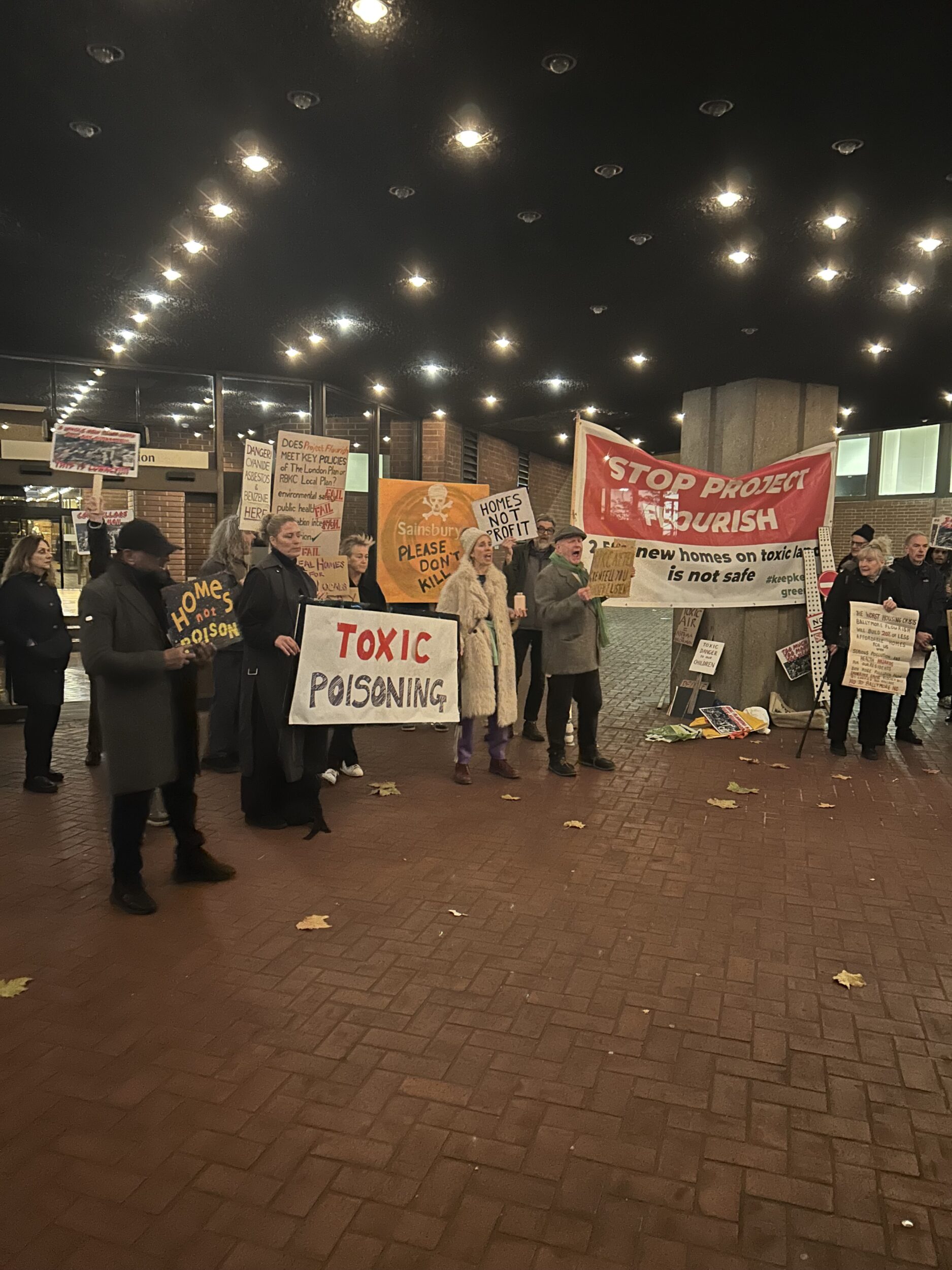
Protestors gather outside Kensington Town Hall
Contamination
The question of contamination was spoken at length during the meeting, given the history of the site.
Objectors highlighted the toxic soil, that would emit gases such as blue cyanide, benzene and asbestos.
Ballymore say that this is not uncommon in many brownfield sites, and other sites that they have built on.
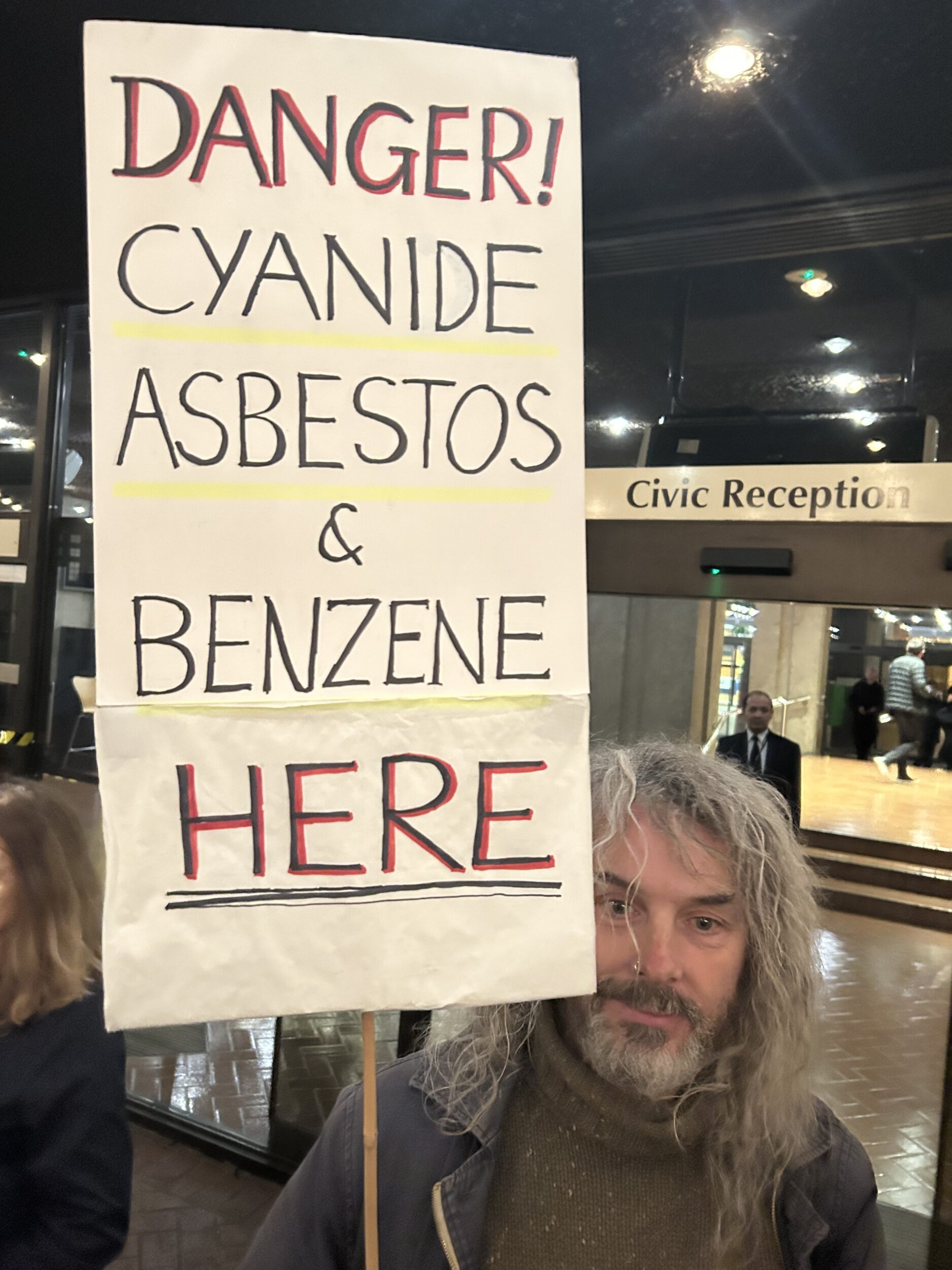
A protestor holds a sign relating to contaminated soil
There were also many references to the Southall site, which has had similar redevelopment. Residents in the area spoke out a number of years ago that the contaminated soil has caused health problems.
Ballymore themselves outlined what will be done is a remediation strategy, which includes “proactive monitoring” as well as soil testing which has already taken place.
Transport
Another key point that was raised by objectors was the transport issues the site currently faces, and how it would be affected with not only a new neighbourhood, but the vehicles to make construction possible.
The current Ladbroke Grove site has only one entry point, making traffic “choc-a-block” in the words of Salim, a bus driver.
Ballymore have proposed two redevelopments to the main junction, working with TfL to produce the most effective one.
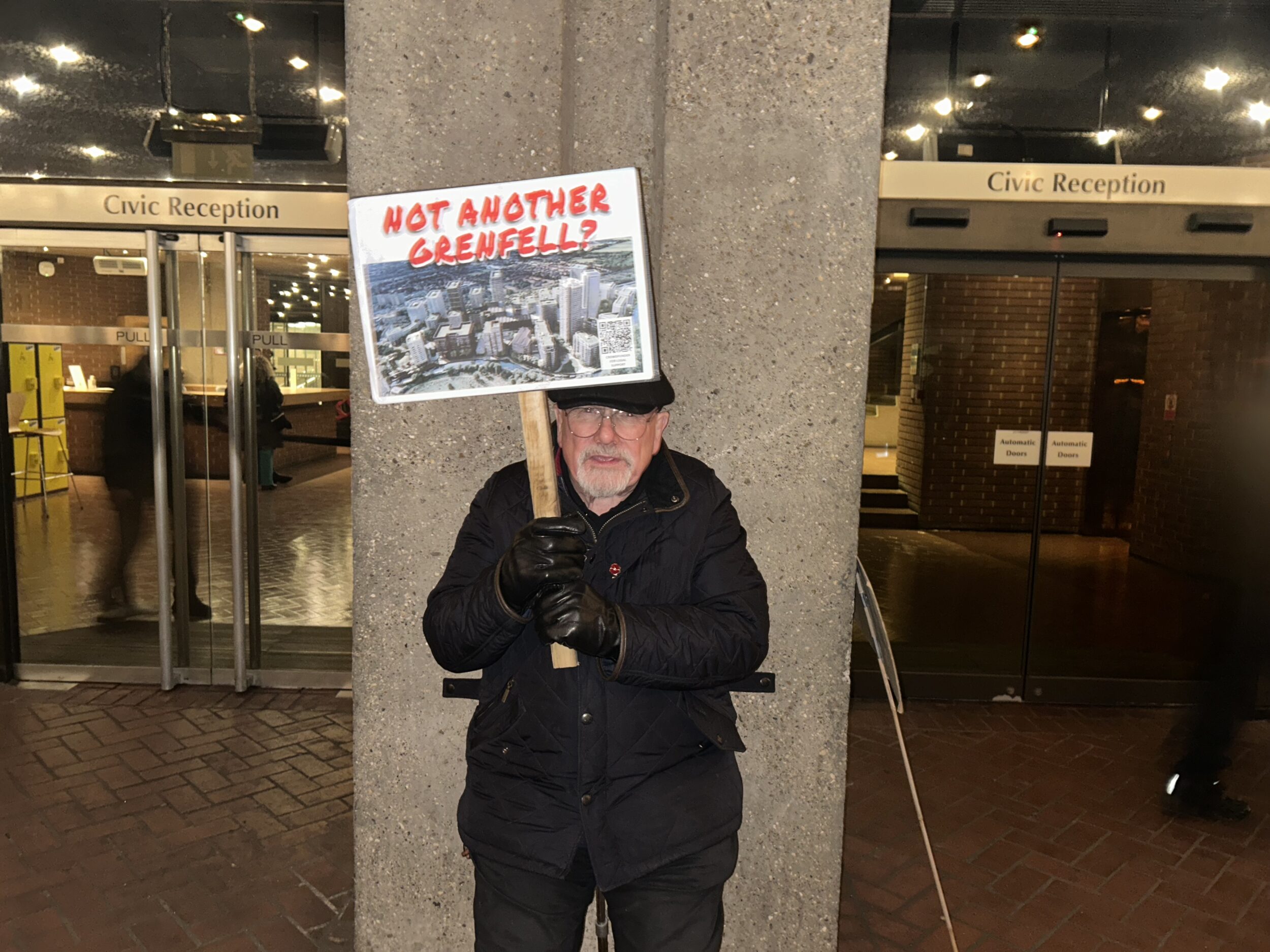
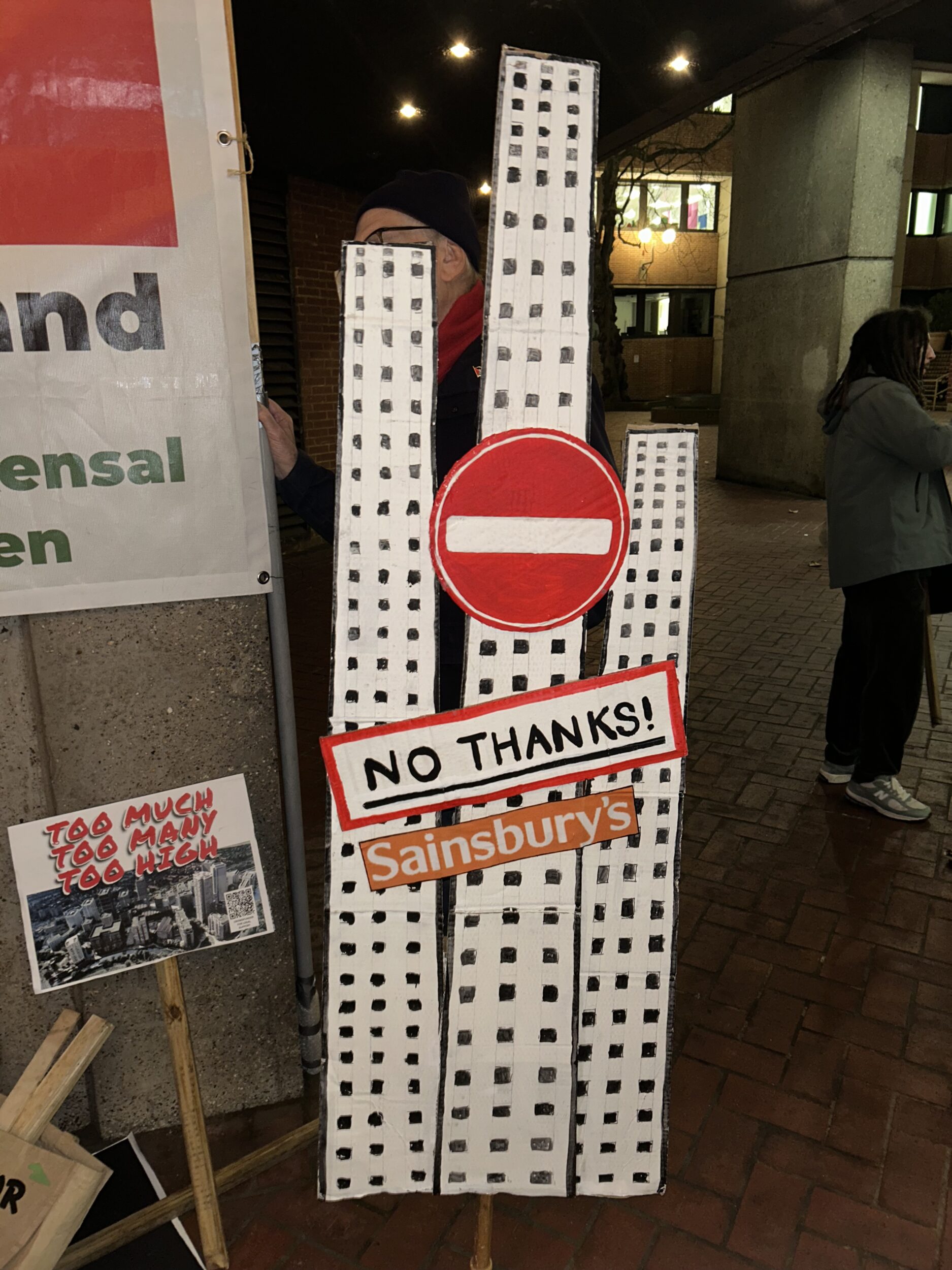
A protestor holds a sign opposing the high-rise buildings
Affordable Housing
Locals also raised fear over the lack of affordable housing in the proposed project.
Ballymore have repeatedly said they were looking at 25% affordable housing, constituting to 500 homes. These will be split between affordable renting and outright owning.
This was met with claims from Councillor Kasim Ali that it would only be 19%, below Sadiq Khan’s new 20% target. He also called for more as he said “2100 residents are in temporary housing outside the borough”.
St William, part of the Berkley Group has also submitted planning application for the part of the site that held the gas towers. This decision helps to set out what is expected of their application.
While the application will still have to be brought before the Mayor, its approval on Tuesday sets a precedent that will be unlikely to be overturned.
Submitted Article
Headline
Short Headline
Standfirst
Published Article
HeadlineNew Ladbroke Grove neighbourhood gets green light from council
Short HeadlineLadbroke Grove's newest home development gets approval, but locals are concerned
StandfirstA 2,500-luxury flat project was approved on Tuesday evening, following protests.
A 2,500-luxury flat project was approved on Tuesday evening, which proposes to bring a new neighbourhood to Kensal Canalside.
The Royal Borough of Kensington and Chelsea approved part of the Ballymore and Sainsbury’s application following lengthy discussion from objectors.
The 4 to 1 vote in favour of the development was met with shouts of “shame” from members of the public, as well as “you don’t live here”.
Protestor holds a sign outside Kensington Town Hall
Their hybrid application was set out to include multiple separate applications, and this approval sets a precedent that allows for other applications.
The area, noted as an opportunity in the Mayor’s ‘London Plan 2021’, was previously a gasworks as well as a Coke and Tar works, making it a ‘brownfield site’. Brownfield sites are land that has been previously developed but is now disused and potentially vacant.
Members of the protest afterwards said that “this is not the end… we go again”, with the project set to be asked for approval by the Mayor.
John Mulryan, group managing director at Ballymore, said: “We are pleased that the RBKC planning committee has given approval for our project at Kensal Canalside.”
“This will be an exemplar project, showing how we can turn a complex, former gasworks into a thriving place full of character delivering over 2,500 much needed new homes”.
While the application will still have to be brought before the Mayor, its approval on Tuesday sets a precedent that will be unlikely to be overturned.
Paired this with the site’s status as a designated opportunity area, and the council falling behind on its housing target, adds to the difficulty.
Protestors gather outside Kensington Town Hall
Contamination
The question of contamination was spoken at length during the meeting, given the history of the site.
Objectors highlighted the toxic soil, that would emit gases such as blue cyanide, benzene and asbestos.
Ballymore say that this is not uncommon in many brownfield sites, and other sites that they have built on.
A protestor holds a sign relating to contaminated soil
There were also many references to the Southall site, which has had similar redevelopment. Residents in the area spoke out a number of years ago that the contaminated soil has caused health problems.
Ballymore themselves outlined what will be done is a remediation strategy, which includes “proactive monitoring” as well as soil testing which has already taken place.
Transport
Another key point that was raised by objectors was the transport issues the site currently faces, and how it would be affected with not only a new neighbourhood, but the vehicles to make construction possible.
The current Ladbroke Grove site has only one entry point, making traffic “choc-a-block” in the words of Salim, a bus driver.
Ballymore have proposed two redevelopments to the main junction, working with TfL to produce the most effective one.
A protestor holds a sign opposing the high-rise buildings
Affordable Housing
Locals also raised fear over the lack of affordable housing in the proposed project.
Ballymore have repeatedly said they were looking at 25% affordable housing, constituting to 500 homes. These will be split between affordable renting and outright owning.
This was met with claims from Councillor Kasim Ali that it would only be 19%, below Sadiq Khan’s new 20% target. He also called for more as he said “2100 residents are in temporary housing outside the borough”.
St William, part of the Berkley Group has also submitted planning application for the part of the site that held the gas towers. This decision helps to set out what is expected of their application.
While the application will still have to be brought before the Mayor, its approval on Tuesday sets a precedent that will be unlikely to be overturned.
A 2024 Freedom of Information request showed Bromley Council had £4.5 million invested in arms companies that year with £1.5 million reportedly linked to Israel.
Undercover officers raided three linked shops in Barking town centre, revealing how illicit tobacco is being hidden in walls, ceilings and nearby locations to evade detection.
More than 330,000 people across the UK sought support from the Stop It Now helpline in 2025 over concerns about their own or someone else’s online sexual behaviour towards children, according to new charity data. The anonymous service says contacts by phone, email and webchat rose significantly over the year.