For nearly two centuries, Highgate Cemetery has stood as one of London’s most famous landmarks, a Victorian landscape of angles, ivy and history. Now, this Grade I burial ground is preparing for its biggest transformation yet.
Camden Council has approved a 25-year, £18 million “revitalisation” programme designed to make the 19th-century cemetery safer, more accessible and environmentally sustainable. Supporters call it essential conservation. Critics call it a unnecessary disruption.
A Vision for the Future
The renewal plan was first proposed in August 2024 by the Friends of Highgate Cemetery Trust, which has managed the site since 1975.
Hopkins Architects are the winners of the major international competition to restore the 200-year-old cemetery, which is funded by the Trust, grants and visitor income.
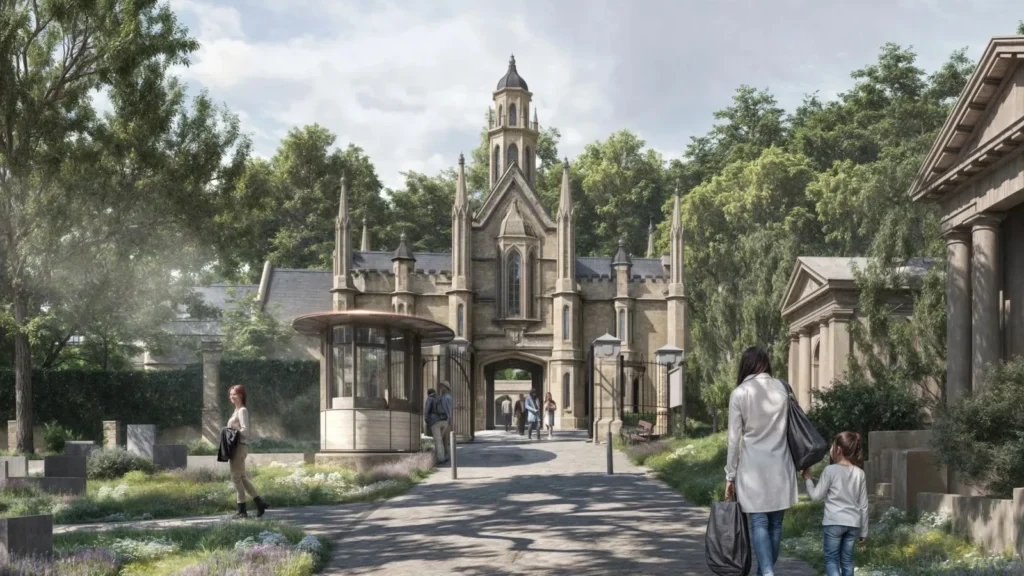
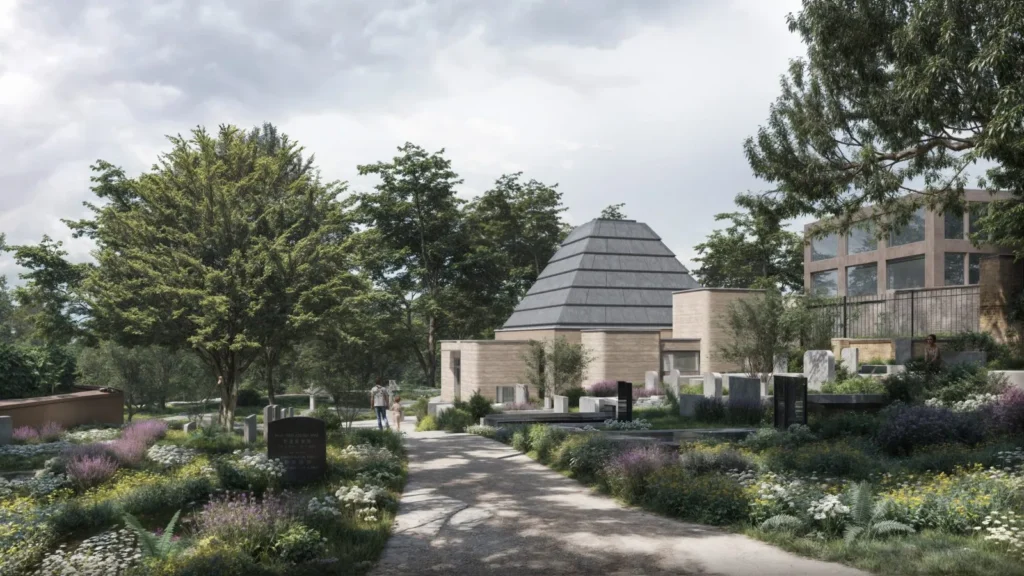
AI designs are available to the public to imagine how it will look, aimed to secure the cemetery’s long-term survival.
source: Hopkins Architects. Community and Education building.
Access vs. Atmosphere
Not everyone is convinced. For some, the magic of Highgate lies precisely in its sense of decay “I don’t think the renovation is necessary, you lose the history of things with the modernisation” says one tourist and history buff.
Others welcome the changes. “When I did guided tours,” best-selling author Audrey Niffenegger recalls, “visitors often wished for many of the things that will now be built: better paths, more signage, a place to rest. I love Highgate Cemetery’s past and I’m excited to know that it is going to have a secure future.”
Tour guide Lily, like many who know the place intimately, sees the project as an act of care:
“Yes they are cutting down a lot of trees but that is because they are dying… the cemetery will look different but the idea is to preserve the cemetery and keep it alive in a weird way” she adds.
Yet grave owner Vivian questions whether mourners will “even have any peace and quiet because every time you come here, they’re always cutting something down.”
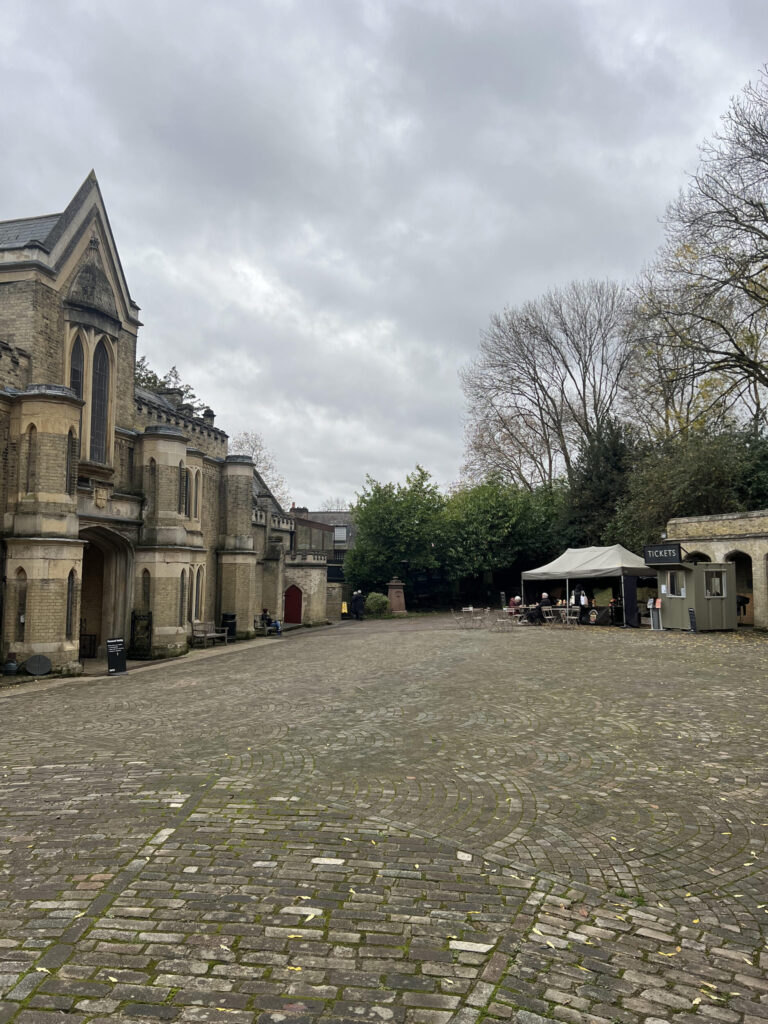
Highgate Cemetery present day
What’s Changing and What’s Not
A source at Highgate Cemetery told City News new amenities, such as toilets, a café, and an education centre will be discreetly added into the landscape.
The main priorities are to stabilise leaning monuments; rebuild paths and install accessibility features; improve drainage, and manage diseased trees.
April Cameron, Deputy Chair of Friends of Waterlow Park and Former Trustee at Highgate Cemetery, told City News the plans would “make it more environmentally sustainable and better for wildlife and biodiversity.”
At a recent town-hall meeting in Camden, residents remained divided. Some praised the emphasis on ecology and access. Others feared that, in practice, “restoration” could feel like redevelopment.
Amir Sanei who attended the meeting and whose parents are buried in the West Cemetery told City News, “[grave owners] are not against the plans, but it came as a bit of shock.”
The approval of the plans comes after a row over previously proposed plans to build a new block of toilets and gardeners facilities on a mound near some burial spaces.
In August, the Friends of Highgate Cemetery Trust said they “listened carefully to grave owners” and scrapped the new gardeners building but have yet to deny no such building will be included in the new plans.
The Soul of the Place
Among those who cherish the cemetery’s mix of history and rebellion is former Labour leader Jeremy Corbyn, who lives nearby.
He told City News “I am a great admirer of Highgate Cemetery, its history, its wildlife, its sense of achievement and radical dissent,” he says.
“Walking round is to absorb all that, always concluding with Karl Marx. I hope the restoration keeps it in its current joyous format as a great place for people to visit.”
Highgate has always been more than a burial ground. It is a mirror of Victorian ambition, a stage for modern reflection, and a living record of how London remembers. Every restoration, however careful, becomes part of that story, another layer in its long dialogue between life, death, and the city beyond the gates.
Submitted Article
Headline
Short Headline
Standfirst
Published Article
HeadlineHighgate Cemetery: renewal or reverence?
Short Headline Camden Council approved a 25-year “revitalisation” programme
StandfirstHighgate Cemetery's New £18 million restoration
Highgate Cemetery: renewal or reverence?
For nearly two centuries, Highgate Cemetery has stood as one of London’s most famous landmarks, a Victorian landscape of angles, ivy and history. Now, this Grade I burial ground is preparing for its biggest transformation yet.
Camden Council has approved a 25-year, £18 million “revitalisation” programme designed to make the 19th-century cemetery safer, more accessible and environmentally sustainable. Supporters call it essential conservation. Critics call it a unnecessary disruption.
A Vision for the Future
The renewal plan was first proposed in August 2024 by the Friends of Highgate Cemetery Trust, which has managed the site since 1975.
Hopkins Architects are the winners of the major international competition to restore the 200-year-old cemetery, which is funded by the Trust, grants and visitor income.
AI designs are available to the public to imagine how it will look, aimed to secure the cemetery’s long-term survival.
source: Hopkins Architects. Community and Education building.
Access vs. Atmosphere
Not everyone is convinced. For some, the magic of Highgate lies precisely in its sense of decay “I don’t think the renovation is necessary, you lose the history of things with the modernisation” says one tourist and history buff.
Others welcome the changes. “When I did guided tours,” best-selling author Audrey Niffenegger recalls, “visitors often wished for many of the things that will now be built: better paths, more signage, a place to rest. I love Highgate Cemetery’s past and I’m excited to know that it is going to have a secure future.”
Tour guide Lily, like many who know the place intimately, sees the project as an act of care:
“Yes they are cutting down a lot of trees but that is because they are dying… the cemetery will look different but the idea is to preserve the cemetery and keep it alive in a weird way” she adds.
Yet grave owner Vivian questions whether mourners will “even have any peace and quiet because every time you come here, they’re always cutting something down.”
Highgate Cemetery present day
What’s Changing and What’s Not
A source at Highgate Cemetery told City News new amenities, such as toilets, a café, and an education centre will be discreetly added into the landscape.
The main priorities are to stabilise leaning monuments; rebuild paths and install accessibility features; improve drainage, and manage diseased trees.
April Cameron, Deputy Chair of Friends of Waterlow Park and Former Trustee at Highgate Cemetery, told City News the plans would “make it more environmentally sustainable and better for wildlife and biodiversity.”
At a recent town-hall meeting in Camden, residents remained divided. Some praised the emphasis on ecology and access. Others feared that, in practice, “restoration” could feel like redevelopment.
Amir Sanei who attended the meeting and whose parents are buried in the West Cemetery told City News, “[grave owners] are not against the plans, but it came as a bit of shock.”
The approval of the plans comes after a row over previously proposed plans to build a new block of toilets and gardeners facilities on a mound near some burial spaces.
In August, the Friends of Highgate Cemetery Trust said they “listened carefully to grave owners” and scrapped the new gardeners building but have yet to deny no such building will be included in the new plans.
The Soul of the Place
Among those who cherish the cemetery’s mix of history and rebellion is former Labour leader Jeremy Corbyn, who lives nearby.
He told City News “I am a great admirer of Highgate Cemetery, its history, its wildlife, its sense of achievement and radical dissent,” he says.
“Walking round is to absorb all that, always concluding with Karl Marx. I hope the restoration keeps it in its current joyous format as a great place for people to visit.”
Highgate has always been more than a burial ground. It is a mirror of Victorian ambition, a stage for modern reflection, and a living record of how London remembers. Every restoration, however careful, becomes part of that story, another layer in its long dialogue between life, death, and the city beyond the gates.
As the weather turns, City News has spoken to a long-term rough sleeper to see how those on the street feel about Andy Burnham’s plan to end homelessness and the upcoming winter.