On 4 June, a candlelit vigil outside the Chinese Embassy in London marked 35 years since the Tiananmen Square Massacre – a brutal act of state-sanctioned violence in 1989 that resulted in the deaths of hundreds of pro-democracy protesters.
Among them stood Hong Kong artists Lumli and Lumlong, who fled to the UK in 2021 after pro-Beijing media accused them of promoting independence through their work.
“The police came to our studio to threaten us. We were scared, so we fled,” Lumli told City News.
Their art is deliberately provocative: traditional portraiture overlaid with bold colours and hyperbolic forms, creating stark political imagery about surveillance, power and defiance.
London, they believed, would be a refuge – a place to speak freely, to advocate for democracy and campaign for friends imprisoned back home.
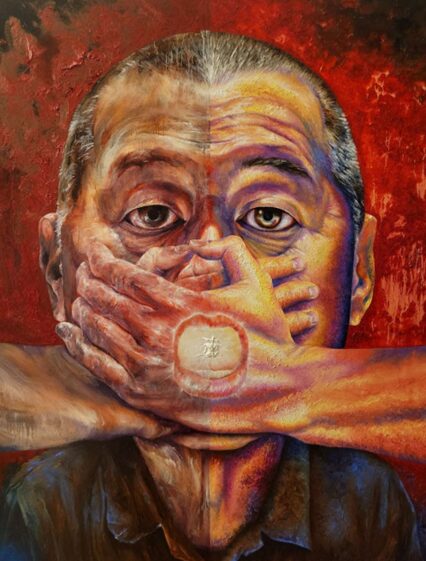
“Apple Man” by Lumli Lumlong. A tribute to jailed Apple Daily founder Jimmy Lai, whose imprisonment under National Security Law has become a symbol of stifled dissent.
But they say the reach of the state has followed them.
On that June evening, walking the vigil route from Trafalgar Square to Portland Place, their iPhones alerted them that an AirTag had been tracking them for over two hours. Later, one of their email accounts was hacked and locked.
For many, espionage is abstract; for Lumli and Lumlong, London has delivered a steady drip of incidents that strain the limits of coincidence.
Back in 2022, a pro-CCP journalist covertly attended one of their London exhibitions. Within a week, the couple lost access to their Facebook, Instagram and WhatsApp accounts. Their Facebook profile photo was replaced with an ISIS flag and their followers were invited to a range of strange group chats.
For Lumli and Lumlong, self-employed artists whose livelihood depends on their followers, “It was like our company went bankrupt overnight,” Lumli says.
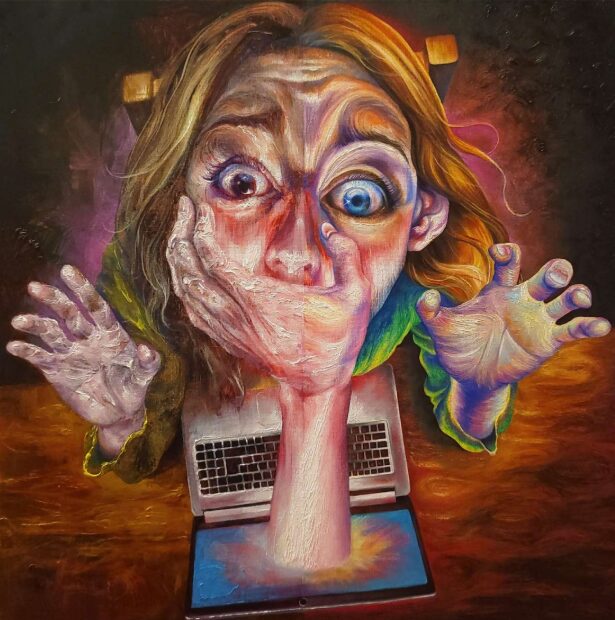
“Long-Armed People” by Lumli Lumlong is about the inescapability of repression – even in exile – and the need to resist it. It appeared on the cover of Index on Censorship’s The Long Reach.
The couple see these incidents not as random cybercrime, but as a reflection of the “long armed” reach of the state-backed harassment they hoped to leave behind them.
“Now it feels like we are facing the risk of a second extraction crisis here in the UK. The idea of a mega Chinese embassy, so close to homes, schools, and local communities, makes people worry about transnational repression. People who came here to live freely should not have to fear political influence, surveillance or the possibility of being targeted for their beliefs.”
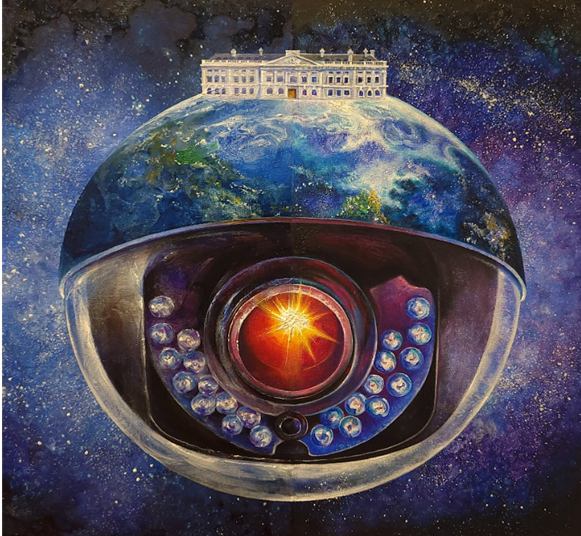
The proposed Chinese embassy inspired the painting Xi Xi TV, a play on CCTV. It depicts Royal Mint Court – the proposed embassy site – as a global surveillance machine.
Having visited the proposed site for the new embassy, they describe it as “a prison” with hundreds of rooms, extensive cameras and a staffing level they argue goes far beyond a typical diplomatic mission.
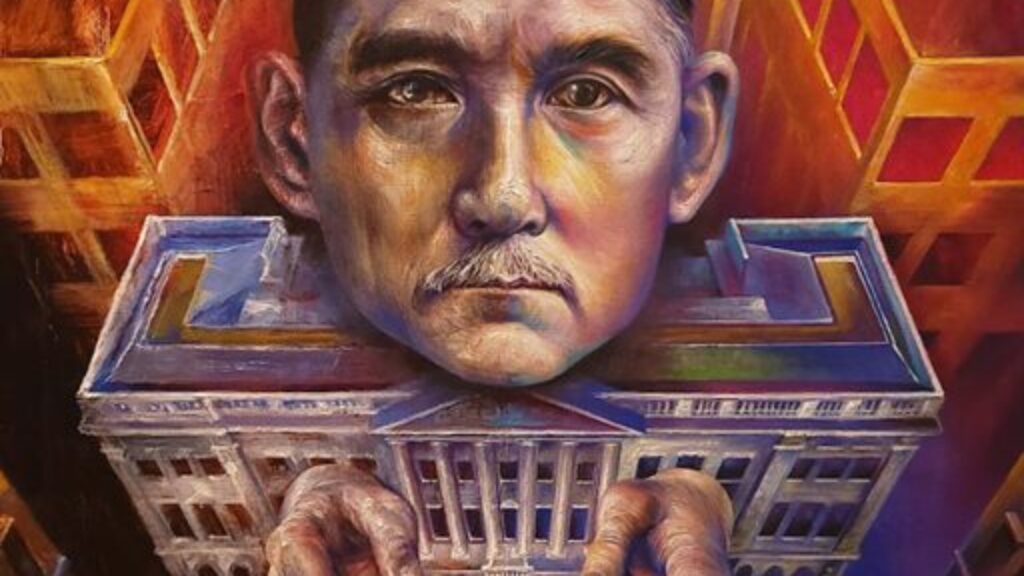
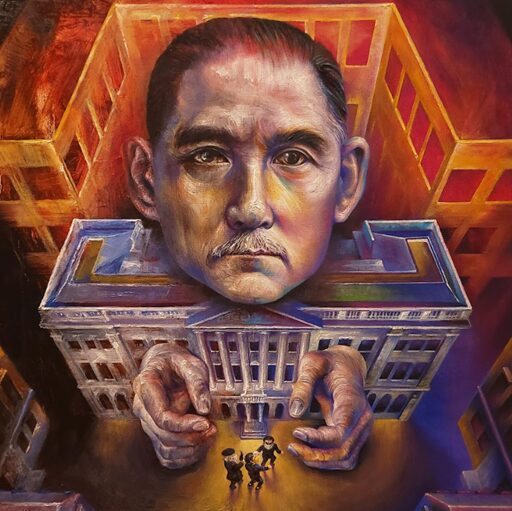
For the artists, China’s history of wielding state power on foreign soil cannot be ignored. Their painting Kidnapped in London recalls events from 1896 when Dr Sun Yat-sen, celebrated as the “Father of Modern China,” was abducted in London and held at the Chinese Legation. He was released only as a result of British public outrage.
“Kidnapped in London” by Lumli Lumlong depicts the 1896 abduction of Sun Yat-sen in London and its resonance today amid plans for new Mega-embassy.
With this track record Lumlong explains, “we never feel totally safe in the UK – never 100%. Of course, it is safer than in Hong Kong but not totally”
“We still have fear at the bottom of our hearts”, Lumli adds.
Their anxieties resonate as the UK navigates a fraught relationship with Beijing.
Labour’s general election win brought a cautious reset in UK–China relations after years of tension over trade, human rights and Covid-19. Keir Starmer met Xi Jinping at the G20; Chancellor Rachel Reeves spent three days in Beijing courting economic cooperation; and Chinese Foreign Minister Wang Yi made the first official visit to London in more than a decade. Agreements on energy, science, AI and education hinted at a fragile thaw.
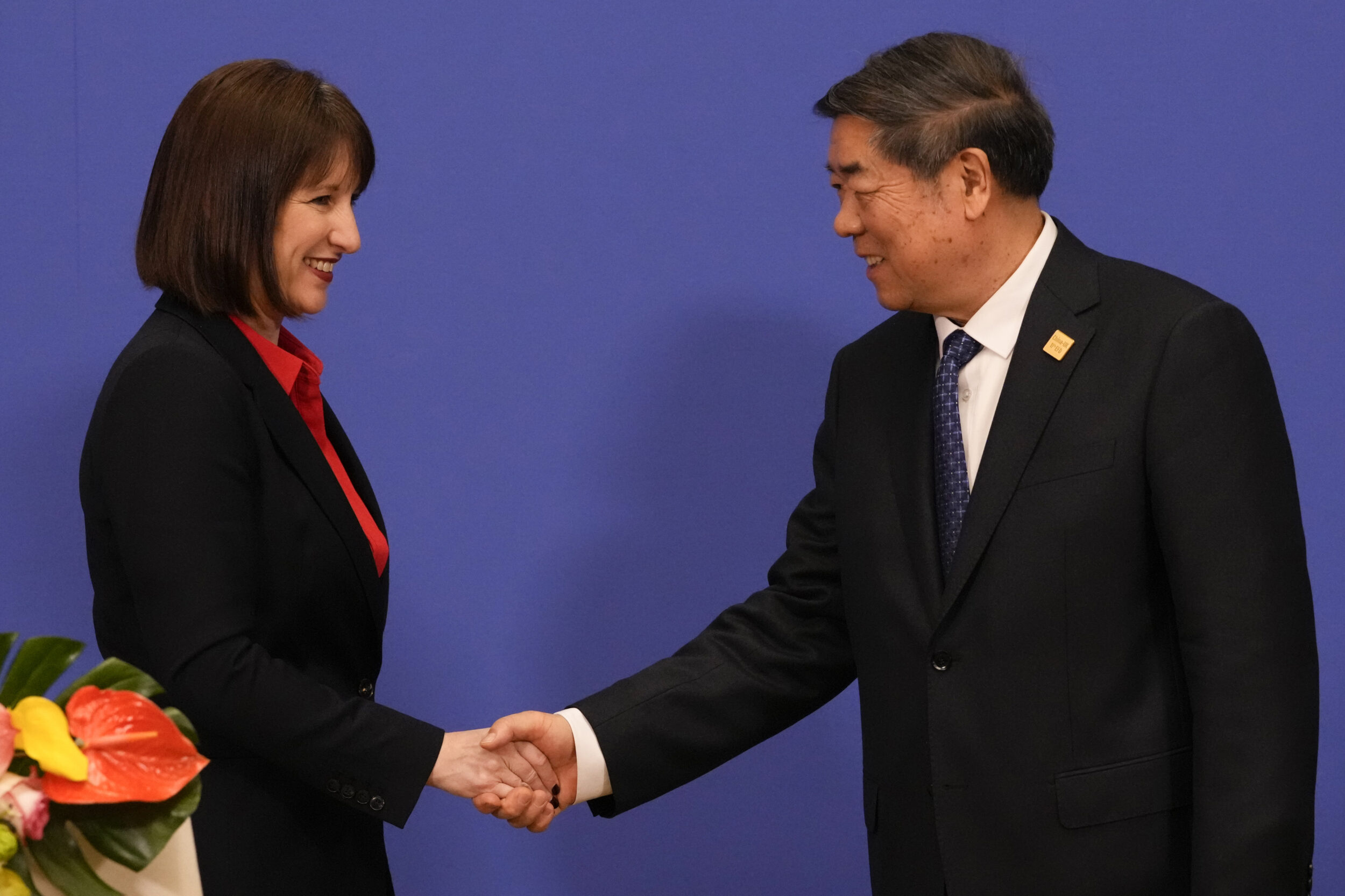
British Chancellor of the Exchequer Rachel Reeves, left, shakes hands with Chinese Vice Premier He Lifeng during a press conference, Saturday, Jan. 11, 2025. (AP Photo/Aaron Favila, Pool)
But diplomacy with the world’s manufacturing powerhouse comes with its own choreography: a give and take – and risk being taken from.
Security concerns have long shaped Britain’s dealings with Beijing, despite China’s insistence that the UK barely merits its espionage efforts. In a statement to City News, the Chinese Embassy rejected the idea that it or the Chinese government posed any threat to the UK or to exiled communities, calling the allegations “completely groundless and malicious slander.”
Yet despite those denials, a run of autumn headlines pushed relations back into fraught territory. When an alleged spy case against two UK citizens collapsed, it reignited debate over how seriously Britain should take the threat from China.
Soon after, reports surfaced that China had pressured Sheffield Hallam University to delay research into alleged human rights abuses.
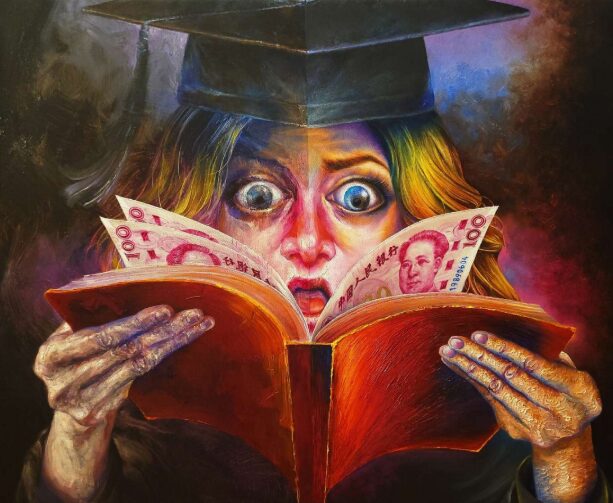
“Hidden Agenda” examines how Chinese funding pressures European universities and threatens academic freedom.
Last week, Security Minister Dan Jarvis revealed that MI5 had uncovered two LinkedIn profiles run on behalf of China’s Ministry of State Security, allegedly targeting individuals with access to sensitive UK government information.
But at the centrepiece of these escalating frictions sits China’s proposed mega-embassy.
Plans to turn Royal Mint Court into the largest Chinese diplomatic compound in Europe were rejected by Tower Hamlets Council in 2022, then escalated to central government. Ongoing protests by Uyghur, Tibetan and Hong Kong groups – alongside security warnings – have turned the project into a political flashpoint. Beijing has responded sharply, even restricting water and repairs at the UK embassy in China, warning London of “consequences” if planning permission is not granted on the new 10 December deadline.
For Lumli and Lumlong, such threats carry weight. They do not view China through the lens of trade flows or diplomatic overtures, but through lived experience.
“We’ve dealt with this big monster for many years,” says Lumlong. “Some people say our paintings are terrifying – and yes, I agree! Because reality is even more terrifying.”
This is a developing story, we will bring you more details as they come. Please refresh the page to update.
On 4 June, a candlelit vigil outside the Chinese Embassy in London marked 35 years since the Tiananmen Square Massacre – a brutal act of state-sanctioned violence in 1989 that resulted in the deaths of hundreds of pro-democracy protesters.
Among them stood Hong Kong artists Lumli and Lumlong, who fled to the UK in 2021 after pro-Beijing media accused them of promoting independence through their work.
“The police came to our studio to threaten us. We were scared, so we fled,” Lumli told City News.
Their art is deliberately provocative: traditional portraiture overlaid with bold colours and hyperbolic forms, creating stark political imagery about surveillance, power and defiance.
London, they believed, would be a refuge – a place to speak freely, to advocate for democracy and campaign for friends imprisoned back home.
“Apple Man” by Lumli Lumlong. A tribute to jailed Apple Daily founder Jimmy Lai, whose imprisonment under National Security Law has become a symbol of stifled dissent.
But they say the reach of the state has followed them.
On that June evening, walking the vigil route from Trafalgar Square to Portland Place, their iPhones alerted them that an AirTag had been tracking them for over two hours. Later, one of their email accounts was hacked and locked.
For many, espionage is abstract; for Lumli and Lumlong, London has delivered a steady drip of incidents that strain the limits of coincidence.
Back in 2022, a pro-CCP journalist covertly attended one of their London exhibitions. Within a week, the couple lost access to their Facebook, Instagram and WhatsApp accounts. Their Facebook profile photo was replaced with an ISIS flag and their followers were invited to a range of strange group chats.
For Lumli and Lumlong, self-employed artists whose livelihood depends on their followers, “It was like our company went bankrupt overnight,” Lumli says.
“Long-Armed People” by Lumli Lumlong is about the inescapability of repression – even in exile – and the need to resist it. It appeared on the cover of Index on Censorship’s The Long Reach.
The couple see these incidents not as random cybercrime, but as a reflection of the “long armed” reach of the state-backed harassment they hoped to leave behind them.
“Now it feels like we are facing the risk of a second extraction crisis here in the UK. The idea of a mega Chinese embassy, so close to homes, schools, and local communities, makes people worry about transnational repression. People who came here to live freely should not have to fear political influence, surveillance or the possibility of being targeted for their beliefs.”
The proposed Chinese embassy inspired the painting Xi Xi TV, a play on CCTV. It depicts Royal Mint Court – the proposed embassy site – as a global surveillance machine.
Having visited the proposed site for the new embassy, they describe it as “a prison” with hundreds of rooms, extensive cameras and a staffing level they argue goes far beyond a typical diplomatic mission.
For the artists, China’s history of wielding state power on foreign soil cannot be ignored. Their painting Kidnapped in London recalls events from 1896 when Dr Sun Yat-sen, celebrated as the “Father of Modern China,” was abducted in London and held at the Chinese Legation. He was released only as a result of British public outrage.
“Kidnapped in London” by Lumli Lumlong depicts the 1896 abduction of Sun Yat-sen in London and its resonance today amid plans for new Mega-embassy.
With this track record Lumlong explains, “we never feel totally safe in the UK – never 100%. Of course, it is safer than in Hong Kong but not totally”
“We still have fear at the bottom of our hearts”, Lumli adds.
Their anxieties resonate as the UK navigates a fraught relationship with Beijing.
Labour’s general election win brought a cautious reset in UK–China relations after years of tension over trade, human rights and Covid-19. Keir Starmer met Xi Jinping at the G20; Chancellor Rachel Reeves spent three days in Beijing courting economic cooperation; and Chinese Foreign Minister Wang Yi made the first official visit to London in more than a decade. Agreements on energy, science, AI and education hinted at a fragile thaw.
British Chancellor of the Exchequer Rachel Reeves, left, shakes hands with Chinese Vice Premier He Lifeng during a press conference, Saturday, Jan. 11, 2025. (AP Photo/Aaron Favila, Pool)
But diplomacy with the world’s manufacturing powerhouse comes with its own choreography: a give and take – and risk being taken from.
Security concerns have long shaped Britain’s dealings with Beijing, despite China’s insistence that the UK barely merits its espionage efforts. In a statement to City News, the Chinese Embassy rejected the idea that it or the Chinese government posed any threat to the UK or to exiled communities, calling the allegations “completely groundless and malicious slander.”
Yet despite those denials, a run of autumn headlines pushed relations back into fraught territory. When an alleged spy case against two UK citizens collapsed, it reignited debate over how seriously Britain should take the threat from China.
Soon after, reports surfaced that China had pressured Sheffield Hallam University to delay research into alleged human rights abuses.
“Hidden Agenda” examines how Chinese funding pressures European universities and threatens academic freedom.
Last week, Security Minister Dan Jarvis revealed that MI5 had uncovered two LinkedIn profiles run on behalf of China’s Ministry of State Security, allegedly targeting individuals with access to sensitive UK government information.
But at the centrepiece of these escalating frictions sits China’s proposed mega-embassy.
Plans to turn Royal Mint Court into the largest Chinese diplomatic compound in Europe were rejected by Tower Hamlets Council in 2022, then escalated to central government. Ongoing protests by Uyghur, Tibetan and Hong Kong groups – alongside security warnings – have turned the project into a political flashpoint. Beijing has responded sharply, even restricting water and repairs at the UK embassy in China, warning London of “consequences” if planning permission is not granted on the new 10 December deadline.
For Lumli and Lumlong, such threats carry weight. They do not view China through the lens of trade flows or diplomatic overtures, but through lived experience.
“We’ve dealt with this big monster for many years,” says Lumlong. “Some people say our paintings are terrifying – and yes, I agree! Because reality is even more terrifying.”
A 2024 Freedom of Information request showed Bromley Council had £4.5 million invested in arms companies that year with £1.5 million reportedly linked to Israel.
Undercover officers raided three linked shops in Barking town centre, revealing how illicit tobacco is being hidden in walls, ceilings and nearby locations to evade detection.
More than 330,000 people across the UK sought support from the Stop It Now helpline in 2025 over concerns about their own or someone else’s online sexual behaviour towards children, according to new charity data. The anonymous service says contacts by phone, email and webchat rose significantly over the year.