Was it because you had a quick rummage through a website and saw a dress worth purchasing? Or perhaps it was because your favourite influencers showcased their wanted products which has inspired you to buy them too!
A Textile Resources statistic states since 2023, at least 70% of Generation Z and millennials have admitted to buying something fashion influencers have promoted.
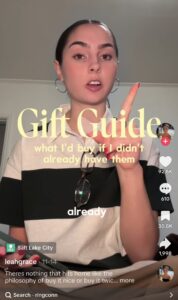
Tiktok Video ‘Brands that are doing Black Friday sales’ @SreyaTikTok Video ‘Gift Guide’ What I’d buy if I didn’t already have them’ @LeahGrace
But why is this? Why have people became more likely to trust influencers over brands?
It seems to be an issue of intimacy.
Cambridge Dictionary recently named ‘parasocial’ as the 2025 word of the year. The term refers to a one-sided connection someone feels towards another that they do not know. Sounds strange right? But it’s extremely common and many of us don’t even realise we have one!
This relates to the intimate connections that develop between influencers and followers which many brands have struggled to replicate. Although the relationship isn’t real, the strong ‘trust’ created can be used as a more valuable currency of consumerism rather than widespread branding advertisements.
Anna Farmer, 23, told City News ‘I would probably follow what influencers are promoting over a brand that’s a bit more generic and targeting a more generic market.’
We are noticing a shift away from the glossy allure of celebrity lifestyles towards everyday creators who feel familiar. McKinsey & Company state influencers who are seen as ‘quirky, humorous and vulnerable’ have become much more popular in recent years. Audiences are more frequently looking at people who share their budgets, routines and style preferences. The creators who feel like ‘just like us’ are increasingly shaping our choices and what we choose to buy.
London student, Freya Morse, 23, told City News ‘For me personally a lot of content creators, I find them quite unrelatable. We don’t have similar lifestyles. I’m not really going to be influenced to buy that Louis Vuitton bag. I think it’s so much easier to be influenced by someone who is slightly more down to earth and lives a more relatable lifestyle.’
Tessa Hartmann, CEO of Hartmann Influencers and mother of Talia Storm told City News the modern relevance of influencers; ‘they’ve got real time engagement, personality-driven and its far more relatable, people are putting forward not unreachable voices of authority.
It isn’t always the influencers with the biggest following like Molly-Mae Hague or Eleanor Calder, who are driving the strongest purchasing decisions. Instead, it’s often smaller, more relatable creators whose lives feel closer to our own.
So, what have your favourite influencers got their eye on this Black Friday, and does that make you want to buy it too?
Short HeadlineAre influencers outselling brands? Who’s really driving purchases?
StandfirstMany Londoners are getting geared up for the Black Friday sales happening this weekend! But how have you been influenced to buy certain products?
Was it because you had a quick rummage through a website and saw a dress worth purchasing? Or perhaps it was because your favourite influencers showcased their wanted products which has inspired you to buy them too!
A Textile Resources statistic states since 2023, at least 70% of Generation Z and millennials have admitted to buying something fashion influencers have promoted.
Tiktok Video ‘Brands that are doing Black Friday sales’ @SreyaTikTok Video ‘Gift Guide’ What I’d buy if I didn’t already have them’ @LeahGrace
But why is this? Why have people became more likely to trust influencers over brands?
It seems to be an issue of intimacy.
Cambridge Dictionary recently named ‘parasocial’ as the 2025 word of the year. The term refers to a one-sided connection someone feels towards another that they do not know. Sounds strange right? But it’s extremely common and many of us don’t even realise we have one!
This relates to the intimate connections that develop between influencers and followers which many brands have struggled to replicate. Although the relationship isn’t real, the strong ‘trust’ created can be used as a more valuable currency of consumerism rather than widespread branding advertisements.
Anna Farmer, 23, told City News ‘I would probably follow what influencers are promoting over a brand that’s a bit more generic and targeting a more generic market.’
We are noticing a shift away from the glossy allure of celebrity lifestyles towards everyday creators who feel familiar. McKinsey & Company state influencers who are seen as ‘quirky, humorous and vulnerable’ have become much more popular in recent years. Audiences are more frequently looking at people who share their budgets, routines and style preferences. The creators who feel like ‘just like us’ are increasingly shaping our choices and what we choose to buy.
London student, Freya Morse, 23, told City News ‘For me personally a lot of content creators, I find them quite unrelatable. We don’t have similar lifestyles. I’m not really going to be influenced to buy that Louis Vuitton bag. I think it’s so much easier to be influenced by someone who is slightly more down to earth and lives a more relatable lifestyle.’
Tessa Hartmann, CEO of Hartmann Influencers and mother of Talia Storm told City News the modern relevance of influencers; ‘they’ve got real time engagement, personality-driven and its far more relatable, people are putting forward not unreachable voices of authority.
It isn’t always the influencers with the biggest following like Molly-Mae Hague or Eleanor Calder, who are driving the strongest purchasing decisions. Instead, it’s often smaller, more relatable creators whose lives feel closer to our own.
So, what have your favourite influencers got their eye on this Black Friday, and does that make you want to buy it too?
A 2024 Freedom of Information request showed Bromley Council had £4.5 million invested in arms companies that year with £1.5 million reportedly linked to Israel.
Undercover officers raided three linked shops in Barking town centre, revealing how illicit tobacco is being hidden in walls, ceilings and nearby locations to evade detection.
More than 330,000 people across the UK sought support from the Stop It Now helpline in 2025 over concerns about their own or someone else’s online sexual behaviour towards children, according to new charity data. The anonymous service says contacts by phone, email and webchat rose significantly over the year.