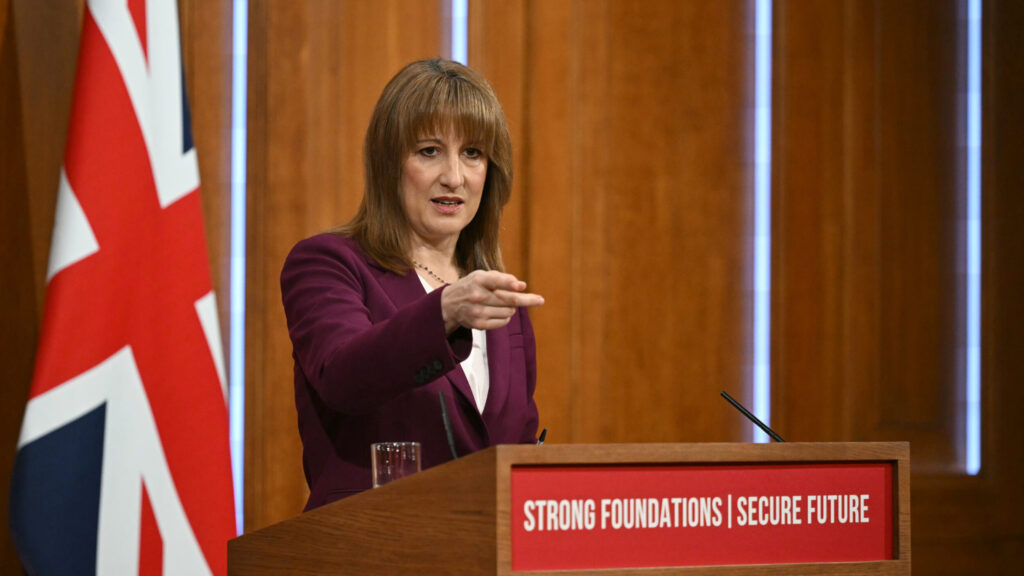
Britain's Chancellor of the Exchequer Rachel Reeves takes journalists’ questions. (Justin Tallis/Pool Photo via AP)
SHARE:
The Chancellor is reportedly planning a significant change to property taxation, with a proposed Mansion Tax targeting high value homes.
Amidst a government commitment not to raise headline income taxes, this levy is seen as a key way to boost public finances and address wealth inequality. However, the details of the tax and its potential unintended consequences have sparked immediate debate across the political and financial spectrums.
Two types of Mansion Tax being considered
Current speculation centres around two main models for the new Mansion Tax. They are both designed to leverage the value of expensive properties:
Council Tax Surcharge Model: This proposal involves applying a surcharge to homes in the highest existing Council Tax bands, which are currently based on 1991 valuations. This approach would likely require a revaluation of these properties, potentially applying the surcharge only to those worth above a certain threshold, such as £2 million.
Annual Percentage Levy: An alternative, simpler model involves an annual charge, such as a 1% levy, on the value of a property that exceeds a threshold, but this precise figure is not known. This is estimated to affect around 150,000 homes.
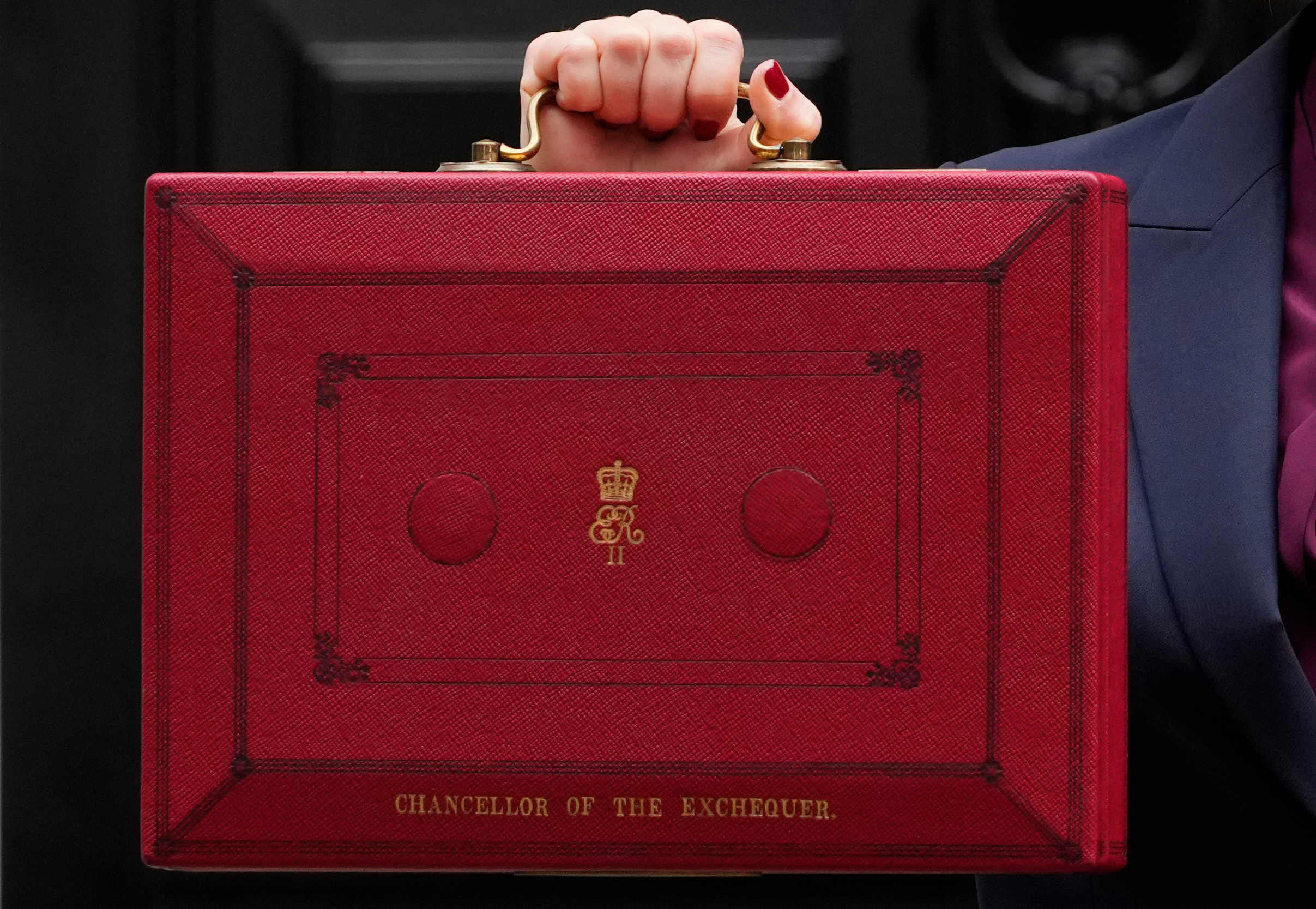
The red box is a budget box used by the Chancellor of the Exchequer to carry the Budget speech and other government papers. Source: AP Photo/Kirsty Wigglesworth
Arguments for the Mansion Tax
The proposed Mansion Tax is a highly contentious policy, attracting strong arguments from both supporters and critics.
Revenue Generation: Proponents argue that the tax could generate billions in pounds in much-needed revenue for the Treasury without impacting most taxpayers.
Fairness and Inequality: It is viewed as a measure to correct an imbalance in the tax system, where property wealth is currently undertaxed relative to income. The number of properties in London currently estimated to be more than £2 million is approximately 2.3% of homes. This shows it targets a small and highly affluent section of the market.
Council Tax reform: Layering the tax onto the Council Tax system forces an update to property valuations set over 30 years ago. This means two identical homes could have wildly different Council Tax bills, simply because one was built after 1991.
Popularity: Polling suggests a significant portion of the general public supports the introduction of a wealth tax measure. A recent YouGov poll found that 44% of Brits are in favour.
Source: Emma Conaghan
Arguments against a Mansion Tax
Asset-Rich, Cash-Poor: Critics warn that an annual charge could disproportionately affect asset-rich but income-poor individuals, such as retirees whose family homes have appreciated significantly but who have limited accessible funds to cover the annual bill. Proposals to pay the tax upon sale of the house or the owner’s death is being considered, but adds complexity and extra paperwork.
Market distortion and ‘cliff edge’: The introduction of a clear threshold for properties, such as £2 million, could create a “cliff edge,” causing those just above the limit to see a sharp drop in demand and price, risking a distortion at the top end of the housing market.
Regional imbalance: Due to massive house price increases, particularly in London and the South East, the tax will overwhelmingly affect these regions, potentially punishing homeowners simply because their area has become more expensive. According to recent research by the estate agent Savills, the average house price in London is currently about double the UK average.
A challenging road ahead
The proposed Mansion Tax is less about policy and more a symbol of the government’s challenge in meeting budget needs without breaking its key manifesto pledges.
Whether implemented as a Council Tax surcharge or an annual levy, its success will depend on careful design to ensure fairness, especially for vulnerable homeowners and to avoid crippling the already fragile housing market.
The clamour for a full, nationwide revaluation of properties remains a constant backdrop, with many arguing that no new tax can be truly fair when bolted onto an archaic valuation system.
Ultimately, the new levy will test the balance between raising revenue from those with the ‘broadest shoulders’ and maintaining stability in one of the UK’s most politically sensitive sectors.
Submitted Article
Headline
Short Headline
Standfirst
Published Article
HeadlineFairness on trial: A balanced look at the government’s Mansion Tax plans
Short HeadlineFairness on trial: A balanced look at the government’s Mansion Tax plans
StandfirstSupporters say a Mansion Tax could tackle inequality and outdated valuations - but critics warn of financial strain for homeowners
The Chancellor is reportedly planning a significant change to property taxation, with a proposed Mansion Tax targeting high value homes.
Amidst a government commitment not to raise headline income taxes, this levy is seen as a key way to boost public finances and address wealth inequality. However, the details of the tax and its potential unintended consequences have sparked immediate debate across the political and financial spectrums.
Two types of Mansion Tax being considered
Current speculation centres around two main models for the new Mansion Tax. They are both designed to leverage the value of expensive properties:
Council Tax Surcharge Model: This proposal involves applying a surcharge to homes in the highest existing Council Tax bands, which are currently based on 1991 valuations. This approach would likely require a revaluation of these properties, potentially applying the surcharge only to those worth above a certain threshold, such as £2 million.
Annual Percentage Levy: An alternative, simpler model involves an annual charge, such as a 1% levy, on the value of a property that exceeds a threshold, but this precise figure is not known. This is estimated to affect around 150,000 homes.
The red box is a budget box used by the Chancellor of the Exchequer to carry the Budget speech and other government papers. Source: AP Photo/Kirsty Wigglesworth
Arguments for the Mansion Tax
The proposed Mansion Tax is a highly contentious policy, attracting strong arguments from both supporters and critics.
Revenue Generation: Proponents argue that the tax could generate billions in pounds in much-needed revenue for the Treasury without impacting most taxpayers.
Fairness and Inequality: It is viewed as a measure to correct an imbalance in the tax system, where property wealth is currently undertaxed relative to income. The number of properties in London currently estimated to be more than £2 million is approximately 2.3% of homes. This shows it targets a small and highly affluent section of the market.
Council Tax reform: Layering the tax onto the Council Tax system forces an update to property valuations set over 30 years ago. This means two identical homes could have wildly different Council Tax bills, simply because one was built after 1991.
Popularity: Polling suggests a significant portion of the general public supports the introduction of a wealth tax measure. A recent YouGov poll found that 44% of Brits are in favour.
Source: Emma Conaghan
Arguments against a Mansion Tax
Asset-Rich, Cash-Poor: Critics warn that an annual charge could disproportionately affect asset-rich but income-poor individuals, such as retirees whose family homes have appreciated significantly but who have limited accessible funds to cover the annual bill. Proposals to pay the tax upon sale of the house or the owner’s death is being considered, but adds complexity and extra paperwork.
Market distortion and ‘cliff edge’: The introduction of a clear threshold for properties, such as £2 million, could create a “cliff edge,” causing those just above the limit to see a sharp drop in demand and price, risking a distortion at the top end of the housing market.
Regional imbalance: Due to massive house price increases, particularly in London and the South East, the tax will overwhelmingly affect these regions, potentially punishing homeowners simply because their area has become more expensive. According to recent research by the estate agent Savills, the average house price in London is currently about double the UK average.
A challenging road ahead
The proposed Mansion Tax is less about policy and more a symbol of the government’s challenge in meeting budget needs without breaking its key manifesto pledges.
Whether implemented as a Council Tax surcharge or an annual levy, its success will depend on careful design to ensure fairness, especially for vulnerable homeowners and to avoid crippling the already fragile housing market.
The clamour for a full, nationwide revaluation of properties remains a constant backdrop, with many arguing that no new tax can be truly fair when bolted onto an archaic valuation system.
Ultimately, the new levy will test the balance between raising revenue from those with the ‘broadest shoulders’ and maintaining stability in one of the UK’s most politically sensitive sectors.
A 2024 Freedom of Information request showed Bromley Council had £4.5 million invested in arms companies that year with £1.5 million reportedly linked to Israel.
Undercover officers raided three linked shops in Barking town centre, revealing how illicit tobacco is being hidden in walls, ceilings and nearby locations to evade detection.
More than 330,000 people across the UK sought support from the Stop It Now helpline in 2025 over concerns about their own or someone else’s online sexual behaviour towards children, according to new charity data. The anonymous service says contacts by phone, email and webchat rose significantly over the year.