London Bakeries who are Keeping the Mince Pie Tradition Alive
Bakeries across London have been preparing their mince pies for this Christmas season. With thousands being made and sold, this traditional treat continues to be loved by many.
National Mince Pie Day fell on 22 November and new data suggests that Britain’s appetite for them isn’t slowing down. A recent YouGov poll found more than half of Britons (56–58%) still include mince pies in their festive traditions.
Behind the nostalgia of a sweet, fruit-filled pastry lie the London bakeries who are working to meet the demands to make thousands of them each festive season.
Today’s mince pie is synonymous with sweet fruit, brandy, and rich, flaky pastry. In medieval England, mince pies were savoury, and made with meat, dried fruit and spices.
By the Tudor period, the pies became symbolic and baked in the shape of an oval to represent a manger. Mince pies with meat lingered until the 19th century, and it wasn’t until the 20th century that the pie became entirely meat-free.
At Bread Ahead, one of London’s best-known bakeries, Head of Pastry, Andrew has been making mince pies since mid-November.
“We make anywhere in the region of 20 to 30 thousand, but this year we’re aiming for 40,000,” he says.
Andrew also emphasises the importance of making the bake accessible for all.
“Everything we use is halal, we use vegetable suet and no alcohol. You want everyone to be involved, so we try to make it accessible for everyone.”
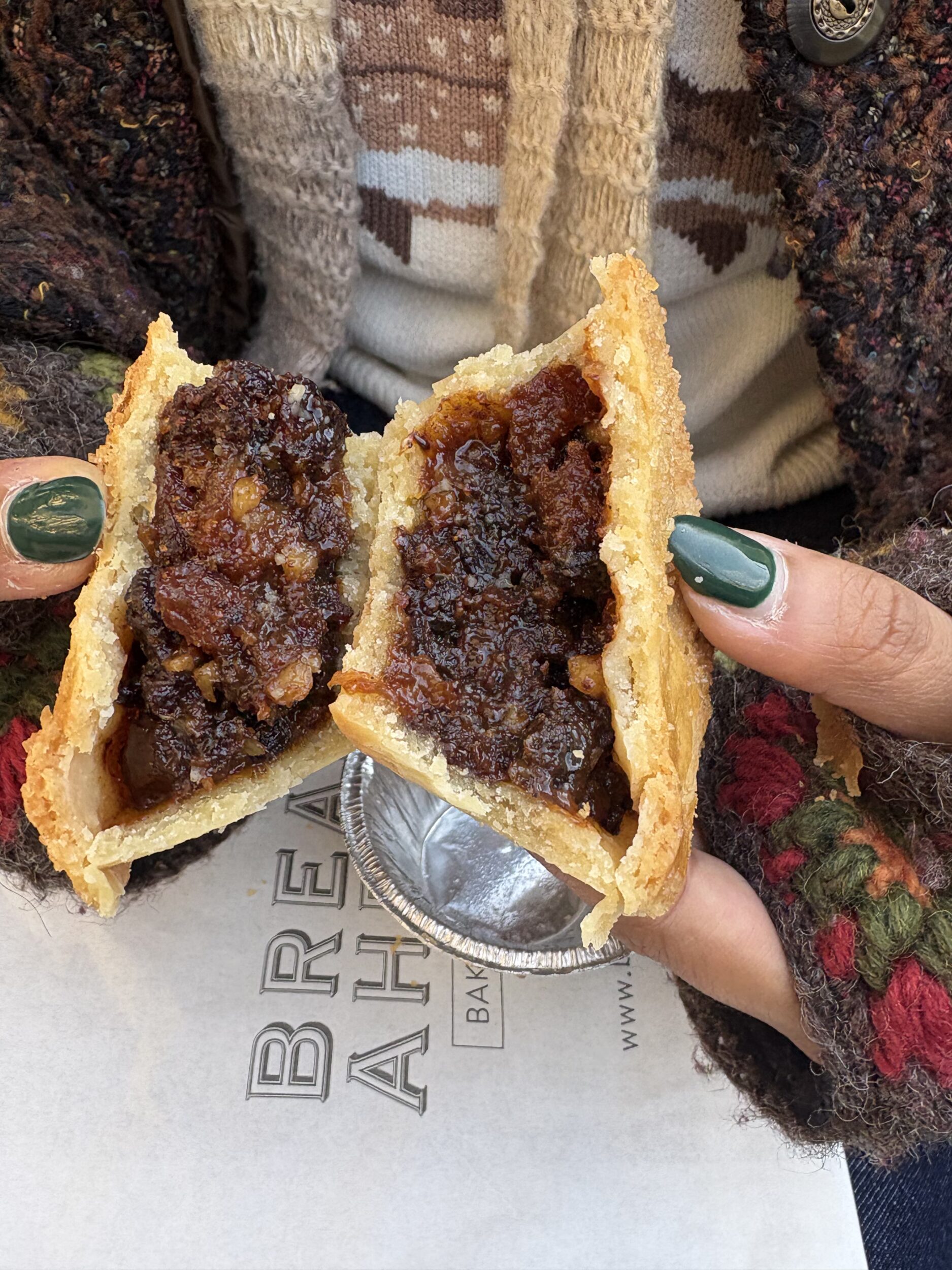
A mince pie broken in half from Bread Ahead.
Such seasonal bakes also come with quirks, and Andrew’s favourite part of making mince pies is the chance to use their pie machine.
“We use our pie blocker machine, use it once a year, we switch it on at the beginning of November, and it’s the only machine we use and use it once a year and that’s the best machine that I would say I like.”
At Comptoir Bakery in Borough Market, demand is equally strong.
Staff say that they sell “over a hundred” mince pies a week, and that customers still see them as a symbol of Christmas.
Similarly, at small batch bakery, EMMY, the team are in full Christmas production. They’re getting ready to head to their market stalls with their biscotti and their Christmas special of red velvet with a cream cheese centre.
They spend their extra time making mince pies and say they are the taste of Christmas.
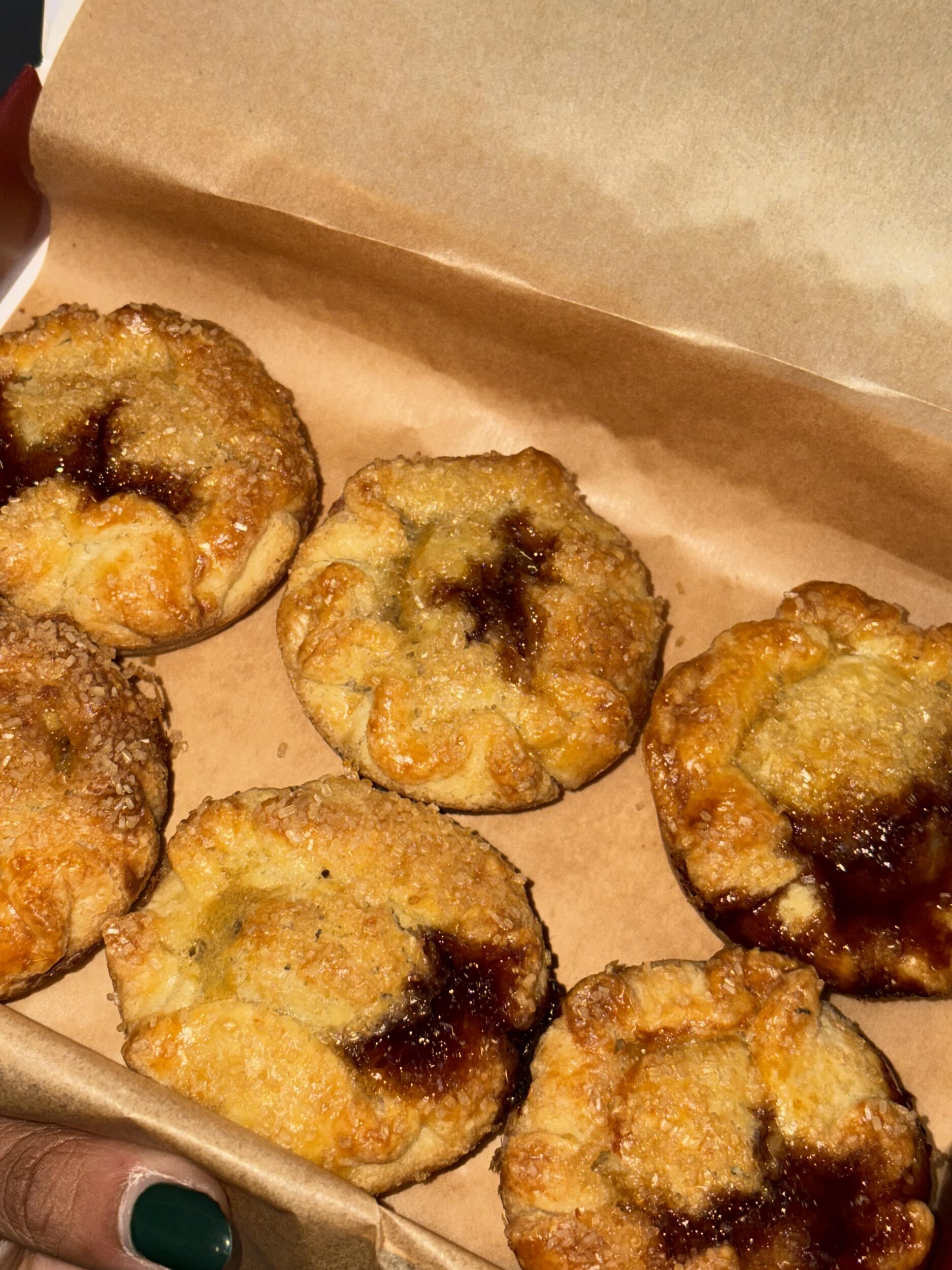
A box of mince pies from EMMY’s.
Opinions do remain divided.
Australians in London said:
“Fruit and mince together? It’s a no from me,”
But others shared their family traditions.
“My mum makes them; she won’t have any bought in at all”.
Some bakeries haven’t taken the traditional route. Blondie Bakery sell mince pie cookie cups instead of a traditional pie.
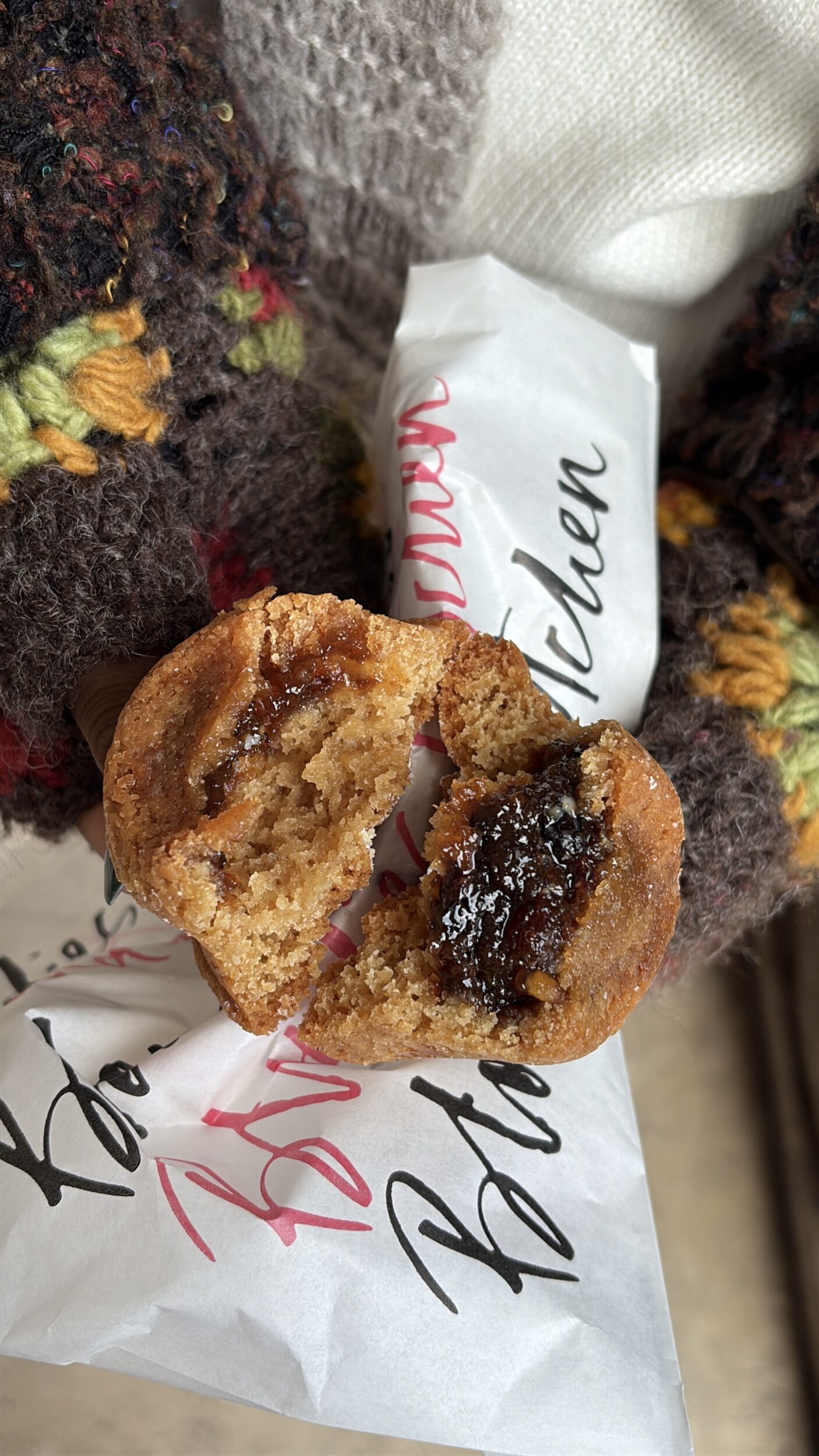
An untraditional baked good, a mince pie cookie cup.
Many bakeries across London have adapted traditional foods by selling vegan versions, and pastries suitable for those with dietary restrictions.
These bakeries illustrate mince pies has plenty of room at the British Christmas table.
Submitted Article
Headline
Short Headline
Standfirst
Published Article
HeadlineLondon Bakeries who are Keeping the Mince Pie Tradition Alive
Short HeadlineMeet the bakers behind London's mince pies
StandfirstBakeries across London have been preparing their mince pies for this Christmas season. With thousands being made and sold, this traditional treat continues to be loved by many.
National Mince Pie Day fell on 22 November and new data suggests that Britain’s appetite for them isn’t slowing down. A recent YouGov poll found more than half of Britons (56–58%) still include mince pies in their festive traditions.
Behind the nostalgia of a sweet, fruit-filled pastry lie the London bakeries who are working to meet the demands to make thousands of them each festive season.
Today’s mince pie is synonymous with sweet fruit, brandy, and rich, flaky pastry. In medieval England, mince pies were savoury, and made with meat, dried fruit and spices.
By the Tudor period, the pies became symbolic and baked in the shape of an oval to represent a manger. Mince pies with meat lingered until the 19th century, and it wasn’t until the 20th century that the pie became entirely meat-free.
At Bread Ahead, one of London’s best-known bakeries, Head of Pastry, Andrew has been making mince pies since mid-November.
“We make anywhere in the region of 20 to 30 thousand, but this year we’re aiming for 40,000,” he says.
Andrew also emphasises the importance of making the bake accessible for all.
“Everything we use is halal, we use vegetable suet and no alcohol. You want everyone to be involved, so we try to make it accessible for everyone.”
A mince pie broken in half from Bread Ahead.
Such seasonal bakes also come with quirks, and Andrew’s favourite part of making mince pies is the chance to use their pie machine.
“We use our pie blocker machine, use it once a year, we switch it on at the beginning of November, and it’s the only machine we use and use it once a year and that’s the best machine that I would say I like.”
At Comptoir Bakery in Borough Market, demand is equally strong.
Staff say that they sell “over a hundred” mince pies a week, and that customers still see them as a symbol of Christmas.
Similarly, at small batch bakery, EMMY, the team are in full Christmas production. They’re getting ready to head to their market stalls with their biscotti and their Christmas special of red velvet with a cream cheese centre.
They spend their extra time making mince pies and say they are the taste of Christmas.
A box of mince pies from EMMY’s.
Opinions do remain divided.
Australians in London said:
“Fruit and mince together? It’s a no from me,”
But others shared their family traditions.
“My mum makes them; she won’t have any bought in at all”.
Some bakeries haven’t taken the traditional route. Blondie Bakery sell mince pie cookie cups instead of a traditional pie.
An untraditional baked good, a mince pie cookie cup.
Many bakeries across London have adapted traditional foods by selling vegan versions, and pastries suitable for those with dietary restrictions.
These bakeries illustrate mince pies has plenty of room at the British Christmas table.
A 2024 Freedom of Information request showed Bromley Council had £4.5 million invested in arms companies that year with £1.5 million reportedly linked to Israel.
Undercover officers raided three linked shops in Barking town centre, revealing how illicit tobacco is being hidden in walls, ceilings and nearby locations to evade detection.
More than 330,000 people across the UK sought support from the Stop It Now helpline in 2025 over concerns about their own or someone else’s online sexual behaviour towards children, according to new charity data. The anonymous service says contacts by phone, email and webchat rose significantly over the year.