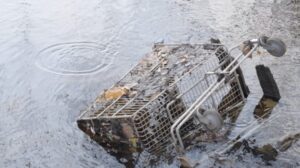
Abandoned supermarket trolleys have become a common sight in parts of London. Residents are writing in local groups, posting on X and sharing images of trolleys blocking pavements, turning up in parks, even in water bodies.
Research conducted by Wanz, a trolley manufacturer, reveals that London and its surrounding areas are the largest hotspot in the UK for their retrievals of abandoned trolleys recently. Wanz have collected 14,445 trolleys from Greater London, compared to 7,838 in the larger Newcastle / Middlesbrough area, the next largest hotspot.
But beyond the frustration, what actually happens to these trolleys, and why does it matter?
Who is responsible for these trolleys?
Despite how many trolleys end up scattered around neighbourhoods, most people we talked to had no idea what happens to them, or who is supposed to deal with them. Some assumed it was the local council sending them to landfills.
In essence, a supermarket trolley is the property of the store it comes from. Government guidance is clear that councils do have jurisdiction over what to do with these trolleys, but only after there has been no claims to the ownership of the trolley.
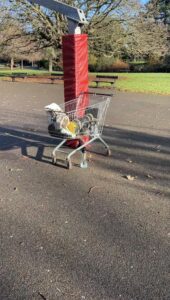
An abandoned trolley in Ravenscourt park
Once the trolleys have been found, if damaged, they need to be repaired. If it is beyond repair, it has to be replaced entirely. This process is environmentally costly. To understand the scale of this, we spoke to Dr Neill Raath. Earlier this year, Raath published his research and analysis of abandoned trolleys in the UK.
The research
“The main impact from abandoning a trolley comes not from driving around a van to collect these trolleys, […] it is more that if you leave a trolley too long and it starts to rust, the supermarket either has to manufacture a new one which is about 90% of the environmental impact. Or from sending it off to a refurbishment facility to apply a new zinc coating onto it, which is another significant environmental impact.”
Traditional trolleys are made of steel, which is what is responsible for most of these emissions. Polymer or plastic trolleys are also in circulation, which avoid rusting and last longer, but once they end up in landfill, Raath says that carcinogens can begin to leach into the soil.
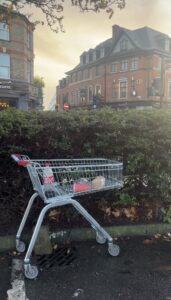
An abandoned trolley in Balham
How can we tackle this problem?
Local authorities have tried for years to enforce legislation around abandoned trolleys and supermarkets’ responsibilities in the matter. To address this, Raath and his colleagues have recently launched a new initiative called Trolley Watch alongside Wanzl:
“Local supermarkets and local governments come together once a year to discuss actions on how to actually address this issue of abandoned trolleys.”
Many major supermarkets now use TrolleyWise, an app created by Wanzl that allows users to upload the location of stray trolleys. A collection team is then dispatched to retrieve it. Members of the public can therefore also play a big role in reducing the impact simply by reporting these trolleys.
Submitted Article
Headline
Short Headline
Standfirst
Published Article
HeadlineAbandoned Trolleys Are Impacting The Environment More Than You Think
Short HeadlineThe hidden impact of abandoned trolleys
StandfirstAbandoned supermarket trolleys are harmful to the environment, according to academic Dr Neill Raath
Abandoned supermarket trolleys have become a common sight in parts of London. Residents are writing in local groups, posting on X and sharing images of trolleys blocking pavements, turning up in parks, even in water bodies.
Research conducted by Wanz, a trolley manufacturer, reveals that London and its surrounding areas are the largest hotspot in the UK for their retrievals of abandoned trolleys recently. Wanz have collected 14,445 trolleys from Greater London, compared to 7,838 in the larger Newcastle / Middlesbrough area, the next largest hotspot.
But beyond the frustration, what actually happens to these trolleys, and why does it matter?
Who is responsible for these trolleys?
Despite how many trolleys end up scattered around neighbourhoods, most people we talked to had no idea what happens to them, or who is supposed to deal with them. Some assumed it was the local council sending them to landfills.
In essence, a supermarket trolley is the property of the store it comes from. Government guidance is clear that councils do have jurisdiction over what to do with these trolleys, but only after there has been no claims to the ownership of the trolley.
An abandoned trolley in Ravenscourt park
Once the trolleys have been found, if damaged, they need to be repaired. If it is beyond repair, it has to be replaced entirely. This process is environmentally costly. To understand the scale of this, we spoke to Dr Neill Raath. Earlier this year, Raath published his research and analysis of abandoned trolleys in the UK.
The research
“The main impact from abandoning a trolley comes not from driving around a van to collect these trolleys, […] it is more that if you leave a trolley too long and it starts to rust, the supermarket either has to manufacture a new one which is about 90% of the environmental impact. Or from sending it off to a refurbishment facility to apply a new zinc coating onto it, which is another significant environmental impact.”
Traditional trolleys are made of steel, which is what is responsible for most of these emissions. Polymer or plastic trolleys are also in circulation, which avoid rusting and last longer, but once they end up in landfill, Raath says that carcinogens can begin to leach into the soil.
An abandoned trolley in Balham
How can we tackle this problem?
Local authorities have tried for years to enforce legislation around abandoned trolleys and supermarkets’ responsibilities in the matter. To address this, Raath and his colleagues have recently launched a new initiative called Trolley Watch alongside Wanzl:
“Local supermarkets and local governments come together once a year to discuss actions on how to actually address this issue of abandoned trolleys.”
Many major supermarkets now use TrolleyWise, an app created by Wanzl that allows users to upload the location of stray trolleys. A collection team is then dispatched to retrieve it. Members of the public can therefore also play a big role in reducing the impact simply by reporting these trolleys.
City news has spoken to a long-term rough sleeper to see how those on the street feel about the Andy Burham’s plan to end homelessness and the upcoming winter.