As Oscar nominations are announced and the BAFTAs approach, City News has spoken to filmmakers who are experimenting with artificial intelligence. From early planning to post-production, the role of AI is raising questions about creativity in the city’s film industry.
AI: behind the scenes
Generative AI reached the mainstream in November 2022 with the launch of ChatGPT. In film production, its use is increasing across areas like voiceovers, pre-visualisation and concept art.
Last month, film and TV performers voted 99.6% in against digital scanning that could copy performers’ faces, bodies or voices without consent.
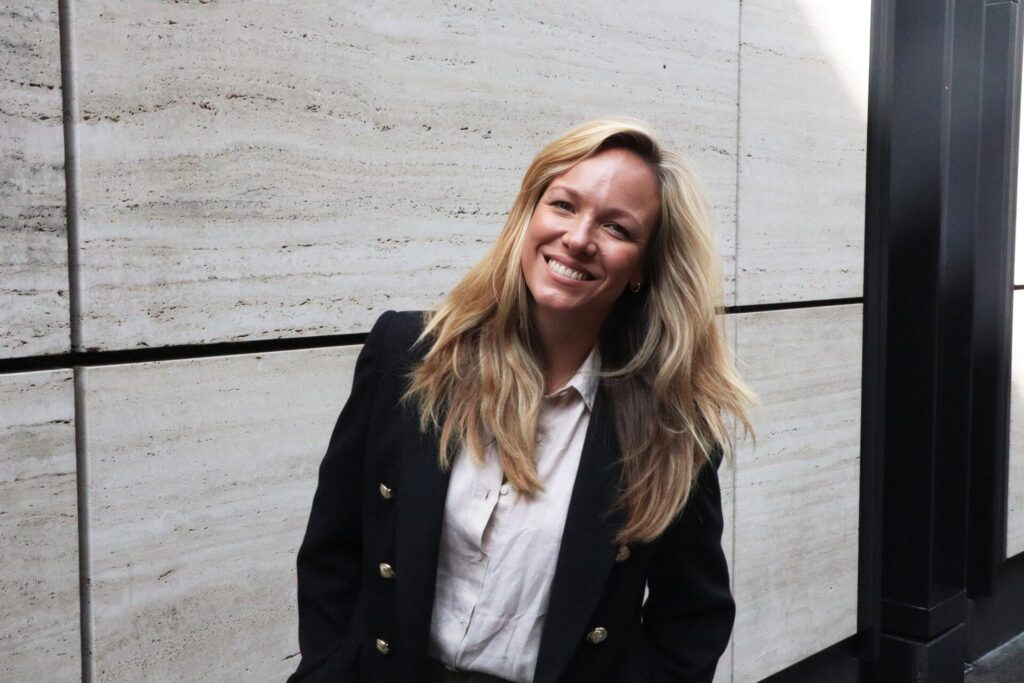
For Eline Van der Velden, actress and founder of London-based production company Particle6, AI is less about resistance and more about curiosity.
When AI tools became widely available three years ago, Particle6 leaned in.
“My background is in physics and musical theatre, so I was intrigued by what tech could do,” she tells City News.
“I started the company 10 years ago, and it was already about digital production.”
Eline says London’s tight budget made her more pragmatic about using AI faster. “It was about optimising budget and getting the most value on screen.”
Eline Van der Velden believes much of the debate around AI stems from misconceptions.
“People think there’s no humanity behind AI. But if you saw our team, there’s loads of humans involved, and there’s so much human skill and experience that goes into it. It’s not just a button you press.”
Eline highlights often-overlooked ethical benefits:
“We can avoid dangerous stunts or using animals or children, all things that could raise ethical concerns during shooting.”
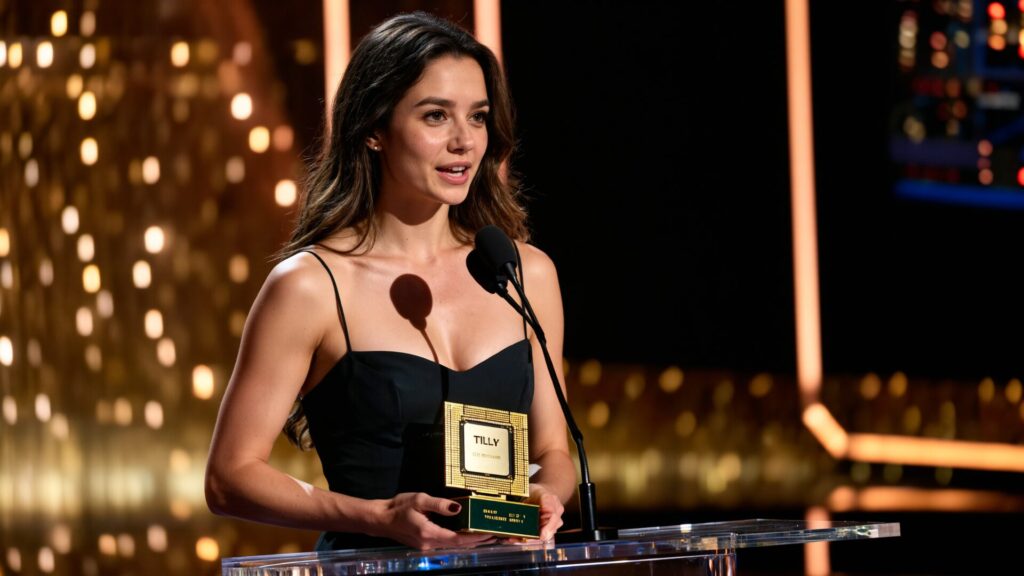
And the award goes to… Tilly Norwood
Tilly Norwood, AI Actress. Particle6 Productions.
Particle6’s most high-profile project is Tilly Norwood, an AI-generated actor. Eline, an experienced actor, sees the project not as a replacement but as an extension of performance.
“Tilly reflected myself, what I wish I was as an actor. She is more beautiful and younger, all the things as an actor you are limited by,” she says. “It was a way to future-proof myself as an actor because I could see where the industry was going.”
She says London audiences were receptive:
“It was very normal, everyone was like ‘this was coming’.”
She points out the UK had already seen small examples of AI in media, such as the viral Wimbledon AI influencer, which helped ease public reaction.
The US response was different: “They hadn’t seen where AI was at. It was a shock for them, all the awe that I had when I first saw a video with AI. It was understandable.”
A divided industry
Film director and producer Martin Percy, who runs the cinema workshop AI Basics: Thrills or Chills, calls the AI debate a “culture war”.
“You can hate AI, love it, or be somewhere in the middle. The point is recognising its importance. It is a new chapter in human civilisation.”
Martin’s cinema workshop is designed to expose how AI works. When asked how welcoming the London film industry is towards the use of AI, Percy put it simply:
“It is bitterly hostile but deeply divided, depending on whether people are using it or not.”
Comparing it to the Pre-Raphaelites’ 19th-century rejection of industrialisation, Percy thinks London filmmakers could push back against AI in a similar way.
He envisions a future where some “cinemas will only advertise films made with no AI,” with human creativity held to a higher standard.
London’s film industry is navigating a future where creativity and technology must coexist.
Chris Chandler, Head of Media, Film and TV at Ravensbourne University London, puts it succinctly:
“The clear view of the vast majority of industry figures is that AI cannot replace human imagination and human creativity.”
Submitted Article
Headline
Short Headline
Standfirst
Published Article
HeadlineAI vs Film: How Artificial Intelligence is Reshaping The London Film Industry
Short HeadlineAI vs Film: London’s Rising Culture War
StandfirstAs AI reaches London’s film sets, the industry is split between resistance and experimentation.
As Oscar nominations are announced and the BAFTAs approach, City News has spoken to filmmakers who are experimenting with artificial intelligence. From early planning to post-production, the role of AI is raising questions about creativity in the city’s film industry.
AI: behind the scenes
Generative AI reached the mainstream in November 2022 with the launch of ChatGPT. In film production, its use is increasing across areas like voiceovers, pre-visualisation and concept art.
Last month, film and TV performers voted 99.6% in against digital scanning that could copy performers’ faces, bodies or voices without consent.
For Eline Van der Velden, actress and founder of London-based production company Particle6, AI is less about resistance and more about curiosity.
When AI tools became widely available three years ago, Particle6 leaned in.
“My background is in physics and musical theatre, so I was intrigued by what tech could do,” she tells City News.
“I started the company 10 years ago, and it was already about digital production.”
Eline says London’s tight budget made her more pragmatic about using AI faster. “It was about optimising budget and getting the most value on screen.”
Eline Van der Velden believes much of the debate around AI stems from misconceptions.
“People think there’s no humanity behind AI. But if you saw our team, there’s loads of humans involved, and there’s so much human skill and experience that goes into it. It’s not just a button you press.”
Eline highlights often-overlooked ethical benefits:
“We can avoid dangerous stunts or using animals or children, all things that could raise ethical concerns during shooting.”
And the award goes to… Tilly Norwood
Tilly Norwood, AI Actress. Particle6 Productions.
Particle6’s most high-profile project is Tilly Norwood, an AI-generated actor. Eline, an experienced actor, sees the project not as a replacement but as an extension of performance.
“Tilly reflected myself, what I wish I was as an actor. She is more beautiful and younger, all the things as an actor you are limited by,” she says. “It was a way to future-proof myself as an actor because I could see where the industry was going.”
She says London audiences were receptive:
“It was very normal, everyone was like ‘this was coming’.”
She points out the UK had already seen small examples of AI in media, such as the viral Wimbledon AI influencer, which helped ease public reaction.
The US response was different: “They hadn’t seen where AI was at. It was a shock for them, all the awe that I had when I first saw a video with AI. It was understandable.”
A divided industry
Film director and producer Martin Percy, who runs the cinema workshop AI Basics: Thrills or Chills, calls the AI debate a “culture war”.
“You can hate AI, love it, or be somewhere in the middle. The point is recognising its importance. It is a new chapter in human civilisation.”
Martin’s cinema workshop is designed to expose how AI works. When asked how welcoming the London film industry is towards the use of AI, Percy put it simply:
“It is bitterly hostile but deeply divided, depending on whether people are using it or not.”
Comparing it to the Pre-Raphaelites’ 19th-century rejection of industrialisation, Percy thinks London filmmakers could push back against AI in a similar way.
He envisions a future where some “cinemas will only advertise films made with no AI,” with human creativity held to a higher standard.
London’s film industry is navigating a future where creativity and technology must coexist.
Chris Chandler, Head of Media, Film and TV at Ravensbourne University London, puts it succinctly:
“The clear view of the vast majority of industry figures is that AI cannot replace human imagination and human creativity.”
As the weather turns, City News has spoken to a long-term rough sleeper to see how those on the street feel about Andy Burnham’s plan to end homelessness and the upcoming winter.