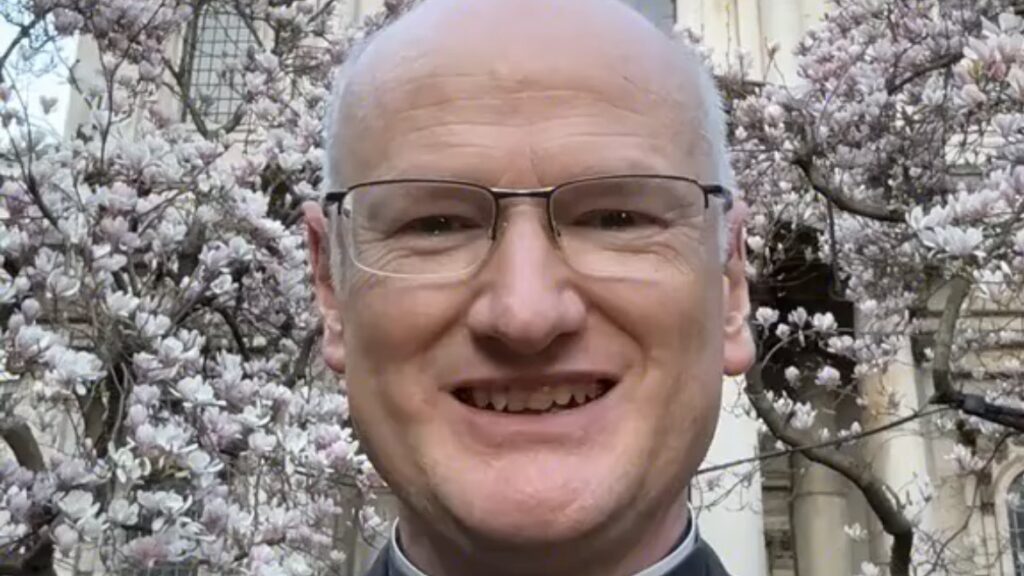
Peter started uploading magnolia updates last year, which have reached over one hundred thousand views on TikTok.
SHARE:
Canon Peter Babington, Priest-in-Charge at St Mary le Strand in Westminster, has turned a daily walk outside his church into a social media sensation.
He stands by the historic 18th-century building and films the magnolia blossoms as students stream past, carving out a quiet moment in one of London’s busiest corners.
His message is simple: “Stop doomscrolling and start bloomscrolling.”
Babington is urging people to actively curate their feeds with something lighter, instead of endlessly absorbing bad news.
“With algorithms, outrage is what drives attention,” he told City News. “These videos are about trying to be the antidote to that.”
He said he noticed the clips did best when he was outside the church, so he leaned into it.
“I learnt the things that were getting the most engagement was when I was outside the church, so I thought a bit like Springwatch, I’m going to do a magnolia watch.”
“It’s something nice and positive, especially with Spring on its way.”
St Mary le Strand was described by author Simon Jenkins as the ‘finest eighteenth century church in London’ (Emily Smith)
This “bloomscrolling” push lands as more people worry social platforms are wired to reward negativity.
Professor Andy Phippen, a digital rights expert at Bournemouth University, says doomscrolling is when people keep scrolling through content “with no real end point to it”.
And he says the system nudges you towards the worst of it.
“Algorithms prioritise content that gets the most engagement – and the content that gets the most engagement is generally negative,” he said.
“You end up down these rabbit holes of pretty grim stuff.”
“There are tools available to change the content you see online,” he told City News. “Once you’re aware of those tools you can engage with your feed and take responsibility for it.”
It comes as ministers consider tougher limits on social media for young people.
Tech Secretary Liz Kendall has floated the idea of “doomscrolling breaks” to interrupt the endless flow of content. The government is also consulting on whether to bring in an Australian-style ban for under-16s.
Phippen warns that simply slamming the door on platforms could backfire.
“If you just say young people shouldn’t be on these sites, you shut down the conversation,” he says, arguing education and awareness about the positives of social media matter too.
For Canon Babington, the pitch is simpler.
“In a challenging world, where people are busy and stressed, to at least have one thing that makes them smile, and brings them a bit of joy, it’s about trying to do something as simple as that.”
Submitted Article
Headline
Short Headline
Standfirst
Published Article
HeadlineDoing God’s work! Priest fights doomscroll despair…one floral video at a time
Short HeadlineMeet the London Priest leading a blooming revolution
StandfirstAs Brits admit they’re hooked on hours of negative scrolling, one London priest is leading a ‘bloom scrolling’ online revolution
Canon Peter Babington, Priest-in-Charge at St Mary le Strand in Westminster, has turned a daily walk outside his church into a social media sensation.
He stands by the historic 18th-century building and films the magnolia blossoms as students stream past, carving out a quiet moment in one of London’s busiest corners.
His message is simple: “Stop doomscrolling and start bloomscrolling.”
Babington is urging people to actively curate their feeds with something lighter, instead of endlessly absorbing bad news.
“With algorithms, outrage is what drives attention,” he told City News. “These videos are about trying to be the antidote to that.”
He said he noticed the clips did best when he was outside the church, so he leaned into it.
“I learnt the things that were getting the most engagement was when I was outside the church, so I thought a bit like Springwatch, I’m going to do a magnolia watch.”
“It’s something nice and positive, especially with Spring on its way.”
St Mary le Strand was described by author Simon Jenkins as the ‘finest eighteenth century church in London’ (Emily Smith)
This “bloomscrolling” push lands as more people worry social platforms are wired to reward negativity.
Professor Andy Phippen, a digital rights expert at Bournemouth University, says doomscrolling is when people keep scrolling through content “with no real end point to it”.
And he says the system nudges you towards the worst of it.
“Algorithms prioritise content that gets the most engagement – and the content that gets the most engagement is generally negative,” he said.
“You end up down these rabbit holes of pretty grim stuff.”
“There are tools available to change the content you see online,” he told City News. “Once you’re aware of those tools you can engage with your feed and take responsibility for it.”
It comes as ministers consider tougher limits on social media for young people.
Tech Secretary Liz Kendall has floated the idea of “doomscrolling breaks” to interrupt the endless flow of content. The government is also consulting on whether to bring in an Australian-style ban for under-16s.
Phippen warns that simply slamming the door on platforms could backfire.
“If you just say young people shouldn’t be on these sites, you shut down the conversation,” he says, arguing education and awareness about the positives of social media matter too.
For Canon Babington, the pitch is simpler.
“In a challenging world, where people are busy and stressed, to at least have one thing that makes them smile, and brings them a bit of joy, it’s about trying to do something as simple as that.”
A 2024 Freedom of Information request showed Bromley Council had £4.5 million invested in arms companies that year with £1.5 million reportedly linked to Israel.
Undercover officers raided three linked shops in Barking town centre, revealing how illicit tobacco is being hidden in walls, ceilings and nearby locations to evade detection.
More than 330,000 people across the UK sought support from the Stop It Now helpline in 2025 over concerns about their own or someone else’s online sexual behaviour towards children, according to new charity data. The anonymous service says contacts by phone, email and webchat rose significantly over the year.