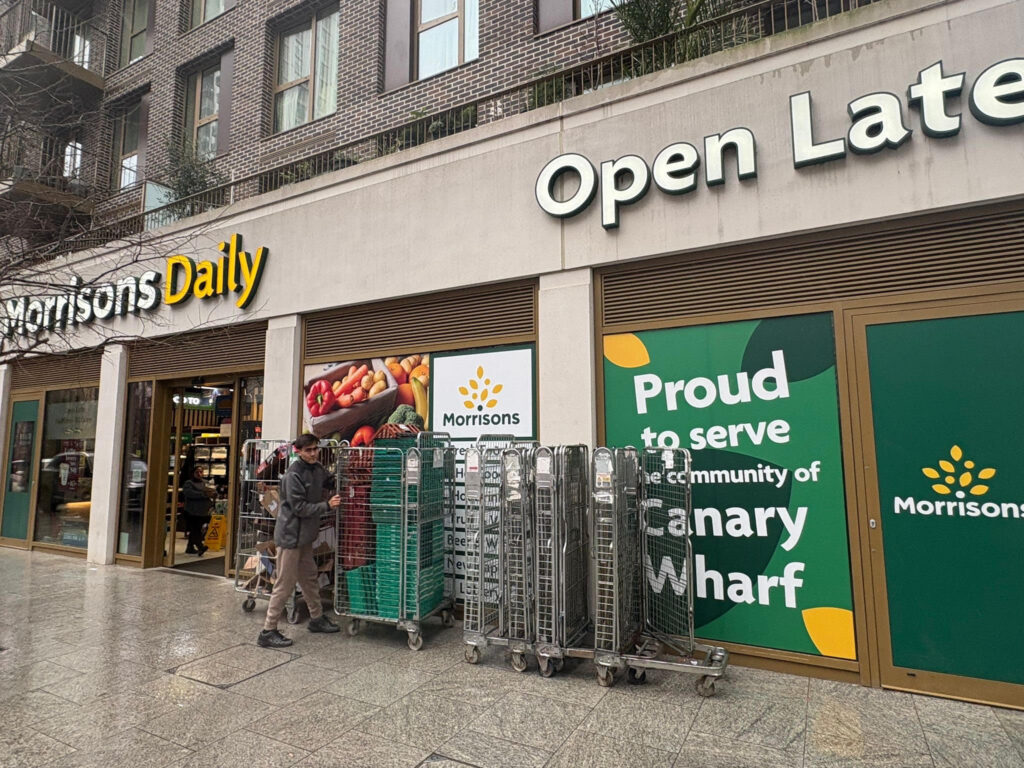
Outside view of Morrisons Daily at 70 Harbord Square in Canary Wharf.
SHARE:
Morrisons Daily in Canary Wharf has received zero stars for hygiene, apparently exposing the risks of fast, grab-and-go food. As London rushes for convenience, small local eateries are proving that clean, high-quality meals don’t have to slow people down. Can speed and hygiene coexist?
It’s lunchtime in Canary Wharf and the area is bustling: hundreds of employees are moving through the busy streets of the district. Miles, a credit analyst who works in one of the big finance firms here, has just exited (with a bakery item in hand) the Morrisons Daily that has been under the spotlight in the last few days.
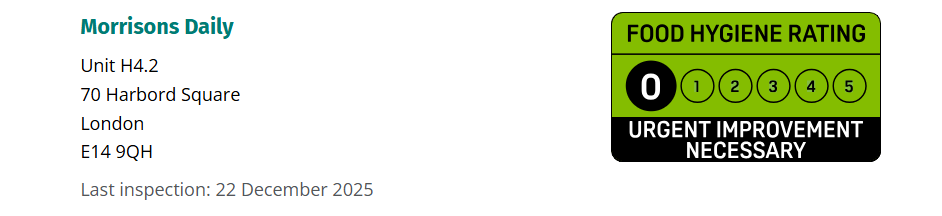
The supermarket has set a negative record by receiving a zero-star rating (“urgent improvement necessary”) on the food hygiene scale.
“I actually could not imagine it before the news of the failed hygiene test broke. I am now more aware of it but, at the same time, what should I do? During my lunch break I am always in a rush, and buying a quick meal here is genuinely a lifesaver.”
Miles tells us when we ask if he is concerned about the food standard and if he’s considering a change in his usual lunch routine.
Inspectors identified serious food hygiene failures in all aspects of food hygiene, including food handling, premises cleanliness, and food safety management.
View of Morrisons Daily at 70 Harbord Square in Canary Wharf.
The Canary Wharf Morrisons Daily is a franchise, meaning it is technically a small business as well, not run directly by the big company. The case, however, has raised concerns that the supermarket giant has failed to train franchise operators properly and has not provided the correct operational guidelines.
When contacted by City News, a spokesperson for Morrisons said:
“The food safety within our franchise-operated stores is really important to us. We have taken immediate action to address and resolve all issues raised in this store, and the store has since passed two additional inspections.”
Although the zero rating is still shown on the official Food Hygiene Ratings site, in the window of 70 Harbord Square, where the supermarket is located, the classic food hygiene green sticker is not immediately obvious.
Food Hygiene Rating of Morrisons Daily at 70 Harbord Square.
In a big, frenetic city like London, do people, racing against time and paying a premium for convenience, care about the higher standards of places where they buy their food? How can smaller, local food businesses with higher hygiene standards (but also usually higher prices) compete with big chains whose quick grab-and-go snacks, fit well with London’s fast pace.
Sylvia Anderson, food hygiene expert and founder of Sylvia A Consultancy, says high standards and fast service can absolutely go hand in hand:
“In a city like London, small independent businesses succeed when food safety is built into everyday working practices. Many customers underestimate the importance of food hygiene ratings, especially when buying food in a hurry. People often assume that a well-known name must be safe. Unfortunately, that is not always true.”
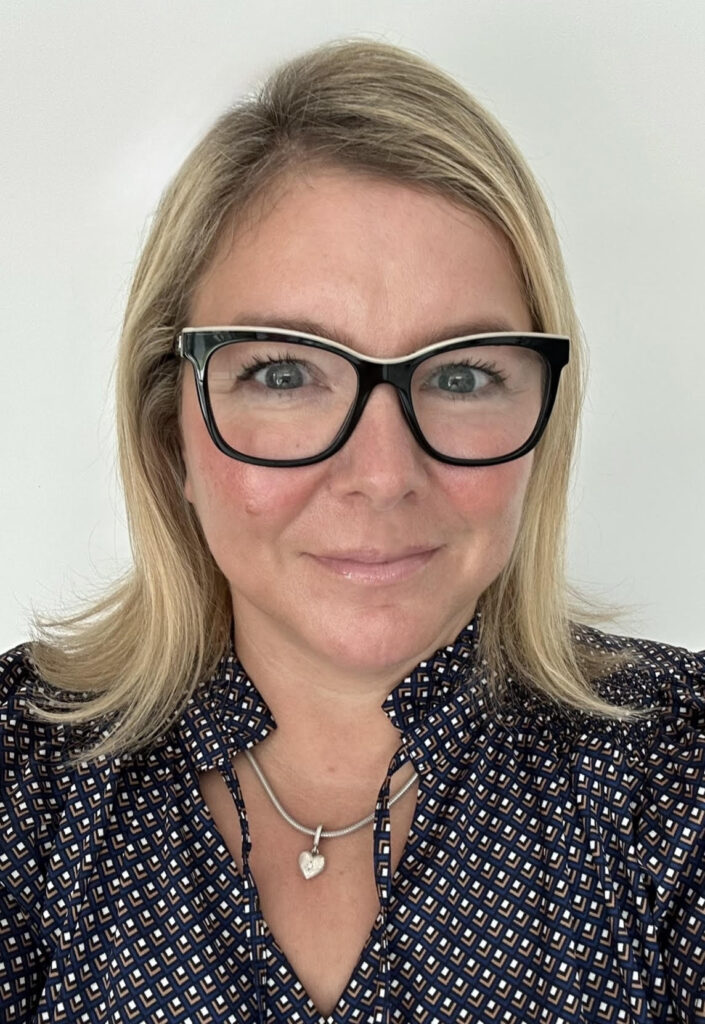
Sylvia Anderson. food hygiene expert and founder of Sylvia A Consultancy.
Sylvia explains that cases like the Morrisons in Canary Wharf show that size and reputation do not guarantee good standards. Smaller independent businesses often perform well because owners are closely involved in daily operations.
Sylvia believes it’s a misconception that higher standards creates extra costs and a slower service – good hygiene reduces waste, prevents complaints, protects reputation, and helps businesses remain sustainable, she says.
So can small businesses use high hygiene ratings as a competitive advantage? The answer, from Sylvia’s perspective, is absolutely yes. Displaying ratings clearly, promoting them online, and making food safety part of their brand builds trust.
Sylvia’s observations find a real-world echo in the experience of small business owners, such as Rebecca Rosmini.
Rebecca is the founder and CEO of Signorelli, a family-run, Italo-English bakery which has a branch close to the zero-star rated Morrisons Daily. For Rebecca, educating customers about hygiene is as important as providing quick, convenient food.
In her view, many Londoners overlook hygiene quality when making lunch choices, but small businesses can compete with larger chains by advertising their rating on social media.
Maintaining high hygiene standards while still offering the convenience customers expect is entirely possible:
“It’s part of the business culture. You have to make sure that hygiene and cleaning become a core part of what you do. During the hiring process, we always ask staff questions to ensure they understand all compliance requirements.”
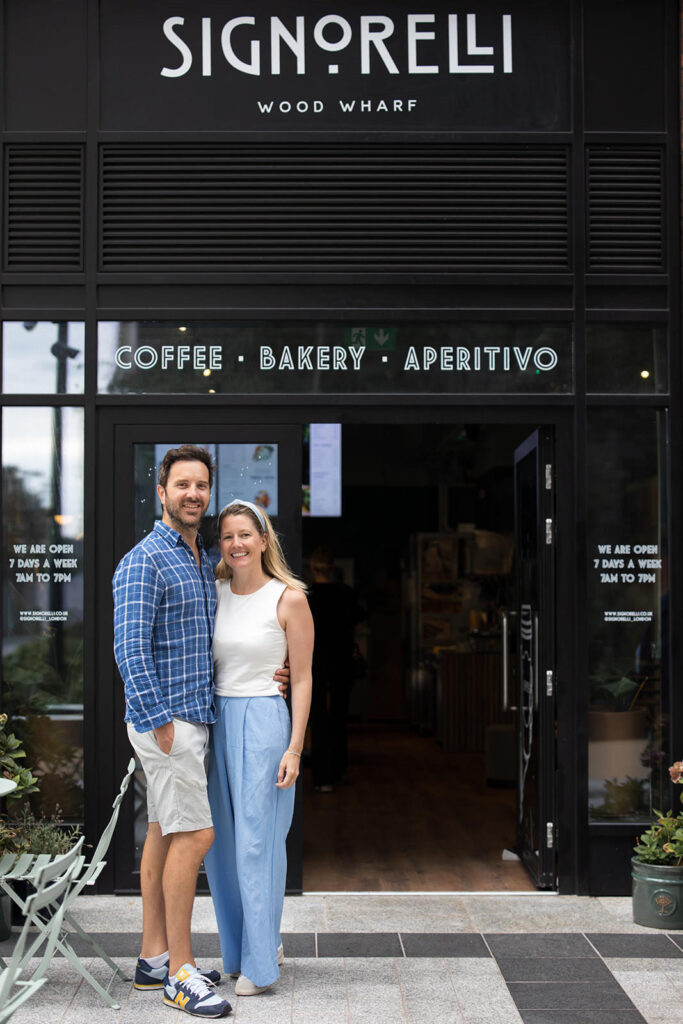
Rebecca Rosmini, CEO and founder of Signorelli, with her husband Alberto.
When asked about the Morrisons Daily case, Rebecca doesn’t shy away:
“For us, small independent shops, inspections usually occur during peak hours on Saturday, when the manager is on a break and everybody is in a rush, but big businesses have no excuses.”
The most common causes of hygiene failures are usually straightforward; poor training, weak documentation, and a lack of management oversight.
London is considered to be the worst region in the UK for food hygiene, and a series of recent incidents would seem to confirm this. A recent BBC investigation exposed numerous food establishments for lying about their ratings.
Sylvia says London often ranks lower nationally due to high business turnover, staff shortages, language barriers, high operating costs, and the number of new or temporary operators. In her view, improvements will come from better early support for new businesses and stronger management training.
“Ultimately, high food hygiene standards are not a barrier to success in London. They are fundamental to it.”
Submitted Article
Headline
Short Headline
Standfirst
Published Article
HeadlineAs Morrisons Store Fails Hygiene Test, How Much Do Londoners Care?
Short HeadlineCanary Wharf Morrisons Fails Food Hygiene Test
StandfirstCanary Wharf Morrisons low rating shows smaller food businesses can shine with better hygiene
Morrisons Daily in Canary Wharf has received zero stars for hygiene, apparently exposing the risks of fast, grab-and-go food. As London rushes for convenience, small local eateries are proving that clean, high-quality meals don’t have to slow people down. Can speed and hygiene coexist?
It’s lunchtime in Canary Wharf and the area is bustling: hundreds of employees are moving through the busy streets of the district. Miles, a credit analyst who works in one of the big finance firms here, has just exited (with a bakery item in hand) the Morrisons Daily that has been under the spotlight in the last few days.
The supermarket has set a negative record by receiving a zero-star rating (“urgent improvement necessary”) on the food hygiene scale.
“I actually could not imagine it before the news of the failed hygiene test broke. I am now more aware of it but, at the same time, what should I do? During my lunch break I am always in a rush, and buying a quick meal here is genuinely a lifesaver.”
Miles tells us when we ask if he is concerned about the food standard and if he’s considering a change in his usual lunch routine.
Inspectors identified serious food hygiene failures in all aspects of food hygiene, including food handling, premises cleanliness, and food safety management.
View of Morrisons Daily at 70 Harbord Square in Canary Wharf.
The Canary Wharf Morrisons Daily is a franchise, meaning it is technically a small business as well, not run directly by the big company. The case, however, has raised concerns that the supermarket giant has failed to train franchise operators properly and has not provided the correct operational guidelines.
When contacted by City News, a spokesperson for Morrisons said:
“The food safety within our franchise-operated stores is really important to us. We have taken immediate action to address and resolve all issues raised in this store, and the store has since passed two additional inspections.”
Although the zero rating is still shown on the official Food Hygiene Ratings site, in the window of 70 Harbord Square, where the supermarket is located, the classic food hygiene green sticker is not immediately obvious.
Food Hygiene Rating of Morrisons Daily at 70 Harbord Square.
In a big, frenetic city like London, do people, racing against time and paying a premium for convenience, care about the higher standards of places where they buy their food? How can smaller, local food businesses with higher hygiene standards (but also usually higher prices) compete with big chains whose quick grab-and-go snacks, fit well with London’s fast pace.
Sylvia Anderson, food hygiene expert and founder of Sylvia A Consultancy, says high standards and fast service can absolutely go hand in hand:
“In a city like London, small independent businesses succeed when food safety is built into everyday working practices. Many customers underestimate the importance of food hygiene ratings, especially when buying food in a hurry. People often assume that a well-known name must be safe. Unfortunately, that is not always true.”
Sylvia Anderson. food hygiene expert and founder of Sylvia A Consultancy.
Sylvia explains that cases like the Morrisons in Canary Wharf show that size and reputation do not guarantee good standards. Smaller independent businesses often perform well because owners are closely involved in daily operations.
Sylvia believes it’s a misconception that higher standards creates extra costs and a slower service – good hygiene reduces waste, prevents complaints, protects reputation, and helps businesses remain sustainable, she says.
So can small businesses use high hygiene ratings as a competitive advantage? The answer, from Sylvia’s perspective, is absolutely yes. Displaying ratings clearly, promoting them online, and making food safety part of their brand builds trust.
Sylvia’s observations find a real-world echo in the experience of small business owners, such as Rebecca Rosmini.
Rebecca is the founder and CEO of Signorelli, a family-run, Italo-English bakery which has a branch close to the zero-star rated Morrisons Daily. For Rebecca, educating customers about hygiene is as important as providing quick, convenient food.
In her view, many Londoners overlook hygiene quality when making lunch choices, but small businesses can compete with larger chains by advertising their rating on social media.
Maintaining high hygiene standards while still offering the convenience customers expect is entirely possible:
“It’s part of the business culture. You have to make sure that hygiene and cleaning become a core part of what you do. During the hiring process, we always ask staff questions to ensure they understand all compliance requirements.”
Rebecca Rosmini, CEO and founder of Signorelli, with her husband Alberto.
When asked about the Morrisons Daily case, Rebecca doesn’t shy away:
“For us, small independent shops, inspections usually occur during peak hours on Saturday, when the manager is on a break and everybody is in a rush, but big businesses have no excuses.”
The most common causes of hygiene failures are usually straightforward; poor training, weak documentation, and a lack of management oversight.
London is considered to be the worst region in the UK for food hygiene, and a series of recent incidents would seem to confirm this. A recent BBC investigation exposed numerous food establishments for lying about their ratings.
Sylvia says London often ranks lower nationally due to high business turnover, staff shortages, language barriers, high operating costs, and the number of new or temporary operators. In her view, improvements will come from better early support for new businesses and stronger management training.
“Ultimately, high food hygiene standards are not a barrier to success in London. They are fundamental to it.”
A 2024 Freedom of Information request showed Bromley Council had £4.5 million invested in arms companies that year with £1.5 million reportedly linked to Israel.
Undercover officers raided three linked shops in Barking town centre, revealing how illicit tobacco is being hidden in walls, ceilings and nearby locations to evade detection.
More than 330,000 people across the UK sought support from the Stop It Now helpline in 2025 over concerns about their own or someone else’s online sexual behaviour towards children, according to new charity data. The anonymous service says contacts by phone, email and webchat rose significantly over the year.