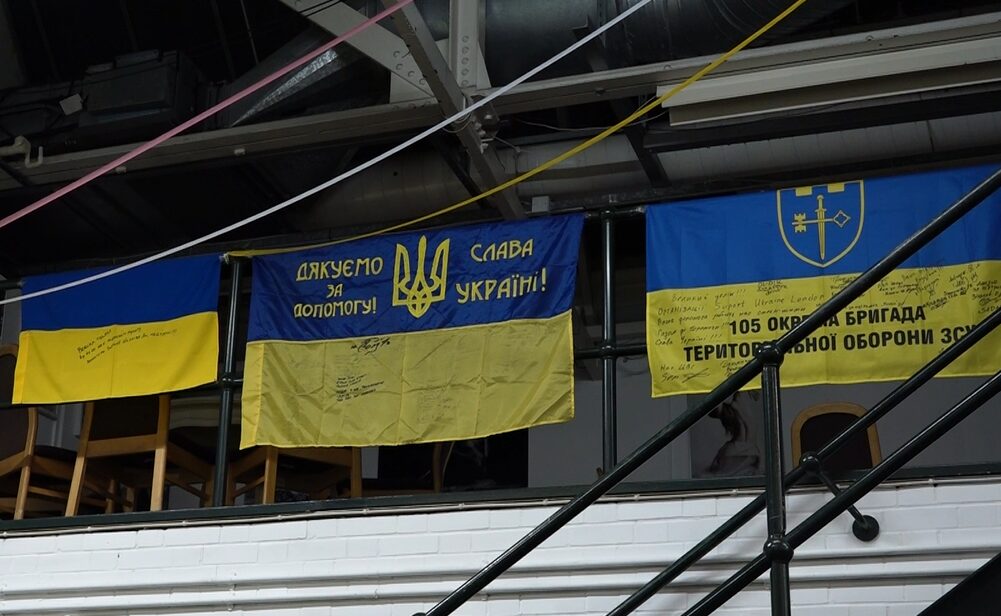
As Ukraine marks four years since Russia’s full-scale invasion, London’s Ukrainians and volunteers describe grief, pride, and the relentless effort to get life-saving aid to the front line.
This week marks four years since Russia invaded Ukraine.
Back in February 2022, Vladimir Putin announced what he called a “special military operation” and missiles hit as troops pushed towards Kyiv. Nearly 2,000 miles away, London hit the streets in protest.
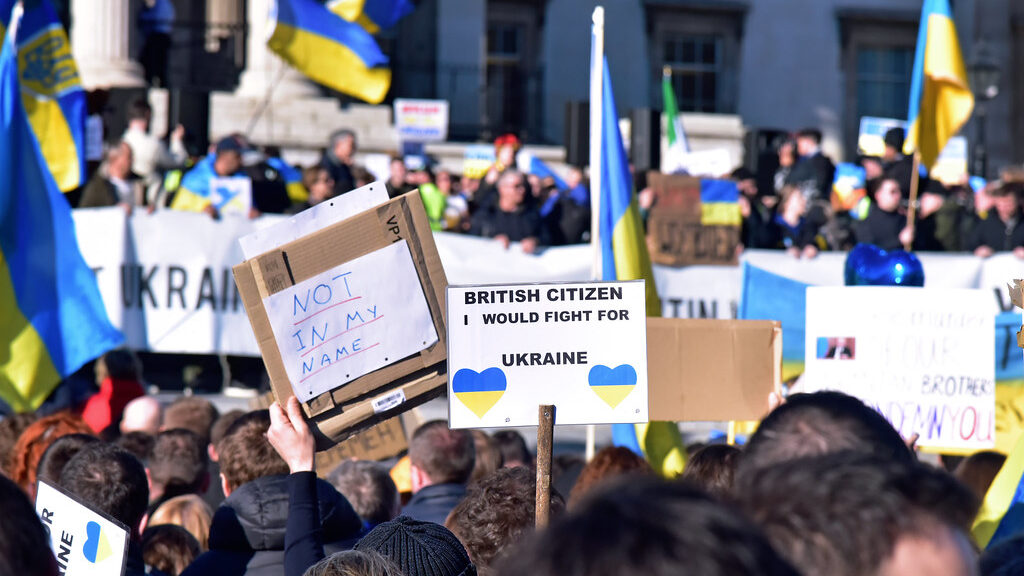
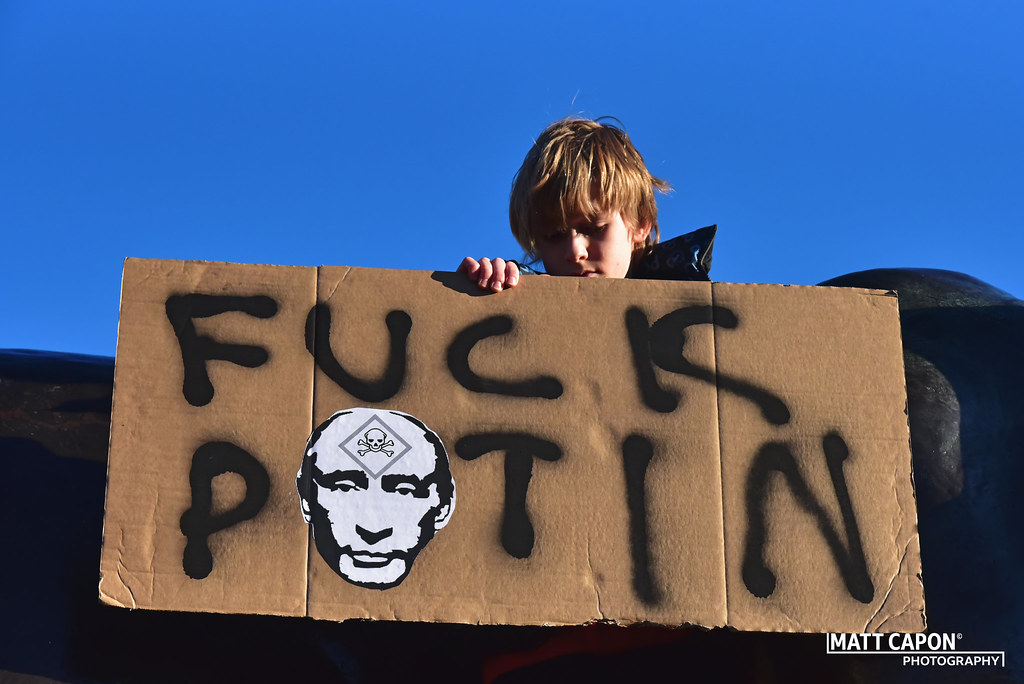
Central London turned blue and yellow. Ukrainians and Londoners stood shoulder to shoulder with placards of support. Some were simple. Some were not safe for a family website.
Protests in London, February 2022 (Source: Matt Capon Photography)
The protests didn’t stop after the first wave of attacks. In London and across the UK, people have kept turning up, carrying grief and anger, with a stubborn kind of pride underneath it all.
Anastasiia Svitko, a Ukrainian who has lived in London since the war began, says that pride sits alongside pain. Nearly all her family are still in Ukraine. Her father works at a power station hit by outages and attacks on energy infrastructure, while friends and relatives are on the front line.
“We are still surviving, people are still fighting, but they are still motivated… I’m very proud,” she said.
That resilience comes with gratitude too. Natalia Ravlyuk, a lead volunteer with the aid charity Support Ukraine, told City News the backing from the UK government and the public has been consistent throughout the invasion.
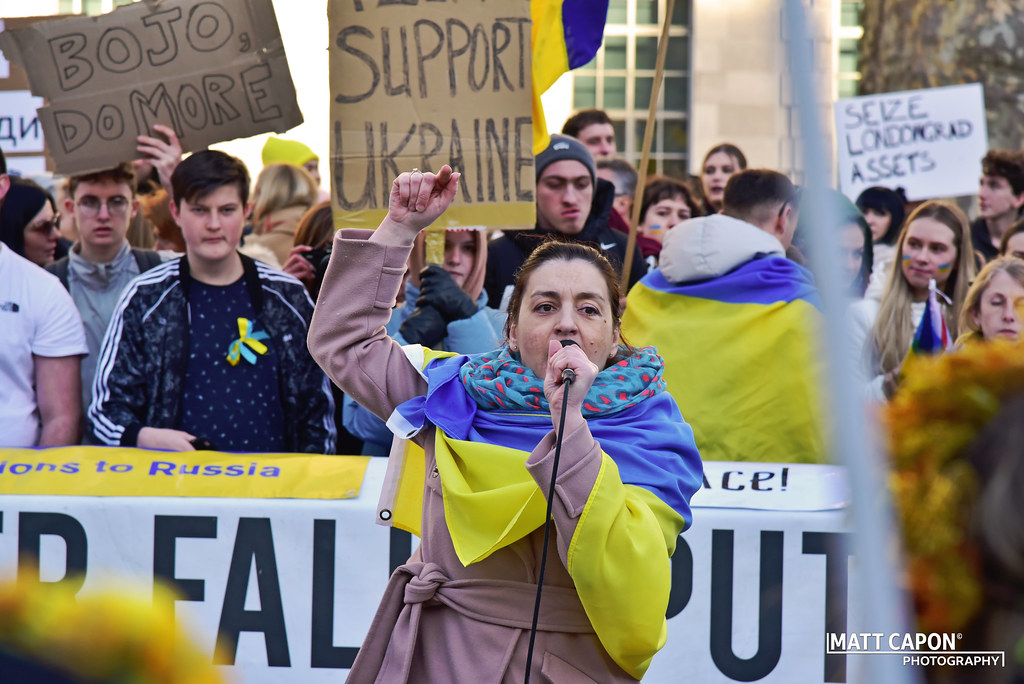
Natalia Ravlyuk at protest in London, February 2022 (Source: Matt Capon Photography)
“You were one of the first countries to give us a helping hand. You stood with us for democracy, and you’ve kept that support through this horrible war.”
Support Ukraine has been backing the Ukrainian cause from London since 2014. More recently, it launched the Bring Light and Warmth campaign with the British Ukrainian Aid charity, raising money to buy and send generators.
The United Nations has reported freezing temperatures across Ukraine since the start of the year, with January described as the coldest in 16 years. This weather has continued into February, with temperatures falling to minus 20C.
But it is not just the cold. Many Ukrainians are also dealing with power cuts after attacks on energy infrastructure. Strikes on power plants and substations have left homes without electricity, heat and water.
The Bring Light and Warmth campaign has raised nearly £18,000 to buy and transport generators to Ukraine, helping keep homes, hospitals and shelters running in hard-hit areas, including Kyiv and Odesa.
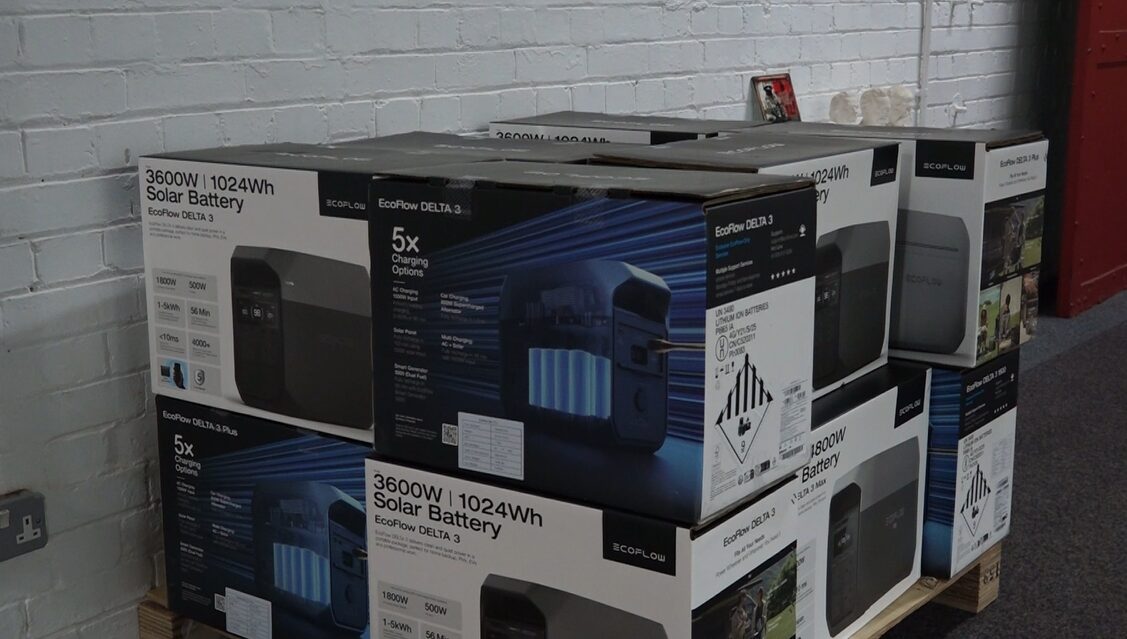
In West London, the Ukraine Support Hub in Fulham is part community space, part dispatch centre. Inside, volunteers pack medical supplies, army uniforms, generators and batteries ready to be driven to Ukraine by British volunteers.
Generators in Fulham to be sent to Ukraine (Source: Maeve Gallagher)
Natalia Ravlyuk said the support for their work has been steady, and that it is already making a difference.
“Within this short period of time we’ve made a huge difference to a lot of ordinary people in Ukraine. If we can save one life, it is still a difference, and we would love to carry on this way.”
On Tuesday, four years to the day since Putin ordered the invasion, Prime Minister Sir Keir Starmer announced a new package of military, humanitarian and reconstruction support for Ukraine. He said:
“On this grim anniversary, our message to the Ukrainian people is simple: Britain is with you, stronger than ever… We will stand by their side, until a just and lasting peace – and beyond. Slava Ukraini.”
Ukraine Hub in Fulham (Source: Maeve Gallagher)
Alex Sobel, chair of the All-Party Parliamentary Group for Ukraine, told City News there is still broad backing in Westminster for supporting Ukraine.
“I am proud of the APPG on Ukraine, who represent resolute consensus across the House on support for our Ukrainian foreign policy,” he said. Sobel added he recently hosted a debate on the non-recognition of Russian-occupied territories in Ukraine, and said the turnout showed Parliament’s “steadfast defence of Ukraine”.
Sir Keir Starmer’s government has pledged £20 million in new funding for emergency energy support, £5.7 million in humanitarian assistance to frontline communities and £5 million to support justice and accountability work in Ukraine. It is the latest signal of continued UK support. But in London, the effort is not just measured in statements and funding lines. It is packed into boxes, loaded into vans, and driven east.
Four years on, the grief has not lifted. But neither has the resolve. In London, support for Ukraine has become something practical, persistent, and hard to shake.
Submitted Article
Headline
Short Headline
Standfirst
Published Article
HeadlineLondon still stands with Ukraine, four years on
Short HeadlineLondon still stands with Ukraine
StandfirstAs Ukraine marks four years since Russia’s full-scale invasion, London’s Ukrainians and volunteers describe grief, pride, and the relentless effort to get life-saving aid to the front line.
This week marks four years since Russia invaded Ukraine.
Back in February 2022, Vladimir Putin announced what he called a “special military operation” and missiles hit as troops pushed towards Kyiv. Nearly 2,000 miles away, London hit the streets in protest.
Central London turned blue and yellow. Ukrainians and Londoners stood shoulder to shoulder with placards of support. Some were simple. Some were not safe for a family website.
Protests in London, February 2022 (Source: Matt Capon Photography)
The protests didn’t stop after the first wave of attacks. In London and across the UK, people have kept turning up, carrying grief and anger, with a stubborn kind of pride underneath it all.
Anastasiia Svitko, a Ukrainian who has lived in London since the war began, says that pride sits alongside pain. Nearly all her family are still in Ukraine. Her father works at a power station hit by outages and attacks on energy infrastructure, while friends and relatives are on the front line.
“We are still surviving, people are still fighting, but they are still motivated… I’m very proud,” she said.
That resilience comes with gratitude too. Natalia Ravlyuk, a lead volunteer with the aid charity Support Ukraine, told City News the backing from the UK government and the public has been consistent throughout the invasion.
Natalia Ravlyuk at protest in London, February 2022 (Source: Matt Capon Photography)
“You were one of the first countries to give us a helping hand. You stood with us for democracy, and you’ve kept that support through this horrible war.”
Support Ukraine has been backing the Ukrainian cause from London since 2014. More recently, it launched the Bring Light and Warmth campaign with the British Ukrainian Aid charity, raising money to buy and send generators.
The United Nations has reported freezing temperatures across Ukraine since the start of the year, with January described as the coldest in 16 years. This weather has continued into February, with temperatures falling to minus 20C.
But it is not just the cold. Many Ukrainians are also dealing with power cuts after attacks on energy infrastructure. Strikes on power plants and substations have left homes without electricity, heat and water.
The Bring Light and Warmth campaign has raised nearly £18,000 to buy and transport generators to Ukraine, helping keep homes, hospitals and shelters running in hard-hit areas, including Kyiv and Odesa.
In West London, the Ukraine Support Hub in Fulham is part community space, part dispatch centre. Inside, volunteers pack medical supplies, army uniforms, generators and batteries ready to be driven to Ukraine by British volunteers.
Generators in Fulham to be sent to Ukraine (Source: Maeve Gallagher)
Natalia Ravlyuk said the support for their work has been steady, and that it is already making a difference.
“Within this short period of time we’ve made a huge difference to a lot of ordinary people in Ukraine. If we can save one life, it is still a difference, and we would love to carry on this way.”
On Tuesday, four years to the day since Putin ordered the invasion, Prime Minister Sir Keir Starmer announced a new package of military, humanitarian and reconstruction support for Ukraine. He said:
“On this grim anniversary, our message to the Ukrainian people is simple: Britain is with you, stronger than ever… We will stand by their side, until a just and lasting peace – and beyond. Slava Ukraini.”
Ukraine Hub in Fulham (Source: Maeve Gallagher)
Alex Sobel, chair of the All-Party Parliamentary Group for Ukraine, told City News there is still broad backing in Westminster for supporting Ukraine.
“I am proud of the APPG on Ukraine, who represent resolute consensus across the House on support for our Ukrainian foreign policy,” he said. Sobel added he recently hosted a debate on the non-recognition of Russian-occupied territories in Ukraine, and said the turnout showed Parliament’s “steadfast defence of Ukraine”.
Sir Keir Starmer’s government has pledged £20 million in new funding for emergency energy support, £5.7 million in humanitarian assistance to frontline communities and £5 million to support justice and accountability work in Ukraine. It is the latest signal of continued UK support. But in London, the effort is not just measured in statements and funding lines. It is packed into boxes, loaded into vans, and driven east.
Four years on, the grief has not lifted. But neither has the resolve. In London, support for Ukraine has become something practical, persistent, and hard to shake.
A 2024 Freedom of Information request showed Bromley Council had £4.5 million invested in arms companies that year with £1.5 million reportedly linked to Israel.
Undercover officers raided three linked shops in Barking town centre, revealing how illicit tobacco is being hidden in walls, ceilings and nearby locations to evade detection.
More than 330,000 people across the UK sought support from the Stop It Now helpline in 2025 over concerns about their own or someone else’s online sexual behaviour towards children, according to new charity data. The anonymous service says contacts by phone, email and webchat rose significantly over the year.