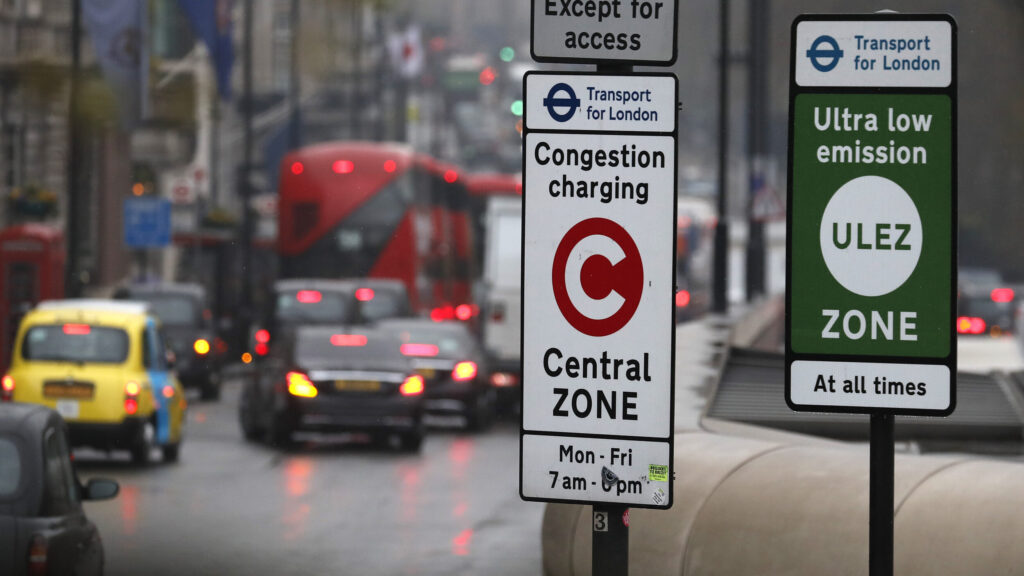
Environmental campaigners are calling to extend congestion charges into the evening to improve the health of Londoners.
Such a change would mean further costs for motorists, who currently pay up to £4,500 in congestion charges.
Figures released last week by the charity Clean Cities suggested there were 56% more cars in central London between 6-7pm than the morning rush hour.
Supporters of the scheme say it has reduced traffic, helped to encourage public transport use and cut vehicle emissions in central areas.
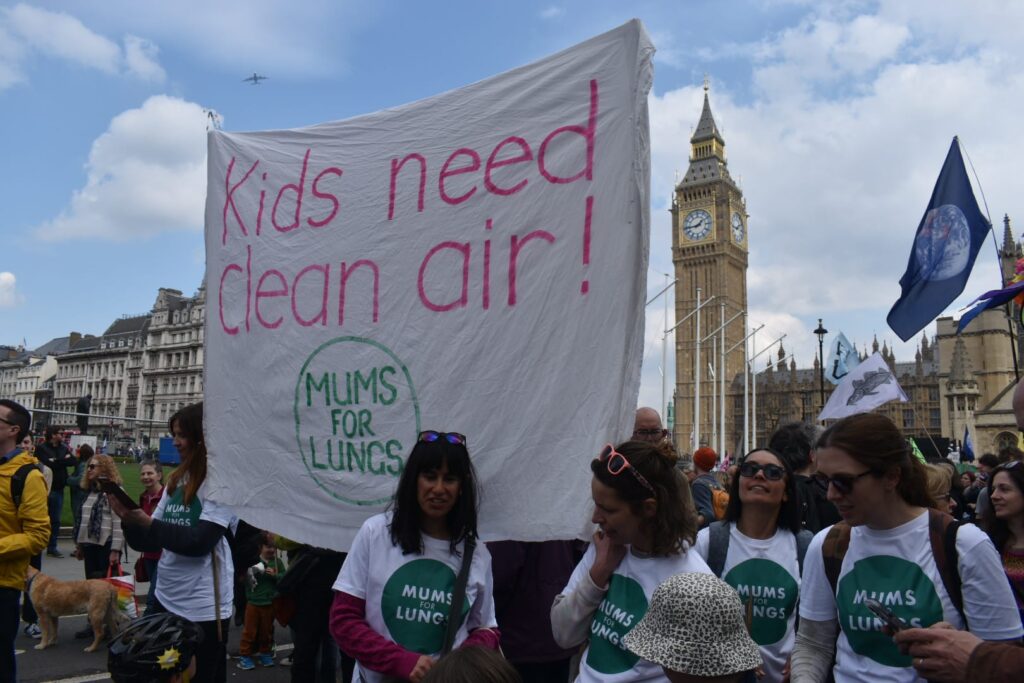
Activist group, Mums for Lungs says expanding the scheme would bring further benefits, and improve the quality of London’s air, which is linked to thousands of premature deaths each year.
“In London, road transport is the biggest contributor to poisonous particulates that are in the air,” says spokesperson, Ruth Fitzharris.
“And of course we breathe that in and the particles go across the lungs and into the bloodstream.”
“There’s around 60 thousand studies that show the impact of air pollution on every part of the body and links with 700 diseases.”
“Asthma, stunted lungs, dementia, and cancers” can be among the range of illnesses contracted from air pollution, she adds.
Mums for Lungs campaigning for cleaner air for future generations
Financially, the scheme remains a significant source of income for Transport for London (TfL). Estimates reported by the Evening Standard suggest TfL could generate around £320 million annually from congestion charges by 2026.
TfL says funds raised through the charge are reinvested into London’s transport system, including public transport improvements, cycling infrastructure, and road maintenance.
Impact on Commuters and Daily Expenses
Uber driver, Jalal Fartini, points out that drivers already face multiple costs, including “fuel, insurance, parking, and other vehicle-related charges,” making additional fees difficult to absorb.
Despite these concerns, pressure for stricter measures is growing as London seeks to meet climate targets and reduce pollution levels.
“There are huge economic costs to air pollution,” says Ruth. “The cost of the NHS runs into billions for treating diseases that are linked to air pollution.
She adds: “It’s important to remember that the people with the least money don’t have a car at all. The cost of running a car is really significant so how much extra is it to have congestion charges? Are those really the people struggling?”
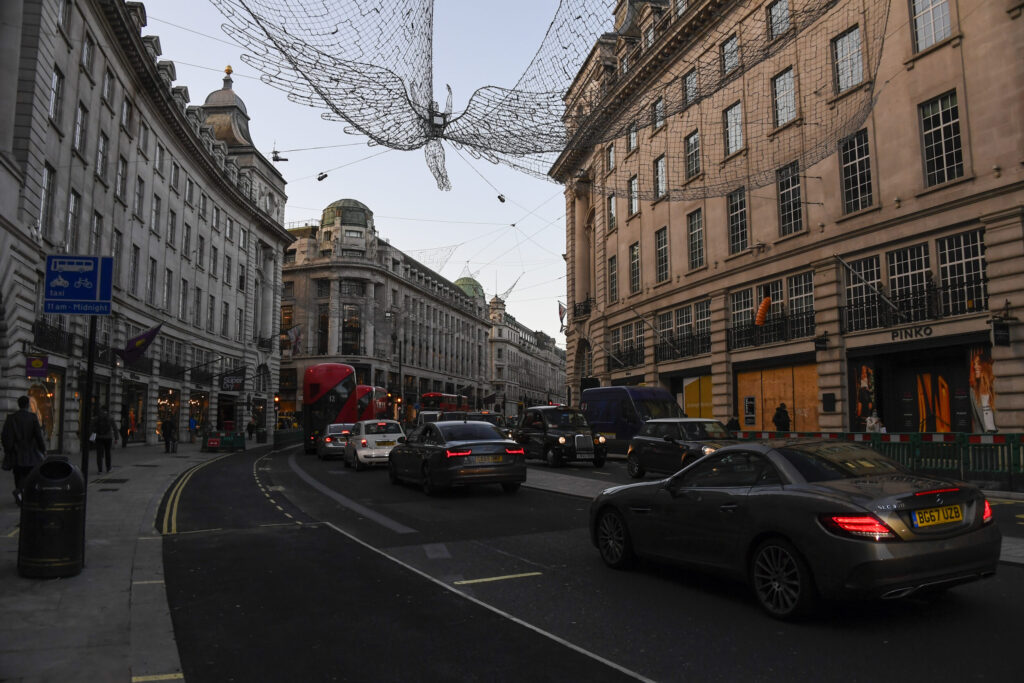
(AP Photo/Alberto Pezzali)
City authorities have not announced any immediate plans to expand the congestion charge zone, but the issue is likely to remain a key topic of debate as policymakers weigh environmental priorities against the financial impact on drivers.
This is a developing story, we will bring you more details as they come. Please refresh the page to update.
HeadlineCalls to extend congestion charges to tackle evening traffic
Short HeadlineEnvironmentalists call to extend Congestion Charges
StandfirstCongestion charges cost £18 a day for vehicles entering central London. For someone driving into the zone five days a week, the cost quickly adds up.
Environmental campaigners are calling to extend congestion charges into the evening to improve the health of Londoners.
Such a change would mean further costs for motorists, who currently pay up to £4,500 in congestion charges.
Figures released last week by the charity Clean Cities suggested there were 56% more cars in central London between 6-7pm than the morning rush hour.
Supporters of the scheme say it has reduced traffic, helped to encourage public transport use and cut vehicle emissions in central areas.
Activist group, Mums for Lungs says expanding the scheme would bring further benefits, and improve the quality of London’s air, which is linked to thousands of premature deaths each year.
“In London, road transport is the biggest contributor to poisonous particulates that are in the air,” says spokesperson, Ruth Fitzharris.
“And of course we breathe that in and the particles go across the lungs and into the bloodstream.”
“There’s around 60 thousand studies that show the impact of air pollution on every part of the body and links with 700 diseases.”
“Asthma, stunted lungs, dementia, and cancers” can be among the range of illnesses contracted from air pollution, she adds.
Mums for Lungs campaigning for cleaner air for future generations
Financially, the scheme remains a significant source of income for Transport for London (TfL). Estimates reported by the Evening Standard suggest TfL could generate around £320 million annually from congestion charges by 2026.
TfL says funds raised through the charge are reinvested into London’s transport system, including public transport improvements, cycling infrastructure, and road maintenance.
Impact on Commuters and Daily Expenses
Uber driver, Jalal Fartini, points out that drivers already face multiple costs, including “fuel, insurance, parking, and other vehicle-related charges,” making additional fees difficult to absorb.
Despite these concerns, pressure for stricter measures is growing as London seeks to meet climate targets and reduce pollution levels.
“There are huge economic costs to air pollution,” says Ruth. “The cost of the NHS runs into billions for treating diseases that are linked to air pollution.
She adds: “It’s important to remember that the people with the least money don’t have a car at all. The cost of running a car is really significant so how much extra is it to have congestion charges? Are those really the people struggling?”
(AP Photo/Alberto Pezzali)
City authorities have not announced any immediate plans to expand the congestion charge zone, but the issue is likely to remain a key topic of debate as policymakers weigh environmental priorities against the financial impact on drivers.
As the weather turns, City News has spoken to a long-term rough sleeper to see how those on the street feel about Andy Burnham’s plan to end homelessness and the upcoming winter.