Sir Sadiq Khan says plans to ban traffic from part of Oxford Street have been approved.
One of the world’s busiest shopping streets, Oxford Street draws around half a million visitors a day, more than 200 million a year, and packs roughly 300 shops into its 1.2-mile stretch through London’s West End.
Around 15,000 taxi passengers are picked up, dropped off, or travel along Oxford Street every day.
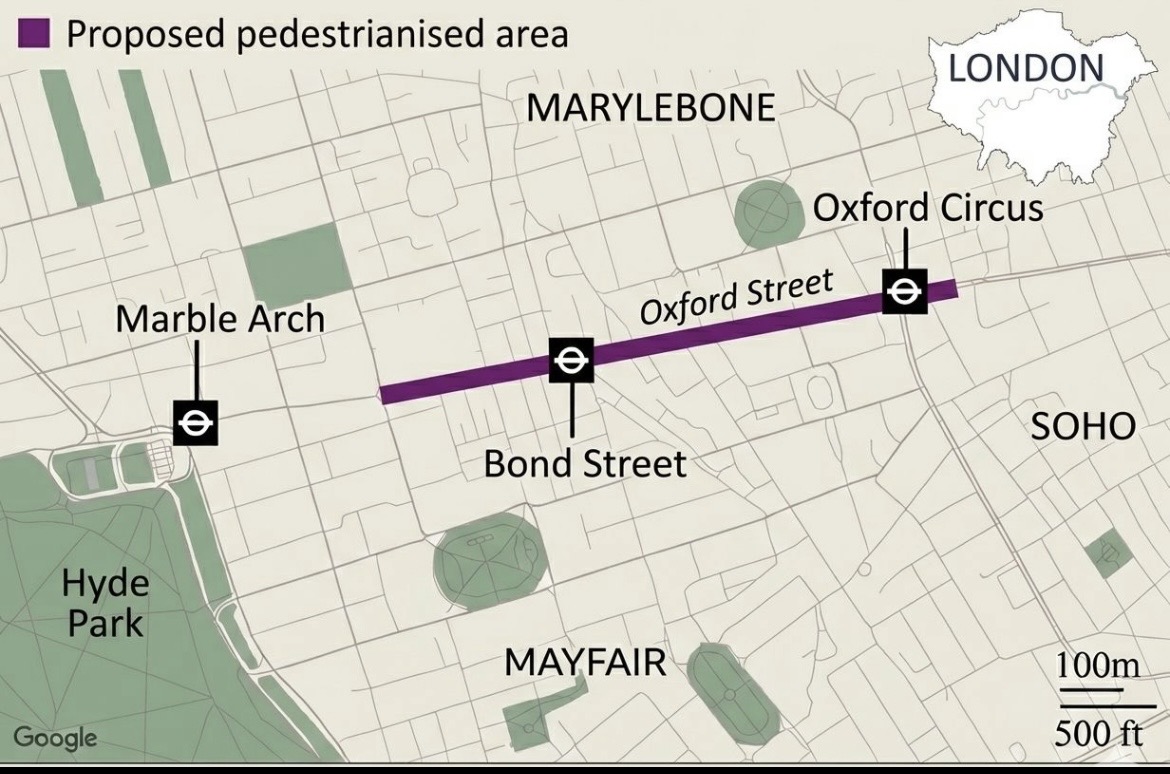
The proposed vehicle-free segment of Oxford Street. (Source: TfL)
The plan would pedestrianise a 0.7-mile stretch between Oxford Circus and Marble Arch, following an eight-week public consultation by Transport for London. TfL says, after reviewing the feedback, it is not planning to make changes to the scheme.
Under the proposals, that section would be closed to all traffic, including private vehicles, buses, taxis and private hire cars, as well as cycles, scooters and pedicabs.
TfL says emergency services will always be able to access the street, while delivery and service vehicles would be allowed into the car-free zone overnight, between midnight and 07:00, to support local businesses.
Sadiq Khan said: “I am delighted to be moving forward with my bold vision to transform Oxford Street into a world-leading urban space for shopping, leisure and outdoor events.”
Sir Sadiq Khan said: “Following TfL’s detailed consultation, I’ve today made the decision to move ahead with these exciting changes to the nation’s high street. We will outline more details in the coming days, as we continue building a better, more prosperous London for everyone.”
Work to make the street vehicle-free is due to begin this summer, with the first pedestrian-only section expected to open by the end of the year.
Alex Williams, TfL’s chief customer and strategy officer, said the organisation will work closely with Westminster City Council in the coming months to deliver the road changes around Oxford Street.
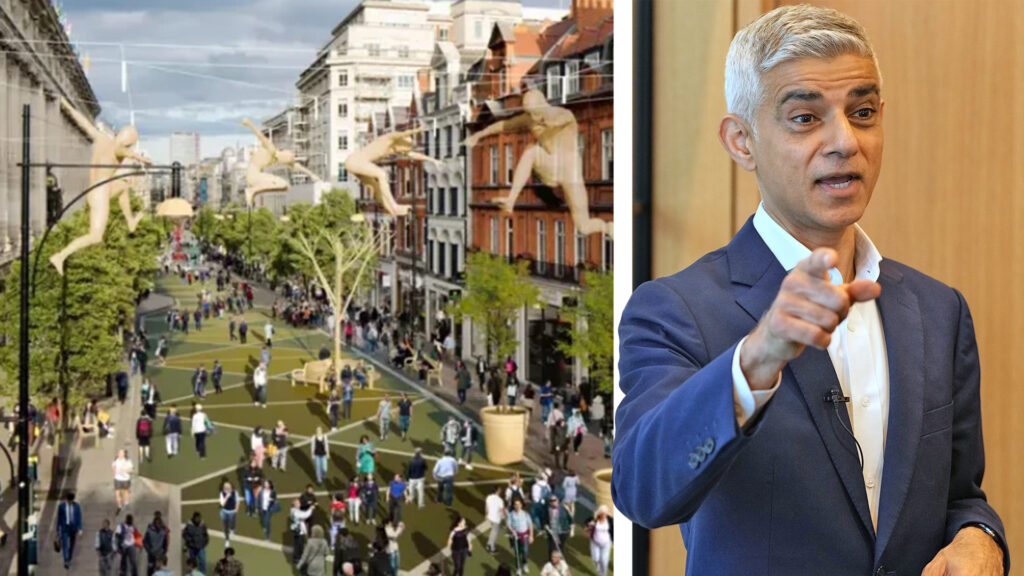
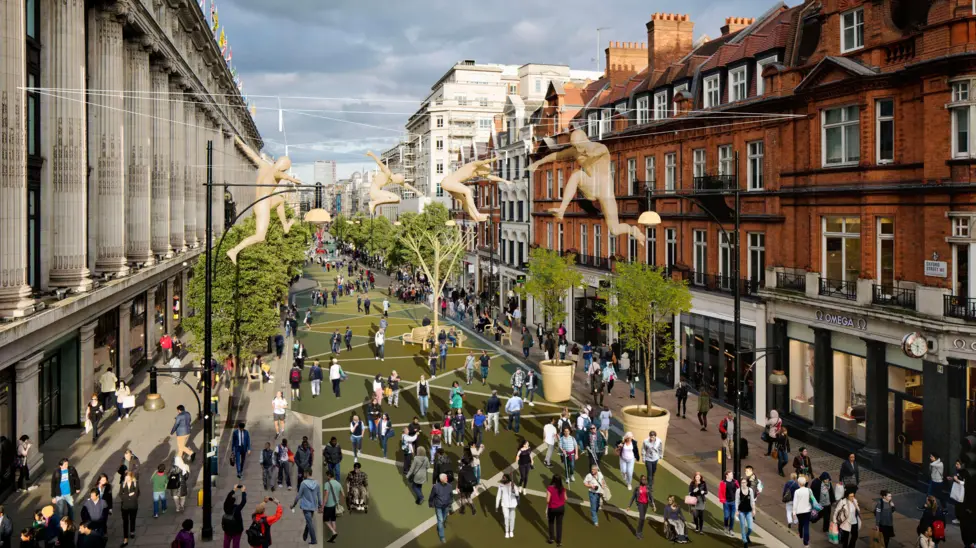
Conceptual rendering of pedestrianized Oxford Street. (Mayor of London)
Steve Gooding, director of motoring research charity the RAC Foundation, said demand for limited road space is always intense in dense, historic cities like London, forcing difficult political choices about who gets priority.
He added that one of the biggest challenges will be rerouting the bus services affected and managing the junctions where traffic currently crosses Oxford Street. Around 270 buses travel along the street every hour, according to the data.
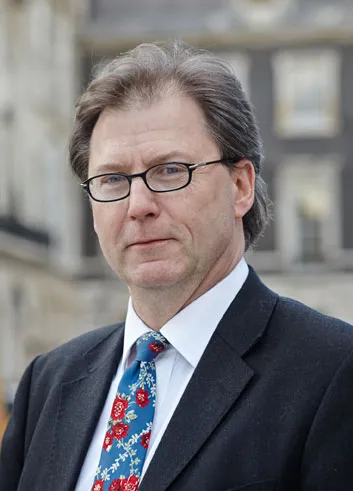
Steve Gooding raised concerns over who gets priority when the road space available is extremely limited. (RAC Foundation)
A previous attempt by Sadiq Khan to pedestrianise part of Oxford Street was blocked in 2018 by the then Conservative-run Westminster City Council.
This time, he has secured government approval to set up a Mayoral Development Corporation, giving City Hall planning powers, while TfL has taken control of the road from the council.
Submitted Article
Headline
Short Headline
Standfirst
Published Article
HeadlineKhan you believe it? Oxford Street set to go traffic-free
Short HeadlineKhan-do attitude: Mayor of London approves Oxford Street traffic ban
StandfirstMayor of London Sadiq Khan has announced plans to pedestrianise part of Oxford Street
Sir Sadiq Khan says plans to ban traffic from part of Oxford Street have been approved.
One of the world’s busiest shopping streets, Oxford Street draws around half a million visitors a day, more than 200 million a year, and packs roughly 300 shops into its 1.2-mile stretch through London’s West End.
Around 15,000 taxi passengers are picked up, dropped off, or travel along Oxford Street every day.
The proposed vehicle-free segment of Oxford Street. (Source: TfL)
The plan would pedestrianise a 0.7-mile stretch between Oxford Circus and Marble Arch, following an eight-week public consultation by Transport for London. TfL says, after reviewing the feedback, it is not planning to make changes to the scheme.
Under the proposals, that section would be closed to all traffic, including private vehicles, buses, taxis and private hire cars, as well as cycles, scooters and pedicabs.
TfL says emergency services will always be able to access the street, while delivery and service vehicles would be allowed into the car-free zone overnight, between midnight and 07:00, to support local businesses.
Sadiq Khan said: “I am delighted to be moving forward with my bold vision to transform Oxford Street into a world-leading urban space for shopping, leisure and outdoor events.”
Sir Sadiq Khan said: “Following TfL’s detailed consultation, I’ve today made the decision to move ahead with these exciting changes to the nation’s high street. We will outline more details in the coming days, as we continue building a better, more prosperous London for everyone.”
Work to make the street vehicle-free is due to begin this summer, with the first pedestrian-only section expected to open by the end of the year.
Alex Williams, TfL’s chief customer and strategy officer, said the organisation will work closely with Westminster City Council in the coming months to deliver the road changes around Oxford Street.
Conceptual rendering of pedestrianized Oxford Street. (Mayor of London)
Steve Gooding, director of motoring research charity the RAC Foundation, said demand for limited road space is always intense in dense, historic cities like London, forcing difficult political choices about who gets priority.
He added that one of the biggest challenges will be rerouting the bus services affected and managing the junctions where traffic currently crosses Oxford Street. Around 270 buses travel along the street every hour, according to the data.
Steve Gooding raised concerns over who gets priority when the road space available is extremely limited. (RAC Foundation)
A previous attempt by Sadiq Khan to pedestrianise part of Oxford Street was blocked in 2018 by the then Conservative-run Westminster City Council.
This time, he has secured government approval to set up a Mayoral Development Corporation, giving City Hall planning powers, while TfL has taken control of the road from the council.
A 2024 Freedom of Information request showed Bromley Council had £4.5 million invested in arms companies that year with £1.5 million reportedly linked to Israel.
Undercover officers raided three linked shops in Barking town centre, revealing how illicit tobacco is being hidden in walls, ceilings and nearby locations to evade detection.
More than 330,000 people across the UK sought support from the Stop It Now helpline in 2025 over concerns about their own or someone else’s online sexual behaviour towards children, according to new charity data. The anonymous service says contacts by phone, email and webchat rose significantly over the year.