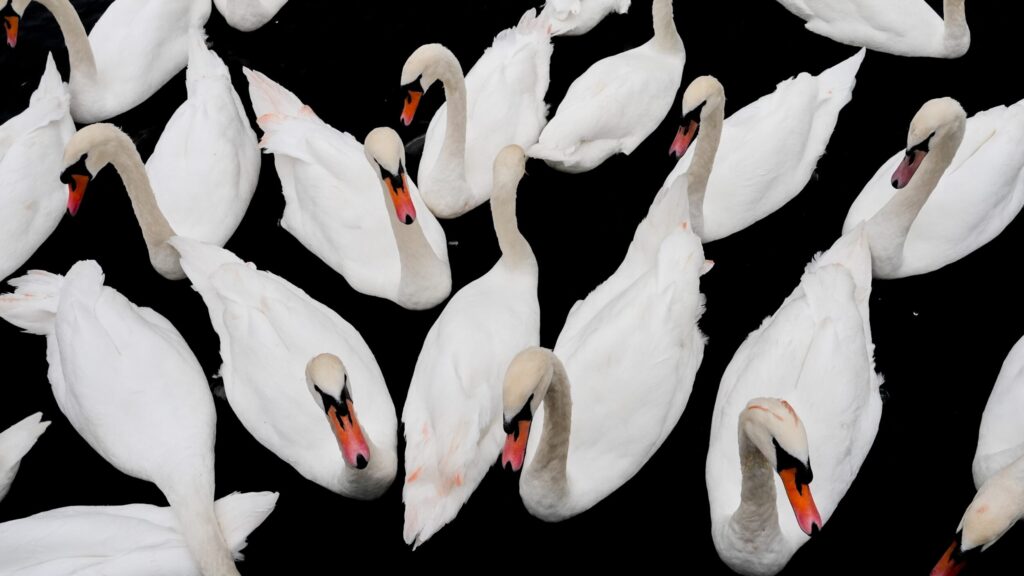
More than 50 swans found dead in east London have tested positive for bird flu, in the latest sign that the UK’s largest-ever avian influenza outbreak is still ongoing.
Around 30 swans were recovered from West India and Millwall Docks near Canary Wharf on Monday 23rd February, with a further 21 found there days later.
The Animal and Plant Health Agency (APHA) have now confirmed these deaths were due to a strain of bird flu known as H5N1.
An APHA spokesperson told City News,
“We are aware of a number of swan deaths around West India and Millwall docks. H5N1 highly pathogenic avian influenza has been confirmed.”
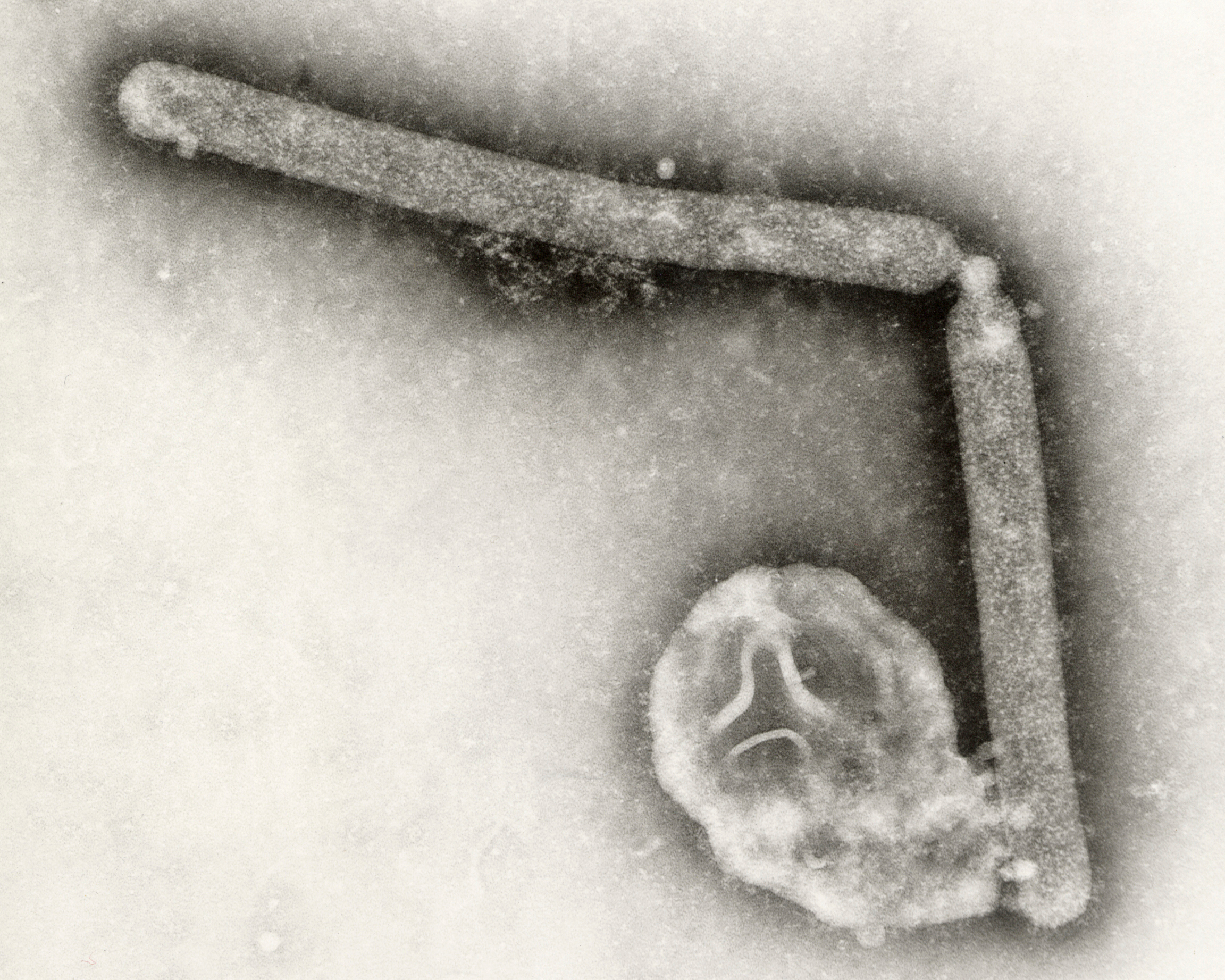
H5N1 virions, a type of bird flu virus, under a microscope. Credit: AP
The deaths follow a similar outbreak near Windsor, 30 miles west of this outbreak, that claimed the lives of nearly 50 swans last month.
What is bird flu?
Bird flu, also known as avian influenza, is a viral disease that primarily affects wild birds and poultry.
Since 2021, the virus has been circulating across the UK in what the Department for Environment, Food, and Rural Affairs describes as the most significant outbreak the country has faced.
The strain identified in Canary Wharf, is classified as “highly pathogenic.” This means it can spread quickly between birds and cause severe diseases, particularly where large numbers gather together.
The strain was first detected in intensive poultry farming in Asia in 1996 before spreading to wild birds.
In humans, symptoms of bird flu usually start about four to six days after being in contact with an infected bird.
Swans and other waterfowl can be particularly vulnerable because they gather in groups along waterways, which can help the virus pass from bird to bird.
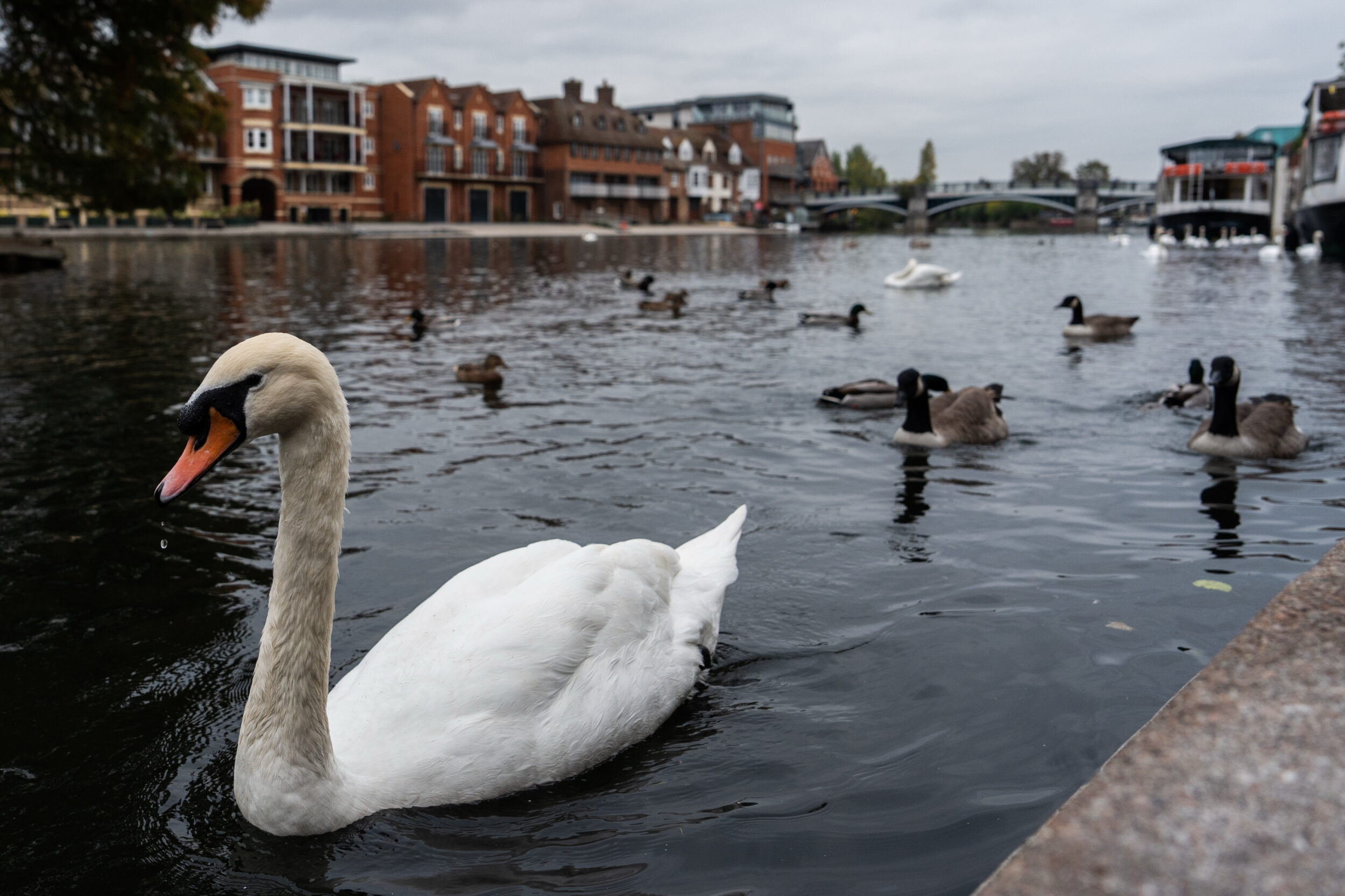
Swans on the River Thames. Credit: AP
What should you do?
Health officials say the risk to the people and animals remains very low, but people are being asked to take precautions.
APHA told City News,
“Members of the public are advised to not touch or pick up any dead or visibly sick birds that they find and should wash their hands thoroughly with soap and water if they touch wild bird faeces or feathers after feeding wild birds.”
Wild birds migrate seasonally, so outbreaks can appear in new locations as avian populations move during spring and summer. As the warmer months approach and birds continue to move across regions, the virus is likely to surface in new areas.
The NHS lists some potential symptoms of bird flu on their website, and urge anyone who was recently in contact with an infected bird and is suffering from the symptoms to call 111.
Members of the public are also encouraged to report dead wild birds via Defra’s online system or helpline, which helps APHA track the spread of the virus.
Submitted Article
Headline
Short Headline
Standfirst
Published Article
HeadlineDozens of swans die after bird flu hits East London
Short HeadlineBird Flu Flocks to East London
StandfirstTests have confirmed a new strain of avian influenza, prompting renewed public health advice.
More than 50 swans found dead in east London have tested positive for bird flu, in the latest sign that the UK’s largest-ever avian influenza outbreak is still ongoing.
Around 30 swans were recovered from West India and Millwall Docks near Canary Wharf on Monday 23rd February, with a further 21 found there days later.
The Animal and Plant Health Agency (APHA) have now confirmed these deaths were due to a strain of bird flu known as H5N1.
An APHA spokesperson told City News,
“We are aware of a number of swan deaths around West India and Millwall docks. H5N1 highly pathogenic avian influenza has been confirmed.”
H5N1 virions, a type of bird flu virus, under a microscope. Credit: AP
The deaths follow a similar outbreak near Windsor, 30 miles west of this outbreak, that claimed the lives of nearly 50 swans last month.
What is bird flu?
Bird flu, also known as avian influenza, is a viral disease that primarily affects wild birds and poultry.
Since 2021, the virus has been circulating across the UK in what the Department for Environment, Food, and Rural Affairs describes as the most significant outbreak the country has faced.
The strain identified in Canary Wharf, is classified as “highly pathogenic.” This means it can spread quickly between birds and cause severe diseases, particularly where large numbers gather together.
The strain was first detected in intensive poultry farming in Asia in 1996 before spreading to wild birds.
In humans, symptoms of bird flu usually start about four to six days after being in contact with an infected bird.
Swans and other waterfowl can be particularly vulnerable because they gather in groups along waterways, which can help the virus pass from bird to bird.
Swans on the River Thames. Credit: AP
What should you do?
Health officials say the risk to the people and animals remains very low, but people are being asked to take precautions.
APHA told City News,
“Members of the public are advised to not touch or pick up any dead or visibly sick birds that they find and should wash their hands thoroughly with soap and water if they touch wild bird faeces or feathers after feeding wild birds.”
Wild birds migrate seasonally, so outbreaks can appear in new locations as avian populations move during spring and summer. As the warmer months approach and birds continue to move across regions, the virus is likely to surface in new areas.
The NHS lists some potential symptoms of bird flu on their website, and urge anyone who was recently in contact with an infected bird and is suffering from the symptoms to call 111.
Members of the public are also encouraged to report dead wild birds via Defra’s online system or helpline, which helps APHA track the spread of the virus.
A 2024 Freedom of Information request showed Bromley Council had £4.5 million invested in arms companies that year with £1.5 million reportedly linked to Israel.
Undercover officers raided three linked shops in Barking town centre, revealing how illicit tobacco is being hidden in walls, ceilings and nearby locations to evade detection.
More than 330,000 people across the UK sought support from the Stop It Now helpline in 2025 over concerns about their own or someone else’s online sexual behaviour towards children, according to new charity data. The anonymous service says contacts by phone, email and webchat rose significantly over the year.